-
 Written By
MEGA
Written By
MEGA
- Published

The Chain of Survival: 5 Critical Links That Save Lives During Cardiac Arrest
By Prabakar Mahalingam, Managing Partner, AED Total Solution
More than 350,000 people in the United States experience out-of-hospital cardiac arrest each year. The survival rate is under 12%. Yet when every link in the chain of survival is executed quickly, survival rates can exceed 70%. The chain of survival is the American Heart Association’s framework for the sequence of actions that gives a cardiac arrest victim the best chance of surviving. Understanding each link, and being prepared to act on it, is what separates survival from tragedy.
This guide explains the five links in the chain of survival, how they work together, and what your organization can do to strengthen every link.
What Is the Chain of Survival?
The chain of survival is a concept developed by the American Heart Association (AHA) to describe the critical sequence of interventions needed to improve survival from cardiac arrest. First introduced in 1991, the framework has been updated over the years to reflect evolving evidence and best practices.
The core principle is simple: survival depends on a chain of events, and the chain is only as strong as its weakest link. If any step is delayed or missing, the person’s chance of survival drops dramatically.
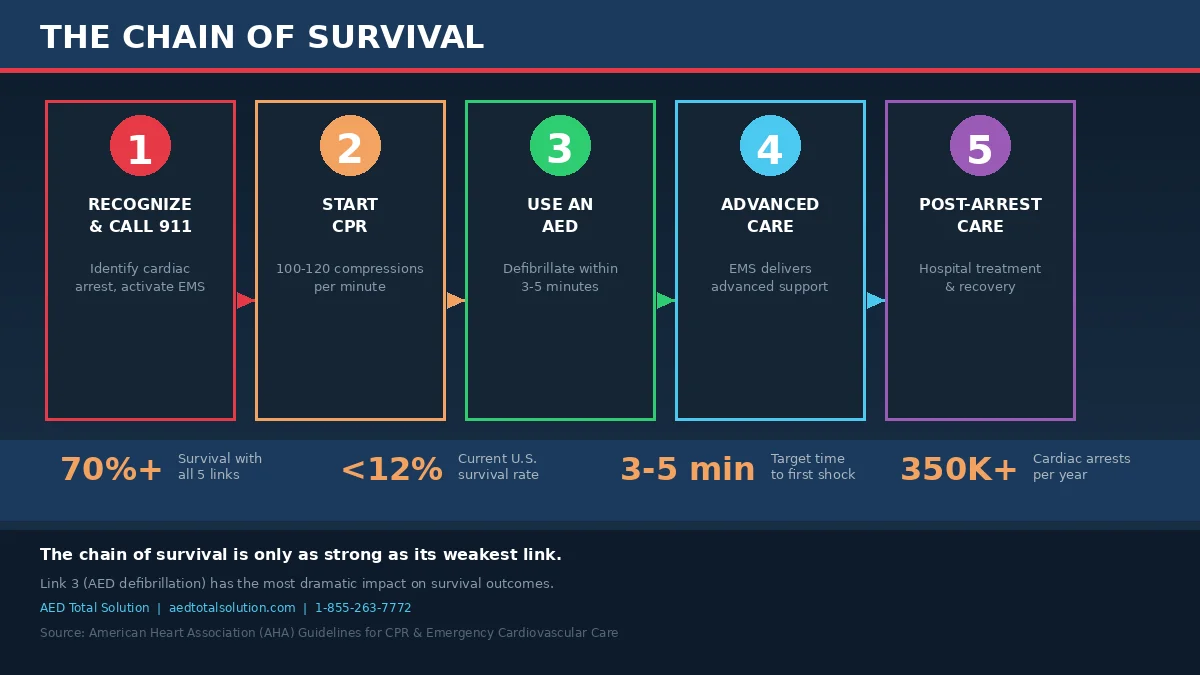
The AHA defines separate chains for in-hospital and out-of-hospital cardiac arrest. For workplaces, schools, and public settings, the out-of-hospital adult chain of survival includes five links:
- Recognition and activation of emergency response
- Early CPR with an emphasis on chest compressions
- Rapid defibrillation
- Advanced resuscitation by EMS
- Post-cardiac arrest care and recovery
Link 1: Recognition and Activation of Emergency Response
The first link in the chain of survival is recognizing that a cardiac arrest is happening and immediately calling 911 (or your local emergency number).
What to Look For
- The person suddenly collapses
- They are unresponsive to shouting or tapping
- They are not breathing, or only gasping (this is agonal breathing, which is not normal breathing)
- No pulse is detectable
What to Do
- Call 911 immediately. If others are present, direct a specific person to call. Saying “You in the blue shirt, call 911” is more effective than a general request.
- Activate your emergency action plan. If your organization has an AED program, this should trigger someone to retrieve the nearest AED while another person begins CPR.
- Stay on the line. The 911 dispatcher can provide CPR instructions and coordinate EMS response.
Why This Link Breaks
The most common reason this link fails is hesitation. Bystanders may not recognize cardiac arrest, may confuse agonal breathing with normal breathing, or may freeze from uncertainty. Training is the fix. Organizations that conduct regular CPR and AED drills have faster recognition and activation times.
Link 2: Early CPR with an Emphasis on Chest Compressions
CPR (cardiopulmonary resuscitation) is the bridge between cardiac arrest and defibrillation. It maintains blood flow to the brain and vital organs during the critical minutes before an AED arrives.
How to Perform High-Quality CPR
- Compression rate: 100 to 120 compressions per minute
- Compression depth: At least 2 inches (5 cm) for adults
- Full chest recoil: Allow the chest to completely return to its normal position between compressions
- Minimize interruptions: Pausing compressions for more than 10 seconds significantly reduces effectiveness
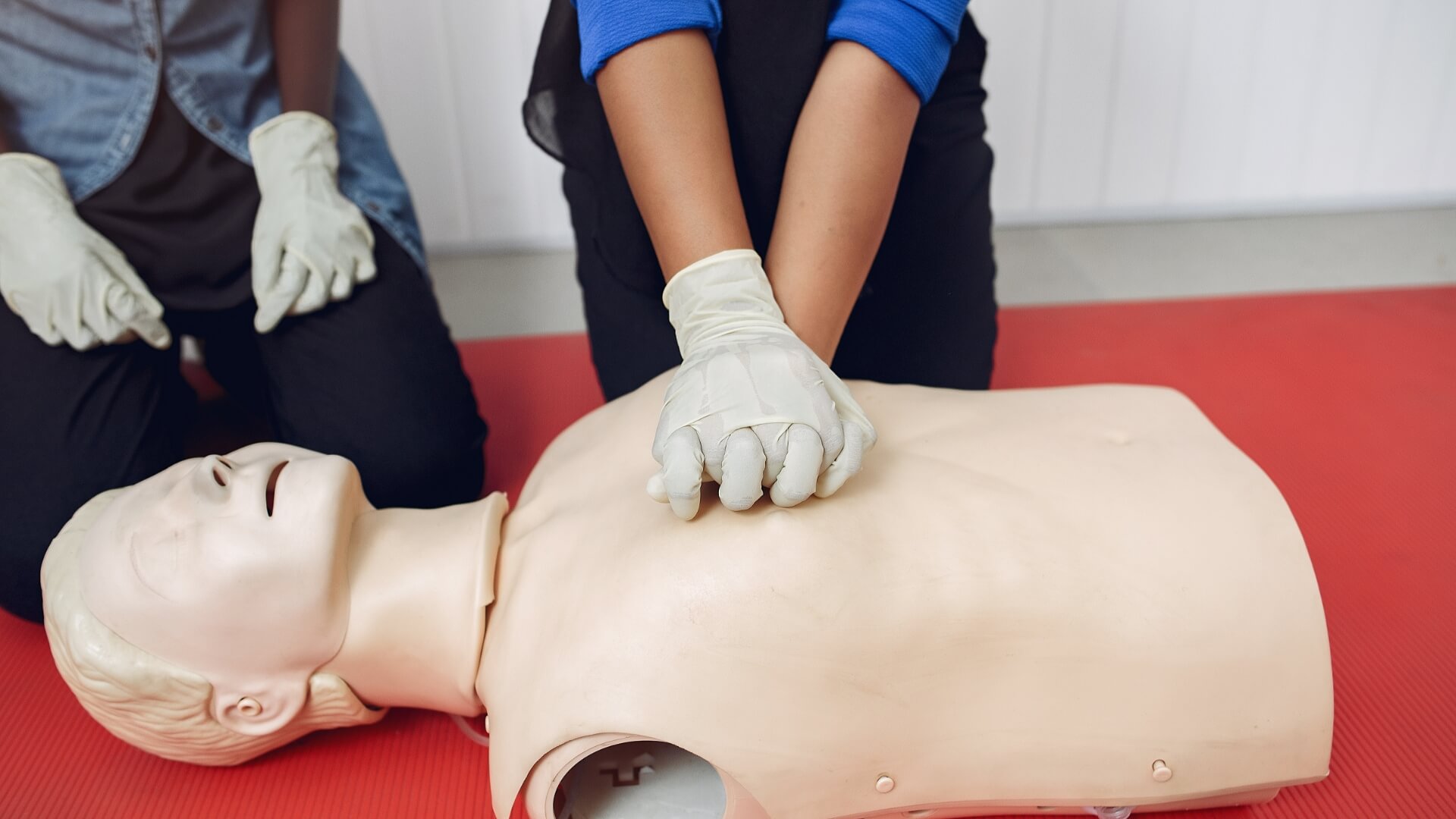
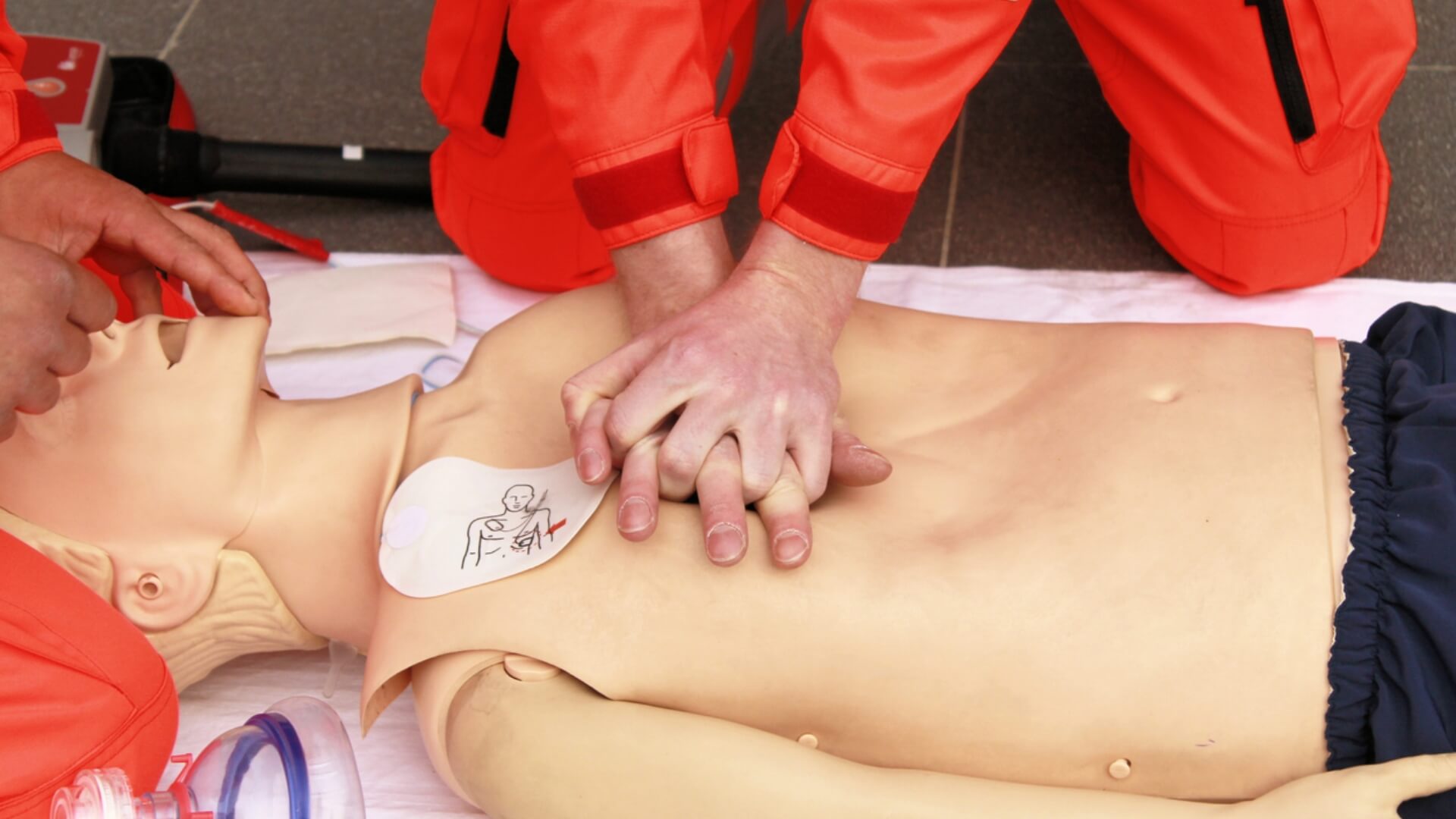
The AHA emphasizes hands-only CPR for untrained bystanders. Push hard and fast on the center of the chest. You do not need to provide rescue breaths to make a meaningful difference. Read our complete CPR and AED guide for step-by-step instructions.
Why Early CPR Matters
Without CPR, brain damage begins within 4 to 6 minutes of cardiac arrest. CPR alone does not restart the heart, but it buys time by circulating oxygenated blood. Studies show that bystander CPR doubles or triples the chance of survival compared to no CPR. Despite this, fewer than 40% of out-of-hospital cardiac arrest victims receive bystander CPR.
Link 3: Rapid Defibrillation
Defibrillation is the only treatment that can restore a normal heart rhythm during ventricular fibrillation or pulseless ventricular tachycardia, which are the most common initial rhythms in sudden cardiac arrest. This is the link where an automated external defibrillator (AED) becomes the most critical piece of equipment.
The Time Factor
For every minute that defibrillation is delayed, the chance of survival drops by 7% to 10%. The goal is to deliver the first shock within 3 to 5 minutes of collapse. Since the average EMS response time in the United States is 7 to 14 minutes, on-site AEDs are the only way to meet this target in most situations.
Why Cardiac Arrest Survival Rates Depend on AED Access
- AED within 3 minutes: Survival rates can exceed 70%
- AED within 5 minutes: Survival rates around 50%
- AED within 10+ minutes (EMS only): Survival rates drop below 10%
How AEDs Work
Modern AEDs are designed for use by anyone, even without training. The device:
- Analyzes the heart rhythm automatically
- Determines if a shockable rhythm is present
- Delivers a controlled electrical shock to reset the heart’s electrical system
- Provides voice prompts guiding every step
See our full guide on how to use an AED for a complete walkthrough.
Why This Link Breaks
The most common failure at this link is not having an AED available. Many workplaces, schools, and public buildings either lack AEDs entirely or have devices with expired batteries and pads. A device that is not maintained is a device that will not work when needed.
Link 4: Advanced Resuscitation by EMS
When emergency medical services arrive, they bring advanced life support capabilities that go beyond what bystanders and AEDs can provide:
- Advanced airway management (endotracheal intubation, supraglottic airways)
- IV/IO access for medication delivery
- Cardiac medications (epinephrine, amiodarone)
- Cardiac monitoring with 12-lead ECG
- Advanced defibrillation with manual defibrillators
- Rapid transport to a cardiac catheterization lab
The Handoff
The transition from bystander care to EMS care should be seamless. When paramedics arrive:
- Communicate clearly: “Cardiac arrest, we started CPR at [time], delivered [number] AED shocks”
- Continue CPR until EMS takes over
- Provide the AED (many models record the event data, which is valuable for hospital care)
Link 5: Post-Cardiac Arrest Care and Recovery
The final link in the chain of survival happens in the hospital. Surviving the initial cardiac arrest is only part of the equation. Post-arrest care focuses on:
- Targeted temperature management: Cooling the body to reduce brain injury
- Cardiac catheterization: Identifying and treating the underlying cause (e.g., coronary artery blockage)
- Neurological monitoring: Assessing brain function and recovery potential
- Rehabilitation: Physical, cognitive, and emotional recovery support
- Prevention planning: Determining whether an implantable cardioverter-defibrillator (ICD) or other interventions are needed to prevent recurrence
The Recovery Path
Cardiac arrest survivors face a range of outcomes depending on how quickly the chain of survival was completed. Patients who received bystander CPR and early defibrillation have significantly better neurological outcomes than those who waited for EMS alone.
How Organizations Strengthen the Chain of Survival
Every organization, whether it is a corporate office, school, gym, or government building, can strengthen the chain of survival by addressing each link:
Link 1: Train Your People
- Conduct regular CPR and AED training for employees and staff
- Post emergency action plans in visible locations
- Designate first responders on each floor or in each department
Link 2: Make CPR Accessible
- Include hands-only CPR instruction in onboarding
- Place CPR reference cards near AED cabinets
- Encourage a culture where anyone can step in during an emergency
Link 3: Deploy and Maintain AEDs
- Place AEDs within a 3-minute walk of all occupied areas
- Conduct monthly visual inspections of AED status indicators
- Replace batteries and pads before expiration
- Register devices with your state (where required)
- Maintain documented inspection records
Link 4: Coordinate with Local EMS
- Ensure building addresses and entry points are clearly marked
- Provide EMS with AED location maps
- Conduct joint drills with local fire and EMS departments
Link 5: Support Survivors
- Have protocols for post-event debriefing (for rescuers and the organization)
- Facilitate return-to-work or return-to-school plans for survivors
The Challenge of Scale
Managing AED programs across multiple locations introduces complexity: different devices, different expiration dates, different state regulations, different trained responders. This is where professional AED program management becomes essential.
AED Total Solution provides comprehensive AED program management that automates inspections, tracks supply expiration, ensures physician oversight, and maintains compliance documentation across every location. Our platform ensures that Link 3 in your chain of survival is never the weak link.
Frequently Asked Questions About the Chain of Survival
What are the 5 links in the chain of survival?
The five links are: (1) Recognition and activation of emergency response, (2) Early CPR with chest compressions, (3) Rapid defibrillation with an AED, (4) Advanced resuscitation by EMS, and (5) Post-cardiac arrest care and recovery.
Why is the chain of survival important?
Each link in the chain must be completed quickly and effectively for the best chance of survival. If any link is delayed or missing, the person’s survival odds decrease significantly. The chain is only as strong as its weakest link.
Which link in the chain of survival has the biggest impact?
Rapid defibrillation (Link 3) has the most dramatic impact on survival. If an AED is used within 3 to 5 minutes, survival rates can exceed 70%, compared to less than 10% when defibrillation is delayed beyond 10 minutes.
Does the chain of survival apply to children?
Yes. The AHA has a pediatric chain of survival that is similar but includes emphasis on prevention (since many pediatric cardiac arrests result from respiratory failure rather than cardiac causes). AEDs with pediatric pads should be available in schools and youth facilities.
How does the chain of survival relate to AED programs?
An AED program directly strengthens Links 1 through 3 by ensuring trained responders can recognize cardiac arrest, perform CPR, and deliver a shock with a maintained, ready AED, all within the critical 3-to-5-minute window.
Build a Stronger Chain of Survival for Your Organization
The chain of survival is not theoretical. It is a proven framework that saves lives every day when organizations are prepared. The difference between a 10% survival rate and a 70% survival rate comes down to preparation: trained people, maintained equipment, and a clear plan.
AED Total Solution helps organizations build every link in the chain with full-service AED program management, AED training programs, automated compliance tracking, and physician oversight. From a single-site office to a multi-location enterprise, we make sure your AEDs are always ready and your team always knows what to do. Our AED rental program makes it easy to get started with FDA-approved devices from just $45/month.
Ready to strengthen your chain of survival? Contact us today or call 1-855-263-7772 to speak with an AED program specialist.
Disclaimer for information purposes only:
The information provided on this website is intended for general educational and informational purposes only. It is not medical advice and should not be used as a substitute for professional diagnosis, treatment, or care. Always consult a qualified healthcare or medical professional regarding any health-related questions or concerns.
While we strive to ensure the information shared is accurate and up to date, no guarantees are made regarding completeness, accuracy, or applicability to any individual situation. Use of this content is at the reader’s sole discretion and risk.
This website is part of the Response Ready family of emergency preparedness and training resources, including CPR & first aid training and compliance services, AED sales and program support, AED program management software, and medical oversight solutions provided through our affiliated platforms:
• CPR1.com
• AEDLeader.com
• ResponseReady.com
• MDSIMedical.com
By accessing or using this website, you agree to release, indemnify, and hold harmless the website owners, authors, contributors, and affiliated entities from any claims, losses, damages, or liabilities arising from the use or reliance on the information presented.