Placing an AED on the wall is a critical first step, but it can create a dangerous false sense of security. A device with a dead battery or expired electrode pads is just as useless as having no device at all during an emergency. The reality is that without constant oversight, these life-saving tools often fail when they are needed most. This is where an AED fleet management service becomes essential. It’s a comprehensive solution that moves your organization from passive ownership to proactive readiness, taking over the complex and critical job of tracking, inspecting, and maintaining every single unit to ensure it’s compliant and ready to save a life.
Key Takeaways
- Go beyond ownership to ensure readiness: An AED on the wall doesn’t guarantee it works. Professional management actively tracks supplies and inspections, making sure your devices are always prepared for an emergency.
- Protect your organization with expert compliance: Keeping up with AED laws and maintaining perfect records is a full-time job. A managed service handles all compliance details, giving you audit-ready documentation and reducing liability.
- Streamline management across all your locations: Managing AEDs at multiple sites gets complicated fast. A centralized system with a single dashboard and automated alerts creates consistency and makes oversight simple.
What Is an AED Fleet Management Service?
Think of an AED fleet management service as your dedicated partner for emergency readiness. When you have one or more AEDs, especially across different locations, just buying the devices is only the first step. A management service takes over the complex and critical job of tracking, inspecting, and maintaining every single unit. It’s a comprehensive solution that combines smart software with expert oversight to ensure your entire fleet is compliant and ready to save a life at a moment’s notice.
This isn’t just about a tracking app; it’s a complete program management solution that handles the details so you don’t have to. From making sure your devices are registered correctly to tracking every battery and pad expiration date, the service provides end-to-end support. It removes the administrative burden and guesswork from your team, giving you confidence that your emergency response program is always prepared. By centralizing all the data and tasks, it creates a clear, accountable system for keeping your entire AED fleet in perfect working order.
Key Components of an AED Program
A strong AED program has several moving parts, and a management service keeps them all in sync. The service handles all the essential tasks required to keep your devices ready and compliant with regulations. This typically includes performing and documenting routine readiness checks to confirm each device is functional and where it should be. It also involves meticulously tracking the expiration dates for all consumables, like batteries and electrode pads, and coordinating their replacement before they expire. Finally, it provides the necessary documentation to help you meet legal requirements and manufacturer guidelines, ensuring your program is always audit-ready.
How It Differs from Simply Owning AEDs
Simply owning AEDs can create a false sense of security. An AED with a dead battery or expired pads is just as ineffective as having no AED at all during an emergency. The key difference with a managed program is the shift from passive ownership to proactive readiness. Instead of leaving maintenance to chance or relying on manual checklists that can be easily forgotten, a management service actively monitors every device. This systematic approach closes common compliance gaps and reduces the significant liability risks associated with a failed device, transforming your AEDs from simple assets into a reliable, life-saving system.
Why Your Organization Needs AED Fleet Management
Owning a fleet of AEDs is a major step toward protecting your employees, customers, and community. But simply placing devices on the wall isn’t enough. An Automated External Defibrillator is a medical device that requires consistent oversight to function correctly during an emergency. This is where AED fleet management comes in. It’s a comprehensive system for monitoring, maintaining, and documenting every AED in your organization to ensure it’s ready to save a life at a moment’s notice.
Without a dedicated management program, it’s easy for critical tasks to fall through the cracks. Batteries die, electrode pads expire, and software updates are missed, leaving you with a false sense of security. A managed approach removes the guesswork and administrative burden, replacing it with a reliable system that keeps your devices compliant and ready for use. Think of it as a complete support system for your emergency response plan, giving you confidence that your investment in safety is protected and effective. A professional AED program management service handles these details for you, so you can focus on your core operations.
Meet Compliance Requirements
When you own an AED, you’re also responsible for meeting a web of local, state, and federal regulations. These laws often dictate everything from device registration and placement to inspection frequency and record-keeping. On top of that, you have to follow the manufacturer’s specific maintenance guidelines to keep your device in good working order. Staying on top of these rules can feel like a full-time job, especially when you manage multiple devices across different locations. An AED management service helps you follow all the rules, ensuring your program is always aligned with current compliance standards and best practices. This systematic approach keeps your program defensible and audit-ready.
Reduce Liability and Manage Risk
A non-compliant or non-functional AED poses a significant liability risk. If a device fails during a cardiac arrest event due to poor maintenance, your organization could face serious legal and financial consequences. Research shows that a surprising number of AEDs are not ready for use when needed, highlighting a widespread gap in oversight. Proper fleet management closes this gap by creating a clear, documented trail of every inspection, maintenance task, and supply replacement. This documentation is your best defense in demonstrating due diligence and responsible ownership. By ensuring your AEDs are properly managed, you actively reduce your organization’s liability and protect your team from unnecessary risk.
Ensure Your AEDs Are Always Ready
At the end of the day, the single most important reason for AED management is to make sure your devices work when someone’s life is on the line. A broken AED is almost as bad as having no AED at all. Readiness depends on several factors: the battery must be charged, the electrode pads must be within their expiration date, and the device must pass its routine self-tests. An effective management program tracks all these variables for every AED in your fleet. It automates reminders for replacing batteries and pads and flags any device that reports an error, so you can address issues immediately. This proactive oversight ensures every AED is a reliable, life-saving tool.
What’s Included in a Comprehensive AED Program?
An effective AED program is much more than a device hanging on a wall. It’s a complete system designed to ensure every AED is ready to perform during an emergency. Think of it as a safety net woven from technology, routine checks, and expert oversight. A truly comprehensive program handles all the moving parts of AED ownership, so you don’t have to worry about compliance gaps or a device failing when you need it most.
These program management services combine smart software with dedicated management to track every detail. From routine inspections and supply expirations to compliance paperwork, every task is monitored and managed. This approach removes the guesswork and administrative headaches that come with maintaining life-saving equipment, especially across multiple locations. Instead of reacting to problems like a dead battery or a missed inspection, a managed program keeps you ahead of them. It gives you confidence that your organization is prepared, protected, and compliant at all times.
Track Device Status in Real-Time
Knowing exactly where your AEDs are and whether they’re ready for use is the foundation of a strong program. For organizations with devices spread across a large campus or multiple sites, this can be a huge challenge. A comprehensive program management service solves this by giving you a central dashboard where you can see all your AEDs on a map and check their status in real-time. This clear overview ensures every device is accounted for and ready to go, eliminating the risk of a missing or non-functional AED during a critical moment.
Automate Maintenance and Inspections
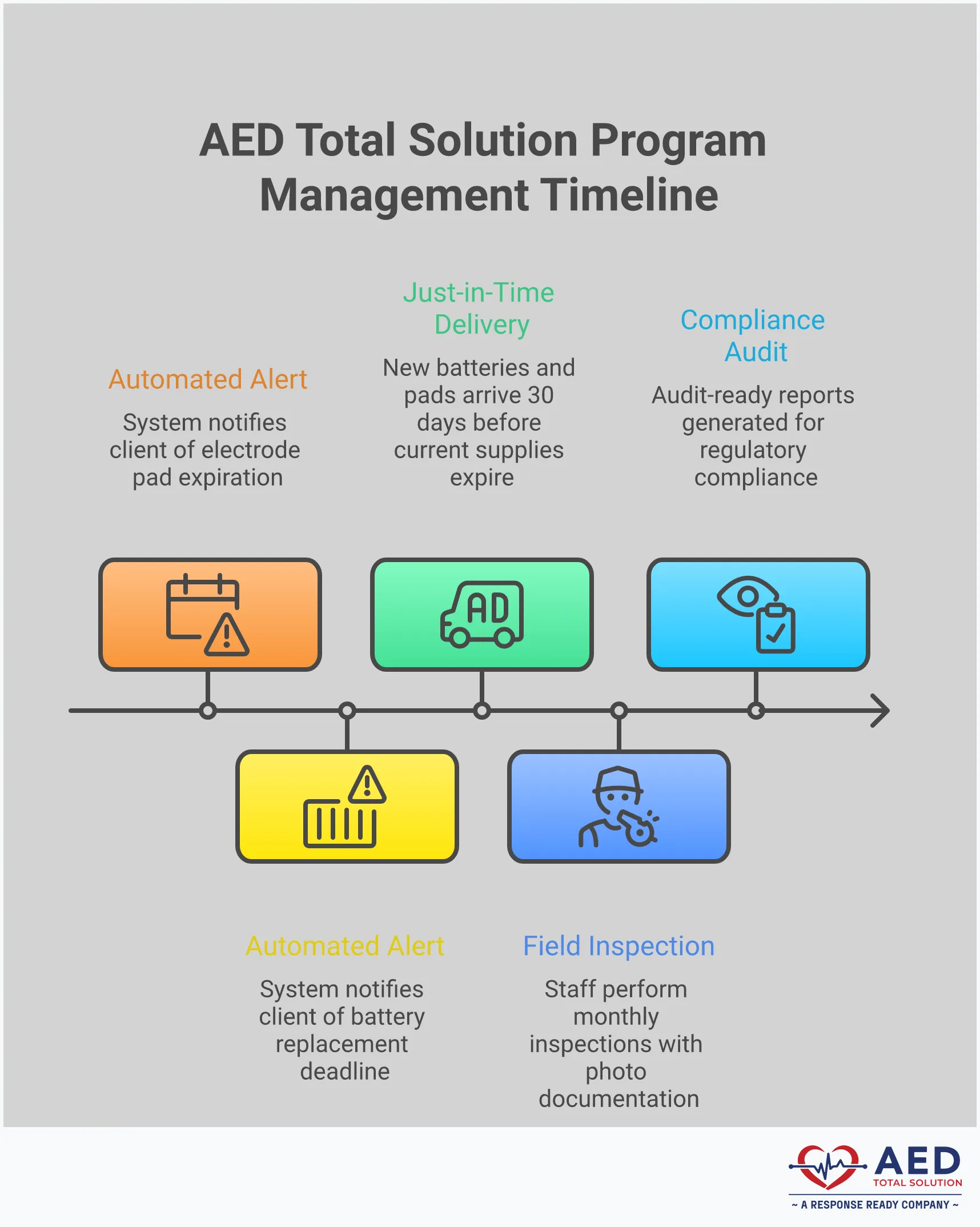
Forgetting a monthly inspection or failing to notice a readiness indicator has turned to red can leave you with a useless device and a major compliance issue. Manual tracking systems are prone to human error, but a managed program automates the entire process. The system sends alerts for upcoming inspections and logs every check, creating a perfect record of maintenance. This automation ensures that routine but critical tasks are never missed, keeping your devices in line with manufacturer guidelines and state regulations. It’s a simple way to guarantee your AEDs are always prepared for an emergency.
Manage Battery and Pad Replacements
An AED is only as good as its components, and its batteries and electrode pads have firm expiration dates. If they expire, the device won’t work. A top-tier management program tracks the expiration dates for all your supplies. You’ll get automatic reminders when batteries and pads are about to expire, and many services will even ship replacements to you before the old ones are out of date. This proactive approach ensures your AEDs are always stocked with functional supplies, removing one of the most common points of failure for unmanaged devices.
Get Audit-Ready Compliance Reports
Proper documentation is essential for protecting your organization from liability and proving compliance with Good Samaritan laws and other regulations. A managed AED program helps you keep your devices ready and follow all the rules by generating detailed, audit-ready reports. These records show that every inspection was completed on time, all supplies are current, and your program meets all necessary requirements. When it’s time for an audit or you need to provide documentation, you’ll have everything you need organized and accessible in one place.
Handle Recalls and Software Updates
Like any piece of technology, AEDs can be subject to manufacturer recalls or require important software updates to function correctly. Trying to manage this information for a fleet of devices is a complex and time-consuming task. A professional management service stays on top of all manufacturer communications for you. They will notify you of any recalls and coordinate the necessary updates or device replacements. This ensures your AEDs are always equipped with the latest software and are free from known issues, protecting your investment and, more importantly, the people you serve.
How Does AED Management Work Across Multiple Locations?
Managing a single AED has its challenges, but overseeing a fleet of devices across multiple offices, campuses, or facilities adds layers of complexity. Different locations might have different staff, varying state requirements, and unique logistical hurdles. A scattered approach just doesn’t work when lives are on the line. This is where a structured management program becomes essential. It creates a unified system that ensures every single AED, no matter where it is, receives the same level of attention and care.
Instead of juggling spreadsheets and relying on manual checks from busy site managers, a professional service streamlines everything. It provides the tools and oversight needed to keep your entire AED fleet compliant, ready, and accounted for. This approach transforms a logistical headache into a manageable, reliable safety net for your whole organization. It’s about creating consistency and confidence across the board, so you never have to wonder if the AED in your satellite office is as prepared as the one in headquarters. A centralized program removes the guesswork and replaces it with a clear, accountable process that works for everyone, everywhere. It connects all the dots, ensuring that every device is properly registered, inspected, and maintained according to a single, high standard.
Use a Central Dashboard for All Your Sites
Imagine having a single screen where you can see the real-time status of every AED in your organization. That’s the power of a central dashboard. It gives you a complete, bird’s-eye view of your entire fleet, consolidating data from all your sites into one easy-to-understand interface. You can instantly check which devices are ready, which need attention, and where compliance gaps might be forming. This centralized system is the core of effective full-service AED program management, helping you ensure every device adheres to manufacturer guidelines and local laws without having to visit each location in person. It’s your command center for total program oversight.
Receive Automated Alerts and Notifications
One of the biggest risks in manual AED management is human error. Someone forgets to perform a monthly check, misses an expiration date on a battery, or overlooks a manufacturer recall. Automated alerts and notifications eliminate that risk. A managed program sends timely reminders directly to you and your team for upcoming inspections, expiring electrode pads, and battery replacement dates. These alerts act as your digital safety net, ensuring critical maintenance tasks are never missed. This proactive system keeps your devices in a constant state of readiness, so you can be confident they will function properly when an emergency strikes.
Standardize Your Emergency Protocols
Consistency is key to a successful safety program, especially across multiple locations. An AED management service helps you standardize your procedures for everything from routine inspections to post-event reporting. By implementing a single, clear protocol for all sites, you ensure that every device is maintained to the same high standard. This uniformity simplifies staff training, makes oversight more efficient, and guarantees that your entire organization is aligned with best practices. It helps you create a cohesive and reliable emergency response plan that protects everyone, everywhere, under your watch.
The Risks of Managing an AED Program Manually
Placing an AED in your facility is a fantastic first step, but the work doesn’t end there. Many organizations fall into the trap of thinking that once the device is on the wall, it’s ready for action indefinitely. Unfortunately, this “set it and forget it” mindset can lead to serious problems. Managing an AED program manually, often with a spreadsheet and a well-intentioned employee, is a fragile system. It relies on perfect memory, consistent follow-through, and seamless handoffs when staff members change roles.
When things get busy, it’s easy for monthly checks to be forgotten. When an employee leaves, their knowledge of the AED program can walk out the door with them. These small oversights can accumulate over time, creating significant gaps in your emergency preparedness. The risks aren’t just about administrative headaches; they involve device failure during a life-or-death situation and the legal liabilities that follow. Let’s look at the specific challenges that come with trying to manage an AED program on your own.
Common Maintenance Failures and Oversight Gaps
An AED is only effective if it’s ready to work at a moment’s notice. The most common reason for failure is a lack of basic maintenance. Batteries die and electrode pads expire, and without a system to track them, these critical components can easily become outdated. A broken AED is almost as bad as having no AED at all. Manually tracking expiration dates across multiple devices is a recipe for error, especially for organizations with more than one location. A simple oversight can leave you with a non-functional device, completely defeating the purpose of your investment in safety. A full-service AED program management system automates these checks and reminders, ensuring every device is always ready.
Solving Documentation and Record-Keeping Headaches
Proper documentation is your proof of diligence. If an incident occurs or an inspector visits, you’ll need a clear record of every check, maintenance task, and supply replacement for each AED. Relying on a paper logbook or a single spreadsheet file is risky. These records can get lost, become outdated, or be inaccessible when you need them most. A comprehensive management service helps you maintain legal compliance by digitizing your records. It creates a centralized, audit-ready history of your entire AED program, giving you the documentation you need to protect your organization and demonstrate that you’ve met your responsibilities.
Addressing Staff Training and Accountability
Who is responsible for checking your AEDs each month? What happens if that person is on vacation, out sick, or leaves the company? In a manual system, accountability often falls on one or two people, creating a single point of failure. Without clear protocols and automated reminders, tasks can easily be missed, and no one realizes it until it’s too late. A managed program establishes a clear system of accountability. It assigns tasks, sends notifications, and tracks completion, so you always know your program is on track. This structure ensures that readiness doesn’t depend on one person’s memory, but is supported by a reliable system and expert program management.
Preventing Device Failures and Compliance Gaps
Ultimately, the small gaps in a manual program add up to two major risks: device failure and non-compliance. Many organizations face challenges in keeping their AEDs ready, which can lead to increased legal exposure. A missed battery replacement, an unrecorded inspection, or expired pads can all result in a device that fails during an emergency. Professional AED program management acts as your safety net. It closes these gaps by automating maintenance tracking, centralizing documentation, and ensuring every device in your fleet is compliant and functional, giving you confidence that you’re prepared for the moments that matter most.
Key Benefits of Professional AED Fleet Management
Managing a fleet of AEDs involves more than just mounting them on a wall. It requires constant oversight to ensure every device is ready and compliant. When you partner with a professional management service, you’re not just outsourcing tasks; you’re adopting a system designed to protect your people and your organization. This partnership provides peace of mind, knowing that experts are handling the details so you can focus on your core responsibilities. From simplifying daily operations to strengthening your overall emergency response plan, the advantages are clear. Let’s look at the key benefits you can expect when you let a dedicated team manage your AED program.
Lighten Your Administrative Load
Keeping track of an AED program can quickly become a major administrative task, especially for organizations with multiple locations. You have to monitor battery and pad expiration dates, conduct regular inspections, maintain detailed records, and ensure staff accountability for every device. A professional AED program management service handles all of this for you. Instead of juggling spreadsheets and calendar reminders, you get a streamlined system that automates readiness checks, tracks supplies, and documents every action. This frees up your team’s time and energy, allowing them to concentrate on their primary roles without letting critical safety tasks fall through the cracks.
Gain Confidence in Your Compliance
AED regulations can be complex, with requirements varying by state, industry, and even local jurisdiction. Staying on top of these rules is essential for avoiding fines and reducing legal liability. A professional management partner acts as your compliance expert, ensuring your program meets all relevant guidelines, from device registration to post-event reporting. They keep up with changing legislation and manufacturer protocols so you don’t have to. This expert oversight gives you confidence that your program is not only effective but also fully documented and defensible, protecting your organization from potential legal challenges.
Strengthen Your Emergency Readiness
In a sudden cardiac arrest emergency, a working AED can be the difference between life and death. An unmaintained device with a dead battery or expired pads is as ineffective as having no AED at all. Professional management ensures every single one of your AEDs is functional and ready to be deployed at a moment’s notice. Through routine inspections and remote monitoring, any issues are identified and resolved proactively. This commitment to readiness means that when an emergency happens, your team can act with certainty, knowing the equipment they’re counting on will perform as expected.
Schedule Maintenance Cost-Effectively
Managing AED maintenance reactively can lead to unexpected and inflated costs. Rushing to replace expired pads or dealing with a failed device often means paying for expedited shipping or emergency service calls. A managed AED program introduces predictability and control to your budget. By tracking the entire lifecycle of your devices and their accessories, a professional service schedules replacements and maintenance in advance. This proactive approach allows you to plan for expenses, avoid last-minute purchases, and keep your program running smoothly without financial surprises. It’s a smarter, more cost-effective way to maintain your life-saving equipment.
Why Managed AED Programs Are More Effective: The Data
Relying on a manual checklist or a single staff member to keep your AEDs ready is a gamble. The numbers show that unmanaged devices often fail when they’re needed most. A structured, professional management program isn’t just about convenience; it’s about ensuring your investment in safety actually pays off during an emergency. Let’s look at the data to see why a hands-off approach to AED maintenance just doesn’t work.
How Proper Maintenance Impacts Survival Rates
When a sudden cardiac arrest occurs, having a functional AED nearby can be the single most important factor in a person’s survival. Research shows that the presence of a public AED can make a person’s chance of surviving 2.62 times better. The impact is even more dramatic when the device is used immediately. If an AED is applied within the first minute of collapse, the survival rate can be as high as 90%. These incredible odds depend entirely on one thing: the AED must be in perfect working order. Proper maintenance isn’t just a compliance task; it’s what makes these life-saving statistics possible.
The High Failure Rate of Unmanaged AEDs
The unfortunate reality is that many organizations with good intentions fail at AED upkeep. According to one report, an alarming one out of every five AEDs is not ready for use because of poor maintenance or failed inspections. A device with a dead battery or expired pads is just as ineffective as having no AED at all. This high failure rate highlights the significant gaps in manual management systems. Without automated tracking and expert oversight, it’s far too easy for critical tasks to be missed. A comprehensive AED program management service closes these gaps, ensuring your device is always prepared.
Why Every Second (and Inspection) Counts
In a cardiac emergency, every second is critical. The device you count on must be ready to deliver a shock without delay. This requires consistent attention to detail, from checking battery life to replacing electrode pads before they expire. Regular inspections are the only way to confirm an AED is ready to perform. An AED management service automates these checks and provides a clear record of readiness. It removes the guesswork and human error from the equation, giving you confidence that your equipment will function correctly when a life is on the line.
How to Choose an AED Fleet Management Provider
Selecting the right partner to manage your AED program is one of the most important safety decisions you’ll make. The goal is to find a provider that not only offers great technology but also acts as a true extension of your team. As you evaluate your options, focus on these four key areas to ensure you choose a partner that protects your organization and empowers you to save lives.
Look for Comprehensive, Integrated Service
A top-tier AED management provider does more than just track your devices on a map. They should offer a complete, end-to-end service that handles every aspect of your program. This means they help you stay compliant with all manufacturer recommendations and complex state AED requirements. A truly comprehensive service includes device registration, readiness checks, supply management, and detailed record-keeping. Instead of just sending automated reminders, a great partner actively manages the entire lifecycle of your devices, giving you a single, reliable solution for everything related to your AED program.
Prioritize Modern Technology and Mobile Access
Your team is always on the move, and your AED management platform should be too. Look for a provider with a modern, user-friendly system that you can access from any device, especially a smartphone. A mobile app makes it easy for your staff to perform and log required inspections, check on battery life, and confirm pad expiration dates right on the spot. This immediate access to real-time data gives you a clear and current picture of your entire AED fleet’s readiness. The technology should simplify your team’s workflow, not complicate it.
Demand Expert Oversight and Hands-On Support
Technology is essential, but it can’t replace human expertise. An automated alert is only useful if someone acts on it. That’s why it’s critical to choose a provider that backs its software with a team of dedicated experts. These professionals should provide hands-on oversight, follow up on unresolved issues, and be available to answer your questions. This combination of smart monitoring and human support ensures that no detail is overlooked. A true program management service gives you confidence that there are real people ensuring your AEDs are always ready for an emergency.
Find a Solution That Grows with You
As your organization expands, your AED program needs to keep pace. The right management partner will offer a solution that can easily scale from one location to dozens or even hundreds. Your provider should be able to manage an unlimited number of devices and users without creating extra administrative headaches for your team. This flexibility ensures you can maintain consistent safety protocols and compliance standards across all your sites, no matter how much you grow. Look for a partner who can support your needs today and adapt to your goals for the future.
What Does AED Fleet Management Cost?
When you’re considering a professional AED management program, one of the first questions is usually about the price. The cost can vary, but it’s helpful to think of it as an investment in readiness and compliance, not just an expense. The right program protects your people, your organization, and your peace of mind by ensuring every device is ready to go when seconds count. Let’s break down the factors that influence the cost and how to think about the return on your investment.
Understanding Pricing Models
AED fleet management is typically priced on a per-device, per-month basis. This model makes it easy to scale your program as your organization grows. The exact cost depends on the size of your AED fleet and the specific management services you need. A basic plan might include compliance tracking and automated reminders, while a more comprehensive, white-glove service would cover everything from remote readiness monitoring and supply replenishment to hands-on support and audit-ready documentation. For organizations with many devices across multiple locations, providers often create custom pricing packages that offer more value and tailored solutions to fit your unique operational needs.
In-House vs. Outsourced: A Cost Comparison
Managing your AED program in-house might seem like the most affordable option at first glance, but it comes with hidden costs. You have to account for the staff hours spent on manual inspections, tracking expiration dates, maintaining records, and staying current with changing regulations. If a task is missed, the cost of non-compliance or a failed device can be significant. Outsourcing to a dedicated management service converts these variable, unpredictable expenses into a fixed, manageable cost. You gain access to specialized expertise and technology designed to streamline the entire process, which often leads to greater efficiency and long-term savings.
Calculating Your Return on Investment (ROI)
The ROI of an AED management program goes far beyond the monthly fee. Think about the costs you’re actively avoiding: hefty fines for non-compliance, legal exposure from a device failure, and the expense of replacing expired pads and batteries at the last minute. A professionally managed program helps you sidestep these financial risks. More importantly, it frees up your team’s time to focus on their core responsibilities. The true return is the confidence that comes from knowing your AEDs are properly maintained, fully compliant, and always ready to save a life. That level of assurance is invaluable.
Simplify Your AED Program Today
Managing an AED program involves more than just mounting a device on the wall. It’s a constant cycle of inspections, battery and pad expiration tracking, compliance documentation, and readiness checks. When you’re juggling these tasks manually across one or multiple locations, it’s easy for something to fall through the cracks. A missed inspection or an expired battery can mean the difference between a successful rescue and a tragic outcome. This is why so many unmanaged AEDs fail when they’re needed most.
This is where professional AED program management makes a difference. Instead of leaving compliance to chance or burdening your team with complex spreadsheets, you can hand over the entire process to a team of experts. A comprehensive service ensures every device in your fleet is tracked, maintained, and compliant with state and local laws. It removes the guesswork and administrative headaches, so you can focus on your primary responsibilities. We believe in a white-glove approach that takes the complexity off your plate.
With a managed program, you gain the confidence that your AEDs are always ready for an emergency. You get automated alerts for maintenance, clear reports for audits, and a partner who handles recalls and updates for you. It’s the most effective way to protect your organization from liability and, more importantly, protect the people in your care. You can learn more about who we are and why we’re dedicated to this mission.
If you’re ready to move from uncertainty to confidence, it’s time to explore a full-service solution. Let us handle the details, so you can have complete peace of mind.
Related Articles
- AED Program Management | Full-Service Compliance & Readiness
- Home AED Solutions – Expert Service & Support
- Top 4 AED Compliance Management Software Platforms
- AED Program Management | Compliance and Maintenance
Frequently Asked Questions
My organization uses a spreadsheet to track our AEDs. How is a management service different? A spreadsheet is a passive tool that depends entirely on manual updates, which makes it easy for errors or forgotten tasks to slip through. A management service is an active system that combines smart software with expert oversight. It automatically alerts you about expiring pads or upcoming inspections and provides a dedicated team that follows up to ensure every task is completed. This gives you a proactive partner in readiness, not just a static logbook.
We only have a couple of AEDs. Is a professional management program really necessary for us? The risks associated with a failed device are the same whether you have two AEDs or two hundred. Compliance laws and manufacturer maintenance guidelines still apply to every single device. A management program provides a reliable system for readiness and documentation, regardless of your program’s size. It ensures those critical details are never overlooked, giving you the same peace of mind and liability protection that larger organizations require.
How exactly does a management service reduce our organization’s liability? Liability often stems from negligence, such as failing to properly maintain a life-saving device. A management service creates a complete, time-stamped record of every inspection, supply replacement, and readiness check. This audit-ready documentation serves as clear proof that you have been diligent in your responsibilities. By ensuring your AEDs are always compliant and functional, the service actively minimizes the risk of a device failure and the legal issues that could follow.
What happens if the system alerts us that an AED has an issue? Are we on our own to fix it? Not at all. This is where our hands-on support makes a difference. When an AED reports an error or fails a self-test, our system flags it immediately. Our team then works directly with you to diagnose the problem and coordinate a solution, whether that involves simple troubleshooting or arranging for service. You’re not just getting software; you’re getting a dedicated partner to help you resolve issues quickly and keep your devices ready.
Our company already owns AEDs from a few different manufacturers. Can you still manage them? Yes, absolutely. We understand that many organizations build their AED fleets over time, resulting in a mix of brands. Our program is designed to be brand-agnostic, meaning we can manage devices from all major manufacturers. We centralize the tracking, maintenance schedules, and compliance documentation for your entire fleet into one unified system, simplifying oversight and ensuring every device meets the same high standard.