Most people think CPR is the go-to for cardiac arrest. But CPR is really just buying time. While vital, the chest compressions alone can’t restart a heart. The real game-changer is that box on the wall,the AED. Understanding the stark difference in aed vs cpr survival rates is crucial. When an AED is used within the first three minutes, survival chances skyrocket. The low cpr success rate without aed is a sobering fact. Knowing how this simple device works can turn panic into life-saving action.
Survival from sudden cardiac arrest depends on acting fast. Quickly spotting symptoms and using an automated external defibrillator (AED) can boost survival chances.
Need an AED program that is ready before an emergency happens? AED Total Solution helps organizations choose devices, place them correctly, track pads and batteries, manage inspections, and keep documentation current. Request AED program support or call 855-263-7772.
The Stark Reality of Sudden Cardiac Arrest
Understanding the Numbers
More Than a Statistic: A Life Every 90 Seconds
It’s easy to think of sudden cardiac arrest (SCA) as something that happens to other people, somewhere else. But the latest 2026 data says otherwise. The CARES 2025 National Survival Report recorded 140,144 non-traumatic out-of-hospital cardiac arrests in one year. Overall survival to hospital discharge was 10.5%, and only 8.3% of patients survived with favorable neurological function. In public settings, survival was higher at 20.9%, which shows why prepared workplaces, schools, gyms, churches, and public venues can change outcomes.
CPR is the first step, but CPR alone does not correct the dangerous electrical rhythm that causes many sudden cardiac arrests. In the 2025 CARES data, bystander CPR was associated with 11.4% survival to discharge, compared with 7.6% when bystander CPR was not performed. When a bystander used an AED before emergency responders arrived, survival to discharge was 15.5% overall. In non-healthcare settings outside nursing homes, bystander AED use was associated with 32.9% survival to discharge and 30.8% survival with good neurological function. These statistics represent real people in our workplaces, schools, and communities, making preparedness a non-negotiable responsibility.
The clock is the biggest enemy during a cardiac emergency. For every minute that passes without defibrillation, a person’s chance of survival drops by about 7% to 10%. This narrow window of opportunity highlights why simply owning an AED isn’t enough. The device must be accessible, visible, functional, and ready for immediate use. A comprehensive AED program management service ensures your equipment is always prepared, removing the guesswork and confirming that you are ready to act when seconds are the difference between life and death.
Get certified in CPR

CPR & AED Training
3-hour in-person training with a 2-year nationally recognized certification.
CPR, AED & First Aid Certification
Instructor-led on-site. Practice on real manikins and AED trainers.
Why CPR is Your First Step in Cardiac Arrest
During sudden cardiac arrest, the heart stops pumping blood. This means the brain and vital organs don’t get enough blood. So, every second is crucial. CPR is vital in those first moments. It manually keeps blood and oxygen flowing until help arrives. Knowing how CPR works and recognizing its limits is essential to being ready when a life depends on you.
What is CPR (Cardiopulmonary Resuscitation)?
CPR, or Cardiopulmonary Resuscitation, is a critical lifesaving technique. It’s used when someone’s heart stops unexpectedly. It combines chest compressions and rescue breaths. This keeps blood and oxygen flowing in the body, acting as a short-term life support system. Learning CPR lets you help keep vital organs alive. You give someone a chance until an AED or medical team can restore their heartbeat.
The Role of Hands-Only CPR for Bystanders
If you witness a cardiac arrest, the idea of performing CPR can feel overwhelming, especially the rescue breaths. The good news is you don’t have to be a medical expert to help. Hands-only CPR is a simplified technique designed for bystanders. It involves pushing hard and fast in the center of the chest without stopping for mouth-to-mouth. This action is powerful because it manually pumps blood to the brain and other organs, keeping them alive. For every minute that passes without defibrillation, the chance of survival drops by up to 10%. While chest compressions alone rarely restart the heart, they create a critical bridge to the one thing that can: an AED. Your willingness to act immediately is the first and most vital step in saving a life.
How Chest Compressions Keep Blood Flowing
Effective CPR needs strong, steady chest compressions. These help keep blood flowing to the brain and vital organs. Pushing down hard on the chest acts like the heart pumping. This keeps life going until help gets there. The American Heart Association says that quick CPR can double or even triple survival rates. But delays can cause irreversible brain damage in just a few minutes. Learning the proper technique ensures every compression counts when it matters most.
Performing High-Quality Chest Compressions
To perform high-quality chest compressions, kneel beside the person and place the heel of one hand on the center of their chest, with your other hand on top. With straight arms and your shoulders directly over your hands, push hard and fast at a rate of 100 to 120 compressions per minute,the beat of the song “Stayin’ Alive” is a great guide. The depth should be at least two inches for an adult, and it’s just as important to allow the chest to fully recoil between each push. These compressions are a critical bridge to defibrillation. They keep oxygenated blood flowing to the brain but can’t restart the heart on their own. That’s why pairing immediate CPR with an automated external defibrillator is so important. Using an AED can more than double a person’s chance of survival compared to CPR alone.
What CPR Can and Cannot Do
CPR’s main goal is to keep blood flowing and protect vital organs until help arrives. CPR can help briefly, but it can’t restart a heart with electrical issues, like ventricular fibrillation. It’s an important bridge that keeps blood flowing. Yet, it doesn’t cure the abnormal rhythm that leads to cardiac arrest.
Why is an AED necessary to restart the heart?
An Automated External Defibrillator (AED) delivers a crucial shock. This shock helps restore a normal heart rhythm during sudden cardiac arrest. Research shows that survival is only about 9% with CPR alone before help arrives. Yet, it jumps to 38% when an AED is used quickly. This key difference highlights how important it is to have AEDs on hand. Knowing how to use them, along with CPR, can save lives.
What Causes Sudden Cardiac Arrest?
Sudden cardiac arrest can be shocking. Yet, it often connects to unseen heart problems. The American Red Cross states that about 84% of adult cases arise from problems like coronary artery disease, heart attack scars, or inherited rhythm disorders. In some cases, outside events like drowning, trauma, or electric shock can trigger it. No matter the cause, the lifesaving steps are the same: call for help, start CPR, and use an AED right away.
AED vs. CPR Survival Rates: 2026 Data Update
Out-of-hospital cardiac arrest stats can be startling. They highlight how fast action can save lives. Survival hinges on how quickly help arrives, whether someone starts compressions, and whether an AED reaches the patient before EMS. These figures aim to inform, not scare. They show why CPR training, clear AED placement, and routine device readiness checks are vital. A single decision to step in could mean the difference between life and loss.
| 2025 CARES category | Survival to discharge | Good neurological outcome | What it means |
|---|---|---|---|
| All EMS-treated non-traumatic OHCA cases | 10.5% | 8.3% | National baseline for reported out-of-hospital cardiac arrests. |
| Bystander CPR | 11.4% | 9.2% | CPR helps maintain blood flow until a shock or advanced care is available. |
| No bystander CPR | 7.6% | 5.7% | Survival falls when no one starts compressions before responders arrive. |
| Bystander AED use | 15.5% | 13.1% | AED access improves outcomes when used before 911 responders arrive. |
| Bystander AED use, excluding nursing homes and healthcare facilities | 32.9% | 30.8% | Public-access AEDs can have a much larger impact when the arrest is witnessed and the device is reachable. |
| Public setting cardiac arrests | 20.9% | 18.2% | Public locations can outperform the overall baseline when people, AEDs, and response plans are present. |
What’s the Survival Rate with Only CPR?
Sudden cardiac arrest is a serious emergency. In the 2025 CARES national dataset, survival to discharge was 11.4% when bystander CPR was performed, compared with 7.6% when it was not. CPR matters because it keeps oxygenated blood moving to the brain and organs, but it is still a bridge to defibrillation and advanced care. Using CPR and an AED right away gives the victim a stronger chance of leaving the hospital and recovering with brain function intact.
How Immediate CPR Buys Critical Time
In cardiac arrest, every second matters. Starting CPR in the first two minutes boosts survival chances. Any delay cuts those odds significantly. Chest compressions keep oxygen flowing to the brain. This helps prevent lasting damage until an AED or medical help arrives. CPR training empowers you to act quickly and make those crucial minutes count.
Surviving Cardiac Arrest Outside a Hospital
Sudden cardiac arrest impacts hundreds of thousands in the U.S. yearly. It often happens unexpectedly at home, work, or in public areas. The 2026 AHA Heart Disease and Stroke Statistics update remains a current reference for heart and circulatory disease data, while CARES provides the EMS-treated OHCA survival detail organizations need for planning. With overall OHCA survival still near one in ten, preparation is key. Businesses and community groups can save lives when they offer CPR training, clarify response plans, and make sure AEDs are easy to find during emergencies.
The Impact of Applying an AED, Shock or Not
It’s a common myth that an AED’s only job is to deliver a shock. In reality, its most important function is to analyze the person’s heart rhythm and determine if a shock is even necessary. This guidance alone is invaluable during a high-stress emergency, removing the guesswork for the rescuer. The 2025 CARES report shows why rapid AED access matters: bystander AED use was associated with 15.5% survival to discharge overall, and 32.9% survival in non-healthcare settings outside nursing homes. Having a reliable, ready-to-use AED on-site isn’t just a precaution; it’s a critical tool that dramatically changes the odds and empowers anyone to become a lifesaver.
What’s the AED survival rate before an ambulance arrives?
The best current answer comes from CARES, the Cardiac Arrest Registry to Enhance Survival. Its 2025 Non-Traumatic National Survival Report includes EMS-treated out-of-hospital cardiac arrests from January 1 through December 31, 2025. The report includes patients who received CPR or defibrillation from 911 responders and patients who received an AED shock from a bystander before responders arrived.
Based on the 2025 national data:
- Overall survival to hospital discharge was 10.5% across 140,144 non-traumatic out-of-hospital cardiac arrests.
- Bystander CPR was associated with 11.4% survival to discharge, compared with 7.6% when bystander CPR was not performed.
- Bystander AED use was associated with 15.5% survival to discharge overall.
- When nursing homes and healthcare facilities were excluded, bystander AED use was associated with 32.9% survival to discharge and 30.8% survival with favorable neurological function.
The lesson is not that CPR and AEDs compete. The strongest response uses both: call 911, start CPR, send someone for the AED, and apply the pads as soon as the device arrives.
Understanding Bystander AED Usage Rates
The statistics are eye-opening. While survival rates jump to 38% when a bystander uses an AED, the reality is that this rarely happens. Research from the Journal of the American College of Cardiology found that out of thousands of cardiac arrests, only about one in three people received CPR from a bystander, and a mere 2% were helped with an AED. This huge gap shows that simply having a device nearby isn’t enough. The problem often comes down to a lack of confidence or awareness,people might not know where the AED is, or they might fear they’ll do something wrong.
This is where a comprehensive AED program makes a real difference. It addresses the root causes of bystander hesitation head-on. By ensuring devices are clearly marked, regularly inspected for readiness, and supported by clear instructions and training, organizations can empower anyone to become a first responder. It’s about removing the guesswork and fear from the equation, turning a moment of panic into one of confident, decisive action when every second is critical to saving a life.
How high can defibrillator survival rates go?
A 2018 study in Circulation looked at around 50,000 cardiac arrests. These events occurred outside hospitals in major cities in the U.S. and Canada. The research looked at how public AEDs affect survival rates. It showed that these devices are vital for saving lives.
- The sudden cardiac arrest (SCA) occurred in public.
- The collapse was seen.
- The victim had a shockable rhythm. It was either ventricular fibrillation or pulseless ventricular tachycardia.
The study showed that survival was 66% when bystanders used an AED. Without it, survival dropped to 43%. Patients who received a public AED shock were more than twice as likely to leave the hospital in good shape. This was compared to those who only received treatment after emergency responders arrived. This shows that early action can be the difference between life and death.
The Critical 3-Minute Window for Defibrillation
When someone experiences sudden cardiac arrest, the clock starts ticking immediately. For every minute that passes without defibrillation, their chance of survival drops by a staggering 7-10%. This is why the first three minutes are so critical. Research shows that if a life-saving shock is delivered within this brief window, the survival rate can be as high as 74%. However, if defibrillation is delayed beyond three minutes, that rate falls dramatically. This small window of time highlights why having an AED nearby and ready for immediate use is non-negotiable. It’s not enough to simply own a device; it must be accessible, maintained, and part of a clear emergency plan to ensure you can act decisively when it matters most.
Why Every Second Counts for Defibrillation
Early studies explored how public defibrillators affected survival rates before help arrived. Later research revealed that having AEDs close by improved bystander response times, too.
How Survival Chances Decrease With Each Passing Minute
When someone experiences sudden cardiac arrest, the clock starts ticking immediately. For every minute that passes without defibrillation, the chance of survival drops by a staggering 7-10%. This means that after just five minutes, the odds have already been cut in half. By the ten-minute mark, survival is unlikely. While immediate CPR is critical for keeping oxygenated blood flowing to the brain, it can’t restart a heart stuck in a chaotic rhythm. That’s where an AED comes in. Studies show that when bystanders perform CPR and use an AED, survival rates can jump to around 38%. This stark contrast underscores why having a properly managed and accessible AED isn’t just a good idea,it’s a critical part of any emergency response plan.
Lessons from Italy’s Volunteer Responders
In 2002, a study in Circulation looked at giving automated external defibrillators to 1,285 untrained volunteers in Piacenza, Italy. Participants had access to 39 AED devices, even without formal CPR training. This shows how everyday people can respond effectively in emergencies.
In 22 months, volunteers helped 143 cardiac arrest victims. They responded in an average of 4.8 minutes. That’s quicker than the 6.2 minutes it took for emergency services. Their faster response boosted survival rates to 10.5%. This is much better than the 3.3% rate when only paramedics provided care.
Florida’s Findings: Police vs. EMS Defibrillation
A study in Miami-Dade County tested putting AEDs in police cars. This aimed to improve response times for cardiac arrests outside hospitals. Officers arrived at patients in under five minutes. This was quicker than the EMS average of seven and a half minutes. As a result, the survival rate was 17.2%, compared to 9% when only emergency crews responded.
The Surprising Success of AEDs in Casinos
A 2000 study in the New England Journal of Medicine found that training casino security staff to use AEDs boosted survival rates after cardiac arrest. The research looked at ventricular fibrillation and response times. This helped show how quickly defibrillation affects outcomes.
In a study of 105 patients with ventricular fibrillation, 74% survived. The survival rate was for people who got defibrillation within three minutes of collapsing. Delaying treatment dropped survival to 49%. This shows that immediate defibrillation gives the best chance for recovery.
What Factors Affect Cardiac Arrest Survival?
Quick CPR and defibrillation save lives. Yet, the outcome of a cardiac arrest also depends on other factors. These include the setting, who is nearby, and how fast they act. These elements show why community-wide readiness matters. The more people trained and the more AEDs there are, the stronger the survival chain for everyone.
Why a Witnessed Collapse Matters
Whether a collapse is seen greatly affects a person’s chance of survival. When no one sees it happen, precious minutes pass before help begins. Watching the event lets you respond right away, but that’s not enough on its own. Studies show that only about a third of cardiac arrest victims get bystander CPR. Also, fewer than 3% receive AED treatment before emergency crews arrive. Real impact comes from being prepared and confident to act when every second counts.
Does the Location of the Emergency Matter?
The location of a cardiac arrest can greatly affect survival rates. This is mainly due to how quickly people can access an AED. A study in Circulation revealed that survival was 66% when bystanders used a public AED. Without it, survival dropped to only 43%. Places like gyms, airports, and offices usually have AEDs. These devices offer clear voice instructions, so rescuers can act quickly. Most cardiac arrests happen at home. This shows we need more AEDs in neighborhoods. It also highlights the importance of knowing where public defibrillators are located.
Who steps up to use an AED?
You don’t need medical training to save a life, just the courage to act. Research shows survival rates rise sharply when everyday people use an AED. In an Italian study, untrained volunteers reached cardiac arrest victims about two minutes faster than emergency crews. This faster response led to much better outcomes. A program that gave police cars AEDs let officers get to victims faster than paramedics. This nearly doubled survival rates. These results show a key point: quick access to an AED can save lives. Plus, anyone with basic training can help make that happen.
Why does rapid defibrillation improve survival rates?
Quick defibrillation is key to survival. An AED gives a controlled shock. This stops the irregular heartbeat. Then, the heart can reset and bring back normal circulation.
When the heart stops, oxygen to vital organs is quickly lost. Chest compressions can only keep someone alive for a short time. A defibrillation shock helps restore a normal heart rhythm. It revives circulation and increases the chance of survival.
Why aren’t AED survival rates 100%?
Early defibrillation boosts survival chances. Still, some patients may not respond, even with quick AED use or advanced care.
An AED can’t always restart the heart. Some rhythms, like asystole or pulseless electrical activity, won’t respond to a shock. Defibrillation works only when the heart’s electrical activity is erratic. It won’t help if the heart has stopped or is too stable.
An AED might not restart the heart if there’s serious damage or health issues. Still, quick CPR and defibrillation give the best chance for survival.
RECOMMENDED
HeartSine Samaritan 350P AED Package
Compact, fully-automatic AED designed for first-time responders. Pads, battery, carry case and wall sign included.
What About Implantable Defibrillators (ICDs)?
While AEDs are crucial for public emergencies, some people with high-risk heart conditions have a different kind of protection: an implantable cardioverter-defibrillator (ICD). Think of it as a personal, 24/7 bodyguard for the heart, working from the inside. Unlike an external AED that a bystander applies, an ICD is a small device surgically placed under the skin for individuals at high risk of life-threatening arrhythmias. Understanding these devices helps paint a fuller picture of the technologies used to fight sudden cardiac arrest.
How an ICD Works to Prevent Sudden Death
An implantable cardioverter-defibrillator is a smart, battery-powered device that constantly monitors a person’s heartbeat. Its main job is to watch for dangerously fast or irregular rhythms that could lead to cardiac arrest. If the ICD detects a life-threatening rhythm, it acts instantly, first trying to correct it with small, painless electrical pulses. If that fails, the device delivers a powerful shock to reset the heart. This internal defibrillation is a proven method to prevent sudden cardiac death and provides constant protection for those who need it most.
Living a Full Life with an ICD
Getting an ICD can feel like a big change, but for many, it’s a ticket to living with greater confidence. The device works automatically in the background, guarding against dangerous heart rhythms. This protection allows people with high-risk conditions to continue enjoying their daily activities, from spending time with family to pursuing hobbies. While an ICD shock can be startling, it’s a sign the device is doing its job by stopping a potentially fatal event. This life-saving intervention empowers patients to live more fully without constant fear of a cardiac emergency.
Important Precautions for ICD Patients
Living with an ICD means being mindful of your surroundings to ensure the device functions correctly. The biggest thing to watch for is strong magnetic and electrical fields, which can interfere with the ICD’s programming. Patients should avoid things like MRIs (unless they have an MRI-safe device), leaning over a running car engine, or placing a cell phone directly over the implant. It’s also important to inform security staff at airports, as metal detectors can affect the device. Following these simple precautions helps ensure the ICD is always ready to protect the heart when it matters most.
How Public AEDs Save Lives
Not every cardiac arrest can be saved. Yet, quick CPR and fast defibrillation give the best chance for survival. Many U.S. states are now supporting public access defibrillation programs. These programs aim to increase the availability of AEDs and enhance survival rates.
You can often find easy-to-use portable defibrillators like the Philips HeartStart FRx or HeartSine Samaritan PAD 350P, 360P, or 450P in:
- Schools
- Colleges
- Gyms
- Swimming pools
- Shopping malls
- Dental offices
- Police stations
- Hospitals
In states with solid public defibrillation programs, emergency dispatchers can locate nearby AEDs. They can guide callers to these locations. Call 911 right away if someone collapses or isn’t responsive. It’s the most important step.
Getting Our Communities Ready to Respond
Why Bystanders Hesitate to Help
Research shows a major gap in bystander response during cardiac arrests. Out of over 13,000 out-of-hospital cases, only about a third received CPR. 2% were treated with an AED before help arrived. Many hesitate out of fear or uncertainty, yet those first few minutes are the most critical. Expanding CPR and AED training boosts confidence. It helps people act fast and can save many lives.
Protecting Your Loved Ones at Home
Most cardiac arrests occur at home, not in public. This makes CPR and AED training a personal responsibility, not a civic one. Not every life can be saved, but quick action helps. Immediate CPR and defibrillation give loved ones the best chance to survive. Being trained lets you respond confidently if a spouse, parent, or child collapses. This can buy valuable time until help arrives.
Why AED Registries and Management Matter
Many states now have public access defibrillation programs. These programs put AEDs in easy-to-reach places. They also keep lists that show where each AED is located. These databases help 911 dispatchers guide callers to the nearest device during emergencies. Studies show that victims who received a shock from a public AED before paramedics arrived had more than double the chance of survival. Joining these programs helps workplaces and organizations manage AEDs effectively. This keeps them compliant and ready to save lives when every second counts.
The Case for Mandatory 911 Registration
An AED mounted on a wall is only useful if people can find it in an emergency. That’s where 911 registration comes in. When an AED is registered with the local emergency dispatch center, dispatchers can see its location on a map and guide a caller directly to it. This simple step closes the gap between a device being available and a bystander being able to use it. Studies show that victims who receive a shock from a public AED before paramedics arrive have more than double the chance of survival. Mandatory registration ensures that every available device is part of this life-saving network. Keeping that registration current is a critical part of AED program management, guaranteeing that when someone calls for help, the dispatcher has the accurate information needed to save a life.
What to Do If You Witness a Cardiac Arrest
If someone collapses, doesn’t respond, and struggles to breathe or gasps, treat it as a cardiac emergency.
- Call 911 and send someone to get an AED.
- If the area is safe, begin hands-only CPR and give rescue breaths only if you are trained.
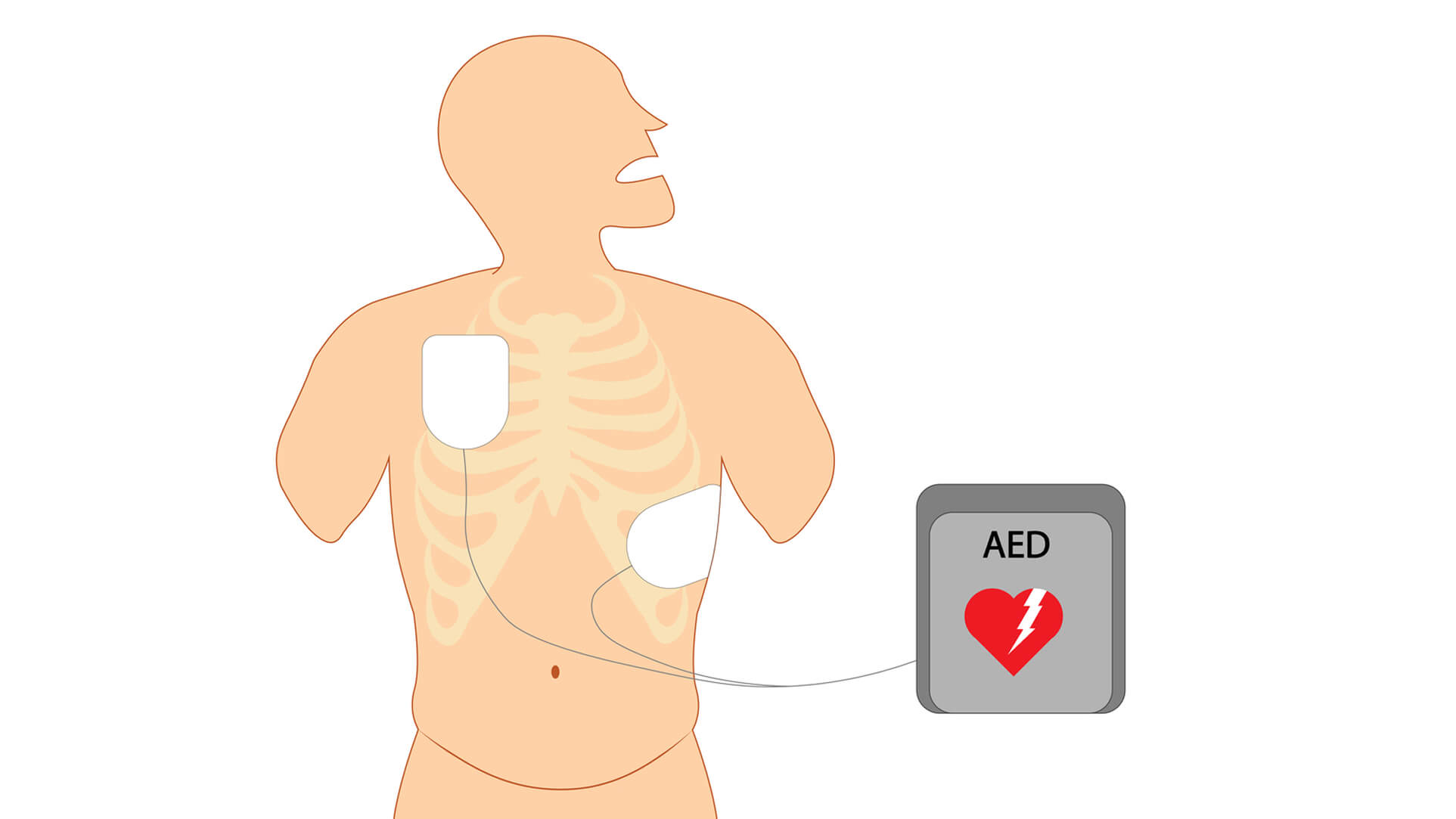
- Place the AED pads, power on the device, and follow its prompts. The machine will check the heart rhythm. It will give a shock if it detects a treatable problem, like ventricular fibrillation or pulseless ventricular tachycardia.
Each minute without aid can reduce a cardiac arrest victim’s survival chances by up to 10%. Acting quickly and using the nearest AED can mean the difference between life and death.
2026 Survival Rate Sources Used in This Update
This page was refreshed with the most current survival-rate sources available in 2026. The primary dataset is the CARES 2025 Non-Traumatic National Survival Report, which reports 140,144 EMS-treated non-traumatic out-of-hospital cardiac arrests. We also referenced the American Heart Association’s 2026 Heart Disease and Stroke Statistics resource for current cardiovascular statistics context.
For organizations, the practical takeaway is simple: survival improves when a collapse is recognized quickly, 911 is called, CPR begins immediately, and a working AED is applied before EMS arrival. AED Total Solution helps organizations close the gap between owning a device and having a device that is visible, inspected, supplied, registered, and ready to use.
FAQs
What is the AED survival rate?
The AED survival rate tells us how many people survive sudden cardiac arrest after an automated external defibrillator is applied or used. In the 2025 CARES national report, bystander AED use was associated with 15.5% survival to discharge overall. Outside nursing homes and healthcare facilities, bystander AED use was associated with 32.9% survival to discharge.
Why is early defibrillation important?
Every minute without defibrillation reduces a person’s chance of survival by up to 10%. Using an AED as soon as possible can restore the heart’s normal rhythm and improve outcomes.
Can CPR alone save a life without an AED?
CPR can help save a life by keeping blood and oxygen flowing to the brain and organs, but it cannot correct a shockable heart rhythm. In the 2025 CARES data, survival to discharge was 11.4% with bystander CPR and 7.6% without bystander CPR. An AED adds rhythm analysis and, when needed, a shock that can restore a life-sustaining rhythm.
Who can use an AED?
Anyone can use an AED. These devices are for public use. They give clear voice instructions to safely guide users through each step.
Where are AEDs usually located?
You can often find AEDs in airports, gyms, schools, offices, and shopping centers. Many communities also have registered AED locations accessible through 911 dispatchers.
Why should I learn CPR and AED use?
Learning CPR and how to use an AED gives you the confidence to act in an emergency. Quick action from a trained bystander can be the difference between life and death.
What to Do Immediately After a Shock is Delivered
Once the AED delivers its shock, the next step is just as important: immediately resume chest compressions. It’s a common misconception to stop and check for a pulse, but this wastes precious time. The shock’s job is to reset the heart’s chaotic electrical activity, but the heart muscle often needs help to start pumping blood effectively again. By continuing CPR, you manually keep oxygenated blood flowing to the brain and vital organs, which is crucial for recovery. Research confirms that you should start CPR again right away after a shock. Continue compressions for two minutes, or until the AED tells you to stop, before it re-analyzes the heart rhythm. This seamless transition from shock to CPR is a key part of what makes the AED survival rate so much higher than with CPR alone.
Be Prepared to Save a Life
In a cardiac emergency, every second truly matters. CPR keeps the heart and brain alive, but only an AED can restore a normal rhythm. The difference between survival and loss often depends on how fast someone acts. Knowing CPR, finding the nearest AED, and having the confidence to use it can make anyone a lifesaver. Preparedness isn’t just a skill, it’s a responsibility that can save the people we care about most.
Key Takeaways
- CPR buys time, but an AED saves the life: While immediate chest compressions are crucial for maintaining blood flow, they cannot correct a fatal heart rhythm. Only an AED can deliver the shock needed to restart the heart and dramatically increase survival chances.
- Every minute without a shock cuts survival by 10%: The window for effective intervention is incredibly small. If an AED is used within the first three minutes, survival rates can be as high as 74%, making immediate access and use the most critical factors in an emergency.
- Having an AED isn’t enough,it must be ready to use: A successful outcome depends on a device that is properly maintained, accessible, and part of a clear emergency plan. This removes bystander hesitation and ensures your team can act confidently when seconds count.
Not sure which AED or program fits your facility?
An AED Total Solution program expert walks you through it — no obligation.
Talk to a program expert →Related Articles