By Prabakar Mahalingam, Managing Partner at AED Total Solution. Prabakar is a renowned national provider of safety training, products, and proprietary compliance software dedicated to addressing Sudden Cardiac Arrest (SCA).
An AED machine (Automated External Defibrillator) is a portable, life-saving medical device that analyzes a person’s heart rhythm and delivers an electrical shock to restore a normal heartbeat during sudden cardiac arrest. AED machines are designed for use by anyone, with or without medical training, and can be found in workplaces, schools, airports, gyms, and public spaces across the United States. According to the American Heart Association, using an AED within the first few minutes of cardiac arrest can increase survival rates from less than 10% to over 70%.
How Does an AED Machine Work?
An AED machine works by detecting dangerous heart rhythms and delivering a controlled electrical shock to reset the heart’s electrical activity. Here is a step-by-step breakdown of what happens inside the device:
Step 1: Heart Rhythm Analysis
When you place the electrode pads on a patient’s bare chest, the AED machine’s built-in sensors detect the heart’s electrical signals. The device’s microprocessor analyzes the rhythm in seconds, distinguishing between shockable rhythms (ventricular fibrillation and pulseless ventricular tachycardia) and non-shockable rhythms.
Step 2: Shock Decision
The AED machine’s algorithm determines whether a shock is needed. If the heart is in a shockable rhythm, the device charges its capacitor and either delivers the shock automatically (fully automatic models) or prompts the user to press a button (semi-automatic models). If no shock is needed, the AED will instruct the user to continue CPR.
Step 3: Defibrillation
The electrical shock travels through the electrode pads and across the heart, temporarily stopping all electrical activity. This gives the heart’s natural pacemaker cells a chance to reestablish a normal rhythm. Modern AED machines deliver biphasic waveform shocks, which are more effective at lower energy levels and cause less tissue damage than older monophasic technology.
Step 4: Post-Shock Monitoring
After delivering a shock, the AED machine continues to monitor the patient’s heart rhythm. It will advise whether additional shocks are needed or whether to continue CPR until emergency medical services arrive.
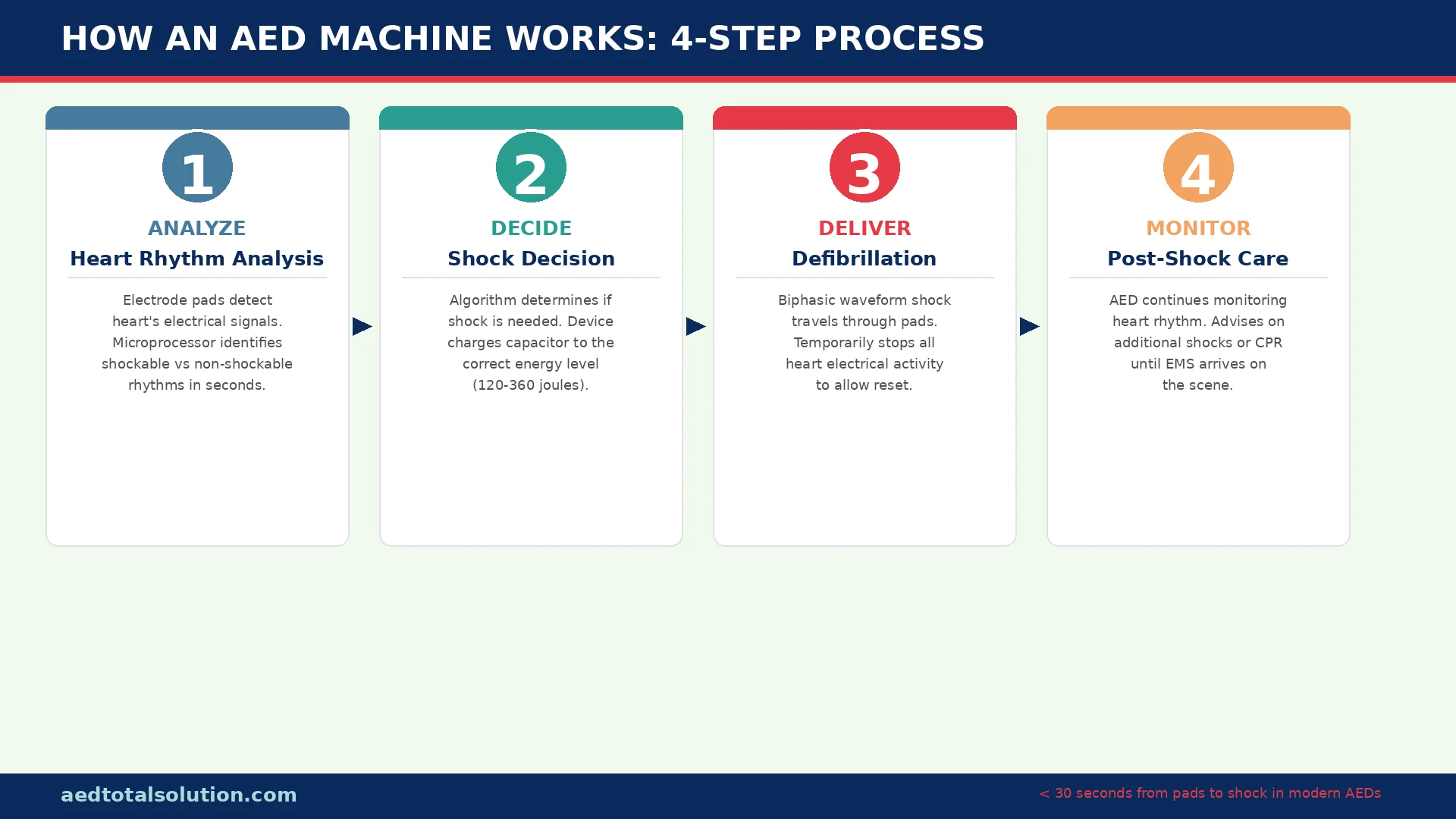
Key fact: The entire analysis-to-shock process takes less than 30 seconds in most modern AED machines, according to FDA guidelines on automated external defibrillators.
Key Components Inside an AED Machine
Understanding what makes up an AED machine helps you make informed decisions when purchasing or managing these devices for your organization.
Microprocessor and Algorithm
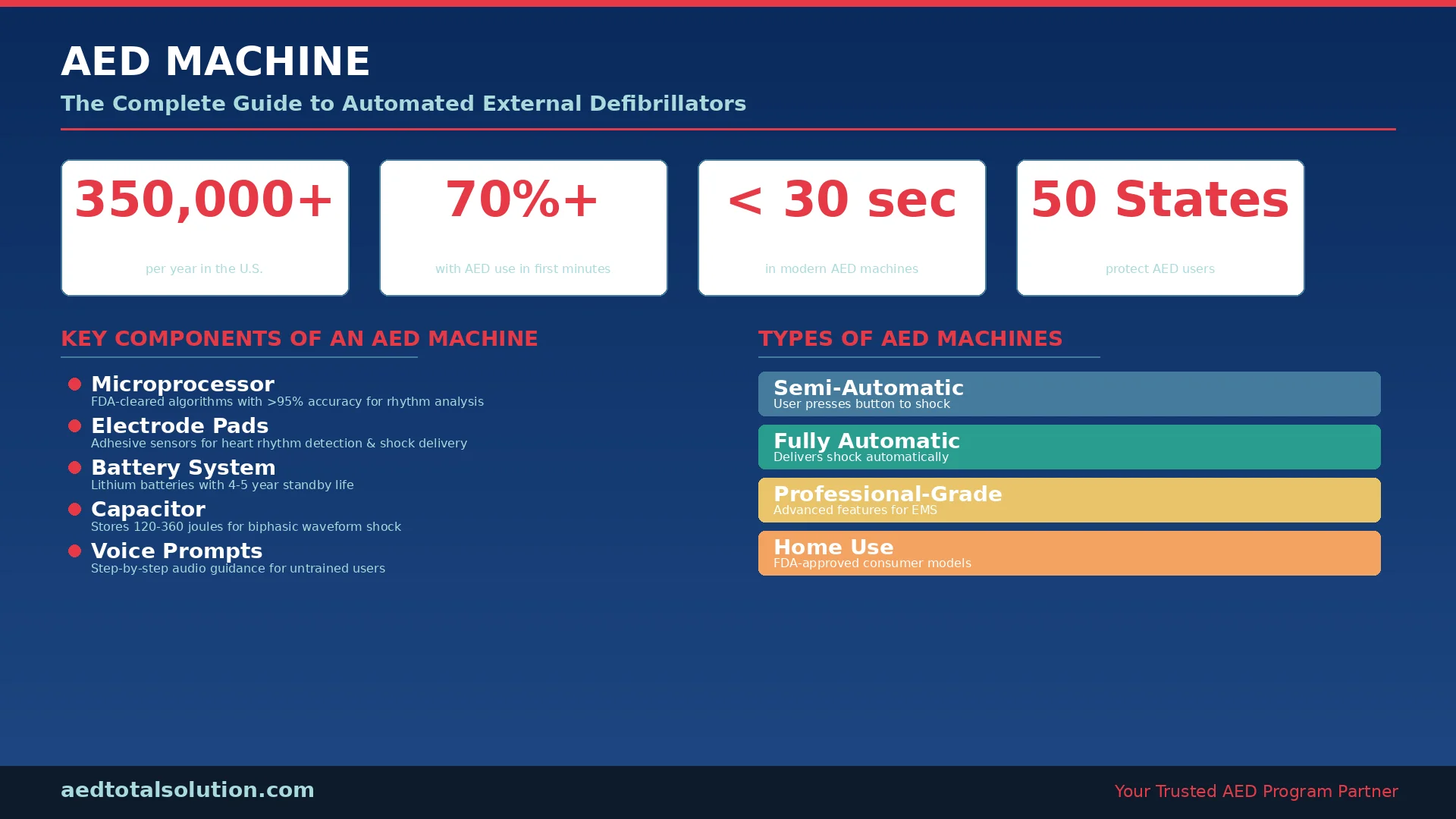
The brain of every AED machine is its microprocessor, which runs proprietary heart rhythm analysis algorithms. These algorithms have been refined over decades of clinical data and are FDA-cleared to accurately distinguish shockable from non-shockable rhythms. The sensitivity and specificity of modern AED algorithms exceed 95%.
Electrode Pads
AED electrode pads are adhesive patches that attach to the patient’s chest. They serve two purposes: sensing the heart’s electrical activity and delivering the defibrillation shock. Most AED machines use pre-connected pads to speed up deployment. Pads have expiration dates and must be replaced regularly as part of your AED compliance requirements.
Battery
AED batteries power both the analysis circuitry and the high-voltage shock delivery system. Battery life varies by manufacturer. Lithium manganese dioxide batteries are common in devices from Philips and ZOLL, offering shelf lives of 4 to 5 years in standby mode. Regular battery checks are essential to ensure your AED machine is always ready.
Capacitor
The capacitor stores the electrical energy that gets released during defibrillation. When the AED machine determines a shock is needed, the capacitor charges to the appropriate energy level (typically 120 to 360 joules, depending on the manufacturer and waveform type).
Voice and Visual Prompts
Every AED machine includes voice prompts, LED indicators, or screen displays that guide the user through each step. These prompts are designed for people with no medical training, using clear instructions such as “Apply pads to patient’s bare chest” and “Press the orange button to deliver shock.”
Types of AED Machines
Not all AED machines are the same. Choosing the right type depends on who will use it, where it will be deployed, and your organization’s compliance requirements.
Semi-Automatic AED Machines
Semi-automatic AED machines analyze the heart rhythm automatically but require the user to press a button to deliver the shock. This design gives the operator a moment of control before the shock is administered. Semi-automatic models are the most common type found in workplaces, schools, and public spaces.
Best for: Organizations with staff who receive periodic AED training.
Fully Automatic AED Machines
Fully automatic AED machines handle the entire process without user intervention once the pads are placed. The device analyzes the rhythm and delivers the shock on its own, removing any hesitation from the equation. These are ideal for settings where untrained bystanders may need to use the device.
Best for: High-traffic public areas, airports, malls, and locations where untrained bystanders are most likely first responders.
Professional-Grade AED Machines
Professional-grade AED machines offer advanced features such as manual override, ECG display, multi-lead monitoring, and configurable energy levels. Emergency medical technicians and healthcare professionals use these devices in clinical and pre-hospital settings.
Best for: Medical clinics, ambulance services, and healthcare facilities.
Home AED Machines
Home AED machines are simplified, consumer-friendly devices designed for personal use. They are FDA-approved for over-the-counter sale and come with minimal setup requirements. Individuals at higher risk of cardiac events may keep these devices at home on the recommendation of their physician.
Best for: Individuals with a history of heart conditions or families who want added protection.
Top AED Machine Brands and Models
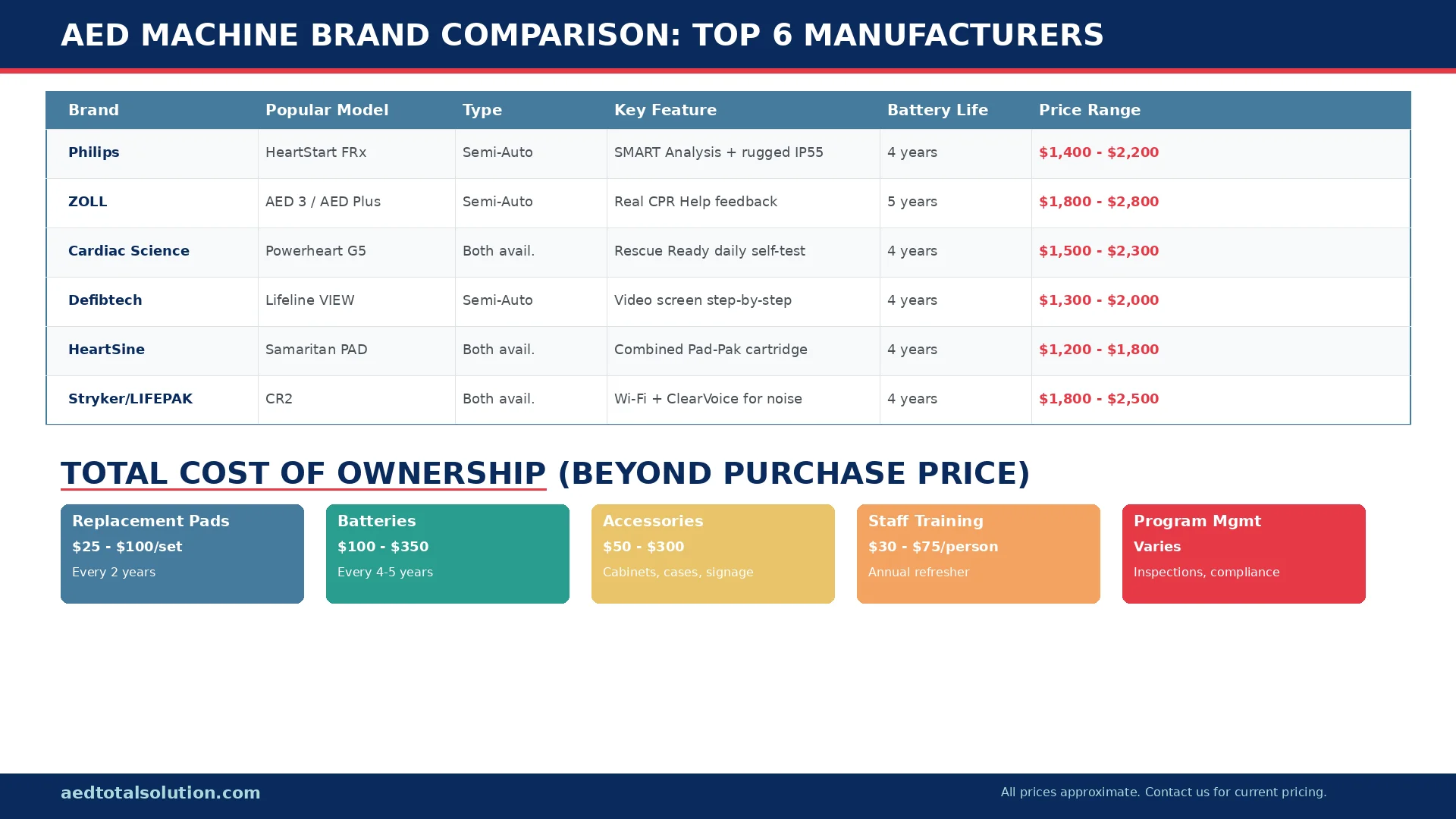
Selecting the right AED machine brand matters for reliability, support, and long-term cost of ownership. Here are the leading manufacturers whose products are available through AED Total Solution’s shop:
Philips HeartStart
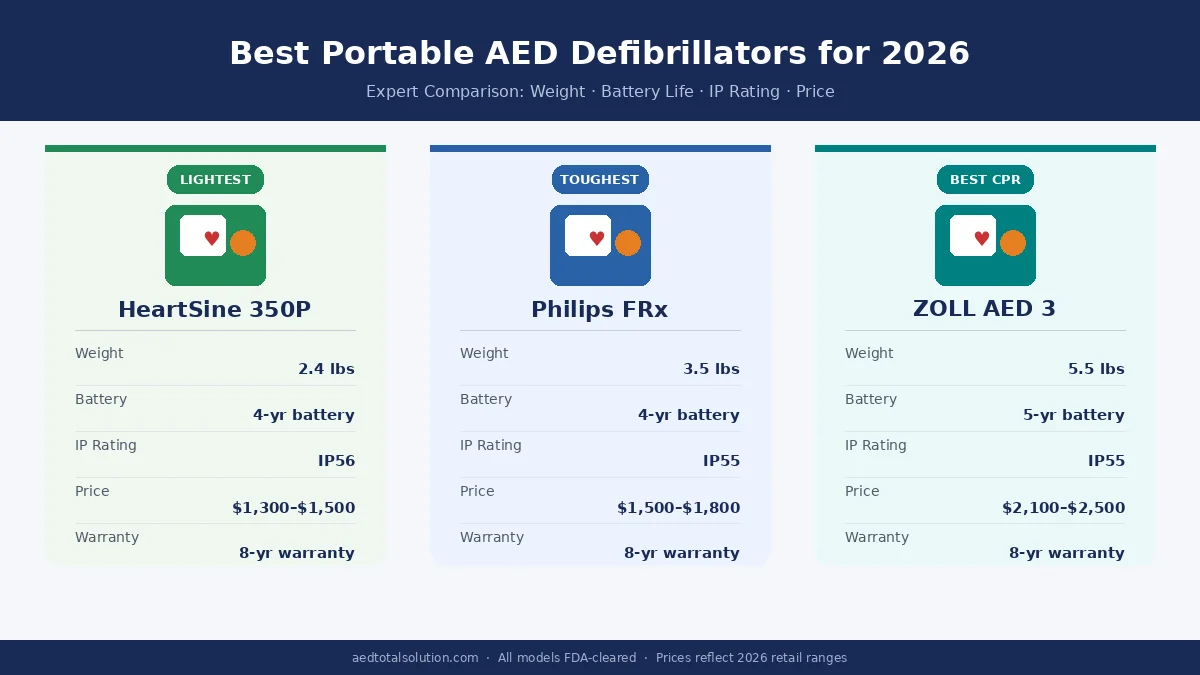
Philips offers some of the most widely deployed AED machines globally. The HeartStart FRx is built for rugged environments, while the HeartStart OnSite is designed for ease of use in offices and schools. Philips AEDs use SMART Analysis technology and pre-connected SMART Pads. Browse Philips AED machines.
ZOLL AED
ZOLL AED machines are distinguished by Real CPR Help, a feature that provides real-time feedback on CPR compression depth and rate. The ZOLL AED 3 and AED Plus are popular in workplaces where integrated CPR coaching adds value. Browse ZOLL AED machines.
Cardiac Science Powerheart
Cardiac Science’s Powerheart G5 features Rescue Ready technology, which runs daily self-tests on the battery, pads, and internal circuitry. The G5 is available in both semi-automatic and fully automatic configurations. Browse Cardiac Science AED machines.
Defibtech Lifeline
Defibtech AED machines are known for their intuitive design and video screen guidance. The Lifeline VIEW provides step-by-step video instructions, making it one of the most user-friendly AED machines on the market. Browse Defibtech AED machines.
HeartSine Samaritan PAD
HeartSine’s Samaritan PAD series combines lightweight, compact design with IP56 dust and water resistance. The PAD 360P is fully automatic, while the 350P is semi-automatic. HeartSine uses a unique Pad-Pak system that combines battery and pads in a single replaceable cartridge. Browse HeartSine AED machines.
Stryker/Physio-Control LIFEPAK
LIFEPAK AED machines are widely used by professional first responders and are also available for public access. The LIFEPAK CR2 features ClearVoice technology for noisy environments and Wi-Fi connectivity for remote management. Browse LIFEPAK AED machines.
How to Choose the Right AED Machine for Your Organization
Purchasing an AED machine is not just about picking a brand. You need to consider your environment, compliance obligations, and total cost of ownership.
Consider Your Environment
An AED machine for a construction site has different requirements than one for a corporate office. Outdoor and industrial settings need rugged devices with higher IP ratings (dust and water resistance). Office and school environments can use standard models with intuitive interfaces.
Evaluate Total Cost of Ownership
The purchase price of an AED machine is only the beginning. Factor in:
- Replacement pads (every 2 years, $25 to $100 per set)
- Replacement batteries (every 4 to 5 years, $100 to $350)
- Accessories (wall cabinets, carrying cases, signage: $50 to $300)
- Training for staff ($30 to $75 per person)
- Program management (ongoing compliance oversight)
For a detailed cost breakdown, read our complete AED pricing guide.
Check Compliance Requirements
Many states require AED machines in certain settings such as schools, fitness centers, and government buildings. Requirements vary significantly by state. Review the specific regulations for your location in our AED requirements by state guide. At the federal level, OSHA provides guidance on AED programs in the workplace, and the FDA regulates AED device approval.
Plan for Ongoing Management
Buying an AED machine without a management plan is like purchasing a fire extinguisher and never inspecting it. AED machines require regular inspections, pad and battery replacement tracking, registration with local EMS, and documentation for compliance audits. This is where AED Total Solution’s managed program services eliminate the guesswork and keep your devices truly response-ready.
AED Machine Requirements for Businesses and Public Spaces
Understanding when and where AED machines are required helps organizations stay compliant and protect the people in their facilities.
Federal Guidance
While there is no blanket federal law requiring AED machines in all workplaces, OSHA strongly recommends them as part of a comprehensive workplace safety program. Federal buildings, airports, and certain government facilities are required to have AED machines on-site.
State Laws
State AED requirements vary widely. As of 2026:
- California requires AEDs in certain health studios and fitness facilities
- New York mandates AEDs in schools, public buildings, and many commercial establishments
- Pennsylvania requires AEDs in schools and certain public spaces
- Florida requires AEDs in all public high schools
Organizations operating across multiple states face the challenge of tracking different requirements for each location. A comprehensive compliance checklist helps ensure nothing falls through the cracks.
Good Samaritan Protection
Every U.S. state has some form of Good Samaritan law that protects individuals who use an AED machine in good faith during an emergency. The Federal Cardiac Arrest Survival Act further extends these protections. This means anyone can use an AED machine without fear of legal liability, even without formal training.
AED Machine Maintenance: What You Need to Know
An AED machine is only useful if it works when you need it. Regular maintenance is not optional; it is a compliance requirement and a life-safety obligation.
Monthly Inspections
Check the AED machine’s status indicator light or readiness display. Verify that the device is in its designated location, undamaged, and showing a “ready” status. Document each inspection.
Pad and Battery Tracking
Electrode pads and batteries have expiration dates. Expired pads may not adhere properly or conduct the shock effectively. Expired batteries may not hold enough charge to power the device. Track these dates and replace components before they expire.
Software and Firmware Updates
Some AED machine manufacturers release firmware updates that improve algorithm performance or address safety notices. Stay informed about updates for your specific model.
Self-Test Features
Most modern AED machines run automatic self-tests daily, weekly, and monthly. These tests check battery charge, pad connectivity, and internal circuitry. If a self-test fails, the device will display a warning. Do not ignore self-test failures.
Why Managed Programs Matter
Tracking all of these maintenance requirements across multiple AED machines, especially for organizations with devices at multiple locations, is complex. AED Total Solution’s managed service handles inspection scheduling, automated expiration alerts, replacement tracking, and compliance documentation so you can focus on your core business. If you need AED machines for a short-term event or project, explore our flexible AED rental programs.
Frequently Asked Questions About AED Machines
How much does an AED machine cost?
AED machine prices typically range from $1,200 to $3,000 for public access models. Professional-grade devices can cost $3,000 to $15,000 or more. Beyond the device price, factor in replacement pads ($25 to $100), batteries ($100 to $350), accessories, and ongoing program management costs. Read our complete AED cost guide for detailed pricing.
Can anyone use an AED machine?
Yes. AED machines are designed for use by anyone, including people with no medical training. Voice prompts and visual instructions guide the user through each step. All 50 U.S. states have Good Samaritan laws that protect bystanders who use an AED in good faith during a cardiac emergency.
Do AED machines expire?
AED machines themselves do not have a fixed expiration date, but critical components do. Electrode pads typically expire every 2 years, and batteries last 4 to 5 years in standby mode. The device’s overall service life depends on the manufacturer, typically 8 to 12 years. Regular maintenance ensures components are replaced before they expire.
Are AED machines required in the workplace?
Requirements vary by state. While OSHA does not mandate AED machines in all workplaces, many states require them in specific settings such as schools, fitness centers, government buildings, and high-occupancy facilities. Check our state-by-state AED requirements guide for specific regulations.
What is the difference between a semi-automatic and fully automatic AED machine?
A semi-automatic AED machine analyzes the heart rhythm and advises a shock, but requires the user to press a button to deliver it. A fully automatic AED machine delivers the shock on its own after a countdown, with no button press required. Both types are equally effective; the choice depends on your organization’s preference and the expected training level of potential users.
Take Control of Your AED Program
An AED machine is more than a device on a wall. It is the centerpiece of your organization’s emergency cardiac response capability. Choosing the right AED machine, maintaining it properly, and staying compliant with regulations are all critical to ensuring it works when seconds matter most.
AED Total Solution provides full-service AED program management, from device selection and purchasing to compliance monitoring, inspections, and managed services. Whether you need one AED machine or hundreds across multiple locations, our white-glove approach ensures your program is always audit-ready and response-ready.
Ready to strengthen your AED program? Contact AED Total Solution at 855.888.2771 ext. 514 or request a quote online to get started.