Failing to comply with AED laws isn’t just a paperwork oversight; it’s a significant legal and financial risk. If a sudden cardiac arrest occurs on your property and you were legally required to have a working AED, the consequences can be severe. This goes beyond fines and penalties—it opens your organization to potential negligence lawsuits and can even void the Good Samaritan protections that are designed to shield you from liability. This raises a critical question for any responsible leader: what businesses are required to have an AED, and what are the real-world consequences of getting it wrong? Below, we’ll break down the legal landscape and explain how to protect your people and your organization.
Key Takeaways
- Prioritize Local and State Regulations: Since there is no federal mandate for AEDs, your legal requirements are determined by state and local laws. It’s essential to research the specific obligations for your business location and industry to ensure compliance.
- Go Beyond Purchase with Active Management: A compliant program requires more than just owning a device. It involves consistent inspections, tracking supply expiration dates, and maintaining clear records to ensure your AED is always response-ready.
- Connect Good Maintenance to Legal Protection: Most Good Samaritan laws, which shield you from liability, require that your AED is properly maintained. A neglected program not only fails in an emergency but also exposes your organization to significant legal and financial risk.
What Is an AED and Why Does Your Business Need One?
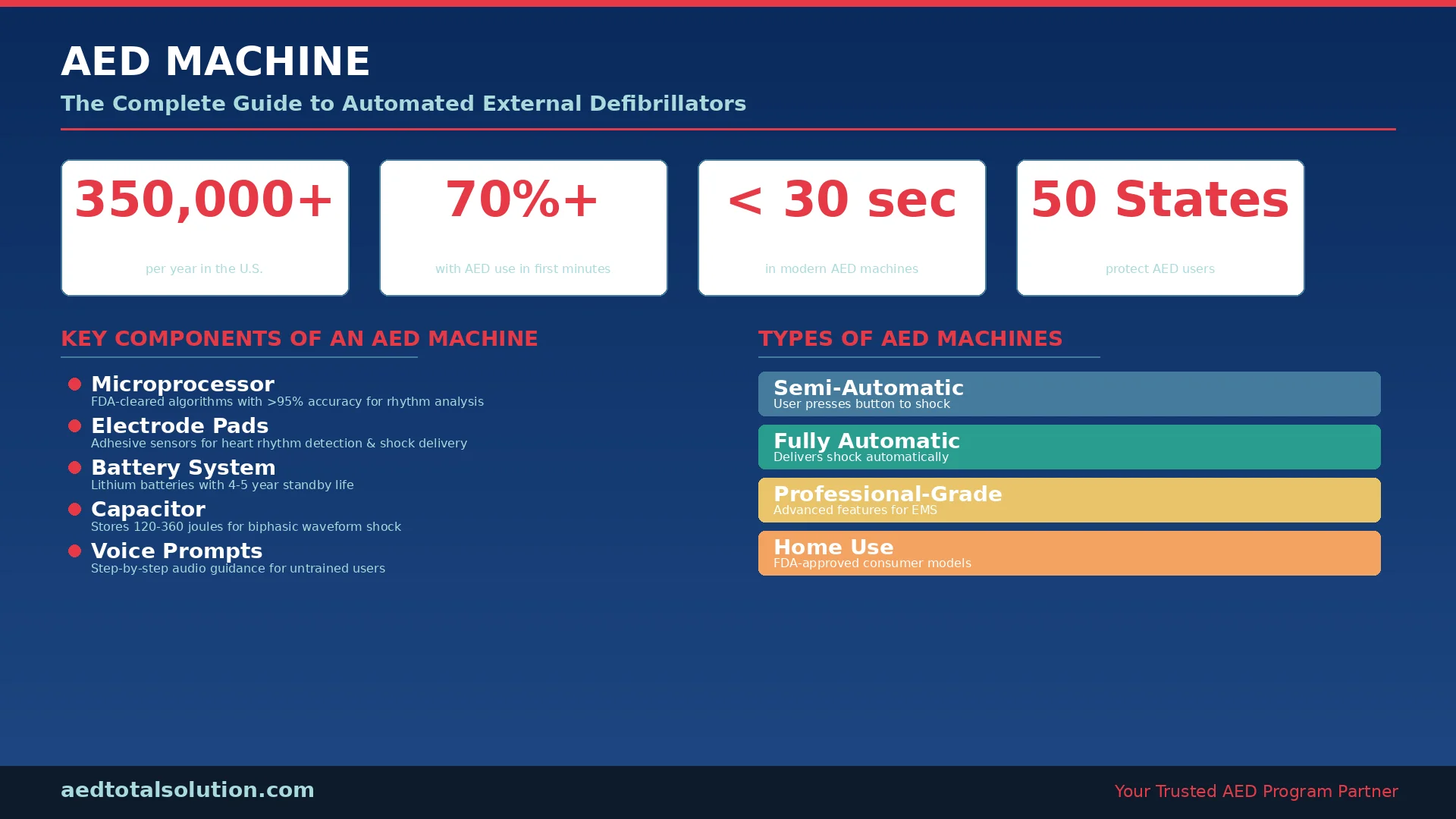
An Automated External Defibrillator, or AED, is a portable medical device that can save a life during sudden cardiac arrest (SCA). When someone experiences SCA, their heart suddenly stops beating effectively, and blood flow to the brain and other vital organs ceases. An AED analyzes the heart’s rhythm and, if necessary, delivers an electrical shock to help restore a normal heartbeat.
Having an AED on-site is a critical part of any workplace safety plan. It provides a way to respond quickly to cardiac emergencies, protecting not just your employees but also any clients, vendors, or visitors on your premises. Sudden cardiac arrest can happen to anyone, regardless of age or health history. By equipping your facility with an AED, you create a safer environment and empower your team to act decisively in a crisis, bridging the crucial gap between the onset of an emergency and the arrival of professional medical help. It’s a small investment that can make an enormous difference when seconds count.
How an AED Works During a Cardiac Emergency
If the thought of using a medical device sounds intimidating, you can rest easy. Modern AEDs are specifically designed for people with no medical training. Most devices come with clear, simple instructions and use voice prompts to walk you through every step of the process. Once you turn the AED on and apply the electrode pads to the person’s chest, the machine takes over.
The device automatically analyzes the heart’s rhythm to determine if a shock is needed. It will only advise and deliver a shock if it detects a life-threatening arrhythmia; you cannot accidentally shock someone who doesn’t need it. This built-in safety feature removes the guesswork and allows anyone to use the device effectively during a high-stress emergency.
Why a Fast Response Matters
When someone suffers a sudden cardiac arrest, every minute without treatment drastically reduces their chance of survival. According to the CDC, using CPR and an AED quickly can greatly increase survival rates for out-of-hospital cardiac arrest. In fact, the odds of survival decrease by about 10% for every minute that passes without defibrillation.
Emergency medical services do an incredible job, but it takes time for them to arrive. By the time they get to your location, it may be too late. Having an AED accessible within your business means that a coworker or bystander can provide immediate, life-saving intervention. This rapid response is often the single most important factor in determining the outcome of a cardiac emergency.
Are Businesses Federally Required to Have an AED?
This is one of the most common questions we hear, and the short answer is no—there isn’t a single federal law that requires every business in the U.S. to have an automated external defibrillator (AED). But the full story is a bit more complex. While you won’t find a universal mandate from the federal government, the responsibility for AED legislation falls to state, county, and city governments.
This creates a patchwork of different rules across the country. A business in one state might have different legal obligations than the exact same type of business in another. That’s why understanding your specific local requirements is so important. Just because there isn’t a sweeping federal law doesn’t mean your business is off the hook. Many specific industries and types of facilities are required to have AEDs by local or state law, and it’s your job to know which rules apply to you. This variability is a major reason why organizations need a clear and consistent approach to compliance, ensuring every location meets its unique legal standards while upholding a high standard of care for employees and visitors.
What OSHA Recommends for AEDs
Many people look to the Occupational Safety and Health Administration (OSHA) for guidance on workplace safety, and for good reason. However, OSHA does not have a specific standard that requires employers to have AEDs. Instead, their regulations focus more broadly on ensuring access to first aid supplies and trained personnel.
While they don’t mandate AEDs, OSHA does recommend them as part of a comprehensive workplace first aid and CPR program. They recognize that an AED is a critical tool for responding to sudden cardiac arrest. Think of it this way: OSHA sets the baseline for a safe workplace, and having an AED is a best practice that helps you meet and exceed that standard, protecting your team and your customers.
Why There Isn’t a Universal Federal Law
The reason there’s no one-size-fits-all federal law is that public health and safety regulations are often managed at the state and local levels. This allows communities to create laws that fit their specific needs. For example, a state with a large number of remote worksites might have different rules than a densely populated urban state.
This approach means that business owners, especially those with multiple locations, have to stay on top of a variety of regulations. The rules for a gym in California might be completely different from the rules for one in Florida. This is where having a clear system for AED program management becomes essential. It helps you cut through the confusion and ensure every one of your locations is compliant with its local laws.
Which States and Cities Require AEDs in Businesses?
Since there isn’t a single federal law mandating AEDs for all businesses, the rules are a patchwork of state, county, and city regulations. This can get complicated fast, especially if your organization has multiple locations. One state might require an AED in your building, while another might not. Then, a city ordinance could add another layer of requirements that you have to follow. It’s a lot to keep track of.
Generally, these laws target places where the risk of sudden cardiac arrest (SCA) is higher or where large groups of people gather. Think about places like schools, gyms, and government buildings. Lawmakers recognize that having an AED nearby in these high-traffic, high-risk environments can dramatically improve survival rates. Understanding this complex legal landscape is the first step, but staying on top of it is a continuous challenge. That’s where having a clear compliance strategy becomes essential for protecting your people and your organization.
AED Laws for Schools by State
Schools are one of the most common places where AEDs are required by law. With so many students, staff, and visitors on campus for classes, sporting events, and other activities, the potential for a cardiac emergency is always present. According to the CDC, at least 25 states have specific laws about placing AEDs in schools. These regulations often specify where the devices must be located—such as near a gymnasium or in a central office—to ensure they can be accessed quickly. The goal is to make sure that if an emergency happens, a life-saving device is just moments away.
Rules for Gyms and Fitness Centers
Gyms and health clubs are another key focus for AED legislation. Because strenuous physical activity can increase the risk of SCA, many states have passed laws requiring fitness centers to have AEDs available for their members and staff. These laws acknowledge that someone experiencing a cardiac event during a workout needs an immediate response. Simply having the device isn’t always enough; these regulations often go hand-in-hand with requirements for staff training, ensuring someone on-site knows how to use the AED and perform CPR until professional help arrives.
Checking Your Local and County Rules
State laws are just the beginning. It’s crucial to remember that your local city or county government can—and often does—have its own set of rules for AEDs. For example, a state might not have a specific law for office buildings, but a major city within that state might require them in all buildings over a certain size. These local ordinances can apply to a wide range of places, from shopping malls and sports arenas to large residential complexes. Staying compliant means you have to look beyond state statutes and understand the specific AED requirements that apply right where you operate.
Which Businesses Are Legally Required to Have an AED?
While there isn’t a single federal law mandating AEDs for all businesses, many states and cities have stepped in with their own specific requirements. These laws typically focus on places where the risk of sudden cardiac arrest is higher or where large groups of people gather. If your organization falls into one of these categories, having a compliant AED program isn’t just a good idea—it’s the law.
Understanding these regulations is the first step toward protecting your employees, customers, and your organization from liability. The rules can vary quite a bit from one state to another, so it’s important to know which ones apply to you. Below are some of the most common types of businesses and public places where AEDs are legally required.
Schools and Universities
Educational institutions are one of the most frequently regulated environments for AEDs. In fact, schools are the most common location where AEDs are required by law, with 25 states having specific legislation for them. These laws are designed to protect students, faculty, staff, and visitors during school hours and at sporting events where the risk of a cardiac emergency can increase. The requirements often specify not only that an AED must be present but also where it should be located for quick access and that staff must be trained in its use. Ensuring your campus is compliant is critical for student safety and meeting state mandates.
Gyms and Health Clubs
Given the nature of physical activity, it makes sense that fitness centers are often required to have AEDs. Strenuous exercise can increase the risk of a sudden cardiac arrest, even in people who seem perfectly healthy. States like California, Illinois, and Pennsylvania have laws requiring health clubs to have an AED on-site and accessible to staff and members. These regulations help ensure that if a cardiac emergency happens during a workout, there’s a device nearby that can save a life. If you manage a gym or fitness facility, checking your state’s specific requirements is a non-negotiable part of your safety and compliance plan.
Government Buildings
Public safety in government facilities is a major priority, which is why some federal laws require AEDs in federal buildings. Many state and local governments have followed suit, mandating AEDs in courthouses, DMVs, and other public-facing municipal buildings. These are places with high foot traffic and diverse populations, including older adults who may be at a higher risk for cardiac events. By placing AEDs in these accessible locations, government entities ensure they are prepared to respond to an emergency and protect the citizens they serve. This requirement underscores the importance of readiness in any public space.
Large Public Venues
Anywhere large crowds gather, the odds of a medical emergency increase. That’s why about 40 states have laws dictating where AEDs must be placed, and these often include large public venues. This category is broad and can cover everything from sports stadiums and concert halls to airports, shopping malls, and even public golf courses. The goal is to shorten the time between a person’s collapse and the first shock from an AED, which is the most critical factor in surviving a sudden cardiac arrest. For managers of these venues, having a well-managed AED program is a key part of their emergency response and public safety strategy.
How to Know if Your Business Needs an AED
Deciding whether to get an AED for your business isn’t always straightforward. While some industries have clear legal mandates, many others fall into a gray area. The best approach is to look beyond just the law and consider your specific environment. Think of it as a crucial part of your overall safety plan. By evaluating your workplace risks, the number of people who come through your doors, and your industry’s specific regulations, you can make an informed decision that protects your employees, customers, and your organization. Let’s break down what you need to consider.
Assess Your Workplace Risk
Start by looking at the daily activities in your workplace. Does your team perform physically demanding tasks? High-stress work or exposure to electrical hazards can also increase the risk of a cardiac event. While OSHA’s first aid standards don’t create a blanket AED requirement for all businesses, they do highlight the need for prompt medical attention in high-risk industries like construction, maritime operations, and healthcare. If an emergency responder can’t reach your location within a few minutes, having an AED on-site becomes even more critical. A thorough risk assessment helps you identify potential dangers and prepare for them.
Consider Your Foot Traffic
Next, think about how many people walk through your doors each day. This includes not just your employees but also customers, clients, and other visitors. The more people you have on-site, the greater the chance that someone could experience a sudden cardiac arrest. This is why places like gyms, shopping malls, and large event venues are often required to have AEDs—strenuous activity or large crowds increase the statistical risk. Even if your business isn’t legally required to have one, a high-traffic environment makes an AED a responsible and life-saving investment for your community.
Know Your Industry’s Rules
Finally, you need to understand the specific rules for your industry and location. AED laws can vary widely between states, counties, and even cities. For example, many states have laws requiring AEDs in schools, fitness centers, government buildings, and public golf courses. It’s your responsibility to know which regulations apply to your business. Staying on top of these requirements is essential for compliance and protecting your organization from liability. A comprehensive AED program management service can help you stay current with local laws and ensure your program meets all necessary standards.
Common Myths About AED Requirements
When it comes to AEDs, a lot of misinformation can make it hard to know what’s required for your business. Clearing up these common myths is the first step toward building an effective and compliant emergency response plan that protects your employees and customers. Let’s walk through some of the biggest misconceptions about AED requirements.
Myth: OSHA Requires All Businesses to Have an AED
This is one of the most common misunderstandings. While the Occupational Safety and Health Administration (OSHA) sets the standards for workplace safety, it does not have a specific rule that mandates every business must have an AED. Instead, OSHA’s guidelines state that employers must ensure the ready availability of medical personnel or have adequate first aid supplies on hand. OSHA strongly encourages businesses to include AEDs as part of their first-aid programs, especially if a hospital or clinic is not nearby. So, while it may not be a strict requirement, having an AED is considered a best practice for creating a safe workplace.
Myth: Every Business Needs an AED by Law
There is no single federal law that requires every business to have an AED. Instead, AED legislation is a patchwork of state, county, and local laws, which can be confusing for business owners. For example, many states have specific requirements for places like schools, gyms, and government buildings. Because the rules vary so much by location and industry, it’s crucial to check your local regulations. This is why having a partner to manage your AED program compliance is so helpful—it removes the guesswork and ensures you meet all relevant requirements without having to become a legal expert.
Myth: AEDs Create More Liability
Many leaders worry that having an AED on-site will open them up to lawsuits. In reality, the opposite is often true. Nearly every state has Good Samaritan laws that offer liability protection to organizations that use an AED in good faith during an emergency. These laws are designed to encourage people to help without fear of legal trouble. The greater legal risk often comes from not having an AED when one is required or failing to properly maintain it. A poorly managed program with an expired battery or missing pads creates significant liability. A well-maintained AED program doesn’t just save lives—it reduces your overall risk.
What Happens if You Don’t Comply with AED Laws?
Ignoring AED laws isn’t just a paperwork oversight—it carries significant consequences that can impact your organization’s finances, legal standing, and reputation. While the specific requirements vary by state and industry, the risks of non-compliance are universal. Failing to provide a required AED or, just as critically, failing to properly maintain it, can leave your business exposed. If a sudden cardiac arrest occurs on your property and your AED program isn’t up to code, the fallout can be severe, turning a medical emergency into a legal and financial crisis.
The issue goes beyond simply having a device on the wall. True compliance involves a whole system of readiness: regular inspections, tracking expiration dates for pads and batteries, ensuring proper registration with local emergency services, and documenting every single step. When these duties are neglected, you not only fail to protect the people in your facility but also open the door to legal action, financial penalties, and the loss of important legal protections. Understanding these risks is the first step toward building a responsible and defensible emergency response program that keeps people safe and your organization secure.
Understanding Your Legal Liability
If your business is legally required to have an AED and you don’t, you could be held liable for negligence if someone suffers a cardiac arrest on your premises. The same is true if you have a device, but it fails to work because of poor maintenance, like expired pads or a dead battery. A tragic outcome that could have been prevented can lead to devastating lawsuits. Courts will examine whether you fulfilled your duty of care, and a non-compliant AED program is a clear failure to do so. Proper AED program management is your best defense, ensuring every device is tracked, maintained, and ready to function as expected when it matters most.
The Cost of Fines and Penalties
Beyond the threat of a lawsuit, state and local authorities can impose direct financial penalties for failing to comply with AED regulations. These fines can range from hundreds to thousands of dollars per violation, depending on your jurisdiction. An inspector might find that your device isn’t registered correctly, your pads are expired, or your staff lacks the required training. Each of these issues can trigger a separate fine. While these penalties can add up, they are entirely avoidable. The cost of maintaining a compliant program is minimal compared to the expenses associated with fines and the legal fees that follow a preventable incident.
Risking Your Good Samaritan Protection
Most states have Good Samaritan laws that offer legal protection to organizations and individuals who use an AED in good faith during an emergency. However, this immunity is not guaranteed. It’s often conditional on you meeting all your legal obligations for the AED program. For example, if your state requires you to register your device with local EMS and you fail to do so, you could lose your Good Samaritan protection. This means that if an incident occurs, your organization could be left vulnerable to a lawsuit, even if someone tried their best to help. Maintaining full compliance is the only way to ensure these vital protections remain intact.
Best Practices for AED Compliance
Beyond just having an AED, a truly compliant program ensures your device is always ready to save a life. It’s about creating a system of preparedness that protects both your people and your organization. Following a few core best practices will help you build a program that’s effective, reliable, and reduces your liability. These steps cover everything from selecting the right device to ensuring it’s checked regularly, so you can have confidence that your workplace is prepared for a sudden cardiac arrest emergency.
Choosing and Placing Your AED
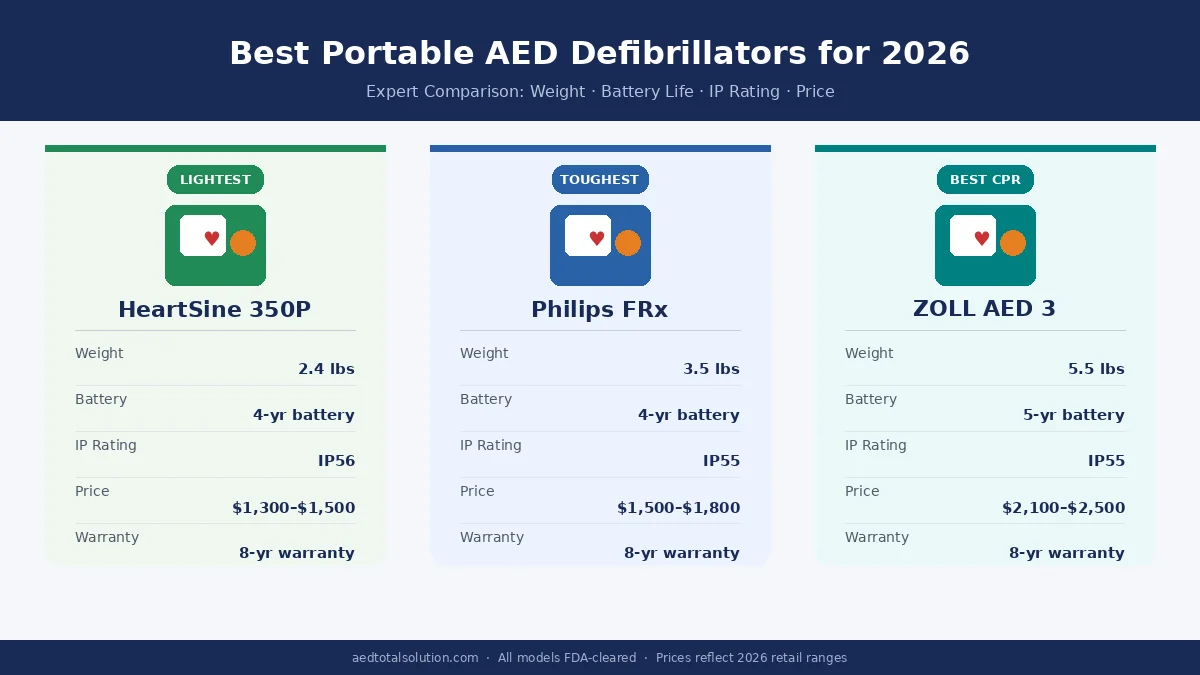
Selecting the right AED is your first step. Modern devices are designed for ease of use, with clear voice prompts to guide a rescuer, but you should also consider features like pediatric capabilities if children frequent your facility. Once you have a device, placement is critical. An AED locked in an office is useless in an emergency. It should be installed in a visible, central, and accessible location, like a lobby or breakroom, with clear signage pointing the way. When you’re ready to shop for an AED, think about where it will live and who will need to access it quickly. The goal is to get the device to the person in need within three minutes.
Training Your Team
An AED is only as effective as the people who are prepared to use it. While anyone can operate an AED by following its instructions, formal training gives your team the confidence to act decisively during a chaotic and stressful event. Designate several staff members to receive CPR and AED certification and encourage practice drills. This ensures someone is always on-site who feels comfortable taking the lead. Many states have Good Samaritan laws that protect businesses from liability, but this protection often hinges on having a well-maintained program that includes trained responders. Investing in training is an investment in readiness.
Setting an Inspection Schedule
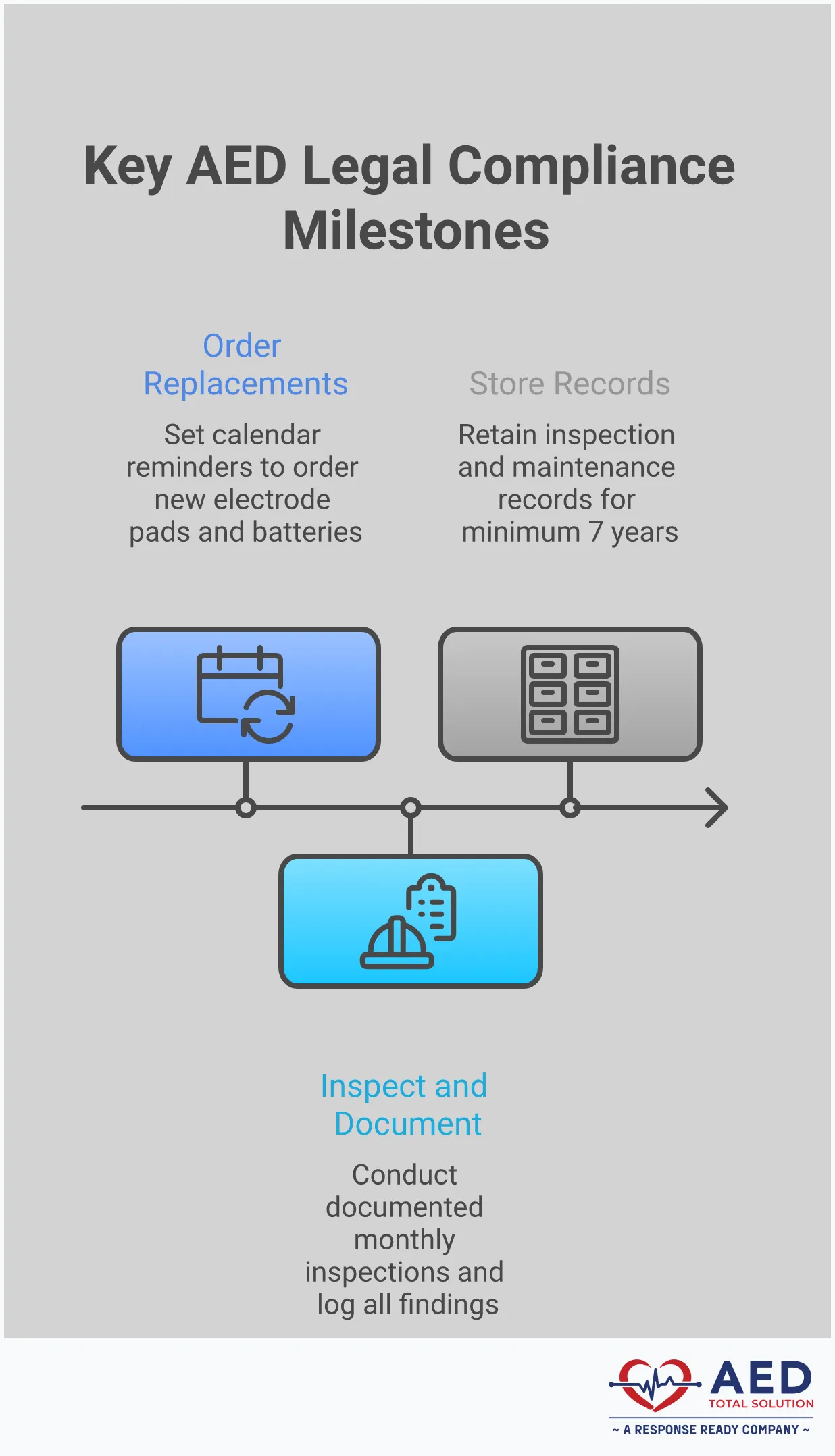
AEDs are not “set it and forget it” equipment. They require routine inspections to ensure they are functional. Your schedule should include monthly checks of the device’s readiness indicator, which confirms the battery and system are working. You also need to track the expiration dates for the electrode pads and batteries, which typically need replacement every two to five years. Documenting every inspection is crucial for maintaining compliance and demonstrating due diligence. This is where professional AED program management can make a huge difference by automating reminders and keeping your records audit-ready, so nothing ever falls through the cracks.
How to Maintain AED Program Compliance
Once you have an AED, the work isn’t over. Simply owning the device isn’t enough to protect your employees, customers, or your organization. A compliant AED program requires ongoing attention to ensure the device is always ready to use when an emergency strikes. This involves keeping detailed records, regularly monitoring the device’s status, and having a clear management plan. Without these pieces, even the best AED can fail when it’s needed most, creating serious risks for your business.
Proper maintenance is not just a best practice; it’s often a legal requirement tied to Good Samaritan laws. These laws often provide liability protection on the condition that the device was properly maintained according to the manufacturer’s guidelines. Neglecting your AED program can not only jeopardize a life but also expose your organization to significant legal and financial consequences. A well-maintained program is your best defense against liability and your best tool for saving a life. Let’s walk through the three core components of keeping your AED program compliant and effective, so you can have confidence that your investment is truly protecting your people.
Keeping Clear Records
Think of your AED program documentation as your compliance safety net. Maintaining clear and accurate records is essential for meeting state and local regulations and is your best defense in the event of an audit or incident. Your records should include everything from routine inspection logs and maintenance reports to the expiration dates for batteries and electrode pads. It’s also wise to document staff training dates and certifications.
This paperwork proves you’re performing the necessary upkeep and exercising due diligence. Should you ever need to use the AED, having these organized records demonstrates that your organization took its responsibility seriously. This is a key part of reducing liability exposure.
Using a Readiness Monitoring System
An AED is a sophisticated medical device that requires regular check-ups to confirm it’s functioning correctly. While most modern AEDs perform automated daily self-tests, they can’t tell you if they’ve been moved, blocked, or if their supplies are about to expire. That’s why a consistent monitoring system is so important. This includes monthly physical inspections to check the device’s status indicator and confirm that supplies like pads and batteries are within their expiration dates.
A readiness monitoring system, whether it’s a simple calendar or a comprehensive software solution, helps you stay on top of these critical tasks. Automated alerts and centralized dashboards make it much easier to manage multiple devices across different locations, ensuring no inspection is ever missed. This proactive approach is the best way to guarantee your AED is ready to respond at a moment’s notice.
The Benefits of Professional Program Management
Managing an AED program involves a lot of moving parts, from tracking state-specific laws to coordinating maintenance and training. For many businesses, handling this in-house can be a significant administrative burden. This is where professional program management comes in. Partnering with an expert removes the guesswork and ensures every detail is handled correctly.
A dedicated program manager handles everything from medical oversight and post-event support to ensuring your device is always compliant with current regulations. This white-glove approach not only saves you time and resources but also gives you confidence that your program is effective and audit-ready. By entrusting your program to specialists, you can focus on your core business, knowing your AED program management is in capable hands.
Create a Compliant AED Program for Your Business
Putting an AED on the wall is a great first step, but building a truly effective and compliant program requires a thoughtful strategy. A well-managed program ensures your device is always ready for an emergency, protects your organization from liability, and gives your team the confidence to act when seconds count. It’s about creating a complete system of readiness, not just owning a piece of equipment.
The goal is to move from simply having an AED to managing a response-ready program. This involves a clear implementation plan, consistent monitoring, and a solid understanding of how to reduce your legal risks. By focusing on these key areas, you can create a program that is both compliant and genuinely prepared to save a life. A comprehensive AED program management service can handle these details, letting you focus on your core operations while ensuring every critical task is covered.
Steps to Implement Your Program
Getting your AED program started on the right foot involves a few key actions. First, you need to research your state’s specific rules for AEDs, as requirements for registration, training, and medical oversight can vary significantly. Next, it’s wise to get expert guidance. This could be from your company’s medical director or an experienced partner who can help you with everything from device placement to developing response protocols. Finally, plan for maintenance from day one. An AED requires regular inspections and timely replacement of batteries and pads. Partnering with a service provider ensures these critical tasks are never missed and your device is always ready.
How to Monitor for Compliance
Once your AED is installed, ongoing monitoring is essential to keep your program compliant and effective. This means conducting routine, documented checks to confirm the device is operational and accessible. It’s also important to stay informed about any changes to state or local AED laws, as these regulations can be updated. Keeping up with these requirements can feel like a full-time job, which is why many organizations use a readiness monitoring system. These systems can automate inspection reminders, track pad and battery expiration dates, and maintain clear records, giving you an audit-ready trail of your compliance efforts.
Reduce Your Liability and Workload
Many business owners worry about the liability of having an AED, but a well-run program actually reduces your risk. All 50 states have Good Samaritan laws that offer legal protection to organizations and individuals who use an AED in good faith during an emergency. The key is to demonstrate you’ve been responsible. Providing your team with proper training is one of the most important steps you can take. It ensures they know how to respond effectively and strengthens your legal standing. By outsourcing the administrative tasks to a program management expert, you can significantly lighten your workload while ensuring every compliance box is checked.
Related Articles
- AED Requirements for Businesses: A Simple Guide
- AED Models for Business: Best Devices for Small Companies
- AED Signage Requirements and Laws to Ensure Legal Compliance
Frequently Asked Questions
My state doesn’t require an AED for my type of business. Should I still get one? Even if the law doesn’t mandate it, having an AED is a critical best practice for workplace safety. Sudden cardiac arrest can happen to anyone, anywhere, including your employees or customers. By having an AED, you demonstrate a commitment to their well-being and significantly reduce your organization’s liability. In the event of an emergency, having a device on-site shows you took reasonable steps to prepare, which is a much stronger position than having done nothing at all.
I bought an AED online. Isn’t that enough to be compliant? Owning an AED is just the first step. True compliance comes from managing a complete program around that device. This includes registering it with local emergency services, performing and documenting regular inspections, tracking the expiration dates of pads and batteries, and ensuring your team is trained. Simply having a box on the wall doesn’t guarantee it will work when needed, and a non-functional device can create more liability than not having one at all.
Can I really get sued if my AED doesn’t work during an emergency? Yes, this is a significant risk. Most states offer Good Samaritan laws that protect businesses from liability, but this protection is often tied to proper maintenance. If an AED fails because of a dead battery or expired pads that you neglected to replace, your organization could be found negligent. The greatest legal risk isn’t from using the AED in good faith; it’s from failing to maintain it so it’s ready to be used.
Do I need to have medically trained staff to use an AED? No, you don’t. Modern AEDs are designed for anyone to use, regardless of their background. The device provides clear, calm voice instructions that walk you through every step, from applying the pads to delivering a shock. It analyzes the heart’s rhythm on its own and will only deliver a shock if one is medically necessary. While formal training is great for building confidence, the device is built to be used by any bystander in an emergency.
I already have an AED, but I’m not sure if it’s compliant. What should I do first? The best first step is to conduct a thorough audit of your device and your records. Check the status indicator on the AED to ensure it’s passing its self-tests. Then, find the expiration dates on the battery and the sealed electrode pad package. Finally, confirm that your device is registered with your local emergency medical services as required by your state. If you’re unsure about any of these steps, a professional program management service can perform an assessment to identify any compliance gaps.