An automated external defibrillator (AED) might look pricey at first. Basic units usually start around $1,400 to $1,600. Advanced models, especially for professionals, can cost over $2,500. Despite the upfront cost, the life-saving capability often makes the investment worthwhile.
Instead of focusing solely on the price of an AED, it is more useful to understand what drives that cost. Tech research and device reliability show how fast costs can increase. An AED is actually a smart investment. Its value and life-saving potential are much greater than they seem at first.
AED Research and Development Costs
A big part of AED costs is due to the large investment in research and development by manufacturers. Philips, known for the HeartStart line, spent over $214 million on R&D in 2022. This investment was for its personal health division. Medtronic, the original creator of the Lifepak series, invested nearly $2.7 billion in 2023. Others spend much more. These budgets show the innovation and safety tests needed for reliable life-saving devices.
Research and development costs a lot because it includes more than just AEDs. It supports all the medical technology a company makes. Creating an AED can cost tens of millions in research. This ensures we meet safety, performance, and regulatory standards before going to market.
- AEDs must be designed with great care. This ensures they meet modern medical standards and keep patients safe. This means avoiding sudden shocks and keeping the electrical current low during emergencies.
- AEDs should go beyond older models. They should add features like wireless connectivity, better biphasic waveforms, and ECG recording. Manufacturers often develop smart proprietary software. This software checks heart rhythms and helps users with each step. It monitors if the device is ready and can switch languages when needed.
- An AED must undergo thorough testing to meet federal safety and performance standards. After that, it goes to the FDA for premarket review. More evaluations happen after submission.
- AEDs are tested to make sure they are safe for use on airplanes. The FAA requires all commercial flights to carry one.
- AEDs are tested in real-life situations. This helps anyone use them quickly and confidently in an emergency, even if they have no training.
- AEDs go through extensive durability tests. They check for impact, vibration, and water resistance. This ensures they operate reliably in tough environments. Many models are reviewed by the International Electrotechnical Commission. This process gives them an official IP rating. The rating confirms how well they are protected.
- Pads and batteries each go through their own tests. They are tested alone and with the AED. Batteries undergo strict evaluation. They need to be reliable for years. They must also offer thermal protection to stop overheating. Plus, they should provide accurate capacity readings. This ensures the device is always ready to use.
Medical devices, like AEDs, face much stricter testing than usual consumer goods. They do this so that every day, people can act quickly and save lives during a sudden cardiac arrest.
AEDs utilize high-voltage components, such as capacitors, which store thousands of volts. Any malfunction can lead to serious risks. If one unit fails and causes a patient’s death, the whole product line can be recalled. This exposes the manufacturer to serious financial losses, which could reach millions or even billions.
Regulatory Costs for AED Manufacturers
The FDA tightly regulates AEDs. This is because they are high-risk medical devices. In 2019, the agency increased enforcement on non-registered defibrillators. Manufacturers had to get premarket approval by February 3, 2020. If they didn’t, they had to stop selling their products. This regulation is important because AEDs depend on ordinary bystanders. These people often have no medical training. They need to give an electrical shock to someone in cardiac arrest. So, safety and compliance are crucial.
Getting FDA premarket approval costs a lot. For medical device companies, it averages about $94 million. The FDA’s user fee alone is close to $235,000, and clinical trials often add tens of millions more. These trials are mandatory. They also help the manufacturer reduce legal risks. An FDA-approved AED has passed rigorous safety tests. It is validated by the top regulatory authority in the country.
Manufacturers count on special regulatory teams to navigate the complex FDA rules. This ensures that every device maintains complete compliance. Without this oversight, companies risk expensive fines, product recalls, or losing FDA approval.
Cost of AED parts
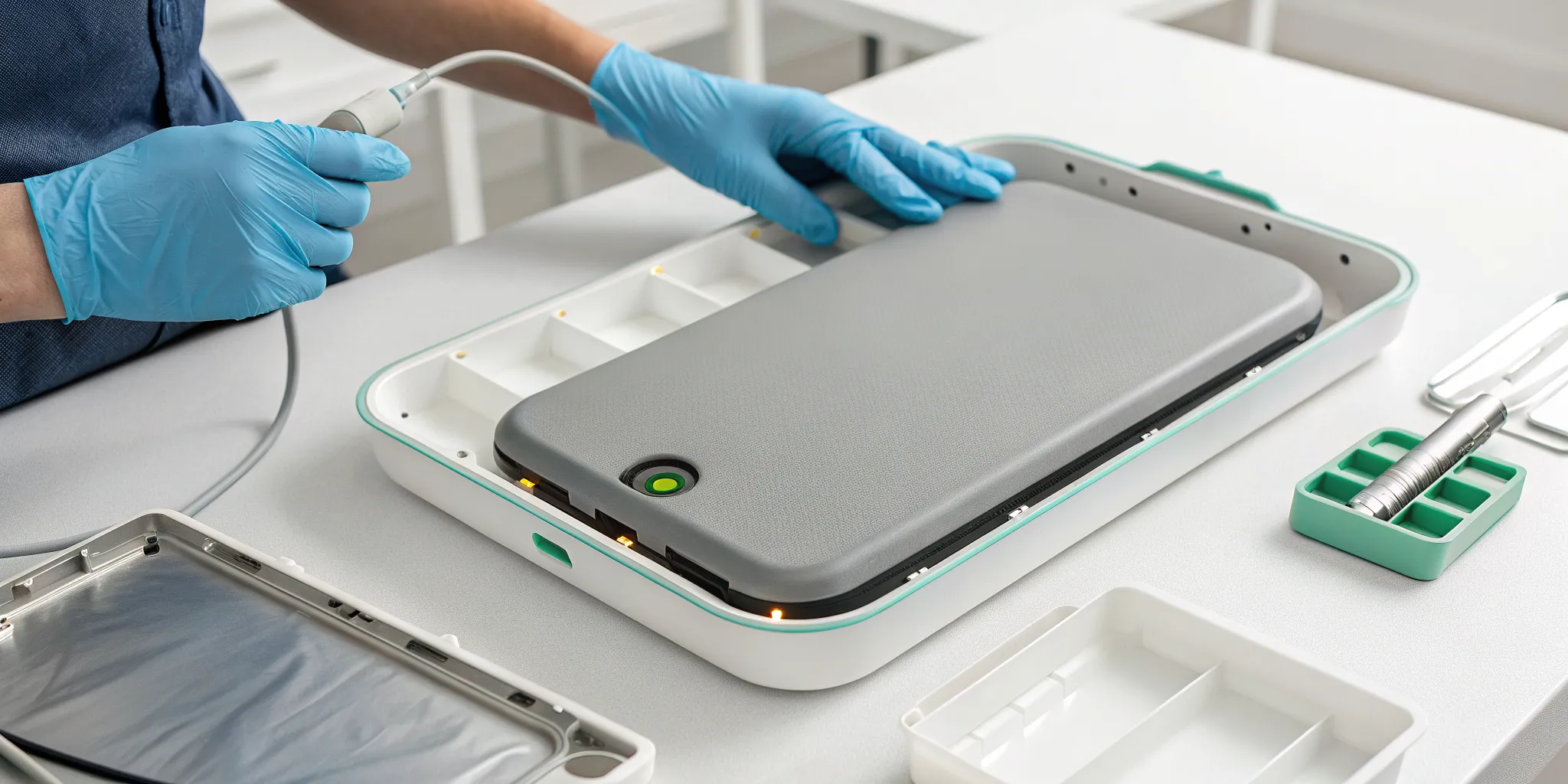
AED components are advanced and specialized. They need top-quality materials and can’t be powered by regular household batteries. Their life-saving role needs careful engineering and strong parts. These parts must work well in important moments.
AED housings are made from strong thermoplastics like Santoprene and ABS. These materials absorb shock, repel water, and shield the device in tough situations.
AED batteries are designed for safety. They provide long-lasting power and have built-in thermal protection. Also, they can communicate with the device. Most batteries use lithium manganese dioxide cells. They last about four to eight years. That’s why replacement batteries usually cost between $180 and $500. This advanced design is a key part of the price of a portable AED.
Defibrillator pads have a special adhesive gel. This gel helps them stick to the skin securely. Because of this, they expire after two to four years. They are designed to provide the precise electrical charge required in a rescue. Due to this design for precision and safety, replacement pads usually cost $60 to $130. This adds to the total cost of owning an AED.
AED software is a big cost factor. It can analyze heart rhythms and guide users step by step. In some cases, it even shows visual prompts during a rescue. Many devices also store ECG data for medical teams to review afterward. This system contains vital information and must function well in emergencies. So, it needs robust and dependable programming.
Important note: To keep an AED working, you must replace the pads and battery before they expire. These parts are crucial for the device to function in an emergency. When buying a portable defibrillator or starting an AED program, maintenance is key. It’s also best to get CPR and AED training. Professional program management services help meet upkeep and state requirements. This gives you confidence that your device is always ready for use.
How MAP Pricing Impacts AED Prices
After a manufacturer finishes development, testing, and regulatory costs, it sets a wholesale price for distributors. Distributors sell the AED at a higher retail price to earn a profit. However, their markup is often limited by the manufacturer’s pricing rules.
Many AED sellers follow small advertised pricing, or MAP. This rule stops big retailers from sharply undercutting smaller distributors. If a manufacturer sets a MAP of $1,400 on an AED that costs the distributor $1,200, the distributor must advertise it at $1,400. They can’t lower the price, even if they could make a profit that way. This system keeps pricing consistent and protects fair competition.
Often, a distributor’s website price isn’t set by them. It’s determined by the manufacturer using MAP guidelines. Some distributors add value by offering bundled AED packages. These packages include accessories, so customers get more for their cost. Buyers who reach out to the seller directly can often get extra discounts or better prices.
The true cost of owning an AED machine.
The initial price of an AED can seem high. When you look at ownership and maintenance costs over the years, the total investment often looks a lot more affordable.
A key analysis showed that owning an AED costs about $200 each year. This estimate spreads the usual $2,000 purchase price over ten years. It shows that owning long-term is often cheaper than people think.
To keep long-term costs down, think about the warranty that comes with your AED. Many models have an eight-year guarantee. This means you can count on them for almost a decade before you need a replacement. The HeartSine 350P costs about $1,410. It comes with an extended warranty, so it’s a smart choice for long-term savings.
Dividing the price of an AED by its lifespan gives a yearly cost of about $176. That’s cheaper than many popular subscription services. For a life-saving device, the cost is surprisingly low. This is perfect for homes with high medical risks or workplaces prone to emergencies. You’ll see this value more clearly when you think about the huge money required for research, development, and getting regulatory approval. These steps are essential to bring a safe, reliable AED to the market.
Next time you wonder if an AED is worth it, think about its long-term savings and life-saving benefits. Knowing you’re ready for an emergency is often worth more than the cost.
FAQs
Why are AEDs so expensive?
AEDs are expensive. They need to do a lot of research, use advanced engineering, and get strict regulatory approval before they can be sold. Manufacturers put a lot of money into technology, safety tests, and FDA rules. This ensures that every device operates reliably in cardiac emergencies. The final retail price shows the hard work that goes into making a safe, life-saving medical tool.
What contributes the most to AED production costs?
A big part of AED costs comes from research and development. This can add up to millions or even billions of dollars for major medical device companies. Manufacturers must also meet strict FDA rules. They must conduct clinical trials. They need to make strong parts, like long-lasting batteries, medical pads, and shockproof casings. Each part must be tested extensively to guarantee safety.
Why does the FDA regulate AEDs so strictly?
The FDA sees AEDs as high-risk medical devices. They let untrained bystanders shock someone in cardiac arrest. Strict premarket approval ensures each model meets top safety and performance standards. This process takes time and money, but it protects patients and manufacturers.
How much does it cost to maintain an AED?
Maintenance is relatively simple but essential. The pads and battery must be replaced before they expire to keep the device ready for use. These items don’t last long, and replacing them adds to the total ownership costs. With proper upkeep, an AED remains reliable for many years.
What does an AED battery cost, and why?
AED batteries usually cost between $180 and $500. They are made for reliability and thermal safety. Plus, they communicate well with the device. They usually work well for four to eight years. This makes them one of the most important and advanced parts of the unit.
Conclusion
Understanding the true cost of an AED goes far beyond the initial price tag. Investing in a reliable life-saving device is smart. Years of research, advanced engineering, and strict FDA oversight back this choice. The high-quality components are also important. An AED costs just a few hundred dollars each year. This small amount offers great protection and peace of mind. An AED is one of the best tools for protecting your home, business, or community in an emergency. In the end, the real question isn’t whether an AED is worth the cost, but whether you can afford to be without one.
Disclaimer for information purposes only:
The information provided on this website is intended for general educational and informational purposes only. It is not medical advice and should not be used as a substitute for professional diagnosis, treatment, or care. Always consult a qualified healthcare or medical professional regarding any health-related questions or concerns.
While we strive to ensure the information shared is accurate and up to date, no guarantees are made regarding completeness, accuracy, or applicability to any individual situation. Use of this content is at the reader’s sole discretion and risk.
This website is part of the Response Ready family of emergency preparedness and training resources, including CPR & first aid training and compliance services, AED sales and program support, AED program management software, and medical oversight solutions provided through our affiliated platforms:
• CPR1.com
• AEDLeader.com
• ResponseReady.com
• MDSIMedical.com
By accessing or using this website, you agree to release, indemnify, and hold harmless the website owners, authors, contributors, and affiliated entities from any claims, losses, damages, or liabilities arising from the use or reliance on the information presented.