Sudden cardiac arrest is one of the leading causes of death in the United States, claiming approximately 356,000 lives outside of hospitals each year, according to the American Heart Association (AHA). Unlike many medical emergencies that develop gradually, sudden cardiac arrest strikes without warning, stopping the heart in seconds and leaving just minutes to act before permanent brain damage or death occurs.
Understanding what this condition means, what causes it, how to recognize it, and how to respond can mean the difference between life and death. This guide covers everything you need to know, from its definition and causes to treatment, prevention, and the critical role that automated external defibrillators (AEDs) play in survival.
Key Takeaway: Sudden cardiac arrest is a life-threatening electrical malfunction that stops the heart without warning. Survival depends on immediate CPR and AED defibrillation within the first few minutes.
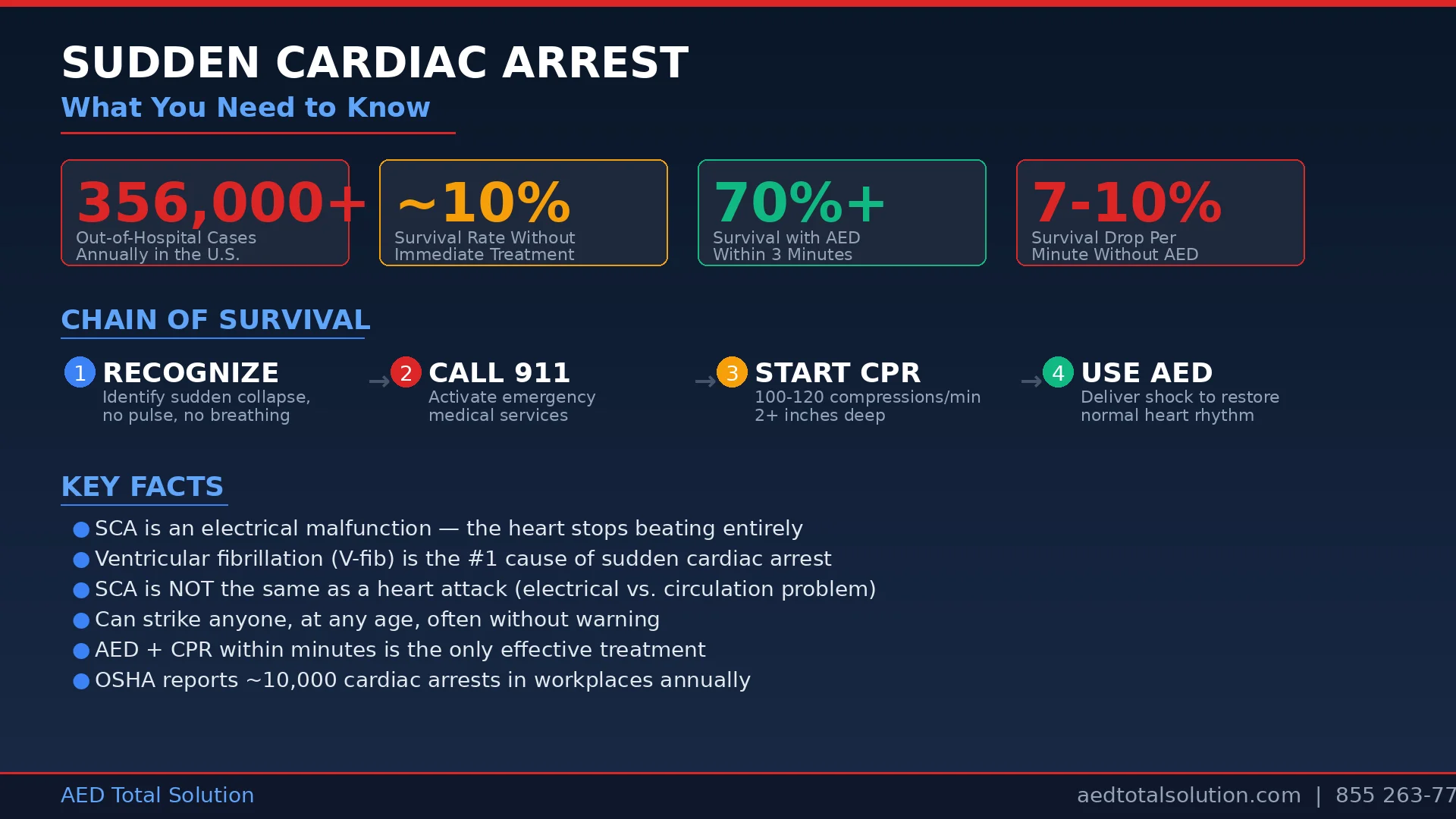
- Sudden cardiac arrest causes over 356,000 out-of-hospital deaths annually in the U.S.
- The survival rate without immediate treatment is approximately 10%
- Using an AED within the first 3 minutes can increase survival rates to over 70%
- Ventricular fibrillation is the most common cause of sudden cardiac arrest
- Sudden cardiac arrest is not the same as a heart attack
What Is Sudden Cardiac Arrest?
Sudden cardiac arrest, often abbreviated SCA, is the sudden and unexpected loss of heart function. The cardiac arrest definition centers on an electrical malfunction: the heart’s electrical system fails, causing the heart to stop pumping blood to the brain, lungs, and other vital organs.
During sudden cardiac arrest, the heart does not simply slow down or weaken. It stops functioning altogether due to a disruption in the electrical signals that coordinate each heartbeat. The person collapses, loses consciousness within seconds, and stops breathing normally.
The cardiac arrest meaning is distinct from other heart conditions. While a heart attack is a circulation problem caused by a blocked artery, sudden cardiac arrest is an electrical problem that halts the heart entirely. A heart attack can lead to cardiac arrest, but they are fundamentally different conditions. For a detailed comparison, read our guide on sudden cardiac arrest vs heart attack.
Without immediate intervention, SCA leads to sudden cardiac death. According to the AHA, approximately 90% of people who experience out-of-hospital cardiac arrest do not survive, largely because treatment does not reach them in time.
Causes of Sudden Cardiac Arrest
Understanding what causes cardiac arrest is essential for both prevention and preparedness. The causes of cardiac arrest are rooted in disruptions to the heart’s electrical system, though underlying heart conditions, lifestyle factors, and external triggers all play a role.
Ventricular Fibrillation: The Primary Cause
The most common cause of sudden cardiac arrest is an arrhythmia called ventricular fibrillation (V-fib). During V-fib, the heart’s lower chambers (ventricles) quiver rapidly and chaotically instead of pumping blood. This electrical malfunction means no blood reaches the brain or other organs, and collapse occurs within seconds.
Heart Conditions That Increase Risk
Several underlying cardiac arrest causes are linked to pre-existing heart conditions:
- Coronary artery disease (CAD): The most common underlying cause in adults. Plaque buildup in the coronary arteries restricts blood flow to the heart, potentially triggering dangerous arrhythmias.
- Cardiomyopathy: An enlarged or thickened heart muscle leads to abnormal contractions and electrical instability.
- Heart attack (myocardial infarction): A heart attack can disrupt the heart’s electrical signals, triggering sudden cardiac arrest as a secondary event.
- Congenital heart defects: Structural abnormalities present from birth can predispose individuals to arrhythmias and SCA.
- Heart valve disease: Malfunctioning heart valves can strain the heart and contribute to electrical dysfunction.
- Long QT syndrome: A hereditary condition affecting the heart’s electrical recharging process that can trigger dangerous arrhythmias.
Other Contributing Factors
Additional cardiac arrest causes include:
- Severe electrolyte imbalances (high potassium or low magnesium levels)
- Drug or alcohol abuse
- Severe blood loss or lack of oxygen
- Intense physical exertion in individuals with undiagnosed heart conditions
- Electrical shock or severe trauma to the chest (commotio cordis)
- Certain medications that affect heart rhythm
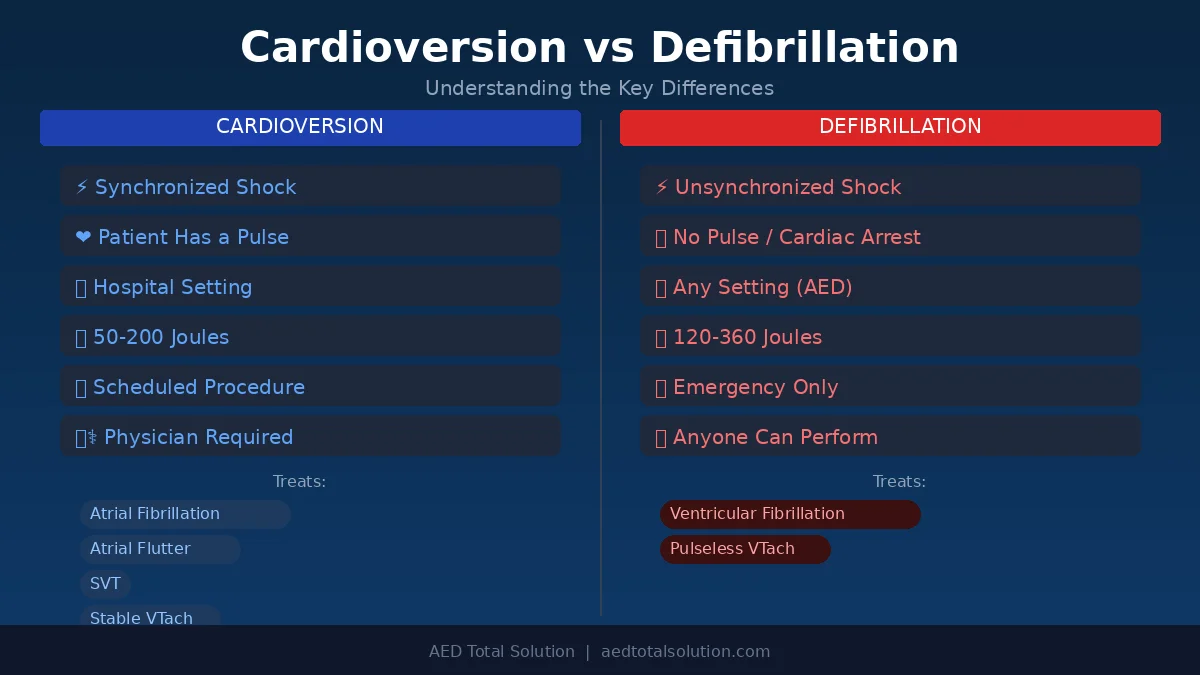
For deeper context on how the heart’s electrical system responds to emergency treatment, see our article on cardioversion vs defibrillation.
Symptoms and Warning Signs of Sudden Cardiac Arrest
Recognizing the symptoms of cardiac arrest is critical because the window for effective treatment is extremely narrow. Cardiac arrest symptoms are immediate and severe, with the person typically losing consciousness within seconds.
Immediate Signs of Cardiac Arrest
When sudden cardiac arrest occurs, the following signs appear almost instantly:
- Sudden collapse with no warning
- No pulse detectable
- No breathing or only abnormal gasping (agonal breathing)
- Complete unresponsiveness to voice or touch
Warning Signs Before Cardiac Arrest
While sudden cardiac arrest often strikes without any preceding symptoms, some individuals experience brief warning signs in the minutes to hours before the event:
- Chest pain or discomfort
- Shortness of breath
- Heart palpitations (racing, fluttering, or pounding heartbeat)
- Dizziness or lightheadedness
- Nausea or vomiting
- Unexplained fatigue or weakness
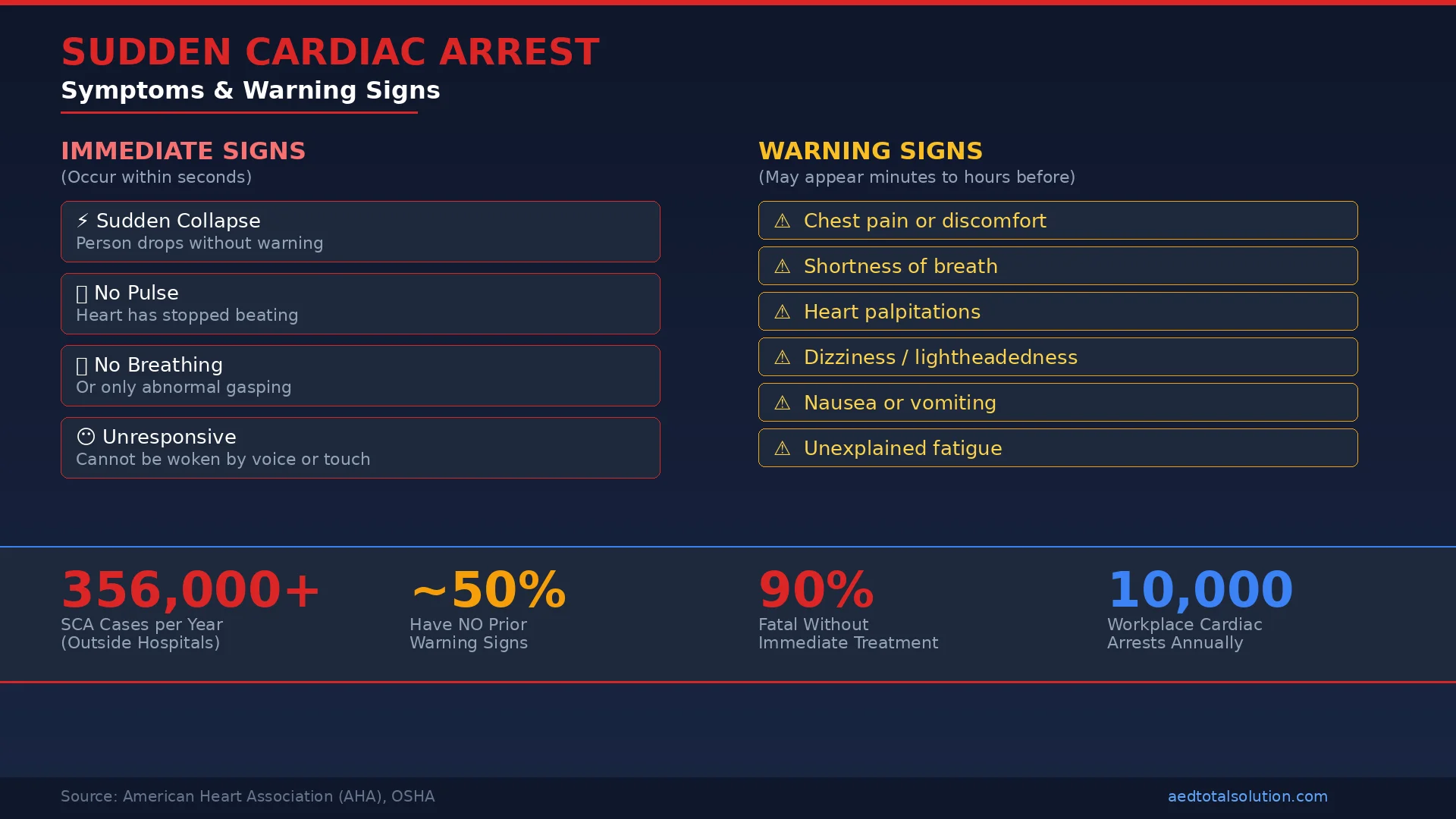
According to research published by the AHA, roughly half of sudden cardiac arrest victims show no prior symptoms. This unpredictable nature is precisely why workplace AED preparedness is so important. You cannot always predict when SCA will occur, but you can be ready to respond.
Who Is at Risk for SCA?
SCA can happen to anyone, at any age, regardless of fitness level or health history. However, certain factors significantly increase the risk:
Medical Risk Factors
- Previous heart attack or heart disease
- Family history of sudden cardiac arrest or sudden cardiac death
- Previous episode of cardiac arrest
- Ejection fraction below 40% (reduced heart pumping ability)
- History of arrhythmias including atrial fibrillation
Lifestyle Risk Factors
- Smoking
- High blood pressure
- High cholesterol
- Obesity
- Diabetes
- Sedentary lifestyle
- Excessive alcohol or drug use
Demographics
SCA is more common in men than women and risk increases significantly with age. However, it is also the leading cause of death in young athletes in the United States, highlighting that this condition does not discriminate. According to the Occupational Safety and Health Administration (OSHA), approximately 10,000 cardiac arrests occur in workplaces each year.
How Sudden Cardiac Arrest Is Treated
This is a medical emergency that requires immediate action. The treatment protocol follows the AHA’s Chain of Survival, where every link in the chain must be executed quickly.
Step 1: Recognize and Call 911
If someone collapses and is unresponsive with no pulse or normal breathing, call 911 immediately. Early recognition and activation of emergency medical services (EMS) is the first critical step.
Step 2: Begin CPR Immediately
Start cardiopulmonary resuscitation (CPR) with hard, fast chest compressions at a rate of 100-120 compressions per minute. Push at least 2 inches deep on the center of the chest. CPR manually circulates blood to the brain and vital organs, buying time until defibrillation is available.
Step 3: Use an AED as Soon as Possible
An automated external defibrillator (AED) is the only device that can restore a normal heart rhythm during ventricular fibrillation. AEDs are designed for use by anyone, even without medical training. The device analyzes the heart rhythm and delivers an electrical shock only when needed.
The impact of AEDs on survival is significant:
- Without AED: Survival rate approximately 10%
- With bystander AED within 3 minutes: Survival rate exceeds 70%
- Every minute without defibrillation: Survival drops 7-10%
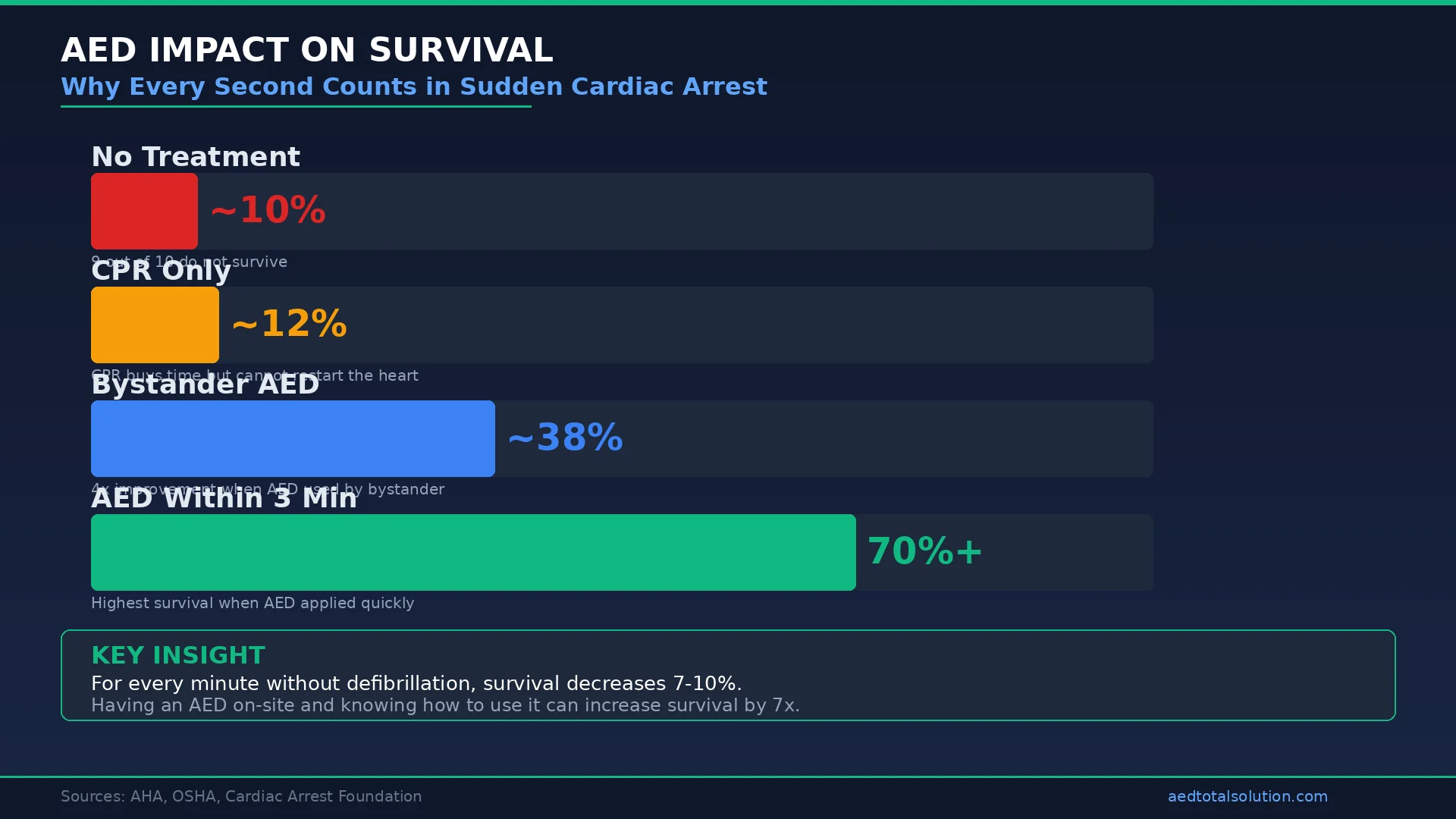
For a detailed breakdown of these numbers, read our analysis of AED vs. CPR survival rates.
Step 4: Advanced Medical Care
Once EMS arrives, paramedics provide advanced cardiac life support (ACLS), including intravenous medications, advanced airway management, and transport to a hospital for definitive treatment and diagnosis of the underlying cause.
Sudden Cardiac Arrest vs. Heart Attack
One of the most common misconceptions is that sudden cardiac arrest and heart attack are the same thing. They are not.
- Sudden cardiac arrest is an electrical problem. The heart stops beating due to a malfunction in the electrical signals that control the heartbeat.
- A heart attack is a circulation problem. A blocked artery prevents blood from reaching part of the heart muscle.
During a heart attack, the heart usually continues beating. During sudden cardiac arrest, the heart stops entirely. A heart attack can trigger sudden cardiac arrest, but cardiac arrest can also occur independently.
Understanding this distinction is important for effective emergency response. For the complete comparison, read our in-depth guide on sudden cardiac arrest vs heart attack.
Prevention: How to Reduce the Risk of Sudden Cardiac Arrest
While not all cases of sudden cardiac arrest can be prevented, the following strategies can reduce risk and improve survival outcomes:
Individual Prevention
- Get regular heart screenings. Monitor blood pressure, cholesterol, and blood sugar. Ask your doctor about an EKG or echocardiogram if you have risk factors.
- Know your family history. A family history of sudden cardiac death, heart disease, or arrhythmias should prompt a conversation with your healthcare provider.
- Manage existing conditions. Follow treatment plans for heart disease, diabetes, high blood pressure, and other chronic conditions.
- Adopt a heart-healthy lifestyle. Regular exercise, a balanced diet, maintaining a healthy weight, and avoiding tobacco and excessive alcohol all reduce cardiac risk.
- Pay attention to warning signs. Chest pain, shortness of breath, palpitations, and unexplained fainting should be evaluated by a medical professional immediately.
Organizational Preparedness
For workplaces, schools, and public facilities, preparedness is the most effective form of prevention when it comes to surviving sudden cardiac arrest:
- Deploy AEDs in accessible locations. OSHA recommends that employers with AED programs ensure devices are within 3-5 minutes of any location in the building.
- Train employees in CPR and AED use. Regular training ensures staff can respond confidently during an emergency.
- Implement a managed AED program. AEDs require ongoing maintenance, including battery replacement, electrode pad tracking, and compliance documentation. Neglected devices may fail when needed most.
Review the latest sudden cardiac arrest statistics to understand why organizational preparedness matters.
Why AED Program Management Matters
Purchasing an AED is just the first step. Without proper maintenance, an AED can become unreliable or non-functional at the moment it is needed most. Expired pads, depleted batteries, missed firmware updates, and lack of documentation can all compromise device readiness.
AED Total Solution provides comprehensive, white-glove AED program management that covers:
- AED selection, sales, and rental programs for events and temporary sites
- Device registration and compliance documentation
- Automated inspection scheduling and readiness verification
- Battery and electrode pad lifecycle tracking
- Remote monitoring and centralized dashboards for multi-location organizations
- Audit-ready reporting aligned with OSHA guidance and state requirements
Whether your organization manages a single device or hundreds across multiple locations, a managed AED program ensures your equipment is always response-ready. Explore our services or browse FDA-approved AEDs to get started.
Frequently Asked Questions About Sudden Cardiac Arrest
What does sudden cardiac arrest mean?
Sudden cardiac arrest means the heart suddenly stops beating due to an electrical malfunction. The heart’s electrical system fails to produce a coordinated heartbeat, blood flow ceases immediately, and the person loses consciousness within seconds. Without CPR and defibrillation, sudden cardiac arrest leads to death within minutes.
What is the most common cause of sudden cardiac arrest?
Ventricular fibrillation is the most common cause of sudden cardiac arrest. In this arrhythmia, the lower chambers of the heart quiver rapidly instead of pumping blood effectively. Underlying conditions like coronary artery disease, cardiomyopathy, and previous heart attacks increase the risk of ventricular fibrillation.
Can you survive sudden cardiac arrest?
Yes, survival is possible with immediate treatment. When bystanders perform CPR and use an AED within the first 3-5 minutes, survival rates can exceed 70%. Without intervention, the survival rate drops to approximately 10%. Speed of response is the single most important factor in survival.
Is sudden cardiac arrest the same as a heart attack?
No. Sudden cardiac arrest is an electrical malfunction that stops the heart from beating. A heart attack is a blockage in an artery that prevents blood flow to the heart muscle. The heart usually continues beating during a heart attack. However, a heart attack can trigger sudden cardiac arrest.
How common is sudden cardiac arrest?
Sudden cardiac arrest affects more than 356,000 people outside of hospitals in the United States each year, according to the AHA. Approximately 10,000 of these events occur in the workplace (OSHA). SCA can happen to anyone at any age, though risk increases with age and the presence of heart disease.
Are there warning signs for sudden cardiac arrest?
In some cases, brief warning signs may appear before sudden cardiac arrest, including chest pain, shortness of breath, heart palpitations, dizziness, and nausea. However, approximately 50% of sudden cardiac arrest victims have no prior symptoms, making preparedness and AED access critical.
Written by Prabakar Mahalingam, Managing Partner at AED Total Solution and recognized national provider of safety training, products, and proprietary compliance software dedicated to addressing Sudden Cardiac Arrest (SCA).
This article is for informational and educational purposes only and is not a substitute for professional medical advice, diagnosis, or treatment. If you or someone near you is experiencing symptoms of cardiac arrest, call 911 immediately.