
For organizations with multiple locations, maintaining a consistent and compliant AED program can feel nearly impossible. What works at your headquarters might not meet the legal requirements in another state. Staff turnover at one site can leave a critical gap in your readiness plan, while another location might forget inspections altogether. This inconsistency creates significant risk. A centralized, outsourced AED program management solution solves this problem by creating a single source of truth for your entire AED fleet. It provides the expert oversight needed to ensure every device, at every location, is managed to the same high standard of readiness and compliance.
Key Takeaways
- Outsourcing solves common in-house risks: Delegating AED oversight to a dedicated partner prevents missed inspections and compliance gaps, which reduces your liability and frees up your team to focus on their core responsibilities.
- A complete service is more than just software: Your partner should provide a full solution that includes automatic supply replacements, medical direction from a physician, and ongoing monitoring of state laws to keep your program compliant.
- The right partner offers total visibility and support: Look for a provider with a centralized dashboard for real-time readiness tracking, automated maintenance alerts, and scalable support that grows with your organization.
What Is Outsourced AED Program Management?
Outsourced AED program management is when you partner with a specialized company to handle all the details of keeping your AEDs ready and compliant. Instead of assigning these critical tasks to an employee who already has a full plate, you delegate the responsibility to a team of experts. This partner takes over the entire lifecycle of your AED program, from tracking device readiness and managing supplies to ensuring you meet all legal requirements.
Think of it like hiring a specialist for any other essential business function, like accounting or IT. You’re bringing in a dedicated resource to manage a complex, high-stakes area so you can focus on your core operations. For organizations with just one AED or hundreds spread across multiple locations, outsourcing provides peace of mind that every device is properly maintained, documented, and prepared for an emergency. It’s a proactive approach to safety that removes the guesswork and administrative burden from your team.
How It Works
When you outsource your AED program, you’re essentially handing over your to-do list to a dedicated provider. These full-service AED program management companies use a combination of software and hands-on oversight to monitor your devices. They track expiration dates for batteries and electrode pads, send reminders for routine inspections, and keep detailed records for compliance purposes. If a device manufacturer issues a recall, your provider handles it.
This system is especially helpful for organizations that don’t have the internal resources to dedicate someone to AED oversight, even as a secondary duty. A management partner ensures nothing falls through the cracks, whether you have two devices or two hundred. The process is designed to be simple, making it easy to offload these responsibilities and gain confidence that your program is always ready.
In-House vs. Outsourced Management
Deciding between in-house and outsourced management comes down to a simple business principle: do what you do best and outsource the rest. While managing one or two AEDs internally might seem manageable, the complexity grows with every device you add. In-house programs often struggle with staff turnover, inconsistent inspections, and the challenge of keeping up with changing state and federal regulations.
Outsourcing makes a lot of sense when your situation becomes complex or when you want to minimize risk. An expert partner removes the burden of compliance and maintenance from your team, reducing the chance of human error and ensuring every detail is handled correctly. By entrusting your program to a dedicated provider, you can focus on your primary business goals, knowing your life-saving equipment is in capable hands.
What Problems Does Outsourcing Your AED Program Solve?
Managing an AED program involves more than just mounting a device on the wall. It requires consistent oversight, regulatory knowledge, and meticulous record-keeping to ensure your devices are ready and compliant. When these tasks are handled in-house, they often fall through the cracks, creating risks you might not even be aware of. Outsourcing your program to a dedicated partner is designed to solve these specific, high-stakes challenges before they become problems.
Avoiding Common In-House Pitfalls
Let’s be honest: AED program management is rarely anyone’s full-time job. It’s usually an added responsibility for a facilities manager or safety officer who already has a packed schedule. When this happens, critical tasks like monthly inspections, supply tracking, and readiness checks can easily be overlooked. An expired battery or a missing set of pads can go unnoticed until it’s too late. These seemingly small oversights can render an AED useless in an emergency and expose your organization to significant liability. A dedicated management service removes the guesswork and ensures every detail is handled correctly and on time.
Keeping Up with Complex Regulations
AED laws and guidelines can be a tangled web of local, state, and federal requirements. These rules are not static; they change over time, and staying current is a major challenge for any organization. Do you know your state’s specific registration requirements or what documentation you need to be audit-ready? If your situation is complex, especially across multiple locations, it makes sense to have an expert in your corner. An outsourced partner lives and breathes these regulations. They handle the compliance burden for you, making sure your program meets all legal requirements and industry best practices.
Solving for Limited Resources and Staff Turnover
What happens to your AED program when the person in charge of it leaves the company? Too often, their knowledge walks out the door with them, leaving a critical gap in your emergency preparedness plan. This is a common issue for organizations that rely on a single employee to manage their devices. Outsourcing provides the stability and continuity your program needs to withstand staff turnover. Instead of relying on one person, you have an entire team of experts dedicated to your program’s success. This frees up your internal staff to focus on their core responsibilities, knowing your AEDs are managed by a consistent, reliable partner.
The Core Benefits of Outsourcing Your AED Program
Deciding to outsource your AED program management is more than just a way to check a task off your list. It’s a strategic move that strengthens your organization’s safety net while freeing up your team to focus on what they do best. When you partner with a dedicated management service, you’re not just getting help with logistics; you’re gaining a partner invested in your program’s success. This collaboration helps you stay compliant, reduces your team’s workload, provides access to specialized knowledge, and makes your budget more predictable. Let’s look at how these benefits play out in practice.
Ensure Compliance and Reduce Risk
Staying on top of AED regulations can feel like a full-time job. Between OSHA guidelines and state-specific laws, the compliance landscape is complex and constantly changing. When AED management is an added duty for an already busy employee, critical details can easily be missed, exposing your organization to significant liability. Outsourcing this function to a dedicated program management service places it in the hands of experts whose primary focus is compliance. They ensure every device is properly registered, inspected, and maintained according to all legal requirements, giving you peace of mind that your program is always audit-ready and your risk is minimized.
Lighten Your Administrative Load
Think about all the small tasks involved in maintaining an AED: monthly readiness checks, tracking pad and battery expiration dates, documenting every inspection, and managing recalls. These administrative duties add up, pulling your staff away from their core responsibilities. An outsourced management system streamlines these processes and handles the heavy lifting for you. Instead of juggling spreadsheets and calendar reminders, your team can trust that a professional service is managing the entire lifecycle of your devices. This frees up valuable time and mental energy, allowing your people to concentrate on driving your business forward.
Gain Access to Expert Oversight
Unless you have a dedicated safety compliance officer on staff, it’s unlikely anyone on your team is a true AED expert. And they don’t have to be. By outsourcing, you gain immediate access to a team of specialists who live and breathe AED program management. These professionals understand the nuances of different devices, stay current on evolving best practices, and know exactly what it takes to maintain a response-ready program. This expert oversight ensures your AEDs are not just present but are properly managed by people who know what to look for, eliminating guesswork and improving the overall effectiveness of your emergency response plan.
Get Predictable Costs and Control Your Budget
The principle “do what you do best and outsource the rest” applies perfectly to AED management. Handling your program in-house can lead to unexpected costs, from rush shipping fees for expired supplies to potential fines for non-compliance. Outsourcing converts these variable and unpredictable expenses into a fixed, manageable monthly or annual fee. This makes it much easier to control your budget and allocate resources effectively. You get a comprehensive, professionally managed program for a predictable cost, allowing you to focus your internal assets on your core business operations.
What Should a Complete AED Management Service Include?
When you decide to partner with an AED management service, you’re looking for more than just a software subscription. You need a comprehensive solution that handles every detail, so you can have complete confidence that your devices are ready and your program is compliant. A true full-service provider acts as an extension of your team, taking ownership of the complex tasks that keep your program running smoothly. They don’t just send you alerts and leave the follow-up to you; they actively manage every aspect of readiness and compliance.
So, what does a complete service actually look like? It’s a blend of smart technology and expert human oversight. It should cover everything from daily device checks to long-term compliance, ensuring no detail is overlooked. A great partner will manage the entire lifecycle of your AEDs, from initial placement to ongoing maintenance and eventual replacement. This white-glove approach removes the administrative burden and potential for human error, giving you a program that is not just monitored, but actively managed for readiness at all times. Below are the essential components you should expect from any top-tier AED program management service.
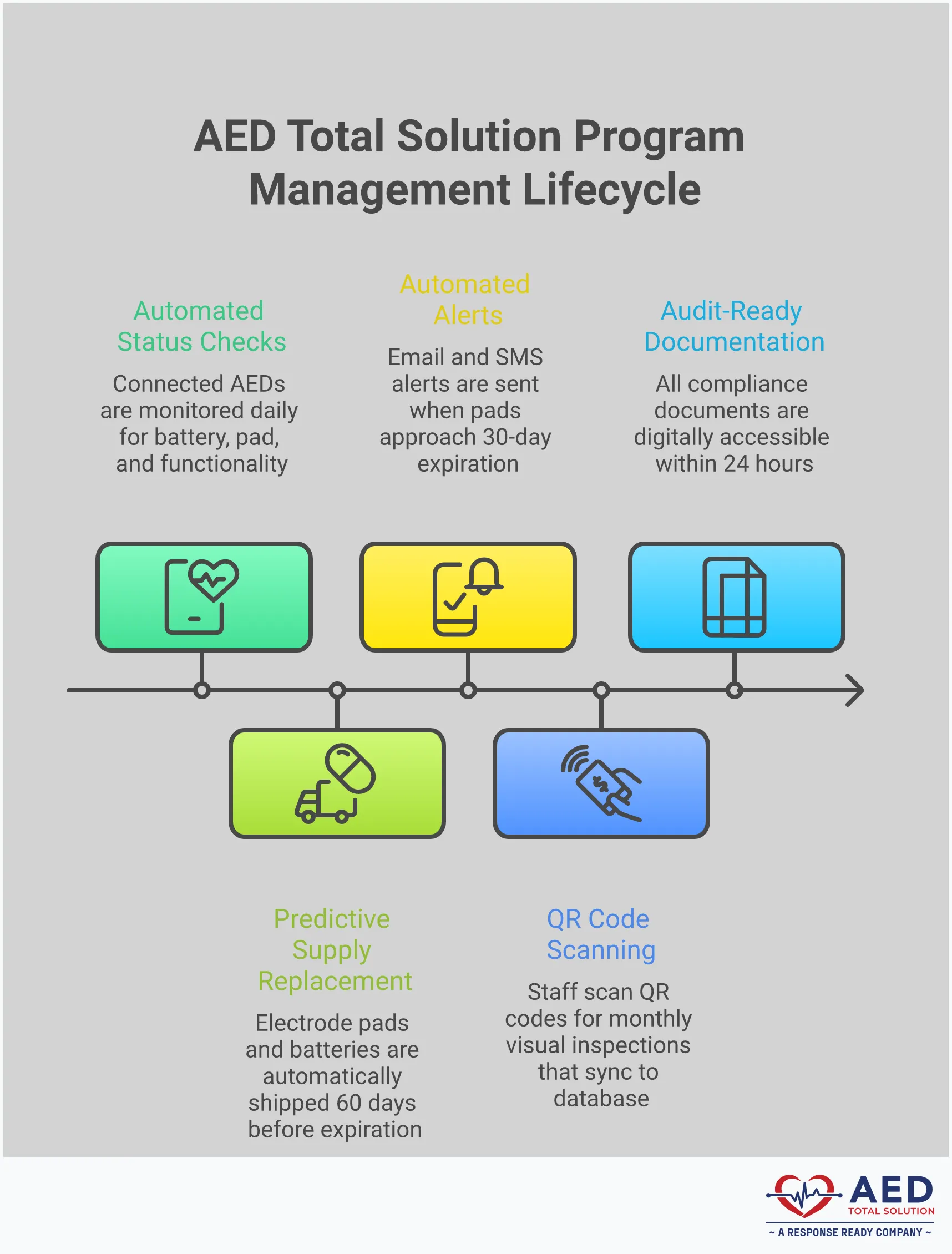
Device Monitoring and Maintenance
A core function of any management service is ensuring your AEDs are functional and ready to use. This goes beyond a simple checklist. A complete service should include remote monitoring that checks the status of each device daily, confirming it’s connected and operational. It also involves managing the physical maintenance and tracking of every AED in your inventory, whether you have a handful of devices or hundreds spread across multiple locations. This constant oversight ensures that if a device develops an issue, it’s identified and addressed immediately, not during an emergency.
Inspection Tracking and Documentation
Regular inspections are a critical part of AED ownership, but tracking them manually is tedious and prone to error. A complete management service automates this process, providing digital tools to log monthly checks and creating a clear, accessible record of your program’s health. This documentation is your proof of due diligence. It shows you are actively maintaining your devices according to manufacturer and state requirements, which is essential for reducing liability and being prepared for any audit. This digital paper trail helps remove the stress and risks of owning AEDs.
Automated Pad and Battery Management
AEDs are useless if their pads or batteries are expired. Manually tracking expiration dates across multiple devices is a significant point of failure for many in-house programs. A top-tier service eliminates this risk entirely. The provider should monitor the expiration dates of all your consumables and automatically ship you new AED pads and batteries before the old ones expire. This proactive approach guarantees your devices are always stocked with functional supplies, ensuring they are ready to perform when a life is on the line.
Staff Training Support
Having a ready AED is only half the battle; you also need trained people who are confident enough to use it. While a management service may not provide the training itself, it should absolutely support your training initiatives. This includes tracking which staff members are certified in CPR and AED use and sending automated reminders when their certifications are nearing expiration. By helping you maintain a roster of qualified responders, the service ensures your emergency response plan is backed by capable and prepared individuals.
Ongoing Regulatory Monitoring
AED laws and compliance standards can be a tangled web of federal guidelines and state-specific rules that change over time. A complete management service acts as your compliance expert, staying on top of all relevant regulations. They monitor OSHA guidance, track changes in state legislation, and ensure your program adheres to all requirements, including medical direction and post-event reporting. This ongoing regulatory oversight means you don’t have to be a legal expert to run a compliant program; you can trust your partner to handle the complexities for you.
What to Look For in an AED Management Partner
Choosing an AED management partner is about more than just buying software; it’s about finding a team you can trust to handle the details. A great partner acts as an extension of your own team, making sure every device is compliant, ready, and accounted for. This frees you up to focus on your other responsibilities with the confidence that your emergency response program is in expert hands. When you’re evaluating your options, there are a few non-negotiable features to look for that separate a basic tracking tool from a true management solution.
Real-Time Readiness Monitoring
You need to know that every AED in your program is ready to work at a moment’s notice. That’s where real-time readiness monitoring comes in. A reliable partner will give you a clear, up-to-the-minute view of your entire AED fleet through a simple web portal or mobile app. This isn’t just a static inventory list. It’s a dynamic system that tracks the location, status, and health of each device, including crucial details like battery life and electrode pad expiration dates. This constant oversight ensures there are no surprises when an emergency strikes and that every device is fully operational.
Automated Alerts and Reminders
Let’s be honest, remembering to check every AED battery and pad expiration date is a task that can easily fall through the cracks. A great management partner takes this burden off your plate with automated alerts and reminders. Their system should proactively notify you via email or text when supplies are about to expire, when monthly inspections are due, or when staff training certifications need renewal. This automated follow-up is your safety net, ensuring that critical maintenance tasks are never missed and your program remains compliant without you having to manually track every single detail in a spreadsheet.
Centralized Dashboards and Reporting
Managing an AED program, especially across multiple sites, can generate a lot of paperwork. The right partner simplifies this by providing a centralized dashboard where all your program information lives. Think of it as your command center. From this secure online portal, you can view the status of all your devices, access inspection records, and generate compliance reports with just a few clicks. This is incredibly valuable for internal reviews and essential if you ever face an audit. It gives you complete visibility and keeps your documentation organized, accessible, and always ready to go.
Support for Multiple Locations
If your organization has more than one location, you need a partner whose services can grow with you. A scalable solution is essential. Your management system should handle one AED just as effectively as it handles hundreds spread across different buildings, cities, or even states. The platform should allow you to easily view and manage devices by location while still providing a comprehensive overview of the entire program. This ensures consistency in compliance and readiness everywhere, eliminating the logistical headaches that come with managing a decentralized program. Your partner should make scaling your program feel simple, not more complicated.
Access to Medical Oversight
Many people don’t realize that AEDs are medical devices regulated by the FDA and require a physician’s oversight to be legally compliant. This is one of the most critical components a management partner should provide. A complete AED program management service includes medical direction from a licensed physician who oversees your program’s protocols and provides a prescription for each device. This oversight ensures your program meets both state and federal requirements, protecting your organization from liability. It’s not an optional add-on; it’s a fundamental piece of a compliant and effective AED program that a true partner will always include.
Common Myths About Outsourcing AED Management
The idea of outsourcing a critical safety function can bring up some valid questions and concerns. Many organizations hesitate because of common misconceptions about what it means to partner with an external AED program manager. These myths can prevent you from finding a solution that not only simplifies your workload but also significantly strengthens your emergency response plan.
Let’s clear the air by addressing some of the most persistent myths head-on. By looking past these assumptions, you can make a more informed decision about what’s truly best for your organization’s safety and compliance. We’ll explore the truth behind concerns about control, cost, and quality, showing how a dedicated partner can be a powerful asset for your team.
Myth: You’ll Lose Control of Your Program
This is probably the biggest hesitation we hear, and it’s completely understandable. The fear is that outsourcing means you’ll be in the dark about the status of your devices. In reality, the opposite is true. A great AED management service actually gives you more visibility and centralized control than you likely have now. Instead of relying on scattered spreadsheets or manual calendar reminders, you get a clear, real-time view of your entire program through a single dashboard. You can see inspection records, track expiration dates, and confirm every device is ready to go. It’s less about giving up control and more about gaining a powerful tool and an expert partner to help you manage everything perfectly.
Myth: It’s Too Expensive
When you first look at the cost of a management service, it’s easy to think it’s an added expense. But it’s important to consider the hidden costs of managing your program in-house. Think about the staff hours spent on inspections, tracking supplies, and keeping up with changing regulations. For most companies, this isn’t a full-time job, so these tasks pull a team member away from their core responsibilities. Outsourcing converts those unpredictable costs into a fixed, manageable budget item. It often proves to be a more cost-effective approach, especially when you factor in the financial risk of non-compliance or a failed device.
Myth: The Quality Isn’t as Good as In-House
It’s natural to believe your own team will be the most dedicated to your safety program. While your team’s commitment is essential, an in-house person often manages the AED program on the side. A specialized provider, on the other hand, lives and breathes AED compliance. This is our entire focus. We bring a level of expertise that’s difficult to develop internally, from knowing the nuances of state laws to understanding the specific maintenance needs of every device model. This specialized knowledge ensures a higher standard of readiness and reliability, which is exactly what you need when a life is on the line. Our team’s expertise is what makes our program management so effective.
Understanding AED Compliance and Legal Requirements
Owning an AED is a critical step in protecting your team and community, but it’s not just about having the device on the wall. It also means following a set of rules and legal requirements to ensure your program is effective and defensible. These regulations can feel complicated, but they exist to make sure every AED is ready to save a life. Breaking them down is the first step to building a program you can feel confident in.
From federal guidelines to specific state laws, staying compliant protects you from liability and, more importantly, ensures your device will work when you need it most. Let’s walk through the key areas of compliance you need to know.
OSHA and Workplace Guidelines
While the Occupational Safety and Health Administration (OSHA) doesn’t require AEDs in every single workplace, it strongly encourages them as a key part of a first-aid and emergency response plan. If you choose to implement an AED program, you take on the responsibility of managing it correctly. This includes proper maintenance, placement, and employee training.
For many organizations, this is where things get tricky. AED program management is a significant task, and it’s often more than a secondary duty someone can handle on top of their primary job. A dedicated AED program management service ensures these responsibilities are met without overburdening your staff, keeping your workplace both safe and compliant.
State-Specific AED Laws
One of the biggest compliance challenges is that AED laws vary from state to state. A rule in California might be completely different from one in Texas, which creates a real headache for organizations with multiple locations. These laws can dictate everything from where an AED must be placed to how often it needs to be inspected and who needs to be notified of its location.
It’s incredibly difficult for any organization to keep up with this patchwork of regulations on its own. An outsourced partner stays on top of these legislative changes for you, making sure every device at every one of your sites meets local requirements. This expertise is essential for maintaining nationwide compliance and minimizing risk across your entire footprint.
Medical Direction Requirements
Did you know that AEDs are considered Class III medical devices by the FDA? Because of this, most states require that an AED program operate under the guidance of a physician. This is known as medical direction or medical oversight. The physician provides a prescription for the device and signs off on the program’s protocols, ensuring it aligns with established medical best practices.
Securing this on your own can be a major hurdle. A complete AED management service removes this obstacle by providing the necessary medical oversight for your program. This ensures you meet all legal requirements from day one, giving you the clinical authority needed to run a responsible and effective AED program.
Documentation for Audits
If an incident occurs or an auditor shows up, you’ll need to prove your AED program is compliant. This means having clear, organized, and accessible records of everything. You need to document routine inspections, track battery and pad expiration dates, log staff training, and record any maintenance performed on your devices.
A manual tracking system using spreadsheets or binders is often prone to human error and can be difficult to manage. Modern AED management programs use secure, online systems to keep all your records in one place. This gives you an audit-ready trail of documentation that’s always available, providing peace of mind that your program is fully prepared and defensible.
How Is AED Program Management Priced?
When you start looking into outsourced AED program management, you’ll find that pricing isn’t one-size-fits-all. The cost depends on the level of support you need and the number of devices you have. Most providers structure their pricing in a way that lets you choose a plan that aligns with your organization’s budget and compliance requirements. Understanding these models is the first step to finding a partner that fits your needs without any financial surprises down the road.
Understanding Service Tiers
Most AED management providers offer tiered packages, much like a subscription service. A basic tier might only cover software access for tracking your AEDs and sending you automated reminders for inspections. Mid-range tiers often add crucial compliance components, like medical direction and oversight. The most comprehensive, or “white-glove,” tiers typically include everything: software, medical direction, on-site inspections, and even automatic replacement of expired pads and batteries.
When comparing options, look closely at what each tier includes. A cheaper plan might seem appealing, but if it leaves you responsible for critical tasks like ordering supplies or documenting inspections, it may not save you much time or reduce your risk. The goal is to find a balance between cost and the level of hands-on support your team needs. A truly full-service program management solution handles these details for you.
What Factors Influence the Cost?
The primary factor driving the cost of AED program management is the number of AEDs you need to cover. Most providers charge on a per-device, per-year basis. So, an organization with 20 AEDs across multiple locations will naturally have a higher cost than a single-office business with one device. Some companies offer discounts for longer contract terms, so signing up for a three or five-year plan could lower your annual rate.
Other factors can also affect the price. The level of service you choose, as we discussed with service tiers, plays a big role. Additional services, like providing initial staff training, managing recalls, or offering on-site maintenance checks, can also add to the total cost. If you’re looking for a short-term solution, an AED rental program might be a more flexible and cost-effective option.
How to Spot Hidden Fees
The last thing you want is to be surprised by unexpected fees. Some lower-priced plans may seem like a great deal until you realize what they don’t include. The most common hidden cost is for consumables. A plan might cover tracking and alerts, but you could be on the hook for the full price of replacement electrode pads and batteries, which can be expensive. These are not optional expenses; they are essential for keeping your device ready for an emergency.
Before you commit to a provider, ask for a clear breakdown of all potential costs. Ask direct questions: Are pads and batteries included in the annual fee? Is there a separate charge for medical direction or compliance documentation? What happens if a device is recalled? A transparent partner will be upfront about what their management services cover, ensuring your budget remains predictable and your program stays compliant.
How to Choose the Right AED Management Provider
Choosing a partner to manage your AED program is a major decision. This isn’t just about buying a device; it’s about entrusting a critical part of your safety plan to an outside expert. The right provider acts as an extension of your team, giving you confidence that every device is ready and every compliance box is checked. But with so many options, how do you find the one that’s right for you?
The key is to look beyond the price tag and evaluate the core components of their service. A great partner offers more than just software. They provide a comprehensive solution that combines technology with human oversight. When you’re vetting potential providers, focus on three key areas: their industry experience and reputation, the quality of their support and training, and their ability to deliver a program that is both scalable and fully compliant. A provider with a strong track record can give you peace of mind that your program is in capable hands, letting you focus on your primary responsibilities.
Evaluate Their Experience and Reputation
When it comes to life-saving equipment, experience is non-negotiable. You need a partner who has seen it all: complex multi-state regulations, device recalls from various manufacturers, and the challenges of managing programs for organizations of all sizes. Look for a provider with a proven history in AED management. Check their website for case studies or testimonials from businesses similar to yours. Don’t hesitate to ask for references you can speak with directly. A reputable company will be happy to connect you with satisfied clients. Their reputation should reflect reliability, expertise, and a genuine commitment to customer success, ensuring your program is built on a solid foundation.
Assess Their Support and Training Options
An AED is only effective if people feel prepared to use it. That’s why support and training are so important. Your provider should be a resource for your entire team. Find out what their customer support looks like. Will you have a dedicated program manager, or will you be calling a generic help desk? Quality support means having an expert available to answer your questions about compliance, maintenance, or post-event procedures. Also, ask what training resources they offer. While they may not conduct in-person training, they should provide materials or guidance to help your staff feel confident and ready to act in an emergency.
Confirm Their Program Is Scalable and Compliant
Your business isn’t static, and your AED program shouldn’t be either. A good management partner can easily scale with you, whether you’re adding a single new device or expanding to ten new locations. Their system should simplify the management of multiple AEDs across different sites, giving you a single, clear view of your entire program. Most importantly, they must guarantee compliance. Ask how they stay on top of changing OSHA recommendations and the specific AED laws in every state where you operate. They should be able to provide audit-ready documentation at a moment’s notice, proving that your program meets all legal requirements.
How to Transition to an Outsourced AED Program
Making the switch to a managed AED program is a straightforward process that can immediately lighten your team’s workload. A good partner will guide you through every step, but knowing what to expect can help you prepare for a smooth and successful transition. It all starts with a clear look at where your program stands today.
Start by Auditing Your Current Program
Before you can hand over the reins, you need a complete picture of your current AED program. Start by taking inventory. How many AEDs does your organization manage, and where is each one located? Check the status of every device, noting the expiration dates for all batteries and electrode pads. It’s also important to identify who is currently responsible for these checks. Many organizations assign this as a secondary duty, underestimating the time it takes to properly manage and maintain even a small number of devices. This audit will highlight existing gaps and give you a clear baseline to share with a potential partner.
What to Expect During the Transition
The good news is that professional AED management providers have made this transition incredibly simple. Once you choose a partner, they will handle most of the heavy lifting. The process typically begins with a comprehensive assessment of all your devices. Your new provider will log each AED into their management system, inspect it for readiness, and replace any expired components. They will also set up remote monitoring, automated alerts, and a schedule for routine checks. Your partner’s goal is to get your entire program compliant and running efficiently from day one, with minimal disruption to your operations.
Preparing Your Team for the Change
Communicating this change effectively is key to a smooth transition. Frame it as a strategic move to support your team, not replace them. By outsourcing, you’re freeing up internal staff to focus on their core responsibilities while bringing in specialized expertise. Let your safety committee, facilities staff, and any current AED coordinators know what’s happening. Explain how the new system will make their jobs easier by providing clear, automated guidance and removing the burden of manual tracking. A quality provider will also offer support and training to ensure everyone understands the new process and feels confident in the program’s readiness.
Related Articles
- AED Program Management | Full-Service Compliance & Readiness
- AED Program Management | Compliance and Maintenance
- Top AED Program Management | AED Program Management
- Top AED Program Management | AED Program Management
- Top AED Program Management | AED Program Management
Frequently Asked Questions
Is outsourcing worth it if we only have one or two AEDs? Absolutely. The legal requirements and maintenance needs are the same whether you have one AED or one hundred. A single device that fails due to an expired battery creates the same liability as any other. Outsourcing ensures that even a small program gets expert oversight, so you can be confident your device is compliant and ready without having to become an expert yourself.
What does the transition process actually look like for my team? It’s a simple, guided process. Once you partner with a management service, they’ll start by taking a full inventory of your current devices. They log everything into their system, inspect each AED, and replace any expired supplies. From there, they handle the setup of all monitoring and alerts. Your team’s main role is to get familiar with the new online dashboard, which is far easier than managing a manual spreadsheet.
How is a full-service management partner different from just using an AED tracking app? An app or basic software will send you reminders, but the responsibility to act on them still falls on you. A full-service partner does the work for you. They don’t just tell you a battery is expiring; they automatically ship you a new one. They don’t just remind you about compliance laws; they provide the medical oversight and documentation to meet them. It’s the difference between a simple tool and a complete, hands-on solution.
Does your service help us after an AED is used in an emergency? Yes, and this is a critical part of a complete management program. After an AED is used, there are specific steps required for reporting and getting the device ready for service again. A management partner guides you through this post-event process, helping with data downloads, filing necessary reports, and restocking the device with new pads and a charged battery so it’s prepared for the next emergency.
Will my staff still have any responsibilities for the AEDs? While the administrative burden is lifted, your team still plays a small but important role. They will typically perform quick monthly visual inspections to ensure the device is accessible and the indicator light is green. The management service makes this easy by sending automated reminders and providing a simple digital checklist. This keeps your team engaged in the safety program without bogging them down with complex tracking or compliance tasks.