
You wouldn’t ask your facilities manager to handle your corporate tax filings, so why would you task them with the complexities of AED compliance? Keeping an AED program ready and defensible requires specialized knowledge of state laws, device maintenance protocols, and meticulous record-keeping. When you assign this critical function to a non-expert, you’re banking on them getting every detail right while juggling their primary duties. Choosing outsourced AED compliance is like hiring a specialist for a specialized job. It replaces guesswork with professional oversight, ensuring your program is managed by experts whose sole focus is keeping your devices ready and your organization protected.
Key Takeaways
- Prioritize Liability Protection Over In-House Convenience: While managing AEDs internally might seem straightforward, it exposes your organization to significant legal and financial risks. Outsourcing creates a defensible, documented trail of compliance that demonstrates due diligence and protects your organization if an incident occurs.
- A True Partner Manages, Not Just Reminds: Don’t settle for a software that only sends alerts. A full-service partner actively handles every detail—from tracking expirations and managing recalls to ensuring inspections are completed—giving you a truly hands-off solution.
- Look for a System, Not Just a Service: The right partner combines expert oversight with user-friendly technology. Evaluate providers on their ability to offer a seamless system that simplifies management across all locations, automates critical tasks, and provides clear visibility into your program’s readiness.
What is Outsourced AED Compliance?
Let’s break down what outsourced AED compliance really means. Think of it like hiring an expert to manage a critical but specialized part of your safety program. Instead of tasking an already busy employee with the complexities of AED maintenance, you partner with a dedicated service to handle everything for you. This approach ensures your devices are always ready, compliant, and accounted for, letting your team focus on their core responsibilities.
An outsourced partner takes on the entire lifecycle of your AED program. This includes tracking battery and pad expiration dates, performing routine inspections, ensuring your program meets state and federal regulations, and keeping meticulous records. It’s a comprehensive solution designed to remove the administrative burden and guesswork from AED ownership. By handing over the details to a specialist, you gain peace of mind knowing that this life-saving equipment is managed correctly and professionally. This is the core of what a full-service AED program management solution provides.
The Challenge of Managing AEDs In-House
Placing an AED in your facility is a fantastic first step, but the real work begins after it’s mounted on the wall. Managing an AED program in-house can quickly become a major headache. You have to keep track of monthly inspections, monitor the expiration dates of pads and batteries, stay on top of evolving local and state laws, and document every single check and replacement. When you have multiple devices across different locations, these tasks multiply, and it’s easy for something to fall through the cracks. This administrative drain often leads to compliance gaps, which can create serious liability issues for your organization.
Key Benefits of Outsourcing Your AED Program
Partnering with an AED management service directly addresses the challenges of an in-house program. First and foremost, it helps minimize your liability. Having a complete, professionally managed record of maintenance and compliance provides a powerful defense if an incident ever occurs. Outsourcing also simplifies the entire compliance process. Your partner handles the reminders, updates, and documentation, ensuring your AEDs are always inspected and consumables are replaced on time. Finally, these services provide incredibly efficient tracking systems that are far more reliable than a spreadsheet or a calendar reminder, giving you confidence that your program is always ready.
What Does an Outsourced AED Program Include?
When you hand over your AED program to a management service, you’re getting more than just tracking software. You’re getting a complete, hands-off solution that covers every angle of compliance and readiness. A true partner handles the details so you can focus on your core operations, confident that your program is always prepared. Here’s what a comprehensive service includes.
Full Program Management and Oversight
Think of this as your dedicated AED support team. Full program management means an expert is overseeing every aspect of your AEDs, from initial placement and registration to ongoing maintenance. This includes tracking battery and pad expiration dates, managing device recalls, and ensuring every unit is inspected on schedule. Having an outsourced AED management program provides a complete record of compliance and maintenance, which is critical for minimizing liability and keeping your program defensible. It removes the guesswork and administrative burden from your team’s plate.
24/7 Remote Device Monitoring
Modern AED programs use technology to ensure devices are ready to function at a moment’s notice. Instead of relying on manual checklists, a great management service uses software to monitor your AEDs around the clock. These AED compliance management systems track device status, send reminders for performance checks, and keep you updated on the latest state and local regulations. If a device’s battery is low or a self-test fails, the system sends an immediate alert so the issue can be resolved long before an emergency occurs.
Medical Direction and Staff Support
Many states require that an AED program be overseen by a licensed physician. This is known as medical direction or oversight, and it’s a critical compliance step that a management partner handles for you. This ensures your program meets all medical and legal standards. Beyond that, a service provides ongoing support to your staff. This includes making sure your team knows where the AEDs are and that all necessary supplies, or consumables, are up to date and ready for use.
Audit-Ready Documentation and Reporting
If an inspector walks through your door, could you prove your AED program is compliant? An outsourced service provides a user-friendly solution that ensures compliance and simplifies management. All inspection records, maintenance logs, and compliance documentation are stored in a centralized, accessible system. You get detailed reports that show the readiness of every device across all your locations. This gives you audit-ready documentation at your fingertips, providing peace of mind and demonstrating your organization’s commitment to safety.
The Real Risks of Poor AED Management
An AED on the wall is a symbol of safety, but it’s a promise that can be broken if the device isn’t properly managed. Simply owning an AED isn’t enough; you have to ensure it’s ready to work at a moment’s notice. When an AED program is neglected, the consequences extend far beyond a simple compliance issue. You open your organization up to significant risks that can impact your legal standing, your finances, and most importantly, your ability to save a life.
Forgetting a monthly inspection, missing a battery expiration date, or failing to keep up with changing state laws might seem like small oversights, but they can lead to catastrophic failures. These aren’t just administrative tasks—they are critical components of your emergency response plan. Understanding the real-world risks of poor AED management is the first step toward protecting your people and your organization. The three biggest risks you face are legal liability, device failure during an emergency, and steep financial penalties.
Legal Liability and Regulatory Penalties
Many people assume Good Samaritan laws protect them from lawsuits, but these laws typically don’t cover negligence. If an AED fails because it wasn’t maintained, your organization could be found liable. Having an outsourced AED management program can go a long way toward minimizing lawsuit potential because you have a complete record of compliance and maintenance. This documentation proves you took reasonable care to keep your device in working order, creating a powerful defense against claims of negligence. Without a clear, consistent record of inspections and service, you leave your organization vulnerable to legal challenges that are both costly and damaging to your reputation.
Device Failure During an Emergency
This is the worst-case scenario for any organization: someone suffers a sudden cardiac arrest, and the AED you have on-site fails to work. The most common causes of device failure are expired electrode pads and dead batteries—both of which are entirely preventable with routine maintenance. Without a system for tracking expiration dates and performing regular readiness checks, your life-saving device could be useless when it matters most. It’s why many organizations are realizing the value of outsourcing AED upkeep to a trusted partner to ensure their equipment is always ready for a rescue and to remove any chance of human error during a high-stress event.
Financial Costs of Non-Compliance
Failing to comply with local and state AED regulations can lead to significant fines and penalties. These laws often dictate everything from device registration and placement to inspection frequency and documentation. Professional AED compliance management systems help track AED registration, send performance check reminders, and keep you updated on the latest regulations, which can prevent costly fines. Beyond government penalties, the financial fallout can include higher insurance premiums and legal fees. Investing in a professionally managed program is a proactive way to avoid these unexpected and often substantial costs while protecting your bottom line.
How to Choose the Right AED Management Partner
Once you’ve decided to outsource your AED program, the next step is finding the right partner. This isn’t just about hiring a vendor; it’s about finding a team that will protect your organization and give you complete peace of mind. A great partner acts as an extension of your own team, handling every detail so you can focus on your core responsibilities. But with different providers offering various levels of service, how do you know which one is the right fit?
The key is to look beyond the sales pitch and dig into the specifics of what they offer. You need a partner who provides a truly comprehensive solution, not just a software tool that adds another task to your plate. A white-glove approach means they handle everything from tracking expiration dates to ensuring every device is documented and ready for an audit. To find a partner you can trust, focus on four key areas: their service offerings, the technology they use, their industry expertise, and the clarity of their pricing.
Evaluate Their Service Offerings
A top-tier AED management partner does more than just send you reminder emails. They should offer end-to-end program management that covers every aspect of your AED’s lifecycle. This includes initial device placement, routine inspections, tracking battery and pad expirations, and managing recalls. The goal is to offload the entire administrative burden from your team.
Look for a provider that guarantees a complete record of compliance and maintenance. This documentation is your best defense against potential liability. Ask potential partners what their process is for verifying that inspections are completed on time and how they handle supply replenishment. A truly full-service partner doesn’t just monitor your program—they actively manage it, ensuring every AED is ready to save a life.
Check Their Technology and Monitoring Tools
The right technology makes managing an AED program simple and transparent. Your partner should provide access to a user-friendly dashboard where you can see the status of every device at a glance. This is especially critical for organizations with AEDs spread across multiple locations. The system should provide automated alerts for upcoming expirations, failed inspections, or device issues, so nothing ever slips through the cracks.
Ask about remote monitoring capabilities. Modern AEDs can connect to Wi-Fi and report their readiness status automatically, and a good management partner will use this technology to provide 24/7 oversight. This combination of smart technology and expert supervision ensures your devices are not just compliant on paper but are truly response-ready at all times.
Verify Their Expertise and Credentials
AED compliance is complex, with rules that vary by state and industry. Your partner needs to be an expert in this regulatory landscape. They should have a deep understanding of federal guidelines from bodies like OSHA, as well as specific state and local requirements that apply to your organization. A partner with proven expertise can guide you through the complexities and protect you from fines and legal risks.
Look into the company’s background and experience. How long have they been managing AED programs? Do they have a dedicated team of compliance experts? A trustworthy partner will be transparent about their credentials and be able to speak confidently about how they help organizations like yours stay compliant. You can often get a good sense of a company’s values and expertise by learning more about who they are.
Understand the Pricing and Contract Terms
When it comes to pricing, clarity is key. A reputable partner will offer a straightforward pricing model without hidden fees. Make sure you understand exactly what is included in your service agreement. Does the fee cover replacement batteries and electrode pads, or are those additional costs? What happens if a device is recalled or needs to be replaced? These are important questions to ask upfront.
Your contract should also be flexible enough to grow with your organization. As you add new locations or devices, your management program should scale seamlessly. A good partner will work with you to create a plan that fits your budget and meets your specific needs, ensuring you are always aware of the latest AED laws and regulations as part of their service.
Common Myths About Outsourcing AED Compliance
Deciding to hand over a critical part of your safety program can feel like a big step, and it’s natural to have questions. Unfortunately, a few common misconceptions about outsourcing AED management can hold organizations back from making a decision that could save them time, money, and significant stress. Let’s clear the air and look at what partnering with an AED compliance expert really means for your business.
By addressing these myths head-on, you can make an informed choice that protects your employees, your customers, and your organization. The right partner doesn’t take over—they empower you with expertise, technology, and support, ensuring your program is always ready for an emergency.
Myth #1: It’s Too Expensive or Complicated
One of the first hurdles for many is the perceived cost. It’s easy to look at a service fee and compare it to the “cost” of doing it yourself, but that’s not the full picture. Managing an AED program in-house comes with hidden costs: staff hours spent on inspections, the price of missed expiration dates, and the immense financial risk of non-compliance fines or litigation. An outsourced AED program management service provides a complete record of compliance and maintenance, which can be invaluable in minimizing lawsuit potential. Instead of a complicated new system to learn, you get a streamlined process managed by experts, freeing your team to focus on their primary roles.
Myth #2: You’ll Lose Control of Your Program
It’s completely understandable to worry about losing control over such a vital safety function. However, outsourcing your AED program isn’t about giving up control—it’s about gaining a specialized partner. A professional management service acts as an extension of your team, handling the day-to-day tasks while you maintain complete oversight. Through detailed dashboards and regular reports, you always know the status of your devices. This allows you to simplify management and focus on your core operations, confident that the experts are handling the details. You’re still in the driver’s seat; you just have a professional co-pilot helping you see the road ahead more clearly.
Myth #3: It Doesn’t Reduce Your Liability
This is perhaps the most critical myth to debunk. Proper AED maintenance and documentation are your first line of defense against liability. If an AED fails during an emergency due to a dead battery or expired pads, your organization could be held responsible. Outsourcing your AED compliance management ensures every device is inspected, maintained, and documented according to state and federal regulations. This creates a clear, auditable trail of due diligence that demonstrates your commitment to safety. This documentation is crucial for protecting your organization from liability and giving you peace of mind that you’ve done everything possible to prepare for an emergency.
Outsourcing vs. In-House: A Head-to-Head Comparison
Deciding how to manage your AED program is a major choice. On one hand, keeping it in-house seems straightforward. You assign the duties to a current employee, and you’re done—right? On the other hand, partnering with a dedicated management service offers a different approach. While it might feel like you’re adding another vendor, you’re actually offloading a significant amount of risk and administrative work.
The best path depends on your organization’s resources, expertise, and tolerance for liability. An in-house program puts the full weight of compliance, maintenance, and readiness on your team’s shoulders. This includes everything from tracking expiration dates and performing regular inspections to staying current with changing state and federal regulations. Outsourcing, however, transfers these responsibilities to a team of specialists whose only job is to ensure your AEDs are ready and your program is compliant. Let’s break down how these two approaches stack up in three key areas: cost, expertise, and the daily workload.
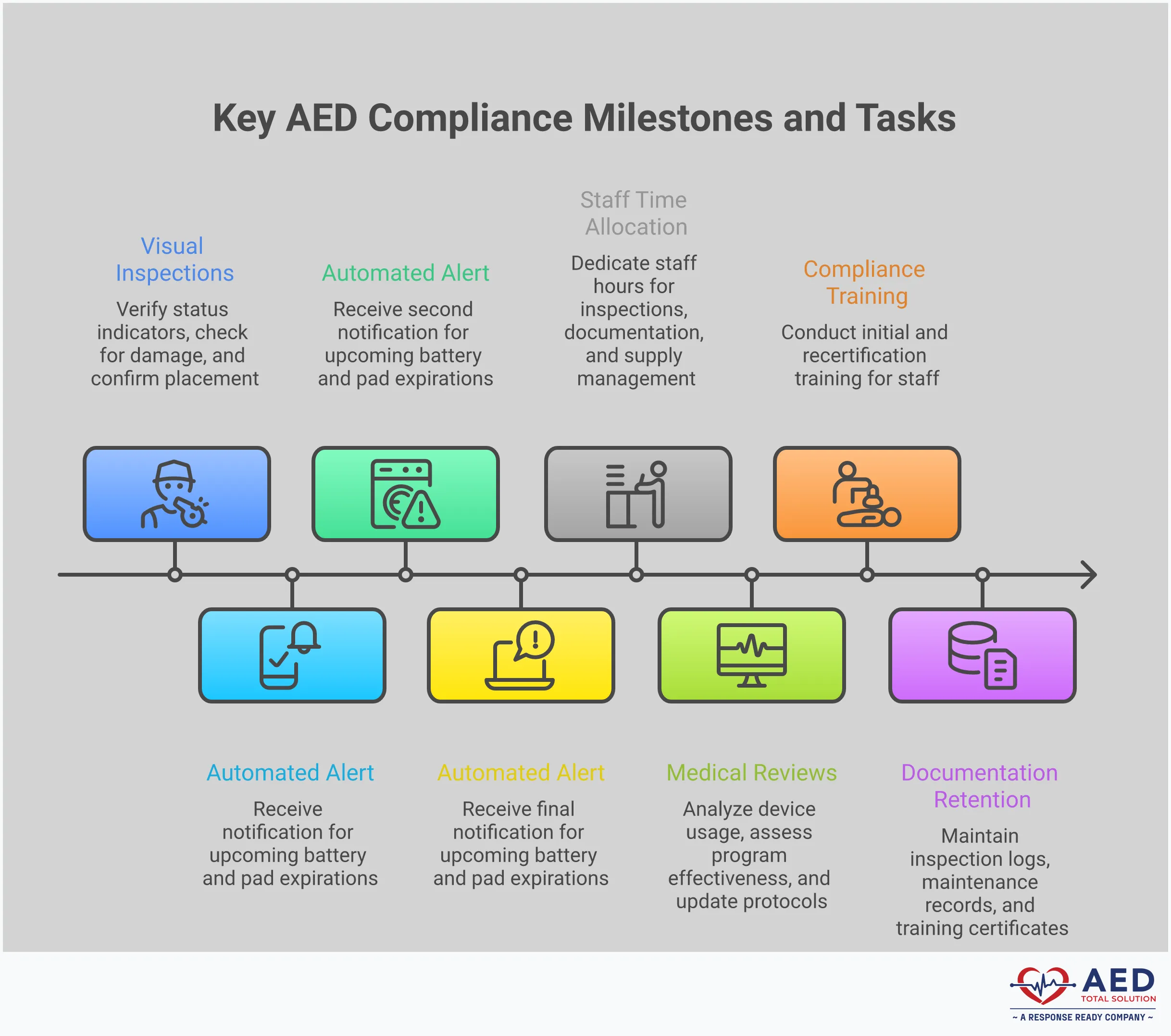
Cost and Resource Allocation
At first glance, managing your AED program in-house might seem like the most cost-effective option. But it’s important to look beyond the surface. The hidden costs of an internal program include the hours your staff spends on inspections, documentation, and training—time they could be dedicating to their primary roles. More importantly, a single missed inspection or expired battery can lead to device failure, regulatory fines, and significant legal liability. A professional management service helps minimize lawsuit potential by creating a complete, audit-ready record of compliance. Outsourcing isn’t just an expense; it’s a predictable investment in protecting your organization and freeing up your team’s valuable time.
Expertise and Reliability
AED compliance is a specialized field with regulations that vary by state and are constantly evolving. Can the employee you’ve tasked with managing your program keep up with these changes while juggling their other duties? An outsourced partner lives and breathes AED compliance. This is their core function, so you can leverage their expertise to ensure your program meets the latest standards. Reliability is another key factor. If your designated employee goes on vacation, takes sick leave, or leaves the company, who takes over? An outsourced program provides uninterrupted oversight, so there are never any gaps in your AED’s readiness or your program’s compliance.
Day-to-Day Administrative Work
The daily, weekly, and monthly tasks required to maintain an AED program are surprisingly demanding. You have to conduct and log routine inspections, track the expiration dates of electrode pads and batteries for every device, and ensure all documentation is perfectly organized for a potential audit. This administrative work is tedious and, unfortunately, easy to forget when your team is focused on other priorities. A dedicated management service handles all of it for you. By using a system that automates reminders and tracks every detail, you can reduce the administrative burden on your staff and gain confidence that nothing will ever be overlooked.
What a Great AED Management Program Looks Like
When you’re responsible for an AED program, “good enough” isn’t an option. A truly great program gives you complete confidence that every device is ready to save a life, every single day. It moves beyond simple tracking spreadsheets and into a proactive system that handles the details for you, so you can focus on the bigger picture. This level of readiness isn’t built on hope; it’s built on a foundation of clear, consistent processes that remove the risk of human error.
A top-tier AED management program isn’t just about having the equipment. It’s about having a robust system that ensures every device is compliant, functional, and accounted for at all times. This system should feel less like a burden and more like a safety net, protecting both the people in your buildings and your organization itself. The best programs are defined by four key features that work in harmony: consistent oversight, smart automation, organized documentation, and scalable management. When these elements are in place, they create a program that is not just compliant on paper, but truly response-ready when seconds matter most.
Consistent Inspections and Maintenance
A great AED program runs on routine. Regular, documented inspections are the backbone of readiness, ensuring that batteries have a charge, pads are within their expiration date, and the device passes its self-tests. The key here is consistency. Sporadic checks leave dangerous gaps in your program’s reliability. An outsourced partner ensures there is a complete record of inspections and maintenance, which is critical for compliance and reducing legal risk. This systematic oversight means nothing gets missed, and every AED is verified as ready for use according to a strict schedule, taking the guesswork and administrative load off your team.
Automated Alerts and Reminders
Relying on a calendar reminder or a sticky note to track AED maintenance is a recipe for failure. A modern, effective program uses technology to do the heavy lifting. You should receive automated alerts for upcoming pad and battery expirations, reminders for scheduled inspections, and notifications if a device fails its readiness check. This proactive approach eliminates human error and ensures critical tasks are handled on time, every time. It also helps your organization stay current with the latest AED laws and regulations, making sure your program remains fully compliant without you having to constantly monitor for changes.
Always-Ready Documentation for Audits
An internal audit or a visit from a regulatory body shouldn’t send your team scrambling for paperwork. With a great management program, your documentation is always organized, complete, and ready for review. This includes records of every inspection, maintenance activity, and staff training session, all stored in a centralized, easily accessible location. Having this audit-ready documentation on hand demonstrates a serious commitment to safety and compliance. More importantly, it provides a clear, defensible record of due diligence that protects your organization from potential liability and confirms your AEDs are properly managed.
Seamless Management Across Multiple Locations
Managing one AED is a challenge; managing dozens across multiple sites can feel impossible without the right system. A great program provides a single, interactive dashboard to oversee every device in your portfolio, no matter where it’s located. This centralized system gives you a bird’s-eye view of your entire program’s health, allowing you to track inspections, monitor supply levels, and ensure compliance uniformity across all locations. It simplifies complexity, standardizes procedures, and makes it easy to confirm that every single one of your AEDs is ready to respond in an emergency.
Ready to Outsource? Here’s How to Start
Making the switch to an outsourced AED program is a straightforward process when you partner with the right team. A good provider won’t just hand you a login and walk away; they’ll guide you through a structured transition designed to set your program up for long-term success. This isn’t about adding another complex system to your plate. Instead, it’s about removing the guesswork and administrative headaches that come with managing AEDs, so you can focus on your primary responsibilities with complete peace of mind. The goal is to create a seamless system that integrates with your existing operations, empowers your team, and gives you confidence that every device is managed correctly from day one.
The entire process can be broken down into three simple phases. First, a thorough assessment and setup creates a single source of truth for your entire AED inventory. Next, clear team training makes compliance a simple and routine part of your staff’s day. Finally, dedicated ongoing support means you always have an expert in your corner, handling the details so you don’t have to. This structured approach ensures that nothing falls through the cracks. Your new partner will handle the heavy lifting of auditing your current devices, establishing compliance protocols, and implementing a system that makes readiness checks and documentation practically effortless. It’s all about building a strong foundation for a program that protects your people and your organization.
Your Initial Program Assessment and Setup
The first step is a comprehensive review of your existing AED program. Your management partner will perform a detailed audit of every device, checking serial numbers, battery and pad expiration dates, and current placement. They’ll also review your current documentation and cross-reference everything with state and local regulations to identify any compliance gaps. This initial deep dive is crucial because it establishes a clean, accurate baseline for your entire program. From this point forward, you’ll have a complete record of compliance and maintenance, which is essential for minimizing liability and ensuring every AED is accounted for and ready to use.
Training Your Team for a Smooth Transition
Once your program is set up in the management system, the focus shifts to your team. A great partner ensures your onsite staff feels comfortable and confident with their role in the new process. This usually involves a simple, clear training on how to use the management platform to log routine inspections. Modern AED management systems are designed to be user-friendly, often using mobile apps with guided checklists that take just a few minutes to complete. This transition empowers your team by giving them easy-to-use tools that simplify their responsibilities, replacing manual logs and spreadsheets with a streamlined, interactive system.
Ongoing Support and Program Improvement
Outsourcing your AED program is not a one-time setup; it’s a continuous partnership. After the initial transition, your provider will manage the day-to-day details that keep your program running smoothly. This includes sending automated reminders for inspections, tracking consumable expiration dates, and shipping replacement batteries and pads before they expire. A top-tier compliance management service also stays on top of changing regulations, ensuring your program remains compliant year after year. This ongoing oversight allows you to focus on your core responsibilities, knowing an expert team is dedicated to maintaining the readiness of your entire AED fleet.
Related Articles
- Top 4 AED Compliance Management Software Platforms
- AED Program Management | Compliance and Maintenance
- AED Program Manager: A Complete Compliance Guide
Frequently Asked Questions
Is outsourcing necessary if we only have one or two AEDs? That’s a great question, and the answer really comes down to risk versus resources. Even a single AED requires consistent monthly inspections, tracking for pad and battery expiration dates, and compliance with local regulations. Outsourcing ensures these critical tasks are never forgotten, which protects you from liability and guarantees the device is ready. It takes the burden off your team so a missed calendar reminder doesn’t turn into a failed rescue.
What’s the difference between a full-service management partner and just using AED tracking software? Think of it as the difference between having a map and having a personal guide. Tracking software is a tool that tells you what needs to be done—it sends reminders, but you still have to perform all the work and follow-up. A full-service partner is your guide; they actively manage the entire process. They don’t just send alerts; they ensure inspections are completed, ship replacement supplies automatically, and provide expert oversight to keep your program compliant and defensible.
If we outsource management, does our staff still have to do anything? Yes, but their role becomes much simpler and more focused. Your onsite staff will typically be responsible for performing quick, monthly visual inspections to confirm the AED is in place and the status indicator looks good. A good management service makes this incredibly easy with guided checklists on a mobile app that take just a minute to complete. Your partner handles all the complex administrative work, like tracking expiration dates, managing documentation, and staying on top of regulations.
What happens after an AED is used in an emergency? Does your service help with that? Absolutely. A comprehensive management partner supports you through the entire post-event process. After a device is used, they will help you download the event data for medical review, which is often a legal requirement. They also coordinate the replenishment of used electrode pads and ensure the device is cleaned, inspected, and returned to service as quickly as possible so it’s ready for the next emergency.
Don’t Good Samaritan laws protect us from liability anyway? Good Samaritan laws are designed to protect bystanders who voluntarily help in an emergency, but they generally don’t shield an organization from negligence. If your AED fails because it wasn’t properly maintained—for example, it had a dead battery or expired pads—your organization could be found liable. A professionally managed program provides a complete, audit-ready record of due diligence, proving you took every necessary step to keep your device in working order.