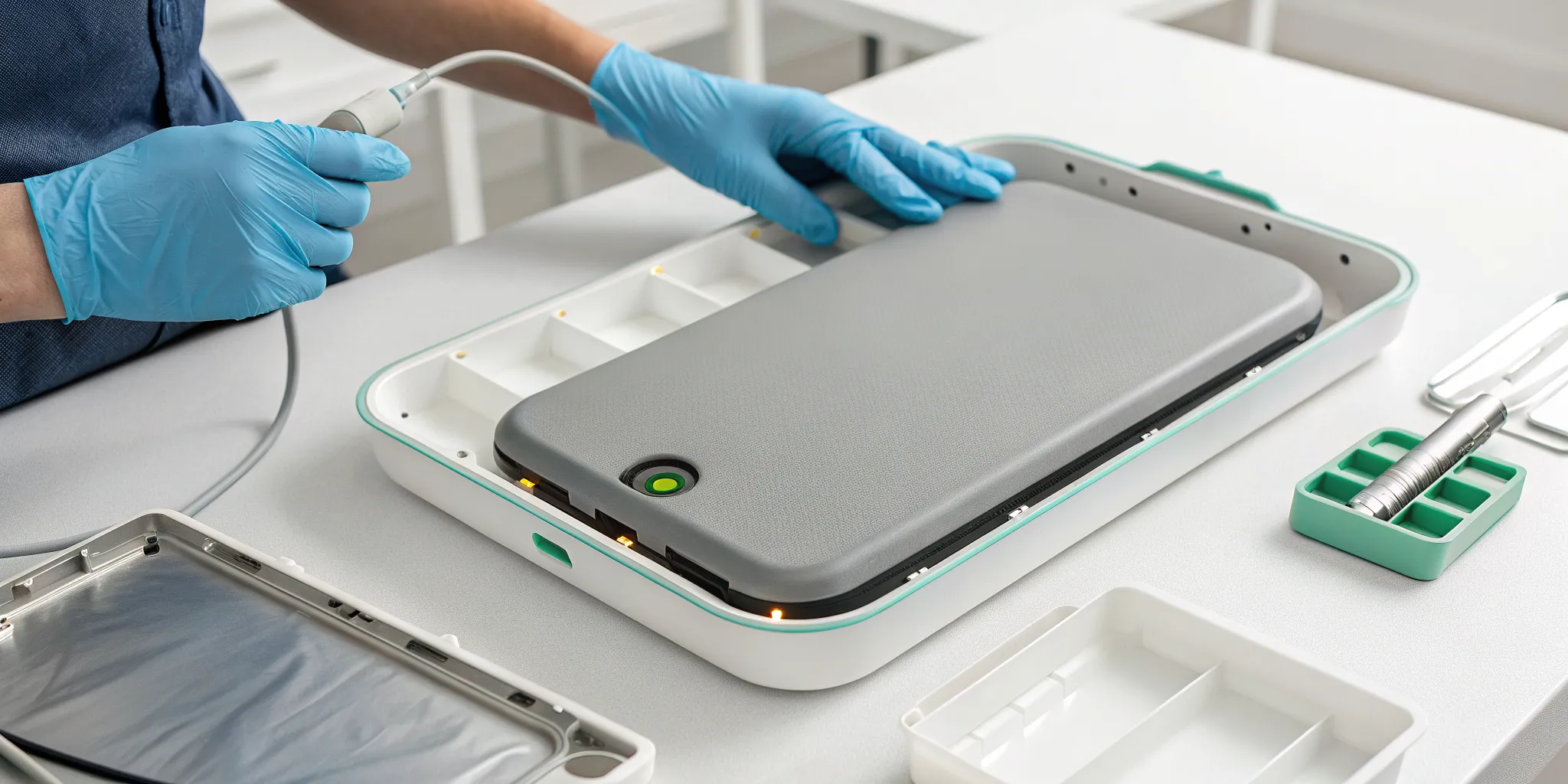
Choosing the right AED means finding a device you can count on in a crisis. That’s why so many heartsine samaritan pad 350p reviews point to its reliability. The HeartSine Samaritan PAD 350P and its fully automatic counterpart, the 360P, are built for fast, effective action. With a user-friendly design and durable build, they are perfect for any workplace or public space. This guide breaks down why these devices consistently get top marks in heartsine aed reviews, giving you the confidence to protect your community.
A Closer Look at the HeartSine Samaritan PAD 350P & 360P
The HeartSine Samaritan PAD 350P and 360P are reliable, easy-to-use AEDs. They help anyone respond with confidence in emergencies. Their small, light design makes these devices easy to carry and store. They are quick to access in a crisis. They are ideal for homes, workplaces, and communities. They provide a simple, effective solution for sudden cardiac emergencies. They ensure readiness wherever needed.
The HeartSine Samaritan PAD 350P and 360P use clear visuals and voice prompts to guide users. This ensures that anyone can use them with confidence, even without prior experience. These AEDs are simple. They allow you to respond in critical moments when every second counts.
The HeartSine Samaritan PAD 350P and 360P are durable and reliable. They can withstand harsh conditions, like water and dust exposure. These AEDs have a long-lasting battery and replaceable pads. They ensure performance and readiness in emergencies.
The Stryker HeartSine Samaritan PAD 350P and 360P help you in life-threatening emergencies. They provide the tools and confidence to do so. These AEDs let you respond quickly when every second counts. They’re for pros and those ready for the unexpected.
What Makes the HeartSine Samaritan PAD Stand Out?
Grab-and-Go: Compact and Lightweight
1. Portable and lightweight
The Samaritan PAD 350P and 360P are compact and light. They weigh 1.1 kg. This makes them more portable than many other defibrillators.
2. Durable, with an 8-year unit warranty.
The Samaritan PAD 350P can withstand shock and vibration. It has an IP56 rating for dust and moisture protection. It has an 8-year warranty. So, it ensures reliability in harsh conditions.
Clear Guidance When Every Second Counts
1. User-friendly
The Stryker HeartSine Samaritan PAD 350P and 360P have clear prompts. They are both visual and vocal. They include CPR coaching. These prompts guide users through every step of the emergency response process.
2. Two-button operation
The device has two buttons: ON/OFF and SHOCK. It is simple to use in an emergency.
3. Always ready
The System Status Ready Indicator flashes. It confirms the device is ready for use. The Samaritan PAD 350P and 360P check themselves weekly for reliability.
An Affordable and Practical Choice
1. Two parts, one end date.
The Pad-Pak™ cartridge combines the battery and electrode pads. It has one end date to track, so it is easier to maintain.
2. Low cost of ownership
The Pad-Pak™ has a four-year shelf life from the date of manufacture. It saves money and is easy to use. It eliminates the need for separate battery and pad replacements found in other AEDs.
The HeartSine Samaritan PAD 350P & 360P: Tech Specs
Physical (with pad-pak™ inserted)
- Size: 20 cm x 18.4 cm x 4.8 cm (8.0 in x 7.25 in x 1.9 in)
• Weight (including Pad-Pak Battery): 1.1 kg (2.4 lbs)
Defibrillator
- Waveform: Self-Compensating Output Pulse Envelope (SCOPE) Biphasic waveform. The optimized biphasic escalating waveform adjusts for patient impedance. It compensates for energy, slope, and envelope.
Energy selection
- Adult: Shock 1: 150 J; Shock 2: 150 J; Shock 3: 200 J
- Pediatric: Shock 1: 50 J; Shock 2: 50 J; Shock 3: 50 J
Charging time
- New Battery: Typically 150 J in < 8 seconds, 200 J in < 12 seconds
- After six discharges: typically 150J in < 8 seconds, 200J in < 12 seconds
Patient analysis system
- Method: Check the patient’s ECG, signal quality, electrode contact, and impedance. This will determine whether we need defibrillation.
- Sensitivity/Specificity: Meets ISO 60601-2-4
Materials used
- Housing: ABS, Santoprene
- Electrodes: Hydrogel, Silver, Aluminum, and Polyester
Pad-pak — electrode and battery cartridge
- Adult Pad-Pak (Pad-Pak-01/Pad-Pak-03)
Pediatric Pad-Pak (Pad-Pak-02/Pad-Pak-04) - Shelf Life: Four years from manufacture date
- Weight: 0.2 kg (0.44 lbs)
- Size: 10 cm x 13.3 cm x 2.4 cm (3.93 in x 5.24 in x .94 in)
- Battery Type: Lithium Manganese Dioxide (LiMnO2)
- Capacity: > 60 shocks at 200J18V, 1.5 Amp Hrs
- Electrodes: HeartSine samaritan® disposable defibrillation pads are supplied as standard with each device
- Placement: Anterior-lateral (Adult); Anterior-posterior (Pediatric)
- Active Gel Area: 100 cm2 (15.5 in2)
- Cable Length: 1 meter (3.3 feet)
Environmental
- Operating/Standby Temperature: 0°C to 50°C (+32°F to +122°F)
- Temporary Transportation Temperature: –10°C to 50°C (14°F to 122°F) for up to two days. You must return the unit to standby/operating temperature 24 hours before use.
- Relative Humidity: 5% to 95% (non-condensing)
- Water Resistance: IEC 60529/EN 60529 IP56
- Altitude: 0 to 4,575 meters (0 to 15,000 feet)
- Shock: MIL-STD-810F Method 516.5, Procedure I (40 Gs)
- Vibration: MIL-STD 810F Method 514.5. Category 4: Truck transport on U.S. highways. Category 7: Plane, jet 737, & general aviation (exposure).
- EMC: EN 60601-1-2
- Radiated Emissions: EN 55011
- Electrostatic Discharge RF Immunity: EN61000-4-3 80 MHz-2.5 GHz (10 V/m)
- Magnetic Field Immunity: EN 61000-4-8 (3 A/m)
- Plane: RTCA/DO-160F, Section 21 (Category M)
- Falling Height: 1 meter (3.3 feet)
Event documentation
- Type: Internal Memory
- Memory Capacity: 90 minutes of ECG (full disclosure) and event/incident recording.
- Playback: A custom USB cable connects to a PC and Saver™ EVO software.
How Does the HeartSine Samaritan PAD AED Work?
Before using an AED, confirm the patient has sudden cardiac arrest. Don’t use the HeartSine Samaritan PAD 350P and 360P on conscious, responsive individuals.
The HeartSine Samaritan PAD 350P and 360P use an advanced algorithm. The system analyzes the patient’s heart rhythm to determine if it needs to deliver a shock.
If a shock is needed, the HeartSine Samaritan PAD will start charging. It instructs the user to press the shock button on the 350P model. The 360P model delivers the shock without manual intervention. The device pauses to allow someone to perform CPR if it does not need a shock.
The device has a built-in metronome and visual prompts. They guide users to maintain the correct pace and depth for chest compressions. This ensures effective CPR in an emergency.
Your Guide to Using the HeartSine Samaritan PAD
Our HeartSine AED Review: The Top Advantages
Get Real-Time CPR Coaching
Clear prompts guide users step by step through resuscitation, including CPR help.
Designed for Simplicity Under Pressure
The device is simple. It has an easy one- or two-button operation.
Take It With You Anywhere
It is the lightest, most compact AED. So, it is easy to transport and fits in tight spaces.
An Affordable Long-Term Solution
The Pad-Pak has a four-year shelf life. It is a cheap solution. It eliminates the need for separate battery and electrode replacements.
Built to Withstand Tough Conditions
It features an IP56 rating, providing one of the highest levels of protection in the industry.
Backed by a Solid 8-Year Warranty
The AED has an 8-year warranty. It ensures reliability and peace of mind.
FAQs
HeartSine 350P vs. 360P: What’s the Difference?
The HeartSine Samaritan PAD 350P is semi-automatic. The 360P model operates automatically. It delivers a shock without any user action.
How Do You Activate the HeartSine Samaritan PAD?
The HeartSine Samaritan PAD 350P and 360P activate with the On/Off button. They then provide clear instructions to guide you.
What’s the Battery Life of the Pad-Pak?
The HeartSine Samaritan PAD 350P and 360P models have batteries. They can deliver over 60 shocks at 200 J or provide up to 6 hours of continuous use.
When Should You Replace the Pad-Pak?
The battery has a lifespan of up to four years and can deliver up to ten shocks during that period. After four years, we need to replace it. It uses a lithium manganese dioxide (LiMnO2) battery.
Who Should Use the HeartSine Samaritan PAD?
Designers created the Samaritan PAD 350P for public spaces and home environments.
Is Special Training Required to Use This AED?
You do not need special training to operate the Samaritan PAD 350P or 360P. Its simple design makes it easy to use with a quick review of the user manual or instructional video. Yet, you should get CPR training. It will help you respond in an emergency.
Comparing HeartSine Models: 350P vs. 360P vs. 500P
HeartSine offers a focused lineup of Samaritan PAD AEDs, and choosing the right one comes down to your environment and the potential user’s comfort level. The core technology is consistent across the models, but the key differences lie in how the shock is delivered and whether the device provides real-time feedback on CPR performance. The 350P is a semi-automatic device, giving the rescuer final control over administering the shock. The 360P is fully automatic, designed to reduce hesitation by delivering the shock on its own when needed. Finally, the 500P builds on the semi-automatic platform by adding an advanced CPR feedback feature that coaches the user on the quality of their chest compressions. Understanding these distinctions will help you select the best AED for your organization’s emergency response plan.
The HeartSine Samaritan PAD 350P: Semi-Automatic
The HeartSine Samaritan PAD 350P is a semi-automatic AED, which means it guides the rescuer through the entire process but requires them to take one final, critical action. After analyzing the patient’s heart rhythm and determining a shock is necessary, the device will instruct the user to press the flashing shock button. This design is often preferred in environments where responders have some level of training and are comfortable with having manual control over the shock delivery. It ensures that no shock is given until the rescuer has confirmed that everyone is clear of the patient, providing an added layer of control in a high-stress situation.
The HeartSine Samaritan PAD 360P: Fully-Automatic
For public spaces where a layperson with no training is the most likely rescuer, the HeartSine Samaritan PAD 360P is an excellent choice. As a fully automatic AED, it is designed to simplify the process and minimize rescuer hesitation. If the device detects a shockable heart rhythm, it will issue a clear verbal warning to stand back and then deliver the shock automatically, without requiring anyone to press a button. This feature can be invaluable during a chaotic emergency, as some people may hesitate to press the shock button themselves. The 360P removes that psychological barrier, ensuring that life-saving therapy is delivered as quickly as possible.
Reducing Hesitation in an Emergency
In the middle of a cardiac emergency, stress and panic can cause even well-intentioned people to freeze. The decision to press a button that delivers an electrical shock is a heavy one, and this hesitation can cost precious seconds. The 360P’s fully automatic operation is specifically designed to address this. By taking that final step out of the rescuer’s hands, the device ensures the emergency response protocol continues without delay. It delivers the shock automatically, allowing the rescuer to focus entirely on following the other voice prompts, like performing CPR and ensuring the scene is safe for everyone involved.
The HeartSine Samaritan PAD 500P: With CPR Feedback
The HeartSine Samaritan PAD 500P takes emergency response a step further by integrating real-time CPR feedback. While delivering a shock is critical, the quality of chest compressions performed between shocks is just as important for survival. The 500P uses an Impedance Cardiogram (ICG) to analyze the effectiveness of the CPR being administered. Based on this analysis, it provides the rescuer with clear, real-time verbal prompts like “Push harder,” “Push faster,” or “Good compressions.” This feature essentially provides professional-level coaching to a lay rescuer, helping them perform high-quality CPR and significantly improving the victim’s chance of a positive outcome.
Real-Time Coaching for Better Compressions
Effective CPR requires pushing on the chest at the right depth and rate, which is difficult to gauge without training, especially under pressure. The 500P’s live feedback removes the guesswork. The clear, simple prompts guide the user to make immediate corrections, ensuring blood continues to flow to the brain and other vital organs. This coaching empowers anyone to perform CPR with confidence, turning a stressful and uncertain situation into a structured, effective response. By focusing on improving CPR quality, the 500P provides a more comprehensive life-saving solution.
Purchasing a HeartSine Samaritan PAD
When you decide to purchase an AED, you’re investing in readiness. The process involves more than just selecting a model; it’s also about understanding what comes with the device, navigating FDA requirements, and planning for potential supply chain issues. A standard HeartSine AED package includes all the essential components to get you started, but you’ll also want to consider accessories that can make your program more effective. Knowing the full picture of pricing, availability, and regulatory needs ensures you can build a comprehensive and compliant safety program from day one, without any surprises along the way.
What’s Included with Your Purchase?
When you purchase a HeartSine Samaritan PAD, you typically receive a package designed to make you response-ready right out of the box. A standard purchase includes the AED unit itself, a durable soft-shell carrying case for portability and protection, and one adult Pad-Pak. The innovative Pad-Pak combines the battery and electrode pads into a single cartridge with one expiration date, simplifying maintenance. You will also receive the user manual and other essential documentation. This all-in-one approach ensures you have the core components needed to deploy the device immediately upon arrival.
Pricing and Availability
The HeartSine Samaritan PAD models are competitively priced, with units generally starting around $1,485. The final cost can vary depending on the specific model you choose (350P, 360P, or 500P) and whether you bundle it with additional accessories like a wall cabinet or a pediatric Pad-Pak. It’s important to factor in the long-term cost of ownership, where HeartSine excels due to its four-year Pad-Pak shelf life. However, global supply chain issues have recently impacted availability across the industry, making it crucial to verify shipping timelines before you buy.
Current Shipping Delays
It’s important to be aware that significant manufacturer delays are currently affecting HeartSine AED shipments. As of now, new orders for the 360P model are not expected to ship until late 2025, with the 350P facing even longer waits. These delays can leave your organization unprotected for an extended period. To bridge this gap, consider an AED rental program. Renting allows you to have a fully compliant, response-ready device on-site within days, ensuring you meet safety and legal requirements while you wait for your purchased unit to arrive.
FDA Approval and Prescription Requirements
Automated External Defibrillators are classified by the FDA as Class III medical devices. Because of this classification, a physician’s prescription is required to purchase one. While this might sound like a complicated step, most reputable AED suppliers, including AED Total Solution, handle this for you. The medical prescription is typically included with your purchase and managed by the vendor’s medical director. This process ensures that the sale is compliant with federal regulations, and it’s one less piece of paperwork for you to worry about when setting up your AED program.
Enhancing Your AED Program with Accessories and Management
Simply owning an AED is not enough to guarantee readiness; a successful program is built around the device. This means choosing the right accessories to ensure your AED is visible, secure, and ready for any situation, while also implementing a system for ongoing oversight. Accessories like wall cabinets and pediatric pads prepare you for different environments and victims, while remote monitoring technology can automate readiness checks. Most importantly, comprehensive AED program management ties everything together, handling compliance, maintenance tracking, and documentation to ensure your device is always ready and your organization is protected from liability.
Optional Accessories
To make your AED program more robust, you can supplement your HeartSine PAD with several key accessories. If your facility is frequented by children under 8 years old or weighing less than 55 lbs, a Pediatric-Pak is essential for delivering a reduced-energy shock. For visibility and security, an alarmed AED wall cabinet keeps the device protected and easy to locate in an emergency. You might also consider adding a first aid kit or a response kit that includes items like trauma shears, gloves, and a CPR mask to be fully prepared for any scenario.
AED Wall Cabinets
An AED wall cabinet is one of the most important accessories for any program. It provides a secure, designated home for your device, protecting it from dust, damage, or theft. More importantly, a highly visible cabinet ensures that anyone can find the AED quickly in an emergency. Many cabinets are equipped with an alarm that sounds when the door is opened. This not only deters tampering but also serves as an immediate alert to everyone in the vicinity that a medical emergency is in progress, helping to summon additional assistance.
HeartSine Gateway for Remote Monitoring
The HeartSine Gateway is an optional accessory that brings your AED program into the modern age. This device connects to your AED and uses Wi-Fi to communicate its status to an online dashboard. It automatically tracks the results of the AED’s weekly self-tests, the battery level, and the Pad-Pak expiration date. If an issue is detected—like a low battery or a failed self-test—it sends an alert immediately. This technology automates readiness checks, providing peace of mind that your AED is functional without requiring constant manual inspections.
The Importance of AED Program Management
Owning an AED comes with ongoing responsibilities that are easy to overlook. You have to track Pad-Pak expiration dates, document monthly readiness checks, stay current with state and local compliance laws, and be prepared for a recall or software update. This administrative work can become a major burden, especially for organizations with multiple devices. This is where a full-service AED program management solution like AED Total Solution becomes invaluable. We handle every aspect of compliance and readiness—from remote monitoring and supply replenishment to audit-ready documentation—so you can be confident your program is always protected and prepared.
About the Manufacturer: HeartSine
HeartSine Technologies has a rich history rooted in the advancement of defibrillation technology. The company was founded by Professor John Anderson, a key figure in the development of the world’s first mobile coronary care unit in the 1960s. This legacy of innovation and commitment to saving lives is at the core of every Samaritan PAD. Based in Belfast, Northern Ireland, HeartSine is now part of Stryker, one of the world’s leading medical technology companies. This backing provides HeartSine with robust resources for research, development, and manufacturing, ensuring their devices remain at the forefront of life-saving technology while being accessible globally.
A Stryker Company Made in Northern Ireland
HeartSine’s products are proudly developed and manufactured in Belfast, Northern Ireland. In 2015, the company was acquired by Stryker, a global leader in medical devices and equipment. This acquisition integrated HeartSine’s expertise in public-access defibrillation into Stryker’s broader emergency care portfolio. For customers, this means that every HeartSine AED is backed by the quality standards, extensive research capabilities, and global reputation of a major medical technology corporation. It’s a powerful combination of focused innovation and corporate stability, ensuring reliability and support for every device.
Commitment to Training
While HeartSine AEDs are designed for use by anyone, regardless of training, the company strongly supports education to build responder confidence. HeartSine and its network of distributors work to provide resources and connect customers with local representatives who can offer more information on device operation and CPR/AED training courses. This commitment reflects an understanding that technology alone isn’t the whole solution. A truly effective emergency response program combines a reliable, easy-to-use device with people who feel prepared and empowered to act when seconds matter most.
Is the HeartSine Samaritan PAD Right for You?
The HeartSine Samaritan PAD 350P and 360P are ideal for public and home use. They combine simplicity, reliability, and advanced technology. These AEDs have a durable design. Their features are easy to navigate. They provide clear emergency guidance. They empower anyone to act with confidence during critical moments. Investing in these devices ensures you can provide life-saving support. They will give you peace of mind and improve safety.
Key Takeaways
- Designed for real-world use: The HeartSine Samaritan PAD features a compact, durable build and provides clear voice and visual prompts, helping anyone act with confidence during an emergency.
- Choose the right model for your environment: Select the semi-automatic 350P for manual shock control, the fully-automatic 360P to reduce rescuer hesitation, or the 500P for real-time CPR feedback that coaches users on effective compressions.
- A complete program ensures readiness: An AED is only effective with a management plan that tracks maintenance, ensures compliance, and addresses challenges like shipping delays by considering practical solutions like renting.
Related Articles
Disclaimer for information purposes only:
The information provided on this website is intended for general educational and informational purposes only. It is not medical advice and should not be used as a substitute for professional diagnosis, treatment, or care. Always consult a qualified healthcare or medical professional regarding any health-related questions or concerns.
While we strive to ensure the information shared is accurate and up to date, no guarantees are made regarding completeness, accuracy, or applicability to any individual situation. Use of this content is at the reader’s sole discretion and risk.
This website is part of the Response Ready family of emergency preparedness and training resources, including CPR & first aid training and compliance services, AED sales and program support, AED program management software, and medical oversight solutions provided through our affiliated platforms:
• CPR1.com
• AEDLeader.com
• ResponseReady.com
• MDSIMedical.com
By accessing or using this website, you agree to release, indemnify, and hold harmless the website owners, authors, contributors, and affiliated entities from any claims, losses, damages, or liabilities arising from the use or reliance on the information presented.