A working AED is your first line of defense during a sudden cardiac arrest, but what happens if its battery is dead? Or if its pads expired three months ago? For multi-location businesses, these small oversights can create significant legal risks. Many people assume Good Samaritan laws offer total protection, but that immunity often depends on proving the device was properly maintained. This is why enterprise AED compliance is so critical. It moves your program from a place of hope to a position of certainty, creating a documented, audit-ready system that protects your organization and ensures you are always prepared for an emergency.
Key Takeaways
- A successful program is more than the device: True readiness depends on a complete management system that includes consistent maintenance, ongoing staff training, and clear documentation to ensure every location is prepared.
- Centralize your program management: Using a single system to oversee all your AEDs eliminates the guesswork and human error of manual tracking, providing automated alerts for maintenance and a clear view of compliance across every site.
- AEDs require active, ongoing oversight: These are not set-it-and-forget-it tools; regular inspections and timely replacement of batteries and pads are critical for ensuring a device will work during an emergency and for protecting your organization from liability.
What is Enterprise AED Compliance?
When you manage AEDs across multiple locations, compliance becomes a much bigger puzzle. Enterprise AED compliance isn’t just about having a device in the building; it’s about creating a reliable, documented system that ensures every single AED is ready to save a life. This means tracking everything from battery expiration dates and pad replacements to local registration requirements and staff training. It’s a proactive approach that protects your people and your organization from risk.
Understanding the Legal Landscape
First things first: as an AED owner, you are legally responsible for making sure your devices are ready to respond in an emergency. The rules aren’t the same everywhere, either. Businesses have to follow a mix of state and national laws that can change from one location to the next, which can be a major challenge for multi-site organizations. Even the “Good Samaritan Laws” that protect people who use AEDs often come with a catch: they only apply if the devices are properly maintained. This means that keeping your program in good standing isn’t just a best practice, it’s a legal necessity that directly impacts your liability.
Why a Strong AED Program is Good for Business
Beyond the legal requirements, a well-managed AED program is simply good for business. Think of it as a framework built from essential components: the right people, reliable equipment, and clear procedures that guide your team’s response during an emergency. Investing in this framework does more than just check a compliance box. It creates a safer workplace and shows your team you care about their well-being. Providing AED and CPR training also gives your staff valuable skills and confidence, turning a regulatory task into a meaningful professional development opportunity. A strong program protects your people, reduces liability, and builds a culture of preparedness.
Key Features of an Enterprise AED Solution
Managing AEDs across multiple locations can feel like a logistical puzzle, especially as your organization grows. When you’re dealing with dozens or even hundreds of devices, a simple spreadsheet and a calendar reminder just won’t cut it. That’s where an enterprise AED solution comes in. It’s not just about buying AEDs; it’s about building a comprehensive system that ensures every single device is ready to perform in an emergency, no matter where it is.
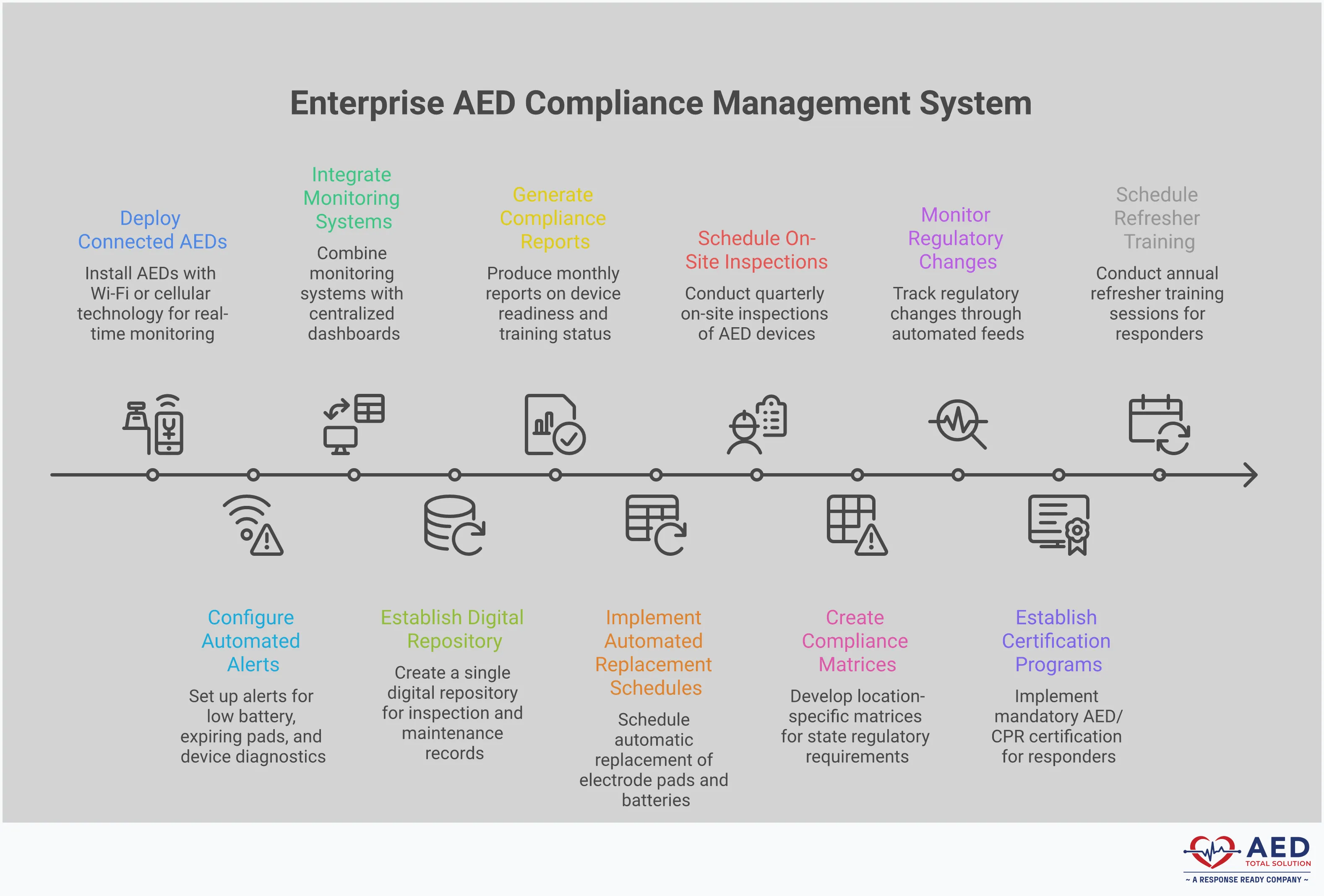
A true enterprise solution shifts your program from reactive to proactive. Instead of discovering a problem during a manual check (or worse, during an emergency), the system identifies issues ahead of time. It’s built around a framework that automates, centralizes, and simplifies every aspect of your program, from tracking battery life to documenting inspections. This approach is less about the hardware itself and more about the operational backbone that keeps every device ready and every location compliant. The right system gives you confidence that your program is working correctly without requiring constant manual effort from your team. It’s about creating a reliable, scalable, and defensible safety net for your employees and customers. Here are the core features that make that possible.
Automated Monitoring and Alerts
A great enterprise AED program works for you, not the other way around. Automated monitoring is like having a virtual team member watching over every single device, 24/7. Instead of relying on someone to physically check each AED, the system keeps tabs on its readiness status. If a battery is running low, a set of electrode pads is about to expire, or a device fails its self-test, you receive an immediate alert. This proactive approach catches small issues before they become serious problems, ensuring every AED is ready to use when an emergency strikes. It’s a key part of a modern, hands-off AED management program.
Centralized Program Management
When your AEDs are spread across different buildings, cities, or even states, you need a single source of truth. Centralized program management gives you a dashboard where you can see the status of your entire AED fleet at a glance. From this one hub, you can track device locations, view inspection histories, and confirm compliance across all sites. This eliminates the need to chase down information from different location managers or sift through scattered records. It provides a clear, top-down view that simplifies oversight and helps you make informed decisions about your entire emergency preparedness strategy.
Simplified Maintenance and Documentation
Keeping up with maintenance schedules and paperwork is one of the biggest challenges for large AED programs. A full-service solution takes this burden off your plate. It automatically tracks expiration dates for batteries and pads and coordinates replacements so your devices are never out of service. Every inspection, service call, and status update is meticulously logged without you lifting a finger. This creates a complete and accurate history for each device, which is essential for demonstrating compliance. This level of hands-on support ensures your program runs smoothly and your records are always in order.
Audit-Ready Reporting
In the event of an incident or a compliance audit, you need to be able to prove your AED program is well-managed. That’s where audit-ready reporting comes in. A robust enterprise solution provides clear, professional reports that document every aspect of your program’s health and compliance. These reports detail inspection histories, maintenance activities, and device readiness, confirming that you’ve met all legal and regulatory requirements. Having this documentation readily available not only reduces legal risk but also gives your leadership team confidence that the organization is fully prepared and protected.
Choosing the Right AEDs for Your Enterprise
Picking the right AEDs for your organization can feel like a big decision, and it is. But it’s important to remember that the device itself is just one component of a successful readiness program. The best AED for your enterprise is one that not only meets clinical standards but also fits seamlessly into your management and compliance system. Think of it less like buying a single product and more like choosing a key piece of a larger safety infrastructure. Let’s walk through what features matter most when you’re scaling a program across multiple sites.
Essential Device Features for Large-Scale Programs
When you’re managing AEDs across different locations, consistency and reliability are everything. Look for devices that are incredibly user-friendly, with clear voice prompts and visual guides that can walk a first-time rescuer through the entire process. Durability is also key, especially for devices in high-traffic or industrial settings. A strong AED program is built on a framework of reliable equipment, clear procedures, and trained people. Your devices should have long-lasting batteries and pads to minimize frequent replacements and reduce the maintenance burden on your team. The goal is to choose hardware that simplifies, rather than complicates, your overall safety plan.
The Role of Connectivity in Modern AEDs
Modern AEDs are now available with connectivity features that completely change how you manage them. A connected AED uses Wi-Fi or cellular technology to monitor its own readiness status in real time. Instead of relying on manual monthly checks, the device can automatically report if its battery is low, its pads are expiring, or if it fails a self-test. This technology provides peace of mind by ensuring every device is ready to go at a moment’s notice. For an enterprise with dozens or even hundreds of AEDs, this automated oversight is essential for maintaining compliance and reducing the risk of having a non-functional device during an emergency.
Why Program Management Matters More Than Brand
It’s easy to get caught up comparing different AED brands, but the truth is, the brand name on the device is less important than the program you build around it. Even the most advanced AED is ineffective if its battery is dead, its pads are expired, or no one can find it when it’s needed. A strong, practical AED program ensures you’re truly prepared for emergencies. This is where comprehensive program management becomes critical. It’s the system of checks, balances, and documentation that guarantees every device is tracked, maintained, and ready for use, turning your investment into a reliable, life-saving asset.
Integrating Devices into a Compliance System
Your AEDs don’t exist in a vacuum. They are part of a larger compliance ecosystem that includes your staff, your procedures, and your documentation. Integrating your devices means ensuring they work in harmony with your entire safety plan. This includes everything from proper registration with local EMS to tracking employee training and certifications. Investing in AED and CPR training is a critical step, as it empowers your team to act confidently. A truly effective enterprise solution connects the hardware to the people, ensuring your program is always audit-ready and, more importantly, response-ready.
What Does Enterprise AED Compliance Cost?
When you think about the cost of an AED program, the price of the device is just the starting point. A truly compliant and effective program involves a mix of initial investments, ongoing maintenance, and long-term management. Viewing these costs as an investment in your team’s safety and your organization’s liability protection helps frame the budget correctly. The total cost of ownership covers everything from the hardware and cabinet on the wall to the training, inspections, and documentation required to keep your program ready and audit-proof. Breaking down the expenses helps you see the full picture and plan for a program that is both effective and sustainable for years to come.
Initial Setup and Implementation
Your initial investment goes beyond the AEDs themselves. First, you’ll need to purchase the right devices and accessories like cabinets and signage for each location. Just as important is establishing the foundation of your program. This includes developing written policies and a clear emergency response plan that outlines exactly how your team should act during a sudden cardiac arrest event. Finally, you need to account for training. Providing your staff with certified AED and CPR courses is essential for building confidence and ensuring your team is prepared to respond effectively. This initial setup creates the framework for a successful and compliant program from day one.
Ongoing Maintenance and Monitoring
Once your program is up and running, ongoing costs ensure it stays ready. AEDs require regular attention. Electrode pads and batteries have expiration dates and must be replaced periodically, typically every two to four years. Beyond consumables, consistent inspections are critical to confirm each device is in working order. This is where a dedicated management solution becomes invaluable. Instead of relying on manual spreadsheets, a comprehensive service tracks maintenance schedules, monitors device status, handles FDA recall notifications, and ensures every action is documented. This proactive approach keeps your AEDs compliant and ready for an emergency, while saving your team significant administrative time.
Planning for Long-Term Program Costs
A strong AED program is built for the long haul, and your budget should reflect that. AEDs have a typical lifespan of eight to ten years, so you’ll need to plan for eventual device replacement. Another key consideration is the internal administrative cost. How much time will your staff spend managing inspections, tracking expiration dates, and keeping up with changing state regulations? For many organizations, partnering with an AED program management provider is the most cost-effective solution. It consolidates unpredictable expenses into a clear, predictable fee and gives you confidence that every detail is handled correctly. You can find answers to more specific budget questions on our FAQ page.
How AED Regulations Vary by State
When it comes to AED compliance, there’s no single rulebook to follow. The legal landscape is a patchwork of federal recommendations, specific state laws, and even industry-specific standards. For any organization, especially one with multiple locations, understanding these layers is the first step toward building a program that is both effective and legally sound. What’s required in one state might be just a suggestion in another, making a centralized approach to compliance absolutely essential.
Federal Guidelines vs. State Requirements
Think of federal guidelines as the floor, not the ceiling. While there is no federal law mandating AEDs in all workplaces, agencies like OSHA provide guidance on their use as part of a first-aid program. Federal laws also established the foundation for Good Samaritan protections, which offer liability immunity to those who use an AED in good faith. However, states take it from there. Some states require routine maintenance, while others don’t. Many mandate that you notify local EMS of your device’s location, and over half have specific training requirements. This variability means you can’t assume compliance in one state translates to another.
State-Specific Registration and Mandates
Digging deeper, you’ll find that each state has its own set of rules. For example, some states require you to register your AED with a local emergency response agency, ensuring that 911 dispatchers know a device is nearby. Others mandate AED placement in certain types of facilities, such as schools, gyms, or government buildings. For an enterprise operating across state lines, this creates a significant administrative challenge. The documentation, inspection frequency, and training protocols required for your Texas location could be completely different from your office in New York. Keeping track of these distinct requirements is critical for avoiding fines and reducing liability.
Understanding Industry-Specific Standards
On top of federal and state rules, your industry may have its own standards of care. Organizations like the American Heart Association and the National Institutes of Health publish best practices that can influence legal expectations. A complete AED program isn’t just about buying a device; it’s about creating written policies and practical steps that prepare your team for an emergency. This includes everything from device placement to post-event reporting. A comprehensive program management solution helps ensure you meet not only legal requirements but also the established best practices for your specific field, giving you confidence that your program is truly ready.
Common Challenges in Enterprise AED Compliance
Setting up an AED program is a critical first step, but for large organizations, the real work is in the ongoing management. As your company grows, scaling your AED program introduces a new set of complexities that can quickly become overwhelming. From tracking devices across state lines to ensuring every new hire knows the emergency plan, maintaining compliance and readiness requires a solid strategy. Let’s walk through some of the most common hurdles enterprises face and how you can start to address them.
Managing Multiple Locations
Keeping employees and customers safe is a priority, but ensuring a consistent standard of care across dozens or even hundreds of locations is a major logistical challenge. Each site might have different managers, layouts, and local regulations, making it difficult to enforce a uniform AED protocol. Without a centralized system, you can end up with a patchwork of well-maintained devices and forgotten ones. True enterprise compliance depends on a unified AED program management system that provides a clear, top-down view of every device, ensuring no location falls through the cracks. This approach guarantees that every AED, no matter where it is, is ready to perform when needed.
Addressing Staff Turnover and Training
An AED is only effective if your team feels confident using it. With staff turnover, initial training sessions quickly become outdated, leaving new employees unprepared during an emergency. An effective program requires continuous education, including tracking certifications, scheduling refresher courses, and ensuring everyone knows the location of the nearest AED. Investing in ongoing AED/CPR/First Aid training courses not only keeps your team ready but also reinforces a culture of safety. For large enterprises, managing this cycle of training and certification for a constantly changing workforce is a significant but essential task.
Integrating Your Technology
Many organizations accumulate a mix of AED models from different manufacturers over time. While each device may work perfectly on its own, managing a diverse fleet creates unnecessary complexity. Each model has unique inspection requirements, accessory expiration dates, and software update procedures. Modern connected AEDs offer features like remote monitoring, but their benefits are limited if they can’t be integrated into a single, easy-to-use dashboard. The goal is to streamline your technology, not create more silos of information. Standardizing your devices through strategic purchasing or AED rentals can simplify oversight and ensure seamless integration with your compliance management system.
Tracking Maintenance Across All Sites
AEDs are not set-it-and-forget-it devices. Every unit contains electrode pads and batteries that expire and must be replaced on a strict schedule. For an enterprise with numerous devices, manually tracking these dates in a spreadsheet is a recipe for error. A single missed expiration date can render a device useless in an emergency and put your organization at risk of non-compliance. A robust program automates this entire process, tracking every component’s lifecycle, flagging upcoming expirations, and documenting every maintenance check. This level of end-to-end AED lifecycle management ensures every device is always accounted for and ready for response.
How to Train Your Team for AED Readiness
An AED is a powerful tool, but it’s most effective in the hands of a confident team. Simply placing a device on the wall isn’t enough; true readiness comes from preparing your people to act decisively during an emergency. A well-structured training plan turns bystanders into capable first responders, ensuring your investment in safety pays off when it matters most. Building that confidence requires a thoughtful approach that goes beyond a one-time certification course.
Build a Comprehensive Training Program
A truly effective training program does more than check a compliance box. It builds the confidence and muscle memory your team needs to act without hesitation. Investing in certified AED, CPR, and First Aid courses is the foundation. These courses provide essential skills, improve workplace safety, and give your staff valuable professional development. The goal is to create a culture of preparedness where team members feel empowered and ready to respond. When training is treated as an integral part of your safety protocol, employees see themselves as part of the solution, ready to support one another in a crisis.
Manage Certifications and Refresher Courses
AED and CPR skills are perishable. Without practice, even the most well-trained person can forget crucial steps under pressure. That’s why regular refresher courses are so important. Most certifications are valid for two years, but many organizations opt for annual refreshers to keep skills sharp and ensure staff are current on the latest protocols. For a large enterprise, tracking who is certified, when their certification expires, and scheduling renewals can become a significant administrative burden. This is where a dedicated program management service can simplify everything, ensuring your entire team remains trained, certified, and ready to respond at all times.
Create a Clear Emergency Response Plan
Training is most effective when it’s part of a clear, documented emergency response plan. This plan acts as a playbook for a cardiac emergency, defining specific roles and responsibilities. Who calls 911? Who retrieves the AED? Who starts chest compressions? A complete program needs written policies that outline exactly how people should respond in a sudden cardiac arrest emergency. Once the plan is documented, it’s critical to practice it through drills. Running mock scenarios helps your team work through the steps, identify any gaps in the plan, and build the coordination needed to perform smoothly under real-world stress.
Find the Right Training Tools
Effective training is active, not passive. Watching a video or reading a manual is no substitute for hands-on practice. Your team needs to feel the click of the pads on a mannequin and hear the voice prompts from a training device. Interactive workshops that involve teamwork and role-playing are excellent for building practical skills. This means using tools like AED trainers and CPR mannequins that simulate a real event. These tools allow employees to practice every step, from turning on the device to following its commands, so the process becomes second nature. This hands-on experience is what builds true confidence and readiness.
Essential Tools for AED Program Management
Managing an enterprise-wide AED program feels like a huge task because it is. Juggling dozens or even hundreds of devices across multiple locations requires a solid system. Relying on a simple spreadsheet and manual reminders just won’t cut it when compliance and readiness are on the line. The right tools work together to automate routine tasks, provide expert oversight, and keep your documentation in perfect order. Think of it as a three-legged stool: you need software, hands-on management, and a great tracking system to keep your program stable and effective.
Software for Automated Monitoring
The foundation of any modern AED program is compliance management software. This is your digital command center, giving you a real-time view of every device in your organization. This software automatically tracks critical data points like battery and pad expiration dates, sending you alerts before they need replacement. It also monitors manufacturer notices and FDA recalls, so you’re never caught off guard by an equipment issue. More importantly, these tools help you fulfill your legal responsibility to ensure every AED is ready to use. A great AED management program uses this technology to take the guesswork out of readiness checks and daily oversight.
The Value of Hands-On Program Management
While software is essential for automation, it can’t replace the value of human expertise. Hands-on program management provides a layer of support that technology alone can’t offer. This is where a dedicated partner steps in to handle on-site inspections, verify that readiness checks are actually being completed, and answer your questions when a device shows a fault. Having an expert team means there’s always someone ensuring your program runs smoothly, from managing device placement to coordinating training. This white-glove approach gives you peace of mind, knowing a team of professionals is actively protecting your investment and your people.
Systems for Tracking and Documentation
If an incident occurs, proving your AED was properly maintained is critical for reducing liability. That’s why a robust system for tracking and documentation is non-negotiable. Every inspection, battery replacement, and training session must be logged. A complete AED program includes clear, written policies that outline emergency response procedures and maintenance schedules. The right system makes it simple to maintain these records and generate audit-ready reports instantly. This documentation is your proof of compliance, showing you’ve taken every necessary step to prepare your organization for a sudden cardiac arrest emergency.
Common Myths About Enterprise AED Compliance
When it comes to managing an AED program across multiple locations, a few common misconceptions can create serious compliance gaps and put people at risk. These myths often stem from outdated information or an underestimation of what a truly effective program requires. Believing them can lead to a false sense of security, leaving your organization unprepared when an emergency strikes. Let’s clear up some of the most persistent myths so you can build a program based on facts, not fiction. A solid understanding is the first step toward creating a life-saving system you can count on.
Myth: “AEDs are too complicated for our staff.”
This is one of the most common, and thankfully, most incorrect assumptions about AEDs. Modern automated external defibrillators are specifically designed for use by people with no medical background. When you open the device, it provides clear, calm voice prompts that walk you through every step, from placing the electrode pads to administering a shock. The technology is incredibly user-friendly; the device analyzes the person’s heart rhythm and will only advise a shock if it’s medically necessary. You can’t accidentally harm someone. The goal of these AED devices is to empower anyone to act confidently in a high-stress emergency.
Myth: “Small locations don’t need full compliance.”
Sudden cardiac arrest doesn’t just happen in large, crowded offices. It can occur anywhere, at any time. The idea that a smaller branch or satellite office has a lower standard of care is a dangerous liability. Every minute that passes without CPR or an AED reduces the chance of survival by about 10%. Whether you have ten employees or a thousand, the legal and moral responsibility to provide a safe environment remains the same. A comprehensive AED program ensures every single location, regardless of size, is equally prepared and compliant, protecting all of your team members and visitors.
Myth: “Our program is ‘set it and forget it.'”
An AED is an active piece of medical equipment, not a fire extinguisher you hang on the wall and check once a year. The electrode pads and batteries have expiration dates, and if they aren’t replaced, the device will fail when you need it most. Regular maintenance is essential to ensure your AED is ready to use in an emergency. Routine inspections confirm the device is operational and that supplies are up to date. This ongoing oversight is a critical part of any successful program. Without it, you’re not just risking a failed device; you’re risking a life.
Myth: “A simple spreadsheet is good enough.”
While a spreadsheet might seem like a simple way to track one or two AEDs, it’s a recipe for disaster in an enterprise setting. Manual tracking is prone to human error, making it easy to miss an expiration date or a failed readiness check. As your organization grows, the complexity multiplies. A spreadsheet can’t send automated alerts, provide a centralized dashboard for all your locations, or generate the audit-ready reports you need to prove compliance. A strong AED program management system is built on a framework of people, equipment, and procedures that a simple spreadsheet just can’t support.
How to Choose the Right AED Compliance Partner
Selecting a partner to manage your AED program is a critical decision that impacts your organization’s safety and legal standing. You need more than just a vendor who sells equipment; you need a true partner who understands the complexities of enterprise-level compliance. The right partner will act as an extension of your team, handling the details so you can focus on your core operations with confidence that your program is always ready.
Evaluate a Partner’s Capabilities
When you start looking for a partner, focus on their experience with organizations like yours. Do they have a proven track record of managing AEDs across multiple locations? A partner with enterprise experience understands the logistical challenges of keeping dozens or even hundreds of devices compliant and ready for use. Their program management services should go beyond simple email reminders. Look for a company that offers hands-on inspections, readiness checks, and proactive maintenance. A great partner doesn’t just track your AEDs; they actively manage them to ensure every device is functional when it matters most.
Key Questions to Ask a Potential Partner
To find the best fit, you need to ask the right questions. A potential partner should be able to clearly explain their process and demonstrate their expertise.
Start with these questions:
- How do you ensure our program stays compliant with all local, state, and federal regulations?
- What is your process for tracking and managing FDA recalls?
- Do you provide medical oversight for our program?
- What does your routine maintenance and inspection process involve?
- How do you support staff training and certification management?
- What kind of documentation and reporting can we expect for audits?
Their answers will reveal the depth of their services and whether they can provide the comprehensive support your enterprise needs.
Understand the Onboarding Process
A strong partner will have a structured onboarding process designed to set your program up for success from day one. They should guide you through every step, from initial site assessments to determine optimal AED placement to device registration and staff training. A successful AED implementation is built on a solid framework of equipment, policies, and procedures. Your partner should help you establish this framework, ensuring your AED program integrates seamlessly with your existing emergency response plans. The goal is to build a sustainable system that protects your team and minimizes your organization’s liability.
Related Articles
- Top 4 AED Compliance Management Software Platforms
- AED Program Management | Full-Service Compliance & Readiness
- AED Legal Requirements for Businesses: Stay Compliant
Frequently Asked Questions
What’s the real difference between buying an AED and having a full AED program? Buying an AED is like buying a single tool, while an AED program is the complete system that makes the tool effective. A program includes everything from the initial device placement and staff training to ongoing maintenance, compliance documentation, and a clear emergency response plan. It’s the framework that ensures your AED is always ready to use and that your team is confident and prepared to act, which is what truly creates a safer environment.
Can’t I just use a spreadsheet to track my AEDs? While a spreadsheet might seem adequate for one or two devices, it becomes a significant liability for a larger organization. Manual tracking is prone to human error, which can lead to missed expiration dates, incomplete inspection logs, and a non-functional device during an emergency. A dedicated management system automates these critical tasks, provides alerts, and creates the audit-ready documentation you need to prove compliance and protect your organization.
With so many AED brands, how do I choose the right one for my business? It’s easy to get focused on comparing different brands, but the device itself is less important than the management system you build around it. Most modern AEDs are reliable and designed for ease of use. The more important consideration is how well a device integrates into your compliance and maintenance system. A good partner can help you choose hardware that simplifies oversight for your entire enterprise, rather than just focusing on a single brand name.
What are the biggest risks if we don’t properly maintain our AEDs? The most immediate risk is that the device will fail during a cardiac arrest emergency when a life is on the line. Beyond that, improper maintenance creates serious legal and financial liability for your organization. Many Good Samaritan laws that protect AED users only apply if the device has been maintained according to manufacturer and state guidelines. A poorly managed program undermines your safety culture and exposes your business to significant risk.
How much time will my staff have to spend managing this program? This depends entirely on your approach. If you manage your program internally, your team will need to dedicate significant time to tracking expiration dates, performing regular inspections, documenting every action, and keeping up with changing regulations. When you work with a full-service management partner, your team’s time commitment becomes minimal. The partner handles the complex and time-consuming tasks, giving you confidence that your program is always compliant without adding a major administrative burden to your staff.