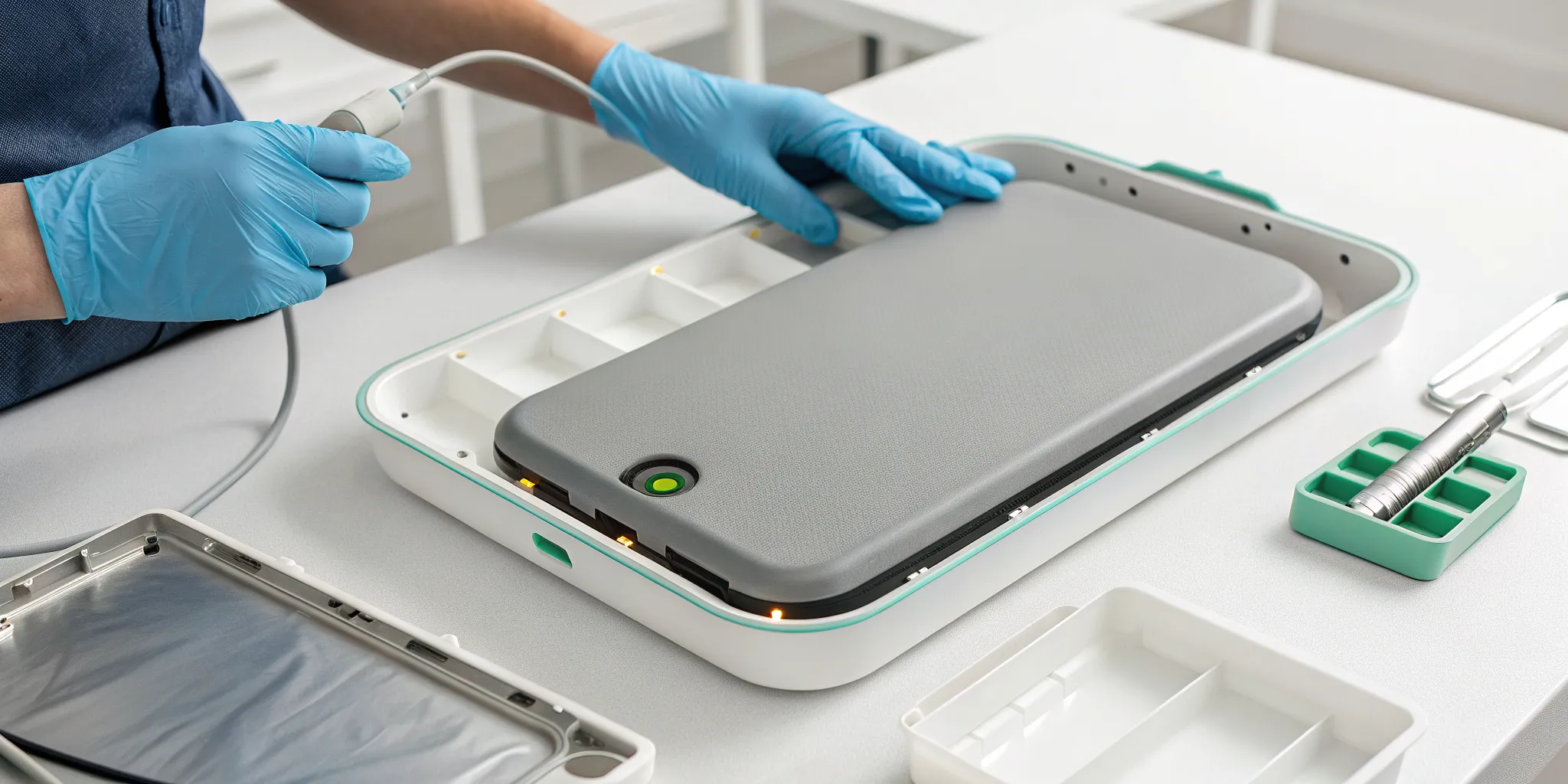
Choosing the right defibrillator machine isn’t a one-size-fits-all decision. The best device for your home is completely different from one needed on a busy construction site. When an emergency strikes, you need an AED that is durable, simple to use, and performs flawlessly under pressure. This guide showcases top-rated, FDA-approved AEDs built for the real world. We compare models based on crucial factors like their durability in wet conditions (their AED IP rating), ease of use, and high-quality CPR guidance, helping you find the perfect device for your specific needs.
What is a Defibrillator and How Does It Work?
At its core, a defibrillator is a medical device designed to save lives during sudden cardiac arrest. It works by delivering a controlled electric shock to the heart when it detects a life-threatening, abnormal rhythm. According to the Cleveland Clinic, this shock is powerful enough to stop the chaotic electrical activity, giving the heart a chance to reset and return to a normal, effective rhythm. Think of it as a reset button for the heart’s electrical system. When the heart beats erratically, it can’t pump blood to the brain and other vital organs. A defibrillator is the only effective treatment for this condition, and its immediate use can be the difference between life and death. The device analyzes the heart’s rhythm and will only deliver a shock if it detects a specific type of dangerous arrhythmia, making it safe for anyone to use in an emergency.
What Conditions Does a Defibrillator Treat?
Defibrillators are specifically designed to treat sudden cardiac arrest caused by certain life-threatening heart rhythms, known as arrhythmias. These devices don’t restart a heart that has flatlined (asystole); instead, they correct dangerous electrical patterns that prevent the heart from pumping blood effectively. The two most common rhythms a defibrillator can treat are ventricular fibrillation and ventricular tachycardia. When a person collapses from sudden cardiac arrest, it’s often due to one of these two conditions. An Automated External Defibrillator (AED) is programmed to recognize these specific rhythms and will only advise a shock if one is detected, ensuring the right treatment is delivered at the right time. Understanding these conditions helps clarify why rapid defibrillation is so critical for survival.
Ventricular Fibrillation
Ventricular fibrillation, often called V-fib, is the most common cause of sudden cardiac arrest. The National Heart, Lung, and Blood Institute describes it as a rapid, uncoordinated contraction of the heart’s lower chambers (the ventricles). During V-fib, the heart muscle quivers chaotically instead of pumping blood. This disorganized electrical activity means no blood is being sent to the rest of the body, including the brain. Without immediate intervention from a defibrillator to stop this rhythm and allow a normal one to resume, a person can die within minutes. This is the primary condition that public-access AEDs are designed to treat.
Ventricular Tachycardia
Ventricular tachycardia, or V-tach, is another dangerous rhythm that can lead to sudden cardiac arrest. It’s characterized by a very fast but regular heartbeat that originates in the ventricles. While the heart is still beating, it’s beating so rapidly that it can’t fill with enough blood between beats to pump effectively to the body. This can quickly deteriorate into ventricular fibrillation. In some cases, a person might be conscious during V-tach but feel dizzy or short of breath. A defibrillator can detect this unstable rhythm and deliver a shock to restore a normal heart rate before it progresses to full cardiac arrest.
Why Every Second Counts in Sudden Cardiac Arrest
When someone experiences sudden cardiac arrest, the clock starts ticking immediately. For every minute that passes without CPR and defibrillation, the chance of survival decreases by about 10%. The heart is no longer pumping oxygenated blood to the brain and other organs, and irreversible brain damage can occur within just a few minutes. This is why the immediate use of an AED is so crucial. As the Cleveland Clinic notes, using an AED within the first few minutes of collapse can dramatically increase survival rates. Having an AED nearby and ready for use is essential in schools, offices, and public spaces. A well-managed AED program ensures these devices are not only present but also properly maintained and accessible, so no time is wasted during an emergency.
Types of Defibrillator Machines
While all defibrillators serve the same fundamental purpose—to restore a normal heart rhythm—they come in several different forms. The type of defibrillator used depends on the person’s medical condition and the setting. Some are designed for public use by untrained bystanders, while others are sophisticated medical devices implanted inside a patient’s body for long-term protection. The three main categories you’ll encounter are Automated External Defibrillators (AEDs), Implantable Cardioverter-Defibrillators (ICDs), and Wearable Cardioverter Defibrillators (WCDs). Each plays a unique role in preventing death from sudden cardiac arrest, whether it’s responding to an emergency in a public place or providing constant monitoring for a high-risk individual. Understanding the differences helps clarify who uses them and why.
Automated External Defibrillators (AEDs)
Automated External Defibrillators, or AEDs, are the portable, user-friendly devices you see in airports, gyms, schools, and offices. They are specifically designed for bystanders with little or no medical training to use during an emergency. An AED can automatically analyze a person’s heart rhythm and determine if a shock is needed. It then provides clear, step-by-step voice instructions to guide the rescuer through the entire process, from applying the electrode pads to delivering the shock. Their simplicity and built-in safety features make them incredibly effective tools for public emergency response. You can find various models of these life-saving devices in our online shop, each designed for reliability and ease of use.
Implantable Cardioverter-Defibrillators (ICDs)
An Implantable Cardioverter-Defibrillator (ICD) is a small, battery-powered device that is surgically placed under the skin, usually in the chest or abdomen. It’s connected to the heart by one or more wires. According to the NHLBI, an ICD continuously monitors the heart’s rhythm. If it detects a dangerously fast or irregular heartbeat, it can deliver a precisely calibrated electrical shock to restore a normal rhythm. ICDs are prescribed for individuals who have survived a previous cardiac arrest or have a medical condition that puts them at high risk for one, such as certain types of cardiomyopathy or genetic heart disorders. It acts as a constant guardian, ready to intervene at a moment’s notice.
Wearable Cardioverter Defibrillators (WCDs)
A Wearable Cardioverter Defibrillator (WCD) is an external device worn by a patient at risk for sudden cardiac arrest. It consists of a vest worn under the clothes that contains sensors to monitor the heart and defibrillator pads to deliver a shock. A small monitor worn around the waist or on a shoulder strap records the heart’s activity. If the WCD detects a life-threatening arrhythmia, it alerts the wearer before delivering a shock, allowing a conscious person to delay the treatment if it’s a false alarm. WCDs are often prescribed as a temporary measure for patients who are waiting for an ICD implant or who have a short-term risk of cardiac arrest.
How to Use an Automated External Defibrillator (AED)
Using an AED might seem intimidating, but these devices are designed to be straightforward and guide you through every step. If you find someone who is unresponsive and not breathing normally, your first priority is to act quickly. The AED is a critical tool, but it’s part of a chain of survival that starts with recognizing the emergency and calling for help. The device itself will provide calm, clear voice prompts, so you don’t have to remember a complicated set of instructions under pressure. The most important thing is to stay as calm as possible, turn on the machine, and listen carefully to its instructions. Following these simple steps can help you confidently provide life-saving assistance until professional help arrives.
Step 1: Call 911 and Start CPR
Before you do anything else, check if the person is responsive and breathing normally. If not, the first and most critical step is to call 911 for professional medical help. If there’s another person with you, have them make the call and locate the nearest AED while you begin chest compressions. As recommended by first aid organizations like St John Ambulance, starting CPR immediately is vital. Pushing hard and fast in the center of the chest keeps blood circulating to the brain and other organs, buying precious time until the AED can be used. Don’t wait for the AED to arrive to start CPR.
Step 2: Turn on the AED and Follow Voice Prompts
Once the AED is on the scene, your next step is to turn it on. Most AEDs have a clear green or yellow power button. As soon as it’s activated, the device will begin speaking to you, providing clear and concise instructions. It will tell you exactly what to do, step by step. The voice prompts are designed to be easy to follow, even in a stressful situation. Your job is simply to listen and follow its lead. The device will guide you through everything from pad placement to when to perform CPR, removing the guesswork from the rescue process.
Step 3: Apply the Electrode Pads
The AED will instruct you to expose the person’s chest and apply the electrode pads. The pads themselves have clear diagrams showing exactly where they should be placed—typically one on the upper right side of the chest and the other on the lower left side. It’s important to apply the pads directly to bare, dry skin. If the person’s chest is wet, quickly wipe it dry before applying the pads. Make sure the pads are pressed down firmly to ensure good contact with the skin. This allows the AED to get an accurate reading of the heart’s rhythm.
Step 4: Allow the AED to Analyze
After the pads are in place, the AED will tell you it is analyzing the heart’s rhythm. At this point, it is crucial that no one is touching the person. The voice prompt will likely say something like, “Analyzing heart rhythm. Do not touch the patient.” This ensures the device can get an accurate reading without any interference. The AED’s internal computer will determine if the heart is in a shockable rhythm, like V-fib or V-tach. This analysis phase only takes a few seconds, so be prepared for the next instruction.
Step 5: Deliver the Shock and Resume CPR
If the AED determines a shock is needed, it will charge up and instruct you to press the shock button, which is usually flashing. Before you press the button, loudly announce “Clear!” and make sure everyone has stood back and is not touching the person. Once you deliver the shock, the person’s body may jolt. Immediately after the shock, the AED will instruct you to resume CPR. It’s important to start chest compressions right away, as the heart needs that support to begin pumping effectively again. Continue following the AED’s prompts until emergency medical services arrive and take over.
Critical Safety Precautions During Use
AEDs are designed with safety as a top priority, both for the person in cardiac arrest and for the rescuer. One of the most important built-in safety features is that the device will not deliver a shock unless it detects a shockable heart rhythm. This eliminates the risk of accidentally shocking someone whose heart doesn’t need it. The primary safety precaution for you as a rescuer is to ensure no one is touching the person during the analysis and shock delivery phases. The AED will remind you of this with clear verbal warnings. By following the voice prompts, you can use the device safely and effectively.
After an Emergency: Next Steps and Recovery
Using an AED is a critical first step in the chain of survival, but the journey doesn’t end when the shock is delivered. The moments immediately following the use of an AED are just as important, as the person will require continuous care until they reach a hospital. Once emergency medical services take over, the focus shifts to professional medical treatment and the long road to recovery. Understanding what happens after the initial emergency can help prepare rescuers, family members, and patients for the path ahead. Recovery from sudden cardiac arrest is a complex process that involves both physical and emotional healing, often requiring ongoing medical support and rehabilitation.
Immediate Care After a Shock
Immediately after a shock is delivered by an AED, the device will typically instruct you to resume CPR for two minutes. This is because even after a successful shock restores a more normal rhythm, the heart muscle is often weak and needs the help of chest compressions to circulate blood effectively. You should continue to follow the AED’s prompts, which will guide you on when to perform CPR and when to pause for the device to re-analyze the heart rhythm. This cycle of CPR and analysis continues until paramedics arrive. They will then take over with more advanced medical care, but the actions you took in those first few minutes are absolutely vital for a positive outcome.
Understanding the Recovery Process
Surviving a sudden cardiac arrest is a significant medical event, and the recovery process can be long and challenging. As the Cleveland Clinic explains, recovery can take months or even years. In the hospital, doctors will work to identify and treat the underlying cause of the cardiac arrest. The patient may need procedures like an angioplasty or the implantation of an ICD to prevent future events. Beyond the physical recovery, many survivors experience emotional and psychological challenges, including anxiety, depression, and memory issues. Rehabilitation programs, counseling, and strong support from family and friends are essential components of a successful recovery journey.
Understanding AED Safety and Legal Protections
One of the biggest hesitations people have about using an AED is the fear of doing something wrong or causing harm. It’s completely normal to feel that way, but it’s important to know that these devices are designed to be nearly foolproof. They are equipped with multiple safety features to protect both the user and the patient. Furthermore, legal protections are in place to encourage bystanders to step in and help during an emergency without fear of legal repercussions. Understanding these safety measures and laws can give you the confidence to act decisively when someone’s life is on the line. It’s also why having a well-managed program is so important for organizations.
Built-in Safety Features
AEDs are incredibly safe because they make the critical decisions for you. The device will only advise and deliver a shock if its analysis confirms the presence of a life-threatening, shockable heart rhythm. It will not shock a person who has a normal heart rhythm, has no heart rhythm at all (flatline), or is conscious and moving. This feature removes any risk of a rescuer accidentally harming someone. The clear, step-by-step voice prompts are another key safety feature, ensuring that even a panicked, untrained user can operate the device correctly. These safeguards are designed to empower anyone to become a rescuer.
FDA Regulation and Approval
You can also be confident in the reliability of AEDs because they are regulated as medical devices by the U.S. Food and Drug Administration (FDA). Before an AED model can be sold, it must go through a rigorous review process to ensure it is safe and effective for its intended use. This oversight guarantees that the devices meet high standards for performance, labeling, and manufacturing. At AED Total Solution, we are committed to this standard of safety and only provide FDA-approved devices and accessories, so you can be sure your equipment is dependable when it matters most.
Good Samaritan Laws
To encourage bystander intervention, all 50 states have Good Samaritan laws in place. While the specifics can vary by state, these laws generally provide legal protection to individuals who voluntarily provide emergency assistance to someone in need. This means that if you use an AED on someone in good faith to save their life, you are typically protected from liability, even if the outcome is not successful. These laws are designed to remove the fear of legal trouble and empower people to help. While these laws offer protection, having a robust AED program management system in place further minimizes risk for organizations by ensuring proper training, maintenance, and compliance.
Will Your AED Work in Extreme Heat or Cold?
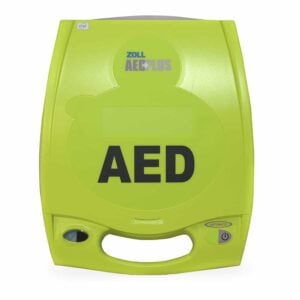
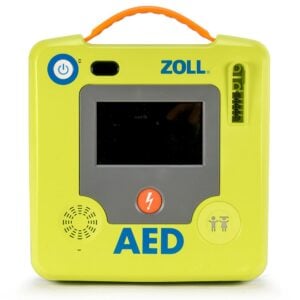
Extreme temperatures can affect AEDs. This can shorten battery life and harm the electrode pad gel. Most devices work best between 32°F and 122°F. You can usually check this range in the manual or specifications. Some models from ZOLL Medical and Physio-Control work well beyond these standard limits.
- The storage temperature range for ZOLL AED Plus is -22° to 140°F.
- The range for ZOLL AED 3 is -22° to 158°F
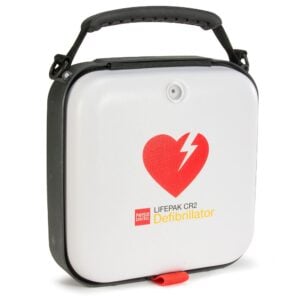
- The range for LIFEPAK CR2 and LIFEPAK 1000 is -22° to +140°F
What Does an AED IP Rating Mean for Rain and Humidity?
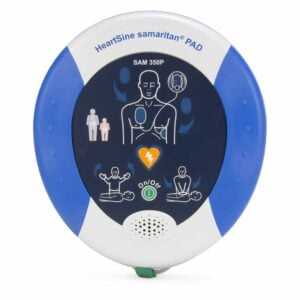
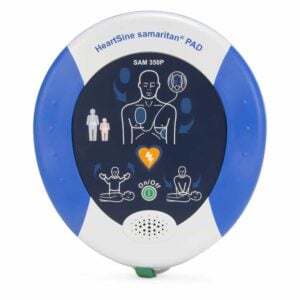
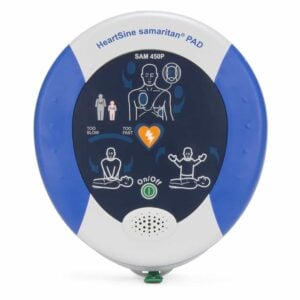
When moisture is a concern, an AED’s IP rating becomes essential for ensuring durability. It shows how well the device keeps out dust and water. This is important in wet or outdoor places. HeartSine’s Samaritan PAD models, like the 350P, 360P, and 450P, have an IP56 rating. This means they are well-protected against water jets. This makes them ideal for pools, boats, marinas, or any job site near water.
Finding the Right AED for Your Home or Small Business
The HeartSine Samaritan PAD 350P is a great option for home use. Its simple design and clear voice prompts enhance user-friendliness. It’s easy to get and perfect for quick help in emergencies, with no prescription required. Its easy use and low upkeep make it a smart pick for boosting home safety and being ready for emergencies.
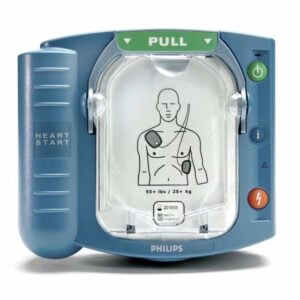
The Philips HeartStart OnSite is perfect for beginners. It features clear voice prompts and has a compact, portable design. This makes it great for homes and small indoor spaces. Its CPR guidance and low price make it a great choice for beginners. The ZOLL AED Plus is great for long-term value. It requires little maintenance and has a battery and pads that last five years. The Real CPR Help® feature gives real-time feedback during compressions. This support is vital when time is short.
Should You Buy an AED for Your Home?
Deciding to keep an AED at home is a personal choice, but it can be a critical one for certain households. If someone in your family has a known heart condition or is at high risk for sudden cardiac arrest, having a device nearby can make all the difference. The Mayo Clinic suggests that people with severe heart disease should discuss the possibility of a home AED with their doctor. This conversation is the best first step to determine if it’s the right move for your family’s safety plan.
The good news is that modern AEDs are designed for anyone to use, regardless of medical training. Devices like the Philips HeartStart OnSite provide clear, calm voice instructions that guide you through every step, from applying the pads to delivering a shock. This user-friendly design removes the guesswork during a high-stress emergency. Owning an AED provides not just a tool, but also the peace of mind that comes with being prepared to protect the people you care about most.
Choosing a Durable AED for Outdoor Use
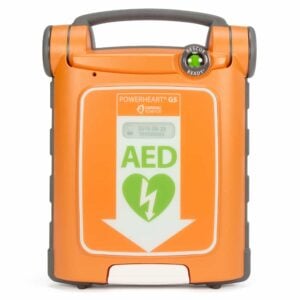
The Cardiac Science Powerheart G5 and HeartSine Samaritan PAD work well outdoors. This includes the 350P, 360P, and 450P. Their rugged design ensures they perform reliably in various conditions. The Powerheart G5 shines in loud or stressful places. It provides clear guidance through visual and voice prompts. With an IP55 rating and military-grade durability, it is built for challenging conditions. Its long-lasting battery provides up to 400 shocks. It also offers 16 hours of monitoring. This makes it a reliable option for tough outdoor environments.
The HeartSine Samaritan is perfect for remote or open areas where help might take time. It has a tough design, a small size, and a high IP rating. It works well in many settings. You can use it outdoors at schools, public places, parks, and community events.
Need a Portable AED for Travel?
For travel, compact and lightweight AEDs are key. The HeartSine Samaritan PAD and Defibtech Lifeline Auto are user-friendly and reliable. Their sturdy, easy-to-use design is perfect for trips. They help you stay prepared without adding extra bulk.
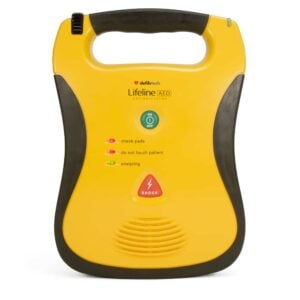
The Defibtech Lifeline has a bright yellow-and-black design. It also features a built-in handle. This makes it easy to carry and find during emergencies. It delivers quick shocks for an effective response to sudden cardiac arrest. HeartSine AEDs are convenient. Their Pad-Pak system combines the battery and pads into one replaceable cartridge. Both devices are lightweight, portable, and come with carrying cases for easy transport.
Choosing an AED to Protect Your Family
For family safety, good AEDs are the Physio-Control LIFEPAK CR2, ZOLL AED 3, and Philips FRx. They provide reliable protection. Picking the right one can be tough. Features like CPR guidance and easy child-mode access help. The LIFEPAK CR2 features CPRINSIGHT technology. This tech analyzes the victim during chest compressions. It helps us decide if a shock is needed, offering key support in critical moments.
QUIK-STEP electrode pads work for both adults and kids. They adjust shock levels in pediatric mode. Plus, they provide CPR instructions tailored for children. The ZOLL AED 3 improves response with Real CPR Help® technology. It monitors compression quality and gives real-time visual and audio feedback. Uni-pads make it easy to operate. They help anyone, even without training, act quickly and confidently in emergencies.
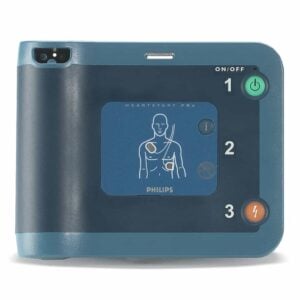
The Philips HeartStart FRx AED is a reliable option for everyone. It provides clear voice prompts to help users at every step. The infant/child key automatically modifies shock levels and CPR instructions for kids. This feature makes it safe for both adults and children during emergencies.
What Do Professional Responders Look for in an AED?
Pros rely on AEDs like the ZOLL AED 3 BLS, LIFEPAK 1000, and Powerheart G3 Pro. These devices offer durability and smart features for challenging situations. The ZOLL AED 3 BLS has a full ECG display. This helps track heart rhythms and guide decisions. It also features Real CPR Help®, which provides real-time feedback on compressions. Designed for trained responders, these devices provide precision and strength when it counts.
Engineers designed the LIFEPAK 1000 for tough settings. It has a strong build, works for kids, and supports WiFi. The ECG display and graphical interface make monitoring easier. cprMAX™ technology helps responders adjust CPR settings on time. This cuts down on delays before giving a shock and improves response efficiency.
The Powerheart G3 Pro AED helps advanced responders. It lets them give continuous chest compressions while it charges. Its manual override and 3-lead ECG features enable quick adjustments during critical moments. It has a backlit screen and uses RHYTHMx® technology. This provides real-time heart rhythm data and tracks important rescue details. Though no longer manufactured, refurbished models remain accessible.
FAQs
What Are the Best AED Brands to Consider?
In 2025, top AED brands include Zoll, Philips, Heartline, Defibtech, and Physio-Control. These brands are reliable, easy to use, and trusted for their performance. Reviews consistently highlight their advanced features and ease of use in critical situations.
What’s the Best Portable AED for Your Car?
The HeartSine Samaritan Pad series and Defibtech Lifeline Auto are great choices for car emergency kits. Their small, lightweight design makes them easy to store. They are perfect for quick access during roadside emergencies.
How to Read AED Reviews and Compare Defibrillator Pads
When reading AED reviews, check for ease of use, reliability, battery life, and features. Look for child mode and CPR feedback, too. These insights can guide you toward the most suitable brand for your needs.
Where Can I Find an Affordable FDA-Approved AED?
For a cost-effective AED without sacrificing reliability, refurbished units are a smart option. Trusted brands Philips and HeartSine offer budget models. These options still ensure strong safety and performance standards.
Are All AED Brands Suitable for Home Use?
Many leading AED brands have models for home use. Examples include the Philips HeartStart, Zoll AED Plus, and HeartSine 350P. These devices are small and simple to use. They also provide clear voice prompts to help users during emergencies.
AED Maintenance and Program Management
Owning an AED is a critical first step, but the real work lies in ensuring it’s ready to perform at a moment’s notice. An automated external defibrillator isn’t a set-it-and-forget-it device; it requires consistent oversight to function correctly during an emergency. Proper maintenance involves regularly checking the device’s status, tracking the expiration dates of batteries and electrode pads, and keeping detailed records. Without a structured approach, it’s easy for these essential tasks to fall through the cracks, leaving your organization unprepared and exposed to liability. This is why a comprehensive management program is just as important as the device itself. It creates a system of accountability that guarantees your AED is always in a state of readiness.
A well-managed AED program moves beyond simple checklists. It integrates every aspect of the device’s lifecycle, from initial placement and registration to ongoing inspections and supply replenishment. This systematic approach ensures nothing is overlooked, providing peace of mind that your life-saving equipment will work when seconds matter most. For organizations managing multiple devices across different locations, this level of oversight is not just beneficial—it’s essential for maintaining compliance and protecting your community. Ultimately, effective program management is the backbone of any successful emergency preparedness plan, turning a piece of equipment into a reliable, life-saving asset.
Essential Readiness Checks for Every AED
To keep your AED response-ready, you need a consistent inspection routine. The American Heart Association recommends assigning a specific person or team to handle these checks, ensuring clear accountability. This process involves more than a quick glance; it’s a detailed review of the device’s core components and operational status. Regular inspections confirm that the AED is where it’s supposed to be, is free from damage, and has all the necessary supplies, like spare pads and a rescue kit. Documenting each check creates a verifiable history of maintenance, which is crucial for compliance and demonstrating due diligence. This proactive approach helps identify potential issues before they become critical failures during an emergency.
Battery and Pad Expiration
The most critical components of any AED are its battery and electrode pads, both of which have finite shelf lives. Batteries lose their charge over time, and expired pads may have dried-out adhesive gel, preventing a solid connection to the victim’s chest. Using an AED with expired components can lead to device failure when it’s needed most. That’s why meticulously tracking these expiration dates is a non-negotiable part of AED ownership. For organizations with several devices, this can become a complex logistical challenge. A reliable system for monitoring and replacing these consumables on time is fundamental to ensuring your AED will deliver a life-saving shock.
Regular Inspections
Routine inspections are the foundation of a reliable AED program. Your team should have a clear, written policy outlining who is responsible for these checks and how often they should occur. During an inspection, the designated person should verify that the AED’s readiness indicator—usually a flashing green light—is active, signaling that the device has passed its last self-test. They should also check for any visible damage to the device or its casing and confirm that all supplies are present and accounted for. Each inspection should be logged, creating a clear and consistent record of the device’s readiness over time.
Why Program Management Matters
Simply having an AED on-site isn’t enough; you need a system to ensure it remains functional and compliant. This is where dedicated program management becomes invaluable. It transforms AED ownership from a series of disjointed tasks into a streamlined, automated process. Instead of manually tracking expiration dates and inspection schedules on a spreadsheet, a management program provides a centralized system for oversight. It sends automated alerts for expiring supplies, reminds your team when inspections are due, and maintains audit-ready documentation. This approach removes the administrative burden and human error, giving you confidence that your program is always prepared and protected.
Staying Compliant
AED programs are subject to a web of regulations that vary by location. Following your state’s requirements is essential for avoiding penalties and reducing liability. These laws often cover device registration, medical oversight, routine maintenance, and post-event reporting. A comprehensive management program helps you meet these obligations by keeping meticulous records and ensuring every step is documented. It closes compliance gaps and provides a clear, defensible history of your program’s diligence. This level of organization is critical for safety officers, facilities managers, and anyone responsible for mitigating risk within an organization.
Ensuring Response-Readiness
A truly effective AED program extends beyond the hardware. It ensures that your entire emergency response plan is cohesive and ready for action. This includes training enough people in CPR and AED use so that a qualified responder is always available. It also means making sure the AED is placed in a visible, accessible location and that everyone knows where to find it. A managed program helps coordinate all these elements, from tracking training certifications to verifying device placement. At AED Total Solution, our white-glove approach handles every detail, ensuring your equipment, people, and processes are aligned for a swift and effective response.
Making the Right Choice for Your Defibrillator Machine
Selecting the right AED is crucial in an emergency. Look for a trusted brand or a portable choice for your vehicle. Focus on reliability, simplicity, and durability. The market has many options. You can find models that are budget-friendly and devices designed for advanced professionals. Most come from trusted brands that balance cost and performance. Being equipped with the right AED ensures you’re ready when it matters most.
Key Takeaways
- Act with Confidence in an Emergency: Modern AEDs are designed for untrained bystanders, providing step-by-step voice prompts and built-in safety checks. Combined with Good Samaritan laws, you are empowered and protected when you step up to save a life.
- Match the Device to the Environment: The best AED is one that fits its surroundings. Prioritize high IP ratings for wet or outdoor locations, compact designs for travel, and simple, clear instructions for home or small business use.
- Prioritize Program Management for True Readiness: Owning an AED is just the first step. A reliable program that tracks expiration dates, documents inspections, and ensures compliance is what guarantees your device will be ready to work when seconds count.
Related Articles