

2026 update: The best AED for schools is the one staff can use quickly, students can access safely, and administrators can keep inspection-ready all year. For most K-12 campuses, that means a school AED with pediatric capability, clear voice prompts, visible placement, and a maintenance plan that tracks pads, batteries, and inspections.
Choosing the right AED for schools is not only a purchasing decision. It is part of a broader emergency response plan for students, staff, visitors, athletic programs, and after-hours events. Sudden cardiac arrest can become fatal within minutes, and early CPR plus fast defibrillation can greatly improve the chance of survival.
Need help selecting a school AED package? Contact AED Total Solution for device recommendations, medical oversight, and AED program management support for your campus.
Best AEDs for schools in 2026: quick rankings
| Rank | AED model | Best fit for schools | School-friendly features | 2026 package price |
|---|---|---|---|---|
| 1 | Physio-Control LIFEPAK CR2 Value Package | Elementary schools and mixed-age campuses | Child Mode, clear prompts, bilingual option, Wi-Fi readiness checks | $2,376.90 to $2,741.50 |
| 2 | Philips HeartStart FRx Value Package | Middle schools, high schools, and athletic departments | Infant/Child Key, rugged design, simple voice guidance | $2,151.80 |
| 3 | ZOLL AED 3 Value Package | Campuses that want real-time CPR feedback | CPR coaching, full-color display, universal adult/child pads | $2,461.70 |
| 4 | Philips HeartStart OnSite Value Package | Budget-conscious school offices and smaller campuses | Simple operation, strong value package, optional pediatric pads | $1,641.80 |
| 5 | Cardiac Science Powerheart G5 Value Package | High schools and universities with trained response teams | RescueCoach prompts, CPR metronome, bilingual option | $2,217.50 to $2,358.50 |
Prices were checked on AED Total Solution product pages during this 2026 refresh. Final price can vary by package options, cabinet selection, signage, accessories, and current promotions.
Get certified in CPR

CPR & AED Training
3-hour in-person training with a 2-year nationally recognized certification.
CPR, AED & First Aid Certification
Instructor-led on-site. Practice on real manikins and AED trainers.
How to choose the best defibrillator for a school
Start with the people who may need to use the AED. A school device should be simple enough for a front office employee, coach, teacher, or bystander to operate under stress. Staff may have CPR and basic life support training, but the AED still needs to guide a first-time responder step by step. For a broader overview of matching devices to organizations, see our guide on choosing the right AED.
- Pediatric capability: Preschools and elementary schools need a child mode, Infant/Child Key, or pediatric pads for students under eight years old or under 55 pounds.
- Clear prompts: Voice guidance, visual instructions, and CPR coaching help responders act quickly when every second matters.
- Language support: Dual-language prompts can improve confidence on campuses with multilingual staff, families, or visitors.
- Self-tests and readiness indicators: Daily, weekly, and monthly self-checks help schools know whether the AED is rescue-ready.
- Warranty and support: Choose an FDA-approved brand with reliable accessories, replacement pads, batteries, and technical support.
Schools buying a pre-owned AED should verify that the device has been fully tested, recertified, and supplied with current pads and batteries. A lower upfront price is not worth the risk of an expired battery, unsupported model, or missing pediatric setup.
Recommended AEDs for schools
These recommendations prioritize ease of use, pediatric response, campus durability, accessory availability, and total program readiness. Schools should also budget for cabinets, signage, replacement pads, batteries, staff training, and documented inspections.
1. Physio-Control LIFEPAK CR2
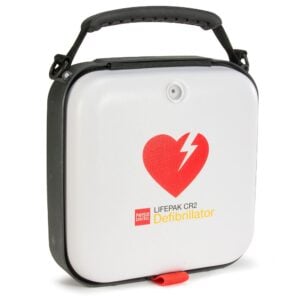
Why it ranks #1 for schools: The LIFEPAK CR2 is a strong fit for campuses that serve both children and adults. Its Child Mode reduces the energy level for younger patients without requiring responders to swap pads during a stressful emergency.
- ClearVoice prompts guide responders through pad placement and shock delivery.
- Bilingual English and Spanish instructions are available with a quick button press.
- Wi-Fi connectivity supports readiness checks and program oversight.
- The device allows CPR compressions to continue while it analyzes the heart rhythm, reducing pauses in care.
Best for: Preschools, elementary schools, districts with mixed-age campuses, and schools that want child-mode simplicity.
2026 cost: $2,376.90 to $2,741.50 for the value package, depending on selected options.
2. Philips HeartStart FRx
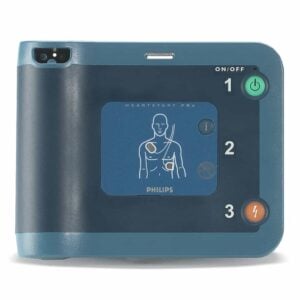
Why it works well for schools: The Philips HeartStart FRx is compact, rugged, and easy to carry across campus. The Infant/Child Key changes the device from adult to pediatric mode, which makes it useful for school environments with varied age groups.
- Voice instructions walk responders through the rescue process.
- Durable design helps the AED hold up in busy offices, gyms, athletic fields, and event spaces.
- The carry case has room for the Infant/Child Key, backup pads, and extra accessories.
Best for: Middle schools, high schools, gymnasiums, athletic departments, and field use.
2026 cost: $2,151.80 for the value package.
3. ZOLL AED 3
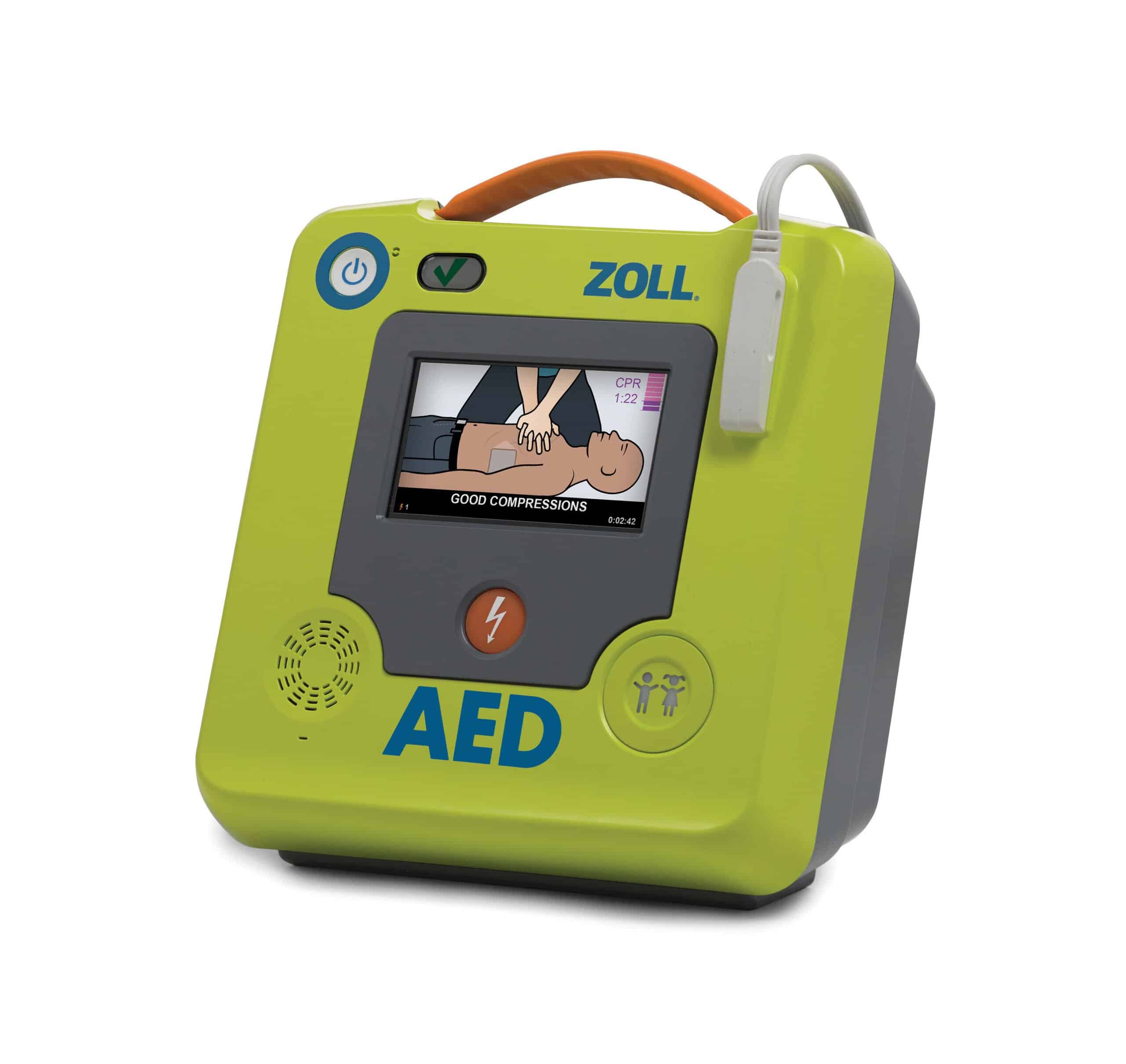
Why it works well for schools: The ZOLL AED 3 is a good choice for schools that want CPR feedback and visual support during a rescue. Its display and coaching features can help trained staff maintain better compression quality.
- Real-time CPR feedback helps responders adjust compression depth and rate.
- Universal CPR Uni-padz support both adult and child rescue with the correct settings.
- The full-color screen can reinforce voice prompts in loud environments.
Best for: High schools, athletic facilities, universities, and campuses with trained response teams.
2026 cost: $2,461.70 for the value package.
4. Philips HeartStart OnSite

Why it works well for schools: The Philips HeartStart OnSite is a cost-conscious option for smaller schools, administrative offices, and campuses that need a straightforward AED package.
- Simple voice prompts are designed for everyday responders.
- The value package includes key accessories such as a wall cabinet, sign, poster, carry case, first responder kit, pads, and battery.
- Pediatric pads are available for younger students and should be part of the school supply plan when needed.
Best for: Small campuses, front offices, administrative buildings, and budget-sensitive school programs.
2026 cost: $1,641.80 for the value package.
5. Cardiac Science Powerheart G5
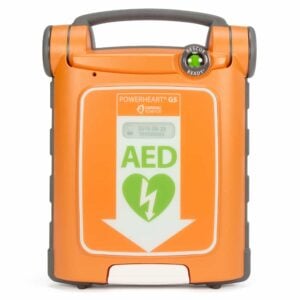
Why it works well for schools: The Cardiac Science Powerheart G5 offers RescueCoach text and voice prompts, a CPR metronome, and bilingual support. It remains a practical option for campuses with trained staff and clear accessory management.
- RescueCoach technology guides responders through the rescue process.
- A CPR metronome helps responders maintain compression pace.
- Separate adult and pediatric pads require strong inventory tracking, especially for campuses with younger students.
Best for: High schools, universities, and campuses with trained response teams that can manage separate pediatric supplies.
2026 cost: $2,217.50 to $2,358.50 for the value package.
Essential accessories for school AEDs
The AED itself is only one part of school readiness. A campus program also needs visible placement, replacement supplies, and a repeatable inspection process.
- Wall cabinet: An AED cabinet keeps the unit visible, protected, and easy to find. Alarmed cabinets can also alert nearby staff when the AED is removed.
- AED signage: Directional signs help responders locate the device from hallways, gyms, auditoriums, and athletic areas. Review AED signage requirements when planning placement.
- Extra pads: Pads expire and must be replaced after use. Schools with young children should stock the correct pediatric AED pads or child-mode accessories.
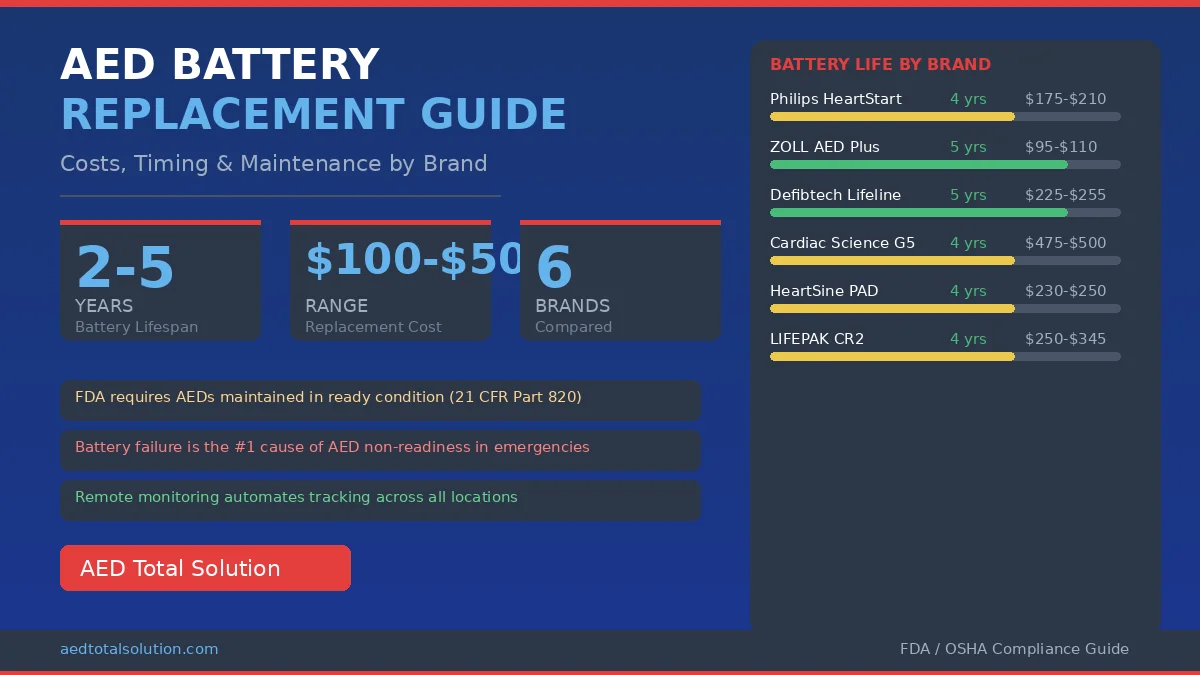
- Extra battery: AED batteries often last several years, but schools should track expiration dates and keep a replacement plan in place.
- First responder kit: Include scissors, gloves, razor, towel, mask, and other basic rescue supplies with each AED location.
Want AED pads, batteries, and inspections tracked automatically? AED Total Solution offers Standard Plus Supplies AED Program Management with replacement supply support for expiration or use.
RECOMMENDED
HeartSine Samaritan 350P AED Package
Compact, fully-automatic AED designed for first-time responders. Pads, battery, carry case and wall sign included.
Where should schools place AEDs?
Schools should place AEDs where they can be reached quickly, not hidden in locked offices. The goal is a 3-minute round trip from any location on campus: someone recognizes an emergency, retrieves the AED, and returns to the victim. In a multi-story school building with long hallways, this usually requires at least one AED per floor.
Priority locations include the main office, gymnasium and locker rooms, athletic fields and stadiums, cafeteria and auditorium, nurse’s office, library, and large common areas like multipurpose rooms. Portable AEDs should accompany athletic teams to off-site games and practices, since exertion-related sudden cardiac arrest is most common during physical activity.
Multi-building campuses such as universities or school districts with separate elementary, middle, and high school buildings may need a dedicated AED in each facility. Every AED should be clearly marked with visible signage and registered with local emergency services when required by state law.
For more planning guidance, review these AED placement guidelines and map the most likely emergency locations on your campus.
Are AEDs legally required in schools?
AED requirements vary by state, school type, and facility use. As of 2026, over 40 states have laws addressing AEDs in schools, with requirements ranging from mandatory placement to recommended guidelines. States such as New York, California, Texas, Florida, and Illinois have some of the most comprehensive school AED mandates, while others encourage programs without a universal requirement.
Most state laws focus on three areas: device placement in public K-12 schools, AED availability at athletic events and practices, and CPR training requirements for staff and students. Some states also require schools to register AEDs with local emergency medical services, post signage, and maintain inspection records.
Even when a device is not mandated, schools still need to consider student safety, response time, staff training, inspection documentation, and Good Samaritan protections. The cost of not having an AED during a sudden cardiac arrest event can far exceed the investment in a single device and training program. Review our AED legal guidelines for a state-by-state breakdown.
A compliant school AED program typically includes medical direction or prescription support, documented inspections, current pads and batteries, staff training records, emergency response procedures, and post-event review. AED Total Solution helps schools manage these requirements through AED Program Management.
How should schools budget for AED programs?
School AED program costs go beyond the initial device purchase. A realistic budget covers the AED or value package, wall cabinet and signage, replacement pads (every 2-4 years), replacement batteries (every 4-7 years), staff CPR and AED training, and ongoing program management or medical oversight fees.
For schools weighing upfront purchase against ongoing service costs, an AED subscription model can simplify budgeting by bundling the device, supplies, and management into a predictable annual fee. Many schools find that subscription programs reduce administrative burden and help maintain compliance without tracking multiple expiration dates.
AED Total Solution offers flexible options for schools at every budget level. Our program management tiers include the Standard AED Program Management with physician medical oversight, as well as the Standard Plus Supplies plan that adds automatic pad and battery replacement. Schools with multiple buildings or district-wide programs can request a customized quote for volume pricing and consolidated management.
How should schools maintain AEDs after purchase?
After installation, assign responsibility for monthly checks, supply tracking, and documentation. A school AED should be inspected for readiness indicator status, pad expiration dates, battery expiration dates, cabinet visibility, signage, and accessory kit completeness. If the AED is used, pads and rescue supplies must be replaced and the event should be reviewed according to program requirements.
Schools that manage multiple buildings or devices should avoid relying only on spreadsheets. A documented management system can reduce missed expirations and make audits easier. See our AED maintenance and compliance guide for a deeper checklist.
FAQs
What is the best AED for schools?
The best AED for schools is reliable, FDA-approved, easy to use, and appropriate for both adults and children. For many K-12 campuses, the LIFEPAK CR2 is a top choice because its Child Mode reduces pediatric setup complexity.
How many AEDs does a school need?
A school needs enough AEDs for fast retrieval from high-traffic and high-risk areas. Large campuses, multi-story buildings, athletic complexes, and portable classrooms may need more than one AED to reduce response time. The industry guideline is a 3-minute round trip from any point on campus, which typically means one AED per building or floor plus dedicated units for gymnasiums and athletic fields.
Review our AED placement guidelines for detailed recommendations on device spacing and location selection for school campuses.
Do schools legally need an AED?
AED requirements vary by state. Some states mandate AEDs in public schools or athletic settings, while others do not. Schools should check state and local rules and maintain documentation once an AED is installed.
Do schools need pediatric AED pads?
Schools serving children under eight years old or under 55 pounds should have pediatric pads, a child key, or a child mode available. The correct pediatric setup depends on the AED model.
How often should school AEDs be inspected?
Inspection frequency depends on state rules, manufacturer guidance, and school policy. Many programs use monthly documented inspections, with additional checks after device use, drills, or facility changes.
Do school staff need AED training?
Many AEDs are designed for lay rescuers, but staff training improves confidence and speed. Schools should maintain CPR and AED training records for designated responders and review their emergency plan regularly. Learn more in our AED certification guide.

Not sure which AED or program fits your facility?
An AED Total Solution program expert walks you through it – no obligation.
Conclusion
The best AED for schools in 2026 should be easy to use, visible, pediatric-ready, and supported by a documented maintenance plan. For many K-12 campuses, the LIFEPAK CR2 offers the best mix of child-mode simplicity, clear prompts, bilingual support, and readiness tools. The Philips FRx, ZOLL AED 3, Philips OnSite, and Powerheart G5 are also strong options depending on campus size, budget, and responder training.
If your school needs help comparing AED packages, placing devices, training staff, or keeping inspections current, contact AED Total Solution for a school AED program recommendation.