Choosing the right AED for your church is one of the most important decisions you can make to protect your congregation. When sudden cardiac arrest strikes, every single second is critical. But with so many models and features, finding the best AED for your church can feel overwhelming. How do you know which one is right for your community and budget? This guide cuts through the confusion. We’ll help you compare the top AEDs for churches so you can feel confident you’re prepared to respond when it matters most.
Survival from sudden cardiac arrest often depends on how quickly help is provided. Starting treatment quickly can boost recovery rates. Yet, every minute that goes by drops the chances of survival. That’s why rapid action and immediate response make all the difference in saving a life.
During a cardiac emergency in your church, remaining calm and acting quickly can save a life. Today’s AEDs are for everyone. They provide clear voice instructions, making them easy and stress-free to use. You don’t need a medical background. You need the right device to keep your congregation ready to respond.
Is Your Church Prepared for a Cardiac Emergency?
Understanding Sudden Cardiac Arrest at Church
Sudden cardiac arrest can strike anyone, even within the walls of your church. Every year, hundreds of thousands of cases happen outside hospitals. So, it’s likely that it could occur during a service or gathering. Churches often have members of all ages. Some of these members have health conditions that raise their risk. Having an AED on-site shows a real commitment to safety. It makes your church a place for both spiritual and physical well-being.
The Numbers: SCA Risk in Congregations
The numbers surrounding sudden cardiac arrest (SCA) make a compelling case for why every church needs a plan. In the United States, over 350,000 cardiac arrests happen outside of a hospital every year, and they often occur in public spaces where people gather. When SCA strikes, the clock starts ticking immediately. A person’s chance of survival drops by 7-10% for every minute that passes without CPR and defibrillation. This narrow window means that waiting for emergency services to arrive is often too late. Having an AED accessible on-site is a critical part of any emergency response program, empowering your community to act decisively and save a life.
Why Every Second Counts in a Cardiac Emergency
When cardiac arrest occurs, every second matters. Every minute without CPR or an AED shock cuts survival chances by up to 10%. Emergency responders usually take several minutes to get there. Acting immediately can raise recovery rates dramatically, sometimes reaching 90%. Having an AED on-site lets anyone help before professionals arrive. But real preparedness happens when your team is trained and confident to use it well.
How Survival Rates Drop by the Minute
Understanding the urgency of a cardiac emergency is the first step toward protecting your community. When sudden cardiac arrest happens, the clock starts ticking immediately. Research shows that for every minute without CPR and an AED shock, a person’s chance of survival drops by 7-10%. That statistic is a powerful reminder of why immediate action is so important. Having an AED accessible means you aren’t just waiting for help to arrive; you are empowered to provide it. Quick intervention can dramatically change the outcome, turning a potential tragedy into a story of survival and community preparedness.
It’s also important to remember that emergency responders typically take several minutes to arrive on the scene. While they are on their way, that critical window of time belongs to you and your team. During these moments, the chances of a positive outcome diminish with each passing minute. This is why simply having an AED isn’t enough. A truly effective safety plan includes ensuring your staff and volunteers are trained and feel confident using the device. The right AED device is designed to be used by anyone, guiding the user through each step with clear instructions.
Ultimately, having an AED and a well-prepared team can make a life-saving difference in the critical moments following a cardiac arrest. It transforms your church from a place of worship into a safe haven where people are ready to act. This commitment to safety is about more than just compliance; it’s about protecting the lives of your members. A comprehensive AED program ensures your device is always ready, your team is prepared, and your entire community is protected, giving everyone peace of mind.
Choosing the Best AED for Your Church
Selecting the right automated external defibrillator for your church requires careful consideration. The features and design you choose can greatly impact how well the device works when time is crucial.
- Ease of use: Since most churches don’t have medical staff on hand, it’s essential to choose an AED that is simple and intuitive. A user-friendly device helps anyone respond quickly and confidently. It provides lifesaving support when every second counts.
- Easy pediatric capabilities: While sudden cardiac arrest is more common in adults, it can also strike children. Every year, thousands of people change young lives. So, it’s crucial to have an AED with a pediatric setting or pads for smaller patients. This ensures that they receive a gentler shock.
- Multi-language capabilities: Choose an AED that has instructions in both English and Spanish if your staff speaks Spanish. This ensures clear guidance in an emergency.
- Affordability: Many churches work with tight budgets. So, it’s key to find an AED that offers both good quality and a reasonable price. Trusted models usually cost between $1,200 and $1,800. They provide reliable protection without putting stress on ministry budgets.
What to Look For in an AED
Selecting the right AED involves more than checking the basic features. Consider how and where it will be used. This helps it meet your congregation’s unique needs. The right device needs to be practical, reliable, and easy to use. This way, your church can respond confidently in any emergency.
Automatic vs. Semi-Automatic Shock Delivery
AEDs generally fall into two categories: fully automatic and semi-automatic. A fully automatic unit delivers a shock by itself after checking the heart’s rhythm. In contrast, a semi-automatic device needs the user to press a button when prompted. In a church setting, untrained volunteers can be effective, no matter the type. Modern AEDs have clear voice and visual cues. So, the choice often depends on what your team prefers.
Why Fully Automatic AEDs Are Ideal for Untrained Responders
In a high-stress emergency, simplicity is everything. That’s why fully automatic AEDs are often the best choice for churches, where responders are unlikely to have medical training. These devices remove the “hesitation factor” by delivering a shock on their own after analyzing the heart’s rhythm. A semi-automatic model requires the user to press a button, which can cause anxiety or delay for someone without experience. By automating the shock, the device allows the volunteer to focus entirely on following voice prompts and performing chest compressions, building confidence when it matters most. This user-friendly design ensures anyone can provide lifesaving support quickly and effectively.
Durability for Different Environments
A church often includes more than a sanctuary—it may have a gym, outdoor areas, or even camps. Emergencies can happen anywhere. So, it’s smart to pick an AED designed for various environments. Check its IP rating to ensure it’s resistant to dust and moisture, and opt for a model that’s lightweight yet durable. A portable and sturdy AED lets you move it easily. This ensures reliable protection at any service, event, or retreat.
Ease of Maintenance and Long-Term Costs
An AED should always be ready to perform without hesitation. Most modern models do this automatically. They run regular self-checks and show a clear status indicator. This is usually a green light that confirms they are ready. If maintenance is needed, like replacing batteries or pads, the device alerts you. Use simple tracking tools or reminder apps to track end dates and maintenance tasks. This way, your church’s AED will always be ready for emergencies.
How to Budget for Your Church’s AED
Adding an AED to your church is a key way to protect your congregation. Plus, you can do it without overspending. With thoughtful planning and a bit of research, you can find a reliable device that fits your budget. Explore affordable models or community funding. Your church can wisely invest in life-saving protection.
Understanding the Total Cost of Ownership
When planning your AED budget, look past the upfront cost. Also, think about long-term maintenance. You will mainly need to replace pads and batteries. They usually last between two and seven years, depending on the model. Including future costs in your budget helps keep your AED in great shape for years. This way, you avoid unexpected expenses.
Funding and Purchasing Options
A limited budget doesn’t have to prevent your church from getting an AED. You have many options! Consider fundraisers, member donations, business sponsorships, or local safety grants. Many communities provide funding for nonprofits. This makes it easier to get this lifesaving device at a low cost.
Applying for Grants and Seeking Community Donations
You can often get an AED for free or at a reduced cost by exploring community funding. Start by applying for local grants from health organizations or emergency services programs that support public safety initiatives. You can also organize fundraising events with your congregation or partner with local businesses to sponsor the purchase. Don’t forget to ask church members with connections in business or medicine if they can help secure a donated AED. Many local groups, like fire departments or service clubs, are eager to support causes that protect community well-being and may be willing to contribute.
Cost-Saving with Recertified AEDs and Church Value Packages
If a new device isn’t in the budget, consider purchasing a “recertified” AED. These are pre-owned devices that have been professionally inspected, tested, and restored to meet manufacturer specifications, often costing half the price of a new unit. Another great option is to look for “Church Value Packages,” which bundle an AED with essential accessories like a storage cabinet, signage, and pediatric pads at a discounted rate. For maximum flexibility, an AED rental can also be a smart choice, providing a ready-to-use device with predictable monthly costs and included maintenance, eliminating large upfront expenses.
Using Purchase Orders for Non-Profit Organizations
As a non-profit organization, your church can likely use a purchase order to acquire an AED. This allows you to buy the device and pay the invoice within 30 days, though it may require credit approval. This payment method simplifies budgeting and allows you to secure the equipment you need without immediate payment. When you’re ready to shop for an AED, make sure you work with an authorized dealer. This ensures your product warranty will be honored and that you receive a new, reliable device straight from the manufacturer, giving you peace of mind that your investment is protected.
The 3 Best AEDs for a Church
We looked at all these factors and found several AED models great for church settings.
Physio-Control LIFEPAK CR2: Simple for Anyone to Use
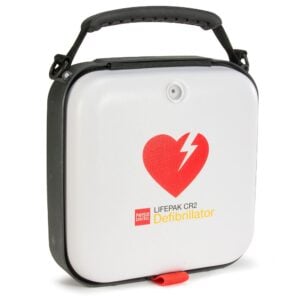
The Physio-Control LIFEPAK CR2 is a great choice for churches. It offers reliable performance and is budget-friendly.
Ease of Use: Using an AED is simple and intuitive. Open the lid to power it on, place the pads as shown, and follow the clear voice instructions. The device adjusts its volume for noisy places. It also has built-in CPR guidance with a metronome, helping you keep the right rhythm during a rescue.
Pediatric Capabilities: For emergencies involving children, simply activate Child Mode. The AED will adjust its settings for a safe, lower-energy shock. There’s no need for separate pads.
Dual-Language Capabilities: Press a button to switch voice instructions from English to Spanish instantly.
Price: The LIFEPAK CR2 Value Package starts at $1,940. You can also get the Value Package for $1,980. This option includes extras like a carry case, cabinet, signage, and a responder kit.
Key Feature: WiFi Connectivity for Remote Monitoring
One of the standout features of the LIFEPAK CR2 is its WiFi connectivity. This allows the device to monitor its own readiness and send alerts if there’s an issue, like a low battery or a disconnected pad. This takes the pressure off your staff or volunteers to perform constant manual checks. You get real-time updates, giving you confidence that the AED is fully functional and ready for an emergency. This automated oversight is a key part of a comprehensive AED management program, simplifying compliance and ensuring your device is always prepared to save a life.
ZOLL AED Plus: Built-In CPR Guidance
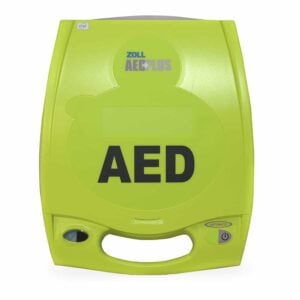
The Zoll AED Plus is simple to use, making it great for people without medical training. It may have fewer advanced features than other models, but its ease of use is a big plus.
Ease of Use: The Zoll AED Plus has CPR-D-padz that are easy to place. It also detects when a shock is needed automatically. Its Real CPR Help® technology gives real-time feedback on compression depth. It guides users through each step. This feature makes it stand out from other devices.
Pediatric Capabilities: The ZOLL AED uses Pedi Padz II electrodes, available separately for about $95. To treat a child, replace the standard pads with pediatric ones. This keeps the treatment safe and accurate.
Dual-Language Capabilities: This model doesn’t support bilingual use. Yet, a dedicated Spanish version is ready for churches that need it.
Price: The AED Plus starts at $1,699. You can also get a Value Package for $1,755. This package includes a cabinet, responder kit, signage, and decals.
Philips HeartStart FRx: Durable and Reliable
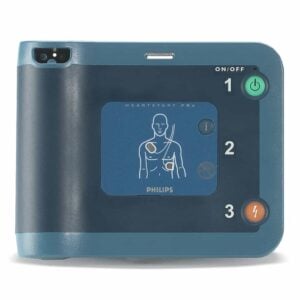
The Philips FRx is easy to use. It offers clear prompts and simple diagrams. This makes it a good choice for children.
Ease of Use: This model provides clear, step-by-step help. The blue i-button gives clear audio coaching for CPR. It helps you keep the right compressions. On the screen, visuals show where to place the pads. It also tells you when to press the orange shock button.
Pediatric Capabilities: The Philips AED includes an Infant/Child Key. When you insert it, the device updates instructions. It adjusts compression levels for kids under eight and those weighing less than 55 pounds.
Dual-language Capabilities: Using the HeartStart Configure software, you can preselect your preferred language before use. However, unlike the LIFEPAK CR2, it does not let you switch languages instantly while in use.
Price: The HeartStart FRx Value Package costs $1,954. It includes a cabinet, responder kit, carry case, signage, and more. Plus, it comes with an eight-year warranty.
Defibtech Lifeline Auto: Fully Automatic Operation
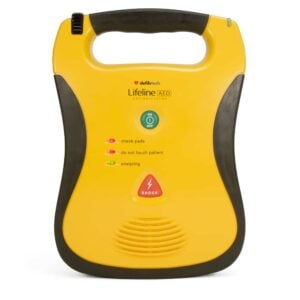
The Defibtech Lifeline Auto is a top choice for churches. Its design is fully automatic, making it easy to use. In stressful situations, rescuers might hesitate to act. This device eliminates that hesitation. After the pads attach, it checks the heart rhythm. If necessary, it automatically delivers a shock. Its simple design is perfect for volunteers or staff with little training. The bright yellow color makes it durable and easy to see in emergencies.
HeartSine Samaritan PAD: Durable and Low-Maintenance
The HeartSine Samaritan PAD is a fantastic choice for churches looking for a durable and low-maintenance device. Its standout feature is the unique Pad-Pak, which combines the battery and electrode pads into a single cartridge. This means you only have to track one expiration date, simplifying upkeep and reducing the chance of a critical component being expired when you need it most. This streamlined approach to AED program management makes it a favorite for busy volunteers. With a high IP56 rating, it’s also resistant to dust and water, making it reliable for everything from indoor services to outdoor community events.
Cardiac Science Powerheart G3: A Community Favorite
The Cardiac Science Powerheart G3 has long been a trusted favorite in community settings for its reliability and straightforward design. This AED is known for its fully automatic operation, which means it analyzes the heart rhythm and delivers a shock on its own, without requiring the rescuer to press a button. This feature can be incredibly reassuring for untrained responders, as it removes any hesitation during a stressful emergency. Its rugged exterior is built to last, making it a versatile choice for churches that host events both indoors and outdoors. It’s a dependable workhorse that keeps your congregation protected, and you can explore similar reliable models in our online shop.
Your Action Plan: Setting Up a Church AED Program
Getting an AED is just the start. A complete emergency response plan is what truly prepares your church. A structured program keeps the device maintained and easy to access. It also helps your team use it confidently. With the right placement, regular training, and safety awareness, your AED is more than a tool. It becomes a vital part of a life-saving system for your congregation.
Where Should You Place Your AED? (The 3-Minute Rule)
Where your AED is located can be as critical as owning one. In a cardiac emergency, every second counts. The aim is to get the device ready and in use within three minutes. Place it in a visible, central spot in the church. Good locations include the lobby, fellowship hall, or near the sanctuary entrance. Mounting it in a marked cabinet with clear signs helps everyone find it fast. This makes your AED a real lifesaver, not equipment on a wall.
Getting a Professional Site Assessment
While you can identify a central spot on your own, a professional site assessment takes the guesswork out of placement. This is especially helpful for larger churches with multiple buildings, outdoor spaces, or sprawling campuses. An expert will walk through your entire property to map out the best locations, ensuring an AED is always accessible within that critical three-minute window. They’ll consider foot traffic patterns, locked doors, and potential obstacles you might overlook. This assessment becomes the foundation of a truly effective emergency response plan. At AED Total Solution, we provide this kind of program management to make sure your device isn’t just present, but perfectly placed for when seconds matter most.
Training Your Team: Getting Staff and Volunteers Ready
AEDs are designed to be simple and easy to use. Still, training helps your team feel confident to act fast and correctly. Staff and key volunteers should know exactly where the device is and how to use it in an emergency. Hands-on CPR and AED courses show you how to spot cardiac arrest. You’ll learn to perform effective chest compressions and use the equipment confidently. With professional group training, your church can change bystanders into active responders. They’ll be ready to save lives when every second counts.
Understanding the Legal Side of Owning an AED
Before buying an AED, know the legal and logistical requirements of ownership. Watch out for state laws and prescription requirements. It’s also crucial to buy from a trusted provider. By managing these details well, you keep your AED program compliant. This helps your church create a safe and ready environment for everyone.
State Laws and Public Assembly Nuances
Federal law doesn’t require churches to have AEDs. Some states see large gatherings as “public assembly” and have rules for them. Check local laws to ensure compliance. Good Samaritan protections help anyone using an AED in good faith. An AED management program makes maintenance and compliance easier. This keeps your device ready when you need it most.
Why You Need a Medical Prescription
It might seem a little strange, but the FDA classifies AEDs as Class III medical devices, which means you need a medical prescription to buy one. This isn’t about stopping by the pharmacy; it’s a legal step that ensures a licensed physician oversees your program. This oversight confirms that your church is prepared to use the device correctly and safely. The prescription process is a key part of meeting legal requirements and establishing a responsible safety plan. Working with a full-service provider simplifies this step, as they can handle the necessary physician authorization and paperwork, letting you focus on protecting your congregation.
The Importance of Buying from an Authorized, FDA-Approved Dealer
Purchasing your AED from an authorized, FDA-approved dealer is non-negotiable for ensuring safety and compliance. Authorized dealers guarantee that you receive a new, genuine device that meets strict federal standards, complete with a full manufacturer’s warranty. Buying from unverified online marketplaces can be risky—you might end up with a counterfeit, expired, or recalled unit that could fail in an emergency. To create a truly safe environment for your congregation, you need equipment you can trust. You can find reliable, FDA-approved devices in our online shop, ensuring your investment protects both your members and your ministry.
Implementing Medical Oversight and Program Management
Once you have your AED, the real work of readiness begins. This is where medical oversight and program management come in. Medical oversight means having a licensed physician who provides the prescription, establishes protocols for use, and reviews any event data if the AED is deployed. This ensures your program meets medical best practices. Program management is the hands-on part: tracking battery and pad expiration dates, conducting routine inspections, and keeping detailed compliance records. An AED management program handles all these moving parts for you, making maintenance and compliance much easier and ensuring your device is ready when you need it most.
This comprehensive approach removes the administrative burden from church staff and volunteers. Instead of juggling spreadsheets and calendar reminders, you get peace of mind knowing experts are monitoring your AED’s readiness around the clock. A full-service program closes compliance gaps and gives you confidence that your emergency response plan is documented, protected, and prepared to save a life when seconds matter most. It allows your team to focus on their ministry, knowing that this critical piece of safety equipment is fully managed and always ready for an emergency.
Don’t Forget These Essential AED Accessories
A Value Package usually has the key accessories. If something is missing, buy the extra items separately. This ensures your AED is fully equipped and ready for use at any time.
A Backpack: In large churches, reaching someone in need can take time, and carrying an AED by hand may slow your response. A strong backpack protects your device. It also helps you move quickly, so you can act fast when time is critical.
A Cabinet: Keep your AED cabinet in a safe and easy-to-reach place. Good spots include the church office or close to emergency supplies. Some models work with security systems. Choosing one made for your AED gives you a good fit and reliable protection.
Signage: Signs like posters, markers, and inspection tags help people find the AED. They also keep it in good condition. The tags are particularly important, as explained in the following section.
FAQs
What is an AED, and why does my church need one?
An AED, or automated external defibrillator, helps save lives. It restores normal heart rhythm during sudden cardiac arrest. Having one in your church lets you respond quickly in an emergency. You can help before paramedics arrive.
Do I need medical training to use an AED?
No. Modern AEDs are designed for anyone to use. They give clear voice and visual instructions. These guide you through every step of the process.
How often should an AED be checked or maintained?
AEDs run automatic self-tests regularly. Yet, you should also visually inspect the device each month. Check batteries, pads, and end dates to ensure that everything is ready for use.
What’s the best location for an AED in a church?
Put it in a central spot that’s easy to reach, like the main lobby, fellowship hall, or near the sanctuary entrance. It should be clearly marked and unlocked for immediate use.
How much does an AED cost for a church?
Most reliable models range between $1,200 and $1,800, depending on features and brands. Additional costs may include replacement pads and batteries every few years.
Using Inspection Tags to Track Maintenance
Keeping your AED ready for an emergency is non-negotiable, and a simple inspection tag is one of your best tools for the job. Think of it like the maintenance card on a fire extinguisher—it’s a physical, at-a-glance record that shows when the device was last checked and who signed off on it. This simple log creates accountability and provides immediate visual confirmation that your AED is being monitored. For any volunteer or staff member, seeing a recently updated tag offers peace of mind, confirming that the device is ready to perform if needed. It’s a small step that makes a huge difference in building a reliable safety program.
So, what should these regular checks include? Each month, your designated person should confirm the AED’s status indicator is green, signaling it’s ready. They also need to verify that the electrode pads and battery are within their expiration dates, as expired components can cause the device to fail. This entire process is a core part of any effective AED program management. While manual tags are a great start, a comprehensive service automates these reminders and digitally logs every inspection, removing the risk of human error and ensuring your church is always prepared.
Ready to Make Your Church a Safer Place?
Investing in an AED for your church isn’t buying equipment. It shows you care about keeping every member of your congregation safe. In an emergency, every second matters. A reliable, easy-to-use device can mean the difference between life and loss. Choose the right AED, offer basic training, and keep your program maintained. This way, your church can be a safe space for both spiritual and physical well-being. Preparedness is a powerful act of care – one that could save a life when it matters most.
Key Takeaways
- Choose an AED anyone can use with confidence: In an emergency, simplicity is key. Opt for a fully automatic model with clear voice prompts to remove hesitation and empower any volunteer to act decisively, even without medical training.
- Build a complete readiness program around your device: Owning an AED is the start, but a solid plan makes it effective. This means placing it where it can be reached in under three minutes, training your team, and establishing a routine for maintenance checks.
- Plan for the total cost, not just the purchase price: A smart budget includes the long-term expenses for replacing pads and batteries. Look into church value packages, recertified units, or community grants to make this life-saving investment manageable and sustainable.
Related Articles