
Managing an AED program at a single location has its challenges. But when you’re responsible for devices across multiple sites—especially in different states—that complexity multiplies. Each state has its own unique set of rules for placement, inspections, and registration, creating a difficult administrative puzzle. A compliant program in Ohio might not meet the standards in California. Getting a handle on AED state law compliance for every location is essential for reducing risk and ensuring every device is ready to use. This guide provides a clear roadmap for creating a centralized system that keeps your entire AED inventory organized, compliant, and prepared for an emergency, no matter where your facilities are located.
Key Takeaways
- State Laws Are Your Definitive Rulebook: Your legal responsibilities for AEDs are determined at the state level, not federally. Following these specific rules for maintenance, training, and registration is the only way to ensure your program is truly compliant.
- Proper Maintenance Is Your Best Legal Defense: Good Samaritan laws offer powerful liability protection, but this shield is only effective if you can prove your AEDs are consistently inspected, maintained, and ready for use through detailed documentation.
- A Simple System Prevents Common Failures: The most frequent compliance issues, like expired pads or missed inspections, are avoided by implementing a consistent system to track maintenance schedules, supply expiration dates, and staff training.
What Is AED State Law Compliance?
If you’re managing an AED program, you’ve probably heard the term “compliance,” but what does it actually mean? Simply put, AED state law compliance is the process of making sure your automated external defibrillator program follows all the specific rules and regulations set by your state. These laws aren’t the same everywhere; the requirements in California can be very different from those in Florida. As an AED owner, your organization is legally responsible for ensuring every device is properly maintained, registered, and ready to be used in an emergency.
Think of it like this: just buying an AED and mounting it on the wall isn’t enough. Each state has its own playbook for how that AED needs to be managed. These rules cover everything from where the device is placed to how often it’s inspected and who needs to be trained to use it. Following these guidelines is what keeps your program compliant. You can find a helpful overview of AED statutes for all 50 states to get a sense of what your local requirements might include. Staying on top of these rules is the foundation of a responsible and effective AED program.
What “AED Compliant” Really Means
Being “AED compliant” goes far beyond the device itself. It means you have a complete system in place to support it. This includes having a formal program with staff trained in both CPR and AED use, which dramatically increases the chances of survival during a sudden cardiac arrest. Compliance also means your AED is correctly registered with local emergency services, undergoes regular maintenance checks, and has its batteries and pads replaced before they expire.
To be protected by your state’s Good Samaritan laws, you have to meet these specific requirements. A compliant program ensures your device is visible and accessible, not locked away in a closet. It’s about creating a state of readiness so that when an emergency happens, your team and your equipment are prepared to respond effectively. Our AED program management services are designed to handle every one of these details for you.
Why Compliance Is Critical for Your Organization
Following AED regulations is about more than just checking boxes to avoid legal trouble; it’s about being truly prepared to save a life. When someone suffers a sudden cardiac arrest, every second counts. A device with a dead battery or expired pads is useless, and a poorly managed program can create a false sense of security. The ultimate goal of compliance is to ensure your AED will work as expected when you need it most.
From a legal standpoint, compliance is your best defense. Understanding and following your state’s laws is what gives you access to the legal protections offered by Good Samaritan laws. These laws are designed to shield rescuers and organizations from liability, but that protection is often conditional on having a compliant program. By prioritizing compliance, you not only strengthen your emergency response plan but also protect your organization from potential legal risks. It’s about creating confidence that you’re doing everything right, for the right reasons.
A Guide to AED Laws and Regulations by State
Understanding the laws that govern AEDs can feel like a moving target. While federal guidelines provide a foundation, the specific rules you need to follow are set at the state level. This means what’s required in Texas might be different from the regulations in New York. Getting a handle on these differences is the first step toward building a compliant and effective AED program that protects both your people and your organization.
Think of it this way: federal law offers the big picture, but state law provides the detailed instruction manual. From where you must place an AED to how often it needs to be checked, your state’s regulations are what matter most in day-to-day operations. Let’s break down what you need to know to make sure your program is on the right track.
Federal Guidelines vs. State-Specific Laws
At the federal level, the most important concept to understand is the “Good Samaritan” law. Every state has some version of this law, which is designed to protect individuals from liability when they step in to help during a medical emergency, including using an AED. This protection is crucial because it encourages people to act without fear of legal trouble.
However, that’s generally where federal uniformity ends. The specific requirements for AED placement, maintenance, training, and registration are all determined by individual state legislatures. To receive the full protection of your state’s Good Samaritan laws, your organization must follow its specific rules to the letter. This is why you can’t apply a one-size-fits-all approach to AED program management.
Common Differences in State Requirements
AED laws vary significantly from one state to another. A requirement that’s standard practice in one region might not exist just across the state line. For example, some states mandate AEDs in certain types of facilities, such as schools, gyms, or large public venues, while others only recommend them.
Other common differences include registration rules, staff training, and medical oversight. Some states require you to register your device with local emergency medical services (EMS), while others don’t. Similarly, training requirements can range from mandatory CPR/AED certification for designated responders to simple awareness training. Understanding these nuances is essential for maintaining compliance and ensuring your AED program is truly prepared for an emergency.
How to Find Your State’s Exact Requirements
So, how do you find the specific rules for your state? The best place to start is your state’s department of health or public safety website. These government sites often publish the full text of the laws and may even provide plain-language summaries for business owners.
For a more direct approach, several online resources compile AED legislation by state, making it easier to find what you’re looking for. Reading through your state’s requirements will help you create a checklist for your program, covering everything from device placement and signage to inspection schedules and documentation. Taking the time to confirm these details ensures your program is not only effective but also fully compliant.
Your Legal Responsibilities as an AED Owner
Owning an AED is a powerful commitment to safety, but it involves more than just mounting a box on the wall. Think of it like owning a fire extinguisher; it needs to be ready and accessible at a moment’s notice. As an AED owner, you have a set of legal responsibilities designed to ensure your device is always prepared to save a life. Fulfilling these duties not only keeps you compliant with state laws but also strengthens your emergency response plan and protects your organization from liability.
These responsibilities generally fall into four key areas. First, you need to properly register your device with local emergency services so they know it exists. Second, you must perform regular maintenance and inspections to confirm it’s in working order. Third, it’s crucial to ensure your team is trained and feels confident enough to act during an emergency. Finally, you need to keep detailed records of all these activities. It might sound like a lot, but each step is a logical part of a successful AED program. Let’s walk through what each of these responsibilities looks like in practice.
Registering Your Device and Notifying EMS
Once your AED is installed, one of your first tasks is to let your local Emergency Medical Services (EMS) agency know it’s there. Many states legally require you to notify them of the location and type of AED you have. This isn’t just a bureaucratic step; it’s a critical link in the chain of survival. When someone calls 911, the dispatcher can see your AED in their system and direct the caller or first responders to its location, potentially saving precious minutes. This registration process integrates your device into the community’s emergency response network, turning a private asset into a public safety tool.
Maintaining and Inspecting Your AEDs
An AED can’t help anyone if its battery is dead or its electrode pads have expired. That’s why regular maintenance and inspections are a core legal responsibility. Most state laws require AED owners to maintain their devices according to the manufacturer’s guidelines. This typically means performing monthly visual inspections to check the status indicator light, confirming that supplies like pads and batteries are within their expiration dates, and ensuring the device is clean and accessible. Keeping your AED in a constant state of readiness is non-negotiable for both compliance and effective emergency response.
Ensuring Proper Staff Training and Certification
Having an AED is one thing, but having people who are prepared to use it is another. While Good Samaritan laws offer protection, many states require or strongly encourage that people who are expected to use the AED receive proper training. Providing CPR and AED certification for key staff members builds the confidence they need to act decisively in a high-stress situation. Following guidelines for maintenance and staff training also provides essential legal protections for your organization, demonstrating that you’ve taken reasonable steps to prepare for a cardiac emergency.
Keeping Accurate Records and Documentation
A well-documented AED program is a compliant one. Keeping accurate records is the best way to prove you’re meeting your legal obligations. This paper trail should include everything from the initial EMS registration confirmation to logs of your monthly inspections, records of battery and pad replacement dates, and copies of staff training certificates. If an incident occurs, you’ll also need to document the event and any post-use maintenance. These records are your first line of defense in an audit or liability claim, showing that you have been diligent in managing your AED program.
Where Are You Required to Place an AED?
Knowing you need an AED is the first step, but knowing where to put it is just as important. State laws don’t just mandate having a device; they often have specific rules about its location to ensure it’s visible, accessible, and can be reached quickly during an emergency. While requirements vary, the guiding principle is always the same: reduce the response time. A person’s chance of survival drops significantly for every minute that passes without defibrillation.
The best practice is to follow the “three-minute rule,” meaning a person should be able to retrieve the AED and bring it to the victim within three minutes of the incident. This often means placing AEDs in central, high-traffic locations where they can be easily seen and accessed by anyone. Think of common areas like main lobbies, security desks, and busy hallways. For larger facilities or multi-story buildings, you’ll likely need multiple devices to cover all your bases. A comprehensive AED program management service can help you create a placement map that ensures your entire facility is protected and compliant with local regulations. The following are some of the most common types of organizations with specific placement requirements.
Placement Rules for Schools and Universities
Schools and university campuses are bustling with students, staff, and visitors, making them a critical environment for AED placement. Many states have passed laws requiring AEDs in K-12 schools to ensure these life-saving devices are available where children and adults gather. The key is to place them in locations that are accessible during school hours and for after-school activities. Think about high-activity and high-traffic zones like near the main office, in the gymnasium or athletic training room, by the cafeteria, and close to outdoor sports fields. The goal is to make sure that no matter where an emergency happens on campus, an AED is just a short sprint away.
Placement Rules for Workplaces and Offices
For most adults, the workplace is where they spend a huge portion of their time, so having an AED program is a core part of corporate safety and responsibility. While not all states mandate AEDs in every office, many require them in large-capacity buildings. The general rule is to install devices where your employees and visitors congregate. This includes lobbies, cafeterias, large meeting areas, and on-site gyms. Placing an AED in a visible, unobstructed location ensures that anyone can find it and use it without delay. A well-placed device can turn a coworker into a first responder, making all the difference in an emergency.
Placement Rules for Healthcare and Fitness Centers
Due to the nature of their services, healthcare facilities and fitness centers often face the most stringent AED requirements. In gyms, health clubs, and athletic centers, members are engaging in strenuous physical activity, which can increase the risk of a sudden cardiac arrest event. Similarly, healthcare facilities must be prepared for patient, staff, and visitor emergencies. State laws typically mandate that these locations not only have AEDs but also adhere to strict maintenance and inspection schedules. This ensures every device is operational and ready to perform when called upon, protecting both the people inside and the organization itself.
Placement Rules for Government Buildings
Government buildings see a constant flow of public traffic, and many states have passed legislation to protect citizens in these spaces. It’s common for laws to require AEDs in places like courthouses, public libraries, DMVs, and other municipal or state-run facilities. The commitment to public safety often extends to public transportation, with some regulations requiring AEDs on commuter trains and in transit stations. By placing AEDs in these accessible public areas, government entities demonstrate a commitment to community well-being and ensure that help is available in the buildings where civic life happens. If you have questions about public access defibrillation, our FAQ page is a great resource.
How Good Samaritan Laws Protect You
One of the biggest concerns for any organization with an AED program is liability. What happens if someone tries to help but makes a mistake? The good news is that every state has Good Samaritan laws designed to protect people who step in to help during a medical emergency. These laws were created to encourage bystanders to act without the fear of legal trouble.
For organizations, these laws often extend protection to the business itself, provided the AED program is managed correctly. This means following your state’s rules for maintenance, placement, and training is not just about being prepared—it’s also your first line of legal defense. Understanding how these protections work is a key part of managing a responsible and risk-free AED program. While the core idea is the same everywhere, the specifics can vary, so it’s important to know what your local laws say.
Understanding Legal Immunity for Responders
At their core, Good Samaritan laws provide legal immunity to individuals who voluntarily assist someone in an emergency. When it comes to sudden cardiac arrest, this protection specifically covers the use of an AED. The goal is to remove any hesitation a bystander might feel about grabbing that AED off the wall. This legal protection generally applies as long as the rescuer acts in good faith and isn’t deliberately reckless. For your organization, this means that a well-meaning employee or even a visitor who uses your AED is shielded from liability, which in turn helps protect you.
Knowing the Scope and Its Limitations
This legal protection isn’t absolute. To be covered by Good Samaritan laws, you and your responders must act reasonably and according to any required training. The immunity typically does not apply in cases of gross negligence or willful misconduct—in other words, if someone intentionally harms a person or acts with a reckless disregard for their safety. For your business, this is where compliance becomes critical. If your AED wasn’t properly maintained, its batteries were dead, or you failed to meet state registration requirements, your organization’s liability protection could be at risk. Following the rules is how you ensure these laws work in your favor.
Finding Your State’s Liability Protections
Because every state has its own version of Good Samaritan laws, you need to know exactly what your local rules are. Some states have specific requirements for AED owners, such as mandatory registration with local EMS or documented routine inspections, to qualify for liability protection. The best way to get clear on this is to look up your state’s specific requirements. You can usually find this information on your state’s department of health website or by consulting legal resources focused on AED compliance. Taking the time to understand these details gives you confidence that your program is not just ready to save a life, but also legally sound.
Create a System for Ongoing AED Compliance
Staying compliant with AED laws isn’t a one-time checklist you can file away and forget. It’s an ongoing commitment to readiness that protects both the people in your building and your organization. The best way to handle this is by creating a simple, repeatable system. When you have a clear process for managing your devices, you replace guesswork and anxiety with confidence. A solid system ensures nothing falls through the cracks, from routine checks to supply replacements, keeping your program effective and audit-ready at all times.
Inspect and Test Your Devices Regularly
An AED needs to be ready to work at a moment’s notice, which is why regular inspections are non-negotiable. Many states legally require routine AED maintenance, so this step is essential for compliance. Your inspections don’t have to be complicated. Most devices perform daily self-tests and display a clear status indicator—usually a green light—to show they’re ready. Your job is to create a schedule (we recommend monthly) to visually check that status indicator, ensure the device is accessible, and confirm that supplies like pads and razors are present. Documenting every check creates a log that proves your diligence and keeps your program on track.
Track and Replace Batteries and Pads on Time
The most common reason an AED fails is due to an expired battery or electrode pads. These components have a specific shelf life, and using them past their expiration date can put lives at risk. Every AED manufacturer provides clear guidelines for when these items need to be replaced. Create a system to track these dates meticulously. You can use a digital calendar, a spreadsheet, or an automated AED management program to send you reminders well before your supplies expire. This proactive approach ensures you always have functional batteries and pads on hand, keeping your device ready for an emergency.
Keep Staff Training Current
A well-maintained AED is only half the equation; you also need people who feel confident enough to use it. Providing initial CPR and AED training is a great start, but skills can fade over time. Regular refresher courses are key to maintaining that confidence and ensuring your team can act decisively in a high-stress situation. Plus, many state Good Samaritan laws offer liability protection that is contingent upon proper training and maintenance. By investing in ongoing education through providers like the American Red Cross, you empower your staff to be effective first responders and strengthen your organization’s legal standing.
Monitor Compliance and Prepare for Audits
As an AED program manager, you are responsible for ensuring every device meets state and local laws. This means keeping organized records of everything—from your initial EMS registration to your monthly inspection logs and staff training certificates. Think of this as being perpetually “audit-ready.” Instead of scrambling for paperwork when an inspector calls, you’ll have a complete, up-to-date file that demonstrates your commitment to safety and compliance. A well-documented program not only simplifies audits but also gives you peace of mind, knowing your program is managed correctly and prepared for any scenario.
The Essential Paper Trail: What to Document
Keeping your AED program compliant involves more than just having a working device on the wall. It requires a clear and organized paper trail. Think of it as your program’s official record—proof that you’re meeting legal requirements and exercising due diligence. Proper documentation protects your organization from liability and ensures every step of your AED’s lifecycle is accounted for, from its initial registration to its use in an emergency. Without these records, it’s difficult to demonstrate that your program is well-managed and ready for an audit or a post-incident review. Let’s walk through the four key types of documents you need to keep on file.
Registration Forms and Permits
Once you acquire an AED, one of your first steps is to notify your local Emergency Medical Services (EMS) agency. Most states require you to register the device, including its location and type. This isn’t just red tape; it’s a critical step that integrates your AED into the local emergency response system. When someone calls 911, the dispatcher can see your AED on their map and direct the caller or first responders to it, potentially saving precious minutes. Keeping a copy of your registration confirmation is the first piece of your compliance puzzle. It proves you’ve taken the necessary steps to make your device a community asset.
Inspection Logs and Maintenance Records
An AED is only effective if it’s ready to work at a moment’s notice. State laws require regular inspections and maintenance, and you need the records to prove it. Your inspection logs should be detailed, showing the date of each check, the status of the battery and electrode pads, and the overall condition of the device. These records demonstrate that you are actively managing your AED’s readiness. If you ever need to show that your program is compliant, a complete and consistent maintenance log is your best evidence. This is often where organizations fall short, but our AED program management services can automate this tracking for you.
Staff Training Certificates
While Good Samaritan laws often protect untrained bystanders, many states have specific training requirements for organizations with AED programs. Having designated responders trained in CPR and AED use is a best practice that strengthens your emergency preparedness. It’s essential to keep records of all staff training certificates and track their expiration dates. This documentation shows you’ve invested in creating a capable response team and are meeting your legal obligations. Keeping these files organized and up-to-date is a simple but powerful way to reduce liability and build confidence in your program.
Post-Incident Reports
If your AED is ever used during a medical emergency, your work isn’t finished after the event. Most states require you to submit a post-incident report to your local EMS agency. This report details the event and the AED’s performance, providing valuable data that can help medical professionals and improve future outcomes. Filing this report is also a key component of liability protection under Good Samaritan laws. Keeping a copy for your own records closes the loop on the incident and confirms you’ve fulfilled all your responsibilities. It’s a final, crucial piece of your documentation strategy.
Solve Common AED Compliance Challenges
Managing an AED program involves more than just mounting a device on the wall. It requires ongoing attention to detail to ensure your program is effective and compliant. Many organizations run into the same few obstacles, from tracking legislative updates to managing devices across state lines. The good news is that these challenges are entirely manageable with a clear plan and the right systems in place. Let’s walk through some of the most common compliance hurdles and how you can handle them.
Keeping Up with Changing Regulations
State laws for AEDs are not set in stone; they can be updated as new standards and best practices emerge. This means a program that was compliant last year might not be today. Each state has its own specific AED laws and requirements covering everything from device registration and placement to inspection frequency and training. Staying on top of these changes is critical for avoiding fines and liability issues. Make it a habit to periodically check your state’s public health department website for updates, or partner with a program management service that monitors legislative changes for you. This proactive approach ensures your program never falls out of compliance.
Managing Compliance Across Multiple Locations
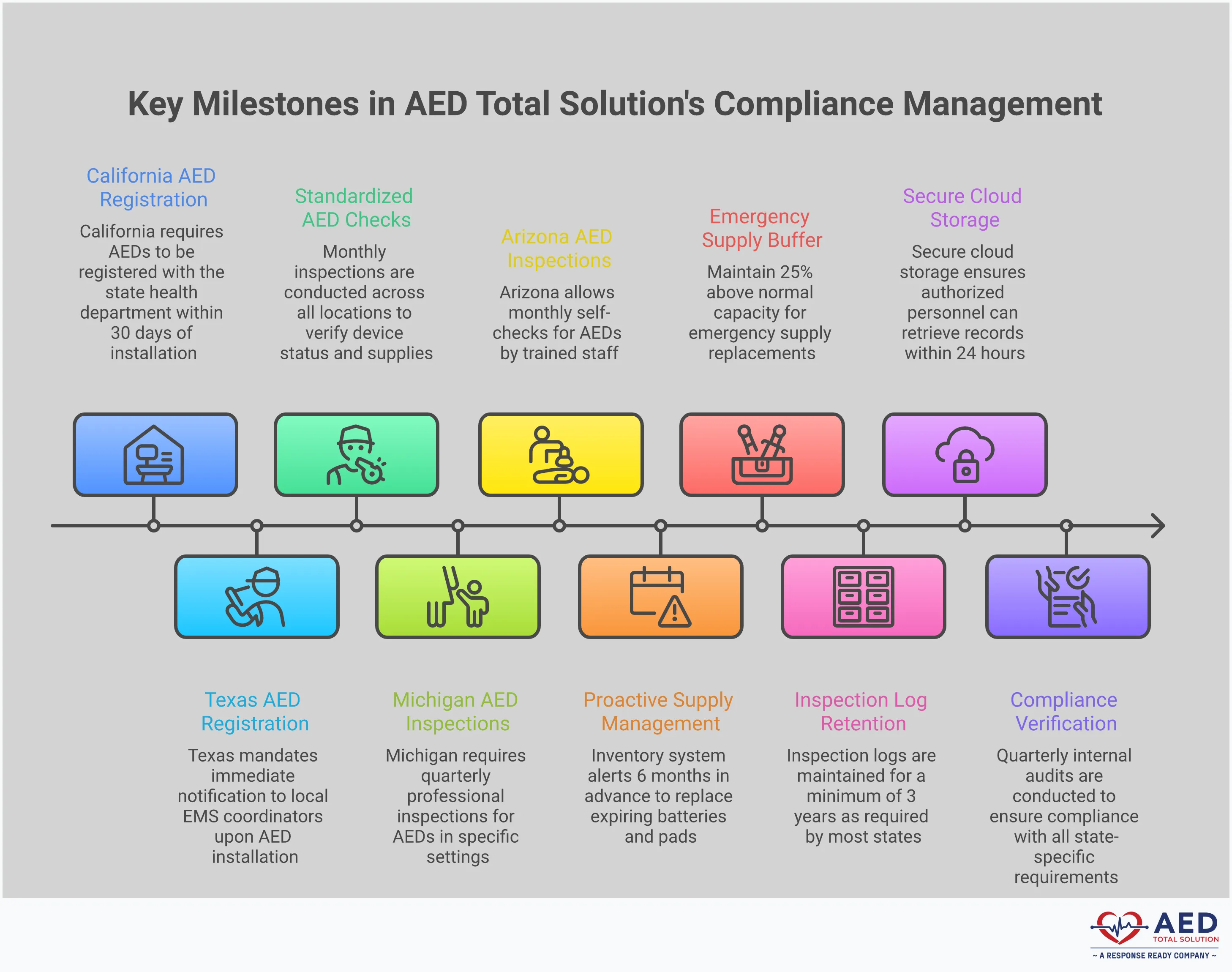
The complexity of AED compliance grows with every new location you manage, especially if your sites are in different states or counties. Juggling varying local and state regulations for each device can quickly become an administrative nightmare. A centralized approach is key to staying organized and ensuring every AED meets its specific requirements. Using a single system to track inspection schedules, expiration dates, and local registration rules prevents critical tasks from slipping through the cracks. A comprehensive AED program management solution can centralize this oversight, giving you a clear view of your entire AED inventory and its compliance status from one place.
Clearing Up Liability Concerns
A common worry for AED owners is the potential for legal liability. Thankfully, this is an area where the law is on your side. Every state has “Good Samaritan” laws designed to protect bystanders who offer help in an emergency. These protections almost always extend to the business or entity that owns the AED, provided the device was maintained in good working order and the program followed state guidelines. While the specifics can vary, these AED state legislation frameworks are in place to encourage the placement and use of AEDs. By keeping your devices ready and your records in order, you not only prepare for an emergency but also secure your legal protection.
How to Avoid Common Compliance Mistakes
Most compliance issues arise from simple oversights, not willful neglect. The most frequent mistakes include forgetting to register a new device with local EMS, letting batteries and electrode pads expire, failing to conduct regular inspections, and not keeping complete documentation. To avoid these pitfalls, create a straightforward checklist for each device that covers manufacturer, state, and FDA requirements. Always document every inspection, training session, and supply replacement. When in doubt, don’t guess. Consult your state’s resources or work with a compliance expert to get clear answers. A well-managed program leaves no room for error and ensures your AED is always ready to be used.
Stay Current with AED State Laws
AED laws aren’t set in stone. Regulations can change, and what was compliant last year might not be today. Staying on top of these updates is a critical part of managing an effective AED program. It protects your organization from liability and, more importantly, ensures your devices are always ready for an emergency. Here are four practical ways to keep your program current and compliant.
Monitor Your State’s Health Department
Your state’s department of health website is the most reliable source for AED regulations. These are the agencies that create and enforce the rules, so their guidance is always the final word. For example, some states have specific requirements for maintenance schedules and reporting device placement. Make it a habit to check the site quarterly or sign up for their newsletters. You can find a directory of all state and territorial health departments on the CDC’s website to easily locate yours and get the most accurate information.
Join Professional Safety Organizations
You don’t have to figure this all out alone. Professional groups like the National Safety Council (NSC) or the American Heart Association (AHA) offer a wealth of resources. Membership often includes access to legislative updates, best practice guides, and training materials that reflect the latest standards. These organizations distill complex legal changes into actionable advice for safety managers. Being part of a community focused on workplace safety helps you stay ahead of regulatory shifts and connect with peers facing similar challenges.
Use Legal Resources and Compliance Tools
Let’s be honest, reading state statutes can feel like trying to decipher a foreign language. Thankfully, you don’t have to. Many online resources provide clear, easy-to-understand summaries of AED laws. These tools break down what you need to do regarding registration, maintenance, and training without the dense legal jargon. Using them as a reference helps you quickly confirm your obligations and ensure you haven’t missed a critical detail in your program’s setup and ongoing management. This clarity is key to knowing exactly how to take care of your AEDs properly.
Implement an Automated Management System
Manually tracking every inspection, battery expiration date, and training certificate is a recipe for compliance gaps, especially if you manage multiple locations. An automated management system is your safety net. It sends reminders, logs activities, and keeps all your documentation in one place, ready for an audit. This not only simplifies your workload but also strengthens your position for Good Samaritan protections, which often depend on proper maintenance. A comprehensive AED program management service can handle this for you, ensuring every device is tracked and ready.
Related Articles
- AED Laws & Requirements Across State — AED Total Solution
- AED Program Management | Compliance and Maintenance
- AED Signage Requirements & Laws for Compliance | AED Total Solution
- AED Rules and Regulations: A Compliance Guide
Frequently Asked Questions
I just bought an AED. What are the very first things I need to do to be compliant? Once your AED is installed in a visible and accessible spot, your first step should be registering it with your local emergency medical services (EMS) agency. This is a legal requirement in many states and connects your device to the 911 system. Next, create a schedule for regular inspections and a system for tracking the expiration dates of the battery and electrode pads. Finally, arrange for CPR and AED training for your key staff members to ensure they feel prepared to act in an emergency.
What happens if I don’t follow my state’s AED laws? Failing to follow your state’s regulations creates two significant risks. First, you could lose the liability protections offered by Good Samaritan laws, which are often dependent on having a compliant program. This could expose your organization to legal action if the device is used. Second, and more importantly, a non-compliant device may not function correctly during an emergency. An AED with an expired battery or pads is of no use to someone in cardiac arrest, defeating the entire purpose of having one.
My company has offices in three different states. How do I manage compliance for all of them? Managing a multi-state AED program requires a centralized system that can account for different local rules. You cannot apply a single set of procedures to all locations, as the requirements for registration, training, and maintenance can vary significantly from one state to another. The key is to create a unique compliance plan for each office that follows its specific state and county laws, while overseeing all of them from a single, organized platform.
Can our organization still be sued even with Good Samaritan laws? While anyone can file a lawsuit, Good Samaritan laws provide a very strong legal defense for organizations that have acted in good faith. This protection, however, is not automatic. It is almost always tied to your ability to prove that you have a well-managed and compliant AED program. By keeping detailed records of your maintenance checks, supply replacements, and staff training, you demonstrate that you have taken every reasonable step to ensure your AED is ready to save a life.
Besides checking the green light, what does “maintaining” an AED really involve? The status indicator is a great starting point, but true maintenance is about managing the entire lifecycle of your device’s supplies. It means you have a system to track the specific expiration dates for both the battery and the electrode pads, ensuring you order and install replacements before they expire. It also involves keeping a detailed log of every monthly inspection, which creates the essential paper trail you need to prove your program is compliant and always ready.