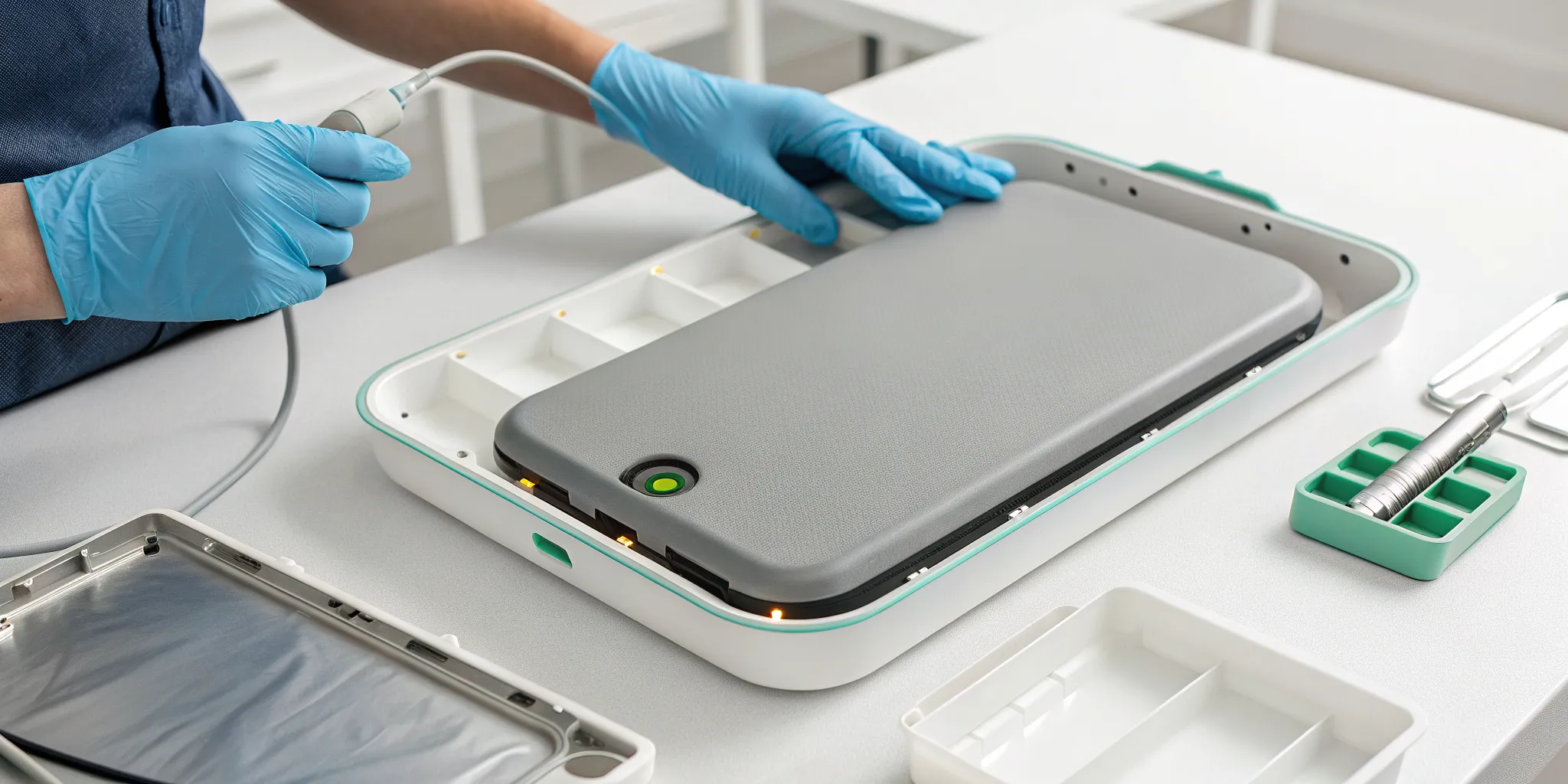
An AED on the wall is a promise—a promise that you’re prepared to help in a sudden cardiac arrest emergency. But that promise is only kept if the device works and your team knows what to do. State laws are in place to make sure that happens. They provide a clear framework for readiness, ensuring every AED is a reliable, life-saving tool rather than just a box on the wall. This article explains how following the state’s rules ensures your program is truly response-ready. Fulfilling the AED requirements in Pennsylvania is about more than just checking boxes; it’s about making sure you’re prepared when seconds matter most.
Key Takeaways
- Fulfill Your Legal Duties Beyond the Purchase: To comply with Pennsylvania law, your responsibilities extend past simply buying an AED. You must also register the device, secure physician oversight for your program, provide certified training for expected users, and follow the manufacturer’s maintenance schedule.
- Secure Your Legal Protection Through Diligence: Pennsylvania’s Good Samaritan law offers liability protection, but it isn’t automatic. This legal shield is tied to responsible ownership, meaning you must keep detailed records of maintenance, inspections, and training to demonstrate you’ve acted in good faith.
- Maintain Constant Readiness with a System: An AED is only effective if it works when needed. Establishing a consistent system for tracking battery and pad expiration dates, performing routine inspections, and documenting all activities is essential for ensuring your device is always functional and your program is audit-ready.
Your Guide to Pennsylvania’s AED Laws
Understanding the laws around Automated External Defibrillators (AEDs) in Pennsylvania can feel like a big task, but it doesn’t have to be. These rules are in place for one simple reason: to ensure that if a sudden cardiac arrest occurs, the people and equipment on-site are ready to save a life. Think of these regulations not as hurdles, but as a clear roadmap for creating a safe environment for your employees, customers, or students. From making sure your device is properly maintained to knowing who needs to be trained, each requirement plays a vital role in the chain of survival.
For any organization with an AED, staying compliant protects you from liability and, more importantly, gives you confidence that your emergency response plan will work when it matters most. This guide will walk you through exactly what you need to know about Pennsylvania’s AED laws. We’ll cover which facilities are required to have a device, what the state expects from you as an owner, and how Good Samaritan protections support you. With a clear understanding of your responsibilities, you can build an AED program that is not only compliant but truly prepared to make a difference.
The Basics of PA AED Law
At its core, Pennsylvania law is designed to encourage the placement and use of AEDs while establishing a framework for safety and effectiveness. If you have an AED program, you are responsible for a few key things: regular maintenance, proper training for anticipated users, activating EMS (calling 911) whenever the device is used, and reporting the use afterward.
A major piece of this framework is the state’s Good Samaritan law. This law provides legal protection to AED owners and trained users who respond to an emergency. As long as you act in good faith and aren’t grossly negligent, you are shielded from civil liability. This protection is crucial because it removes the fear of legal trouble, empowering people to step in and help during a cardiac emergency.
Who Needs to Follow These Rules?
Certain facilities in Pennsylvania are legally required to have an AED on-site. This list includes health clubs, assisted living facilities, schools, and coal mines. If your organization falls into one of these categories, having a compliant AED program is mandatory.
However, the rules don’t just apply to them. If you voluntarily place an AED in your workplace, you must also follow the state’s requirements for maintenance, training, and reporting. The state also strongly encourages schools to have at least one AED and even offers programs to help them acquire devices. To participate, schools must ensure at least two staff members are properly trained. Ultimately, these regulations apply to anyone who owns an AED, ensuring every device is a ready and reliable asset.
Which Facilities in Pennsylvania Must Have an AED?
While placing an AED in any public space is a smart move, Pennsylvania law specifically requires certain facilities to have these devices on hand. Understanding if your organization falls into one of these categories is the first step toward building a compliant and life-saving emergency response plan. These laws are in place to protect vulnerable populations and individuals in high-risk environments. Let’s walk through which facilities are required to have an AED on-site.
Health Clubs and Fitness Centers
If you manage a gym or health club, your AED requirements depend on your operating hours. Pennsylvania law requires at least one CPR-trained person to be on-site during all staffed hours. For facilities open during unstaffed hours, like 24/7 gyms, the rules are more specific. You must have at least one AED that is accessible to members, along with clear signage, a panic button, and a phone for calling 911. This ensures that even when no one is at the front desk, members have the tools they need to respond to a cardiac emergency. Managing these details is a key part of a complete AED program.
Schools and Educational Institutions
Pennsylvania strongly encourages all schools to have at least one AED to protect students, staff, and visitors. The state even helps schools acquire devices at a lower cost through its purchasing program. To participate, schools must meet a few key requirements. This includes ensuring at least two staff members are trained in CPR and AED use, keeping the device in a secure and accessible location, and following the manufacturer’s maintenance schedule. Proper AED maintenance is critical to ensure the device is ready to use when needed, and a physician’s prescription is also required to place an AED in a school.
Assisted Living Facilities
For assisted living and personal care homes, the law is direct: each building must have both a first aid kit and an AED. The regulations also state that all staff must know the location of this equipment. In an environment where residents may have pre-existing health conditions, immediate access to an AED can be the difference between life and death. This requirement underscores the importance of not just owning a device, but also integrating it into your facility’s emergency plan with clear communication and staff training. This ensures your team can act confidently and without hesitation during a crisis.
Coal Mines
Due to the remote and hazardous nature of the work, Pennsylvania has very specific AED requirements for coal mines. Mine operators must place one AED near the main entrance where first aid equipment is stored and another within 1,000 feet of each active work area. This ensures that a device is always reasonably close to workers. Furthermore, all mine emergency medical technicians (EMTs) must be trained in AED use, and all other miners are required to complete AED training annually. These strict rules highlight the need for a robust compliance management system in specialized industries.
What Are the Legal Requirements for Owning an AED in PA?
Once you’ve decided to place an AED in your facility, you’re taking a huge step toward protecting your employees, students, or customers. But owning the device is just the beginning. Pennsylvania has a few key legal requirements you’ll need to follow to ensure your program is compliant and ready for an emergency. Think of these rules not as hurdles, but as a framework designed to make sure every AED is properly maintained, tracked, and effective when it matters most.
Meeting these requirements helps you reduce liability and gives you confidence that your device will perform as expected. From registering your device with the state to having a doctor sign off on your program, each step plays a vital role in a successful and legally sound AED program. Let’s walk through exactly what you need to do to stay compliant in Pennsylvania.
Register Your Device with the PA Department of Health
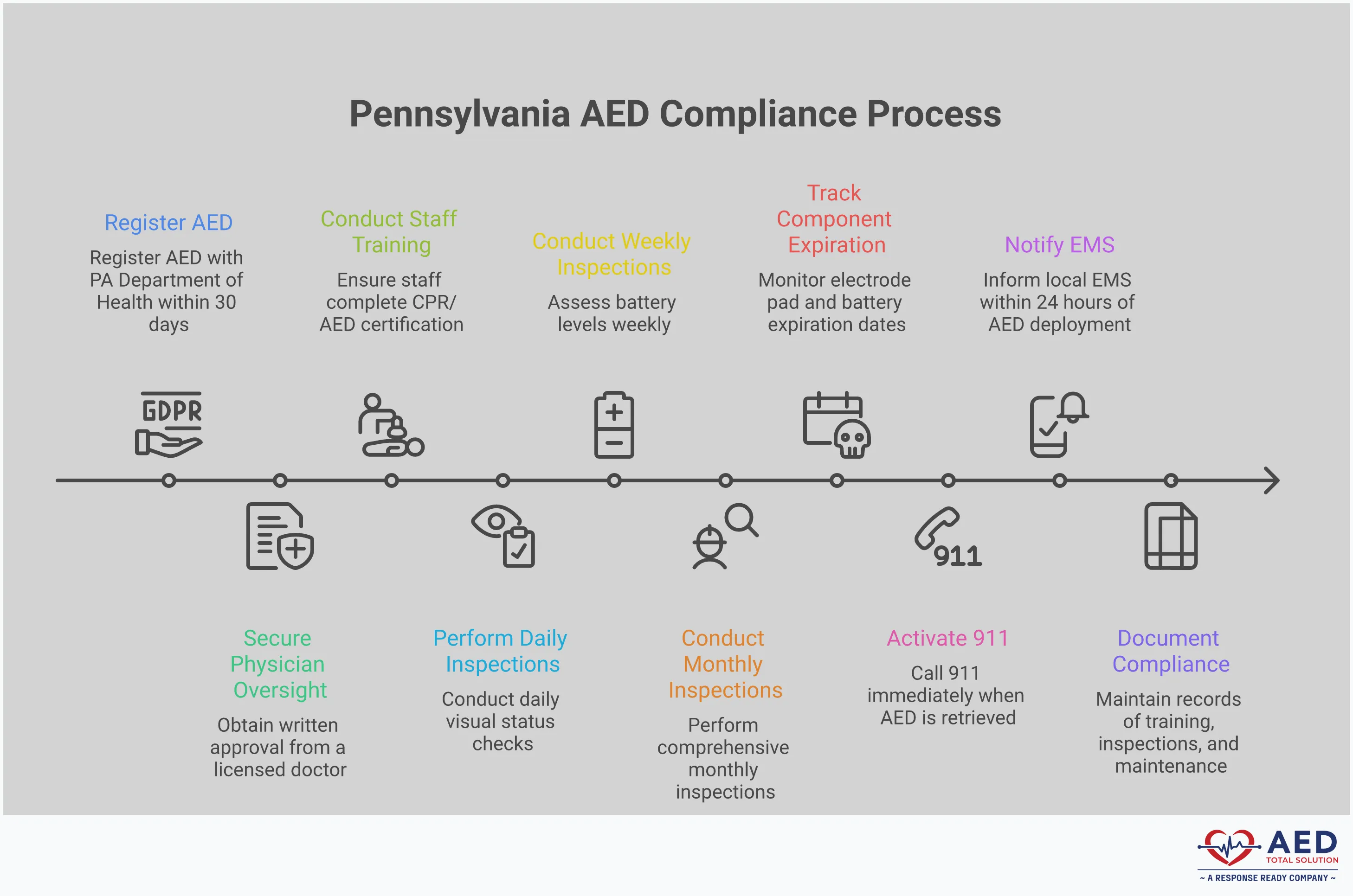
One of the first things you’ll need to do is register your AED. This process helps ensure local emergency medical services (EMS) are aware of your device’s location, which can be critical during a cardiac arrest event. For schools, the requirement is even more specific: you must report the number, condition, age, and placement of each AED to the Pennsylvania Department of Education (PDE). This statewide tracking creates a map of accessible devices, strengthening the chain of survival for everyone. Proper registration is a simple but essential part of responsible AED ownership.
Secure Physician Oversight
In Pennsylvania, you can’t just buy an AED and mount it on the wall. State law requires that you have a physician’s approval before acquiring a device. This is often referred to as medical oversight or medical direction. It’s best to get this approval from a doctor who can oversee your program, ensuring it aligns with medical best practices. This physician oversight confirms that you have a solid plan for using and maintaining the AED correctly. This step is foundational to a credible emergency response program and is a core part of our AED program management services.
Follow Manufacturer Maintenance Guidelines
An AED is only effective if it’s ready to work at a moment’s notice. That’s why Pennsylvania law mandates that all AEDs must be maintained and tested according to the manufacturer’s specific instructions. This includes regularly checking the device’s status indicator, tracking the expiration dates for batteries and electrode pads, and replacing them before they expire. Keeping up with these tasks is non-negotiable for compliance and readiness. A well-maintained device is a reliable one, and consistent upkeep ensures you’re always prepared for an emergency.
Report AED Use to EMS
If your AED is ever used during an emergency, your responsibility doesn’t end after the event. Pennsylvania law requires that someone immediately calls 911 and provides any information requested by the responding EMS team. This communication is crucial for ensuring the patient receives seamless care from the moment you intervene to the moment they arrive at the hospital. Having a clear post-event reporting process as part of your emergency action plan ensures you meet this legal requirement and support the best possible outcome for the victim.
What AED Training Does Pennsylvania Require?
Having an AED on-site is a critical first step, but the device itself is only one piece of the puzzle. A truly effective emergency response plan depends on having people who are trained, confident, and ready to use it when seconds count. Pennsylvania law recognizes this and sets clear training standards to ensure that anyone expected to operate an AED knows exactly what to do. Think of training not as a compliance hurdle, but as an investment in your team’s ability to save a life.
These requirements are designed to build competence and remove hesitation during a crisis. When your staff is properly trained, they can act decisively, follow the AED’s prompts, and perform CPR correctly, creating a vital bridge of support until emergency medical services arrive. Managing these training certifications and renewals across your team can be complex, which is why integrating them into a comprehensive AED program management system is so important. It ensures no one’s certification lapses and your organization is always prepared.
CPR and AED Certification Rules
In Pennsylvania, if your workplace has an AED, anyone who is designated or expected to use it must complete a certified training course. The state wants to ensure that responders have a foundational knowledge of both CPR and AED operation. This training covers the essentials, like how to recognize the signs of sudden cardiac arrest, when to apply the AED pads, and how to follow the device’s audio and visual instructions. Completing a course from a recognized provider gives your team members the official certification they need and the confidence to act without hesitation in a real emergency.
Finding an Approved Trainer
To meet state requirements, your team’s training must come from a state-approved provider. The most widely recognized organizations are the American Red Cross and the American Heart Association. Pennsylvania’s Department of Health also approves other equivalent training programs that meet its standards. When scheduling training for your staff, make sure the course you choose is officially certified. You can find approved courses that cover AED use in your local area. Verifying the provider’s credentials ensures your program remains fully compliant with state law and that your team receives high-quality instruction.
Special Training Rules for Schools
Schools in Pennsylvania have specific and more detailed training requirements. State law mandates that for every AED located in a school, at least two staff members must be trained in its use. This ensures that a certified responder is likely to be available even if one is absent. Furthermore, Pennsylvania has taken a proactive step by requiring all public schools to provide CPR instruction to students in grades nine through twelve. This education includes hands-on practice and information on how AEDs work, preparing the next generation of citizens to respond to cardiac emergencies.
How Pennsylvania’s Good Samaritan Law Protects You
One of the biggest hesitations I hear from organizations about getting an AED is the fear of liability. What if something goes wrong? The good news is that Pennsylvania has a Good Samaritan law designed to protect people who step up to help during a sudden cardiac arrest emergency. This law provides a strong layer of legal protection for both the person using the AED and the organization that owns it, as long as you follow a few key rules. Understanding these protections can give you the confidence to implement a life-saving AED program.
How You’re Protected
Pennsylvania’s law shields you from lawsuits when you own, maintain, or use an AED in an emergency. This protection applies as long as you act in “good faith”—a legal term that simply means you are genuinely trying to help someone. The law recognizes that emergencies are stressful and that bystanders aren’t medical experts. So, if a trained employee uses your AED on a visitor suffering from cardiac arrest, neither the employee nor your organization can typically be held liable for the outcome, provided they weren’t intentionally reckless or grossly negligent. This legal safeguard is designed to empower you to act decisively when seconds count.
Acting in Good Faith
For an organization, “acting in good faith” involves more than just good intentions. To qualify for legal protection, you must meet specific responsibilities. This means ensuring your AED is properly maintained according to the manufacturer’s guidelines, providing CPR/AED training for expected users, and having a plan that includes calling 911 immediately when the device is used. These steps demonstrate that you’ve done your part to create a safe and effective response program. A comprehensive AED program management plan is the best way to ensure all these boxes are checked, so your organization is always protected.
What Isn’t Covered?
While the Good Samaritan law is broad, it has its limits. The protection does not apply if someone intentionally causes harm or acts with gross negligence. For example, ignoring obvious maintenance failures or using the device in a way that is clearly reckless would not be covered. The law also doesn’t protect anyone who interferes with professional emergency responders when they arrive. Once EMS is on the scene, it’s crucial to step back and let them take over. The law is there to protect helpful bystanders, not to obstruct the work of trained medical professionals.
PA’s Rules for AED Maintenance and Compliance
Owning an AED is a fantastic first step, but the real work lies in making sure it’s ready to save a life at a moment’s notice. Pennsylvania law is clear: ongoing maintenance isn’t just a good idea, it’s a requirement. Think of your AED like any other critical piece of safety equipment—it needs regular attention to function correctly. These rules are in place to protect both the user and the person in need.
Keeping up with inspections, expiration dates, and paperwork can feel like a lot, but it’s manageable when you break it down into a few key tasks. Staying on top of these responsibilities ensures your device is always compliant and, more importantly, always prepared for an emergency. Let’s walk through exactly what the state expects from you.
Perform Regular Inspections
In Pennsylvania, you are required to perform regular inspections on your AEDs to confirm they are in good working order. This isn’t a vague suggestion; it’s a mandate that’s central to any compliant AED program. Most AEDs perform daily, weekly, and monthly self-tests, but a visual check is still essential. Your routine inspection should confirm that the status indicator shows the device is ready, the supplies are intact, and the AED is visible and accessible. These checks are a fundamental part of a complete AED program, which also includes training, EMS activation protocols, and post-use reporting.
Track Battery and Pad Expirations
An AED is useless without a functional battery and unexpired electrode pads. These components have a limited shelf life, and Pennsylvania law requires you to maintain your device according to the manufacturer’s specific instructions. This always includes tracking and replacing these essential accessories before they expire. A dead battery or dried-out pads can mean the difference between a successful rescue and a tragic outcome. Keeping a close eye on these dates is one of the most critical parts of AED ownership. Make sure you have a reliable system to order replacement batteries and pads well before you need them.
Keep Clear Records
If you can’t prove you did it, it didn’t happen. Pennsylvania law mandates that AED owners keep clear, accurate documentation of all maintenance and testing. This means every inspection, every battery replacement, and every service check needs to be recorded. These records are your proof of compliance and are absolutely vital in the event of an audit or after the device is used in an emergency. Your log should include the date of each check, the status of the device, the expiration dates of the pads and battery, and the initials of the person who performed the inspection.
Meet Annual Reporting Deadlines
For certain organizations, particularly schools, Pennsylvania has annual reporting requirements. These reports help ensure that AEDs across the state are being properly maintained and are accessible when needed. You’ll typically need to provide information on the number of AEDs you have, their specific locations, their age, and their overall condition. Missing these deadlines can put your organization out of compliance. A comprehensive program management system can automate these reminders and reports, taking the administrative burden off your shoulders and ensuring you meet every deadline.
Where to Find Help with PA’s AED Rules
Understanding Pennsylvania’s AED laws is the first step, but finding the resources to fund, purchase, and properly train your team is just as important. The good news is that the state offers several programs designed to make acquiring and maintaining an AED more manageable. From grants that cover the cost of a new device to cooperative purchasing programs that offer discounts, there are avenues for support. These resources can significantly lighten the financial and logistical load of starting or managing an AED program.
Whether you’re a school administrator, a local government official, or a business owner, it’s worth taking the time to see what assistance is available. These programs not only help you meet legal requirements but also strengthen your community’s emergency preparedness. Exploring these options can help you get life-saving equipment in place faster and more affordably, ensuring you’re ready to respond when it matters most.
Pennsylvania Counties Risk Pool Grants
If you work for a local government, the Pennsylvania Counties Risk Pool (PCoRP) offers a Loss Prevention Grant Program that can be a huge help. This program is designed to assist with safety initiatives, and that includes acquiring AEDs. For example, Pike County has used these grants to place AEDs in government buildings and vehicles, making them more accessible to the public and employees. It’s a fantastic resource for municipalities looking to improve public safety without straining their budgets. Check with your county to see if you can take advantage of this program to fund your next AED purchase.
The COSTARS Cooperative Purchasing Program
For schools, purchasing equipment can be a complex process. The COSTARS program, managed by Pennsylvania’s Department of General Services, simplifies things. As a cooperative purchasing program, it allows schools and other public entities to buy AEDs at a pre-negotiated, reduced cost. This streamlines the procurement process and leverages the state’s buying power to save you money. Instead of going through a lengthy bidding process, you can use COSTARS to purchase a compliant AED quickly and affordably, making it easier to protect your students and staff.
State Funding for School AEDs
Beyond cooperative purchasing, Pennsylvania actively encourages schools to have at least one AED on campus by providing other funding opportunities. The state recognizes the critical role these devices play in student and faculty safety. Because of this, there are often state-level initiatives that help schools purchase AEDs at lower prices. If you’re an administrator, it’s a good idea to stay informed about the latest funding opportunities from the Department of Education and other state agencies. These programs are put in place to ensure that budget constraints don’t prevent schools from being prepared for a cardiac emergency.
Training and Educational Resources
A device is only effective if people know how to use it. Pennsylvania law requires that AED users complete a training course from a state-approved provider. The most recognized organizations are the American National Red Cross and the American Heart Association. However, the Pennsylvania Department of Health also approves equivalent training programs to ensure quality and consistency. Investing in proper CPR and AED certification for your team is non-negotiable. It builds confidence and ensures that in a high-stress situation, your people are prepared to act correctly and without hesitation.
Common Myths About Pennsylvania’s AED Laws
Misinformation can create unnecessary barriers to implementing a life-saving AED program. When you’re responsible for your organization’s safety and compliance, it’s important to separate fact from fiction. Let’s clear up some of the most common myths surrounding Pennsylvania’s AED laws so you can move forward with confidence. These misconceptions often make the process seem more intimidating than it really is, but understanding the truth can simplify your approach and highlight the importance of having these devices ready.
Myth: Training is Too Complicated
Many people hesitate to use an AED because they believe it requires complex medical knowledge. The reality is that modern AEDs are designed for anyone to use, regardless of their background. These devices provide clear, step-by-step voice instructions to guide the user through the entire process, from placing the pads to administering a shock. A common misconception is that you could accidentally harm someone, but an AED will not deliver a shock unless it detects a shockable heart rhythm. While Pennsylvania does have rules around CPR and AED training, the goal is to build confidence, not to create experts.
Myth: I’ll Get Sued if I Use an AED
The fear of legal trouble is a major deterrent for would-be rescuers. Fortunately, Pennsylvania has a Good Samaritan law specifically to address this concern. This law provides legal protection to individuals who, in good faith, use an AED to help someone during a medical emergency. As long as you are not grossly negligent, these Good Samaritan protections are designed to shield you from liability. The law exists to encourage bystanders to act quickly and decisively without worrying about being sued later. Your priority is to help save a life, and the state’s legal framework supports that.
Myth: Maintenance is a Huge Hassle
The idea of keeping up with AED maintenance can seem overwhelming, but it doesn’t have to be. While Pennsylvania does require you to properly maintain your device, the steps are straightforward and essential for ensuring the AED works when needed. The state’s AED statutes outline basic requirements for routine checks, battery and pad replacements, and record-keeping. Creating a simple inspection schedule and tracking expiration dates are key. For organizations with multiple devices, a dedicated management system or a partner offering program management services can automate these tasks, making compliance simple and stress-free.
Myth: Signage and Placement Rules are Confusing
Some believe the regulations for where to place an AED and what signs to use are overly complex. In reality, these guidelines are designed with one simple goal: to make sure the AED is visible and easily accessible in an emergency. The rules aren’t meant to be tricky; they exist to save precious seconds when someone suffers a sudden cardiac arrest. Following the state’s guidelines for placement means putting the device in a central, unlocked location and using clear signage to point people in the right direction. Think of it as creating a clear path for a hero to find their tools.
Your Pennsylvania AED Compliance Checklist
Staying compliant with Pennsylvania’s AED laws doesn’t have to be complicated. It comes down to a few key areas: proper setup, team training, having a clear plan, and knowing what to do after an emergency. Think of this as your go-to checklist to make sure your program is always ready and protected. By focusing on these four steps, you can build a reliable AED program that not only meets legal standards but also gives you confidence that you’re prepared to save a life. Let’s walk through exactly what you need to do.
Register and Set Up Your AED
First things first: getting your AED set up correctly is a foundational step. In Pennsylvania, your AED program must follow specific standards for maintenance, training, and how you activate EMS. This isn’t just about hanging a box on the wall; it’s about integrating it into your safety protocol from day one. This includes registering your device with the local EMS and ensuring its placement is visible and accessible. Following Pennsylvania’s AED statutes is non-negotiable for creating a program that is both effective and legally sound, ensuring you’re ready when every second counts.
Coordinate Staff Training
An AED is only as effective as the people prepared to use it. Pennsylvania law requires that anyone expected to operate an AED must complete a training course from an approved provider, like the American Heart Association or the American Red Cross. This training covers CPR and proper AED use, giving your team the skills and confidence to act decisively in an emergency. Making sure your staff’s certifications are up to date is a critical part of ongoing compliance. Our program management services can help you track these requirements so your team is always prepared.
Create an Emergency Response Plan
When a cardiac arrest occurs, chaos can take over. A clear, practiced emergency response plan is your best tool for ensuring a calm and effective reaction. Your plan should detail the exact steps to take, from the moment someone collapses to when EMS arrives. A critical part of this plan, as required by law, is to call 911 immediately. The plan should also assign roles, so everyone knows who is responsible for calling for help, retrieving the AED, and beginning CPR. A well-documented plan is a cornerstone of a compliant and life-saving AED program.
Know Your Post-Event Reporting Duties
Your responsibilities don’t end once the ambulance drives away. After an AED is used, Pennsylvania requires you to report the event to the proper authorities. This step is crucial for two reasons: it helps regional EMS agencies collect data to improve outcomes, and it ensures your device is properly serviced and restocked for the next emergency. This post-event follow-through is a key piece of the compliance puzzle. Forgetting this step can leave you with a device that isn’t ready for use and a gap in your compliance records. This is where having an AED management program can make all the difference.
Managing Your AED Program Like a Pro
Staying compliant with Pennsylvania’s AED laws doesn’t have to feel overwhelming. Once your AED is registered and your team is trained, the key is to create a simple, repeatable process for managing your program long-term. A little organization goes a long way in ensuring your device is always ready and your records are always in order. Here’s how you can handle your AED program with confidence.
Use a System to Track Compliance
To keep up with Pennsylvania’s AED rules, you need a reliable system. This isn’t the place for sticky notes and scattered files. A good system helps you track everything in one place: routine maintenance checks, battery and pad expiration dates, staff training certifications, and any post-use reports you need to file with EMS. Having a clear, organized record of these details ensures you meet all legal requirements and, more importantly, that your AED is ready to go when someone needs it. A detailed spreadsheet can work, but many organizations find that a dedicated management service is the best way to keep everything straight and avoid compliance gaps.
Coordinate Across Multiple Locations
If your organization has more than one facility, managing your AED program gets a bit more complex. For example, Pennsylvania requires schools to submit an annual report detailing the number, condition, and location of every device. This same principle applies to any business with multiple sites—you need a central way to oversee every AED. Without a coordinated approach, it’s easy for one location to fall behind on inspections or for a device to go missing. A unified AED management program gives you a bird’s-eye view of your entire inventory, ensuring every device across all your locations meets the same standard of readiness and compliance.
Consider Professional Program Management
Let’s be honest—managing an AED program involves a lot of moving parts. Between tracking maintenance schedules, coordinating training, and keeping up with documentation, it can easily become a full-time job. This is where professional help can make a huge difference. Partnering with an expert in AED program management takes the administrative burden off your team. A good partner handles the routine checks, sends reminders for expiring parts, and makes sure your program is always audit-ready. This frees you up to focus on your core responsibilities, all while having complete confidence that your AED program is compliant and effective.
Related Articles
- Pennsylvania AED Statutes & Regulations
- AED Laws & Requirements Across State
- Indiana AED Statutes & Regulations
- Maine AED Statutes & Regulations
- Delaware AED Statutes & Regulations
Frequently Asked Questions
Why do I need a doctor’s approval to get an AED? Think of it less as a prescription and more as a sign-off on your entire emergency response plan. Pennsylvania requires physician oversight to ensure your AED program is medically sound. A doctor’s involvement confirms that you have a solid plan for using the device correctly, maintaining it properly, and integrating it with local EMS protocols. It’s a foundational step that adds a layer of credibility and safety to your program.
Am I really protected from a lawsuit if I use our AED? Yes, Pennsylvania’s Good Samaritan law provides strong legal protection, but it isn’t a blank check. This protection applies when you act in “good faith,” which means you are genuinely trying to help and have done your part to be prepared. For an organization, this includes keeping the AED properly maintained, ensuring your team is trained, and calling 911. As long as you aren’t grossly negligent, the law is designed to shield you so you can act confidently to save a life.
Is a one-time training course enough for my staff? A single training course is a great start, but it’s not a one-and-done task. CPR and AED certifications expire, typically every two years. More importantly, skills and confidence can fade over time. Regular refresher training is the best way to ensure your team members feel prepared and ready to act correctly under pressure. Keeping certifications current is also a key part of maintaining a compliant and effective program.
What’s the most common mistake organizations make with their AEDs? The most common mistake is the “set it and forget it” mindset. Many organizations install an AED and then fail to perform the routine maintenance checks. The single biggest point of failure is letting the batteries or electrode pads expire. An AED with a dead battery or dried-out pads is completely useless in an emergency. Consistent inspections and a reliable system for tracking expiration dates are absolutely critical.
I have AEDs in several buildings. Do the same rules apply to all of them? Yes, every single AED you own must meet all of Pennsylvania’s requirements for maintenance, registration, and record-keeping. Managing compliance across multiple locations can be challenging, as it’s easy for one device to be overlooked. This is why having a centralized system to track the status of every AED is so important. It ensures that no matter which building an emergency occurs in, the device on that wall is ready to work.