Mounting an AED on the wall is the first step, but it’s far from the last. A truly effective AED program involves a cycle of ongoing tasks—from monthly inspections and supply tracking to staff training and EMS registration. Many organizations overlook these critical details, leaving them with a false sense of security and a program that isn’t compliant. The AED requirements California has are designed to ensure every device is ready when a life is on the line. This guide will show you how to manage the entire lifecycle of your AED program, establishing you as your workplace’s aed authority.
Key Takeaways
- Identify Your Legal Requirements: California law mandates AEDs for specific locations like fitness centers, schools with sports programs, and large-occupancy buildings. The first step is to determine if your organization falls into one of these categories to meet your baseline legal duty.
- Treat Compliance as an Ongoing Program: Simply having an AED isn’t enough. You must perform monthly inspections, track battery and pad expiration dates, maintain staff training certifications, and keep detailed records to stay compliant and ensure the device works when needed.
- Make Your AED Easy to Find and Use: A hidden AED is an ineffective one. Proper compliance includes placing the device in a central, unlocked location, using clear signage to guide people to it, and registering it with local EMS so 911 dispatchers know its location.
What is an AED and How Does It Work?
At its core, an Automated External Defibrillator (AED) is a portable, user-friendly medical device designed to save the life of someone experiencing sudden cardiac arrest (SCA). When a person’s heart suddenly stops beating effectively, an AED can analyze its rhythm and, if necessary, deliver a controlled electrical shock called defibrillation. This shock is intended to interrupt the chaotic electrical activity and allow the heart to reset to a normal rhythm. Think of it as a smart device for the heart; it won’t deliver a shock unless it detects a specific, life-threatening arrhythmia, making it incredibly safe for bystanders to use. The device guides the user through the entire process with clear voice prompts and visual diagrams, from applying the electrode pads to performing CPR.
The true value of an AED lies in its readiness. Having a device on the wall is one thing, but ensuring it’s functional, accessible, and ready for an emergency is the foundation of a successful safety program. This is why ongoing management is so critical. The battery must be charged, the electrode pads must be within their expiration date, and the device must be free of service errors. A comprehensive program ensures that when an emergency strikes, your AED is more than just a box—it’s a working, life-saving tool. Whether you are looking to purchase a new device or manage an existing fleet, understanding its basic function is the first step toward building a culture of preparedness in your organization.
The Role of an AED in Sudden Cardiac Arrest
Sudden cardiac arrest is not the same as a heart attack. While a heart attack is a “plumbing” problem caused by a blockage, SCA is an “electrical” problem where the heart’s electrical signals become chaotic, causing it to stop beating properly. During SCA, every second is critical. For each minute that passes without defibrillation, the chance of survival decreases significantly. While CPR is vital for keeping oxygenated blood flowing to the brain and other organs, it cannot correct the underlying electrical issue. Only an electrical shock from a defibrillator can do that. As the U.S. Food and Drug Administration (FDA) notes, using an AED quickly along with CPR is the most effective way to save a life during SCA.
Types of AEDs: Fully-Automated vs. Semi-Automated
When selecting an AED, you’ll generally encounter two main types: semi-automated and fully-automated. A semi-automated AED will analyze the person’s heart rhythm and, if a shock is needed, it will instruct the rescuer to press a flashing button to deliver the shock. This gives the user final control over the shock delivery. A fully-automated AED also analyzes the heart rhythm, but if a shock is required, it will provide a verbal warning and countdown before delivering the shock automatically without any button press from the rescuer. The choice between the two often comes down to your organization’s preference and training protocols. Both are proven to be safe and effective, and selecting the right one is a key part of our AED program management services.
Public Access vs. Professional Use Devices
The AEDs you see in public spaces like offices, gyms, and schools are known as Public Access Defibrillators (PADs). These devices are specifically designed for laypeople with minimal training, featuring simple interfaces and clear instructions. In contrast, professional-use AEDs are intended for trained first responders like paramedics and EMTs. These models may include more advanced features, such as an ECG display for heart rhythm analysis or manual override capabilities, which require specialized medical knowledge to operate correctly. For nearly all businesses and organizations, a public access AED is the appropriate and required choice.
Who is Authorized to Use an AED?
This is one of the most common questions we hear, and the answer is simple: anyone can and should use an AED in an emergency. These devices were created with the untrained bystander in mind. Once turned on, an AED provides clear, calm, step-by-step voice instructions to guide the user through the entire process. It will tell you exactly where to place the electrode pads and when to stand clear. Crucially, the device will only advise and deliver a shock if it detects a shockable heart rhythm. You cannot accidentally harm someone with an AED. Furthermore, all 50 states have Good Samaritan laws that provide legal protection to individuals who voluntarily step in to help during a medical emergency. The biggest barrier is often hesitation, which is why a well-managed program that includes awareness and training is so important. You can find more answers to common questions on our FAQ page.
Is Your California Business Required to Have an AED?
California law is specific about which types of organizations must have an Automated External Defibrillator (AED) on-site. While any business can benefit from having an AED, certain facilities are legally required to install and maintain them. Understanding these mandates is the first step in ensuring your organization is prepared and compliant. If your facility falls into one of the categories below, you have specific responsibilities for device placement, maintenance, and staff training. Let’s walk through the key locations identified by state law.
For Gyms and Fitness Centers
If you operate a health studio, gym, or fitness center, California law requires you to have at least one AED. This rule applies to most fitness facilities, though it generally excludes hotels that simply have a workout room for guests. The law doesn’t just stop at having the device; you are also responsible for making sure it’s properly maintained and in working order at all times. Additionally, your staff must be trained in CPR and how to use the AED. A comprehensive AED program management plan can help you handle these ongoing maintenance and training requirements without the guesswork.
At Public Pools with Lifeguards
Certain public swimming pools are also mandated to have an AED. The key factor here is the presence of a lifeguard. If your facility provides lifeguards, you must have an AED readily available whenever the pool is open to the public. This ensures that in the event of a sudden cardiac arrest, a trained responder has immediate access to life-saving equipment. Keeping the device in a visible, accessible, and weather-protected location near the pool area is critical for a fast response when every second counts.
On School and University Campuses
California schools that have an interscholastic athletic program are required to have at least one AED on campus. The law also mandates that the device is properly maintained and accessible during sporting events and practices. Beyond the legal requirement, state officials also encourage schools to educate students about the importance of AEDs and how they work. Ensuring your school’s AED is ready for an emergency protects not just student-athletes but the entire school community, including staff and visitors.
For Large Assembly Buildings (300+ People)
The law also applies to certain large buildings designed for public assembly. If you own or manage a new or significantly renovated assembly hall, theater, or another venue with an occupancy of 300 or more people, you are required to have an AED. This rule is triggered by construction or major updates, so it’s an important consideration during any facility planning. The goal is to place life-saving technology in high-traffic areas where large groups of people gather, increasing the chances of a positive outcome during a cardiac emergency.
For High-Occupancy Buildings (200+ People)
Similar rules apply to other high-occupancy structures. Newly constructed or substantially renovated commercial, industrial, and residential buildings with an occupancy of 200 or more people must have an AED. This includes places like office buildings, factories, and large retail stores. According to the California Emergency Medical Services Authority, the AED must be placed in a central location that is accessible to anyone in the building. For property and facility managers, this means not only purchasing a device but also developing a clear plan for its placement and accessibility.
On Commuter Trains
Public transportation is another key area of focus for California’s AED laws. Every commuter train operating in the state is required to have an AED on board as part of its standard safety equipment. This ensures that passengers and crew have access to immediate medical assistance while in transit, where traditional emergency services might be delayed. For transit authorities, managing a fleet of devices across multiple trains requires a robust system for tracking inspections, battery life, and pad expiration dates to maintain compliance.
Breaking Down California’s AED Laws
California’s AED laws aren’t a simple yes-or-no checklist. The requirements often depend on your building’s type, its size, and even when it was built or last renovated. Getting a handle on these rules is the first step to ensuring your organization is fully compliant and prepared for an emergency. While some locations are explicitly named in the legislation, others fall under regulations based on occupancy loads and construction dates.
Think of these mandates as a framework designed to place life-saving devices where they can have the greatest impact. For facility managers, safety officers, and business owners, understanding which category your property falls into is critical. It helps you move from wondering if you need an AED to confidently implementing a program that protects your employees, customers, and visitors while shielding your organization from liability. Let’s break down the specifics so you can see exactly where you stand.
Is an AED Required or Just Recommended?
California law is very specific about certain types of places that must have an AED on-site. These are locations where the risk of sudden cardiac arrest is higher due to physical activity or large crowds. If your organization falls into one of these categories, having a functional and properly maintained AED isn’t just a good idea—it’s a legal requirement.
The state mandates AEDs in health studios and fitness centers, public swimming pools staffed with lifeguards, and schools with interscholastic athletic programs. Commuter trains are also required to carry the devices. For these locations, the law leaves no room for interpretation. You can review the exact state requirements to see the specific language, but the bottom line is that compliance is mandatory.
Does Building Size and Occupancy Matter?
Beyond specific types of businesses, California law also sets AED requirements based on building size and occupancy. This rule applies to a broad range of buildings, including business and educational facilities, factories, and mercantile buildings. If your building has an occupancy load of 200 or more people, you are required to have an AED.
For large gathering spaces classified as “assembly buildings,” the threshold is slightly different, kicking in at an occupancy of 300 or more people. These regulations ensure that larger buildings, where more people are present at any given time, are equipped for a cardiac emergency. Determining your exact occupancy load and whether these rules apply can be complex, which is where professional AED program management can provide clarity and ensure you’re covered.
When New Construction Triggers AED Rules
A key factor in California’s AED law is the date of construction or renovation. Any applicable building constructed after January 1, 2017, that meets the occupancy thresholds we just discussed must have an AED. This rule also applies to older buildings that undergo significant renovations or modifications after that date.
This provision ensures that as California’s infrastructure is updated, its public safety standards are, too. If you are a facility manager overseeing a new build or planning a major renovation, factoring an AED into your project plan is essential for compliance. It’s not just about meeting the code for your final inspection; it’s about integrating a life-saving tool into your building’s core safety infrastructure from day one.
Keeping Your AED Compliant in California
Owning an AED is a major step toward protecting your community, but it’s not a one-and-done task. In California, the law requires you to perform regular maintenance to ensure your device is always ready to save a life. Staying on top of these requirements is key to remaining compliant and, more importantly, ensuring your AED works when you need it most. Think of it as a simple, life-saving routine. These rules protect your organization and the people you serve by making sure every device is accounted for, functional, and properly documented. Let’s walk through exactly what you need to do to keep your AED program in good standing.
Why You Must Register Your AED with EMS
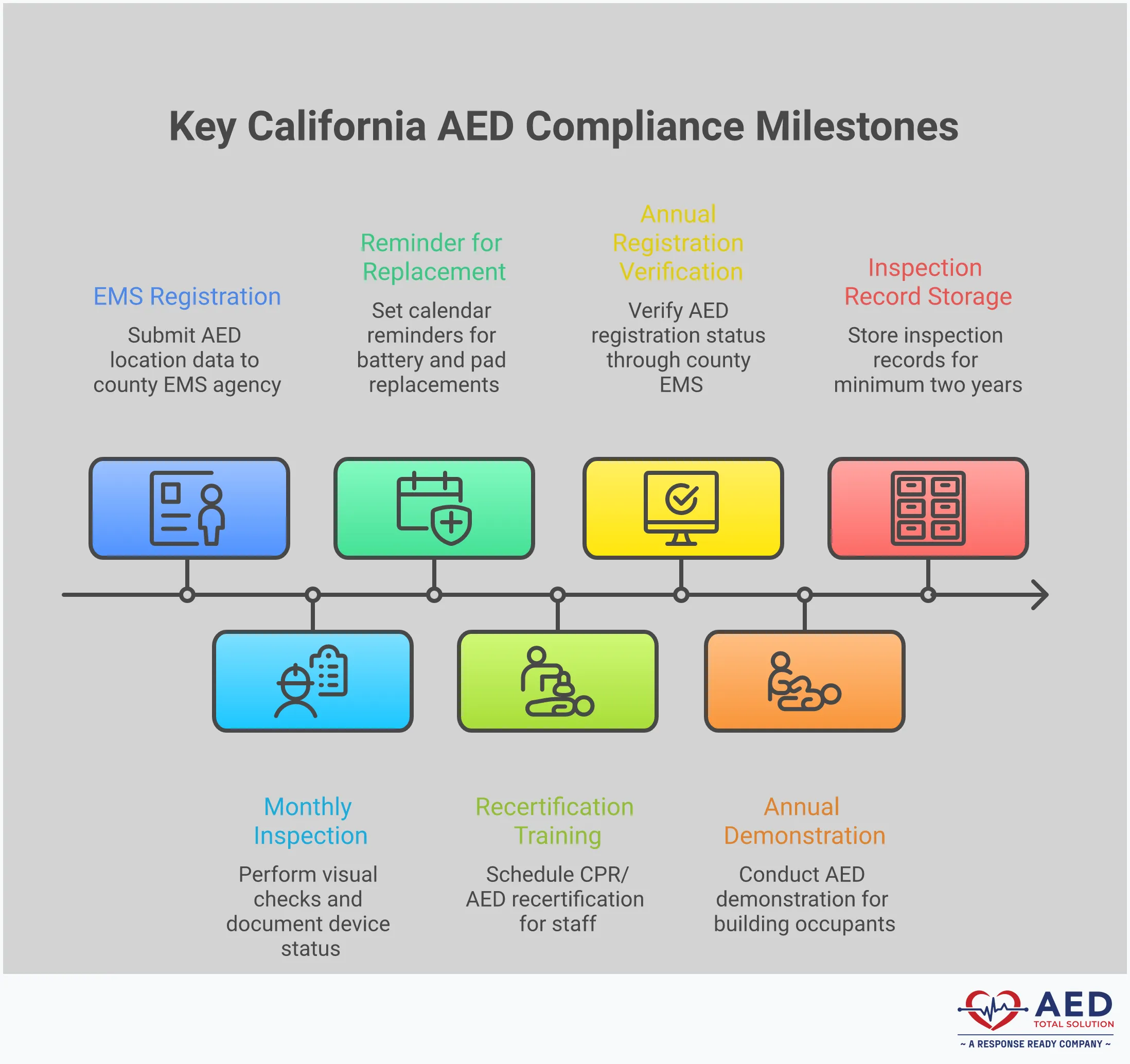
First things first: you need to let the authorities know you have an AED. California law requires you to register your device with the local emergency medical services (EMS) agency. This isn’t just paperwork—it’s a critical step that adds your AED to a map for 911 dispatchers. When someone calls for help near your location, the dispatcher can direct them to your device, potentially saving precious minutes. You’ll need to provide details about your AED’s location and type. Keeping this information current is just as important as the initial registration, so be sure to update it if you move the device.
Your Monthly AED Inspection Checklist
To ensure your AED is always ready for an emergency, California mandates monthly inspections. This regular check-up is your best defense against device failure. During your inspection, you should verify that the indicator light shows it’s ready for use and check that the batteries and electrode pads haven’t expired. These quick, routine checks confirm that everything is in working order. Neglecting this step can lead to a non-functional device when it matters most. Following a consistent schedule is one of the most important AED requirements in California.
Stay on Top of Battery and Pad Expirations
AED batteries and electrode pads don’t last forever; they have specific expiration dates. Part of your responsibility as an AED owner is to keep a close eye on these dates and replace the components before they expire. A dead battery or dried-out pads can render your device useless. Set up a reliable tracking system—whether it’s a digital calendar or a dedicated logbook—to remind you when replacements are due. Proactive management of your supplies is essential for maintaining a response-ready AED and staying compliant with state regulations.
How to Properly Document Your Maintenance
If you don’t write it down, it didn’t happen. California requires you to keep detailed records of all your maintenance activities. This includes every monthly inspection, battery and pad replacement, and any other service performed on the device. These records are your proof of compliance and demonstrate that you are responsibly managing your AED program. In the event of an audit or an incident, having clear, organized documentation is crucial for protecting your organization. You can find more details within the official California AED statutes and regulations.
What to Do After Your AED Is Used
After an AED is used in a rescue attempt, there are a couple of important follow-up steps. First and foremost, you must ensure 911 has been called so that professional responders are on their way. Once the emergency is over, the event needs to be reported. Any data from the device should be shared with a licensed medical professional or the responding EMS personnel. This information is vital for the patient’s follow-up care and helps medical teams understand the cardiac event. This final step closes the loop on the rescue and prepares the device for its next potential use.
Essential Accessories for a Complete Program
Your AED is just one piece of the puzzle; a complete program means paying close attention to the accessories that make it work. The two most critical items are the batteries and electrode pads, both of which have a limited shelf life. According to the FDA, a leading cause of AED failure is expired or dead batteries. This is why diligently tracking expiration dates is a core part of your responsibility. Keeping a stock of fresh AED supplies on hand removes any last-minute scramble and ensures your device is always response-ready, helping you stay compliant with California’s strict maintenance requirements.
Beyond State Law: The FDA’s Role in AED Safety
While following California’s state laws is essential, it’s only part of the compliance picture. At the federal level, the U.S. Food and Drug Administration (FDA) plays a critical role by regulating all Automated External Defibrillators as medical devices. This oversight ensures that the equipment you purchase is safe, effective, and manufactured to a high standard. Think of it this way: state laws tell you where to put an AED and how to maintain it, while FDA regulations confirm the device itself is trustworthy and reliable from the moment it leaves the factory.
Understanding this federal layer of compliance is crucial for any organization. It protects you from liability and gives you confidence that your device will perform as expected during an emergency. The FDA’s rules cover everything from the initial design and manufacturing of an AED to the quality of its batteries and pads. For anyone managing an AED program, staying informed about these federal standards is just as important as keeping up with local requirements. A comprehensive program management service can help you stay on top of both state and federal rules, ensuring no detail is overlooked.
Understanding FDA Premarket Approval (PMA)
Before any AED can be sold in the United States, it must go through the FDA’s rigorous Premarket Approval (PMA) process. This is a scientific review designed to ensure the device is both safe and effective for its intended use. The PMA isn’t just for the main AED unit; it also applies to critical accessories like batteries and electrode pads. When you see that a device is FDA-approved, it means the manufacturer has provided extensive data proving its reliability and performance under emergency conditions. Choosing an AED with PMA is a non-negotiable first step in building a trustworthy and compliant safety program.
How to Verify Your AED and Accessories are FDA-Approved
How do you know if your equipment meets federal standards? The FDA makes it straightforward to check. You can visit the FDA’s website to search their database of approved medical devices. This allows you to confirm the status of your specific AED model and its accessories. If you can’t find what you’re looking for, you can also contact the manufacturer directly to request documentation of their FDA approval. Verifying this information is a key part of your due diligence. When you purchase an AED from a trusted source, you can be confident that the equipment has already been vetted to meet these stringent federal requirements.
Reporting Device Problems Through MedWatch
Even with strict approvals, issues can sometimes arise. If you ever encounter a problem with your AED or its accessories—such as a malfunction, a confusing user interface, or a battery that fails before its expiration date—it’s important to report it. The FDA runs a program called MedWatch, which serves as a national reporting system for medical device issues. Submitting a report helps the FDA track device performance in the real world and identify potential widespread problems. This feedback is vital for maintaining public safety and can trigger safety alerts or recalls that protect other AED owners and the communities they serve.
Does Your Team Meet California’s Training Rules?
Having an AED on-site is a critical first step, but the device itself is only one part of the equation. A successful emergency response depends on having people who are ready, willing, and able to act. That’s why California law includes specific requirements for AED and CPR training. These rules ensure that when a cardiac emergency happens, there’s a trained responder nearby who can confidently use the AED and perform CPR, giving a victim the best possible chance of survival.
For any organization with an AED, building a training program isn’t just about checking a box for compliance—it’s about creating a culture of preparedness. It means ensuring your team has the skills to bridge the gap between the moment someone collapses and the moment professional help arrives. From understanding certification standards to keeping your team’s skills fresh, a well-managed training plan is the backbone of an effective AED program. It empowers your staff to become lifesavers and turns your AED from a piece of equipment into a life-saving tool.
What Kind of CPR/AED Certification Is Required?
When it comes to training, not all courses are created equal. California requires that AED users complete a certification course that includes hands-on practice for both CPR and AED operation. This is crucial because you can’t learn the feel of chest compressions or the rhythm of rescue breaths from a video alone. A proper certification course will teach your team how to recognize the signs of sudden cardiac arrest, when to call 911, how to perform high-quality CPR, and how to correctly apply AED pads and follow the device’s prompts. This practical experience builds the muscle memory and confidence needed to act decisively in a high-stress situation.
Where to Find Approved Training Programs
To meet state requirements, your team’s training must come from a nationally recognized and approved organization. The most common and widely accepted providers are the American Heart Association and the American Red Cross. When you’re vetting potential training providers for your staff, make sure their curriculum is based on the latest guidelines from one of these bodies. This not only ensures you remain compliant with California law but also guarantees your team receives up-to-date, evidence-based instruction that reflects the best practices in emergency cardiac care. Always ask for proof of accreditation before booking a course for your team.
Choosing a Training Format: In-Person, Online, and Blended Options
Once you’ve selected an approved training provider, the next step is choosing a format that fits your team. You’ll typically find three options: traditional in-person classes, fully online courses, and a blended model. While online-only training is convenient, it’s critical to remember California’s legal standards. The state explicitly requires that certification includes practical, hands-on training for both CPR and AED use. This means a purely online course won’t be enough to keep your program compliant and your team truly prepared.
Blended learning is a popular and effective solution for busy teams. This format allows employees to complete the theoretical portion online at their own pace before attending a shorter, in-person session. During this hands-on part, they practice chest compressions and demonstrate their AED skills with a certified instructor. This approach offers flexibility while fulfilling the state’s hands-on requirement. Providers like the American Red Cross offer these blended courses, making it easier to schedule training without disrupting workflow.
How Many Trained Staff Do You Need On-Site?
Certain types of facilities in California, such as health studios, have specific rules about how many trained staff members must be on-site. For example, gyms are required to have at least one employee trained in CPR and AED use available for every AED on the premises during staffed business hours. While your industry may not have such an explicit mandate, this rule highlights a critical best practice for everyone: an AED is only useful if someone trained to operate it is nearby. You should always aim to have a trained responder on-site during all operating hours to ensure a quick and effective response.
Keeping Your Team’s Certifications Current
CPR and AED skills are perishable. Just like your AED needs regular maintenance checks, your team’s certifications need to be kept current. Most CPR and AED certifications are valid for two years, after which a recertification course is required. It’s essential to keep a detailed record of each trained employee’s certification date and their expiration date. Proactively scheduling renewal training before certifications lapse is a key part of a well-managed program. A comprehensive AED program management service can automate this tracking, sending you reminders so your team’s life-saving skills never fall out of date.
AED Signage and Notification Laws in California
Placing an AED in your building is a critical first step, but it’s only half the battle. If no one knows where the device is or feels confident enough to grab it, it won’t do any good. That’s why California law includes specific rules for signage and communication—they’re designed to make your AED program effective when it matters most. Think of it this way: your AED needs to be as easy to find as a fire extinguisher. These requirements ensure that everyone from your employees to your tenants and visitors can quickly locate and use the device in an emergency.
Proper signage removes the guesswork and hesitation during a high-stress event like a sudden cardiac arrest. Beyond just signs, the law also requires you to proactively inform people about the AED’s location and available training. Fulfilling these notification duties is a key part of a compliant and truly response-ready AED program. It’s about creating an environment where people feel empowered to act instead of freezing in uncertainty. Getting the signage and notifications right not only keeps you compliant but also significantly strengthens your facility’s emergency response capabilities. Let’s walk through exactly what you need to do to meet these standards.
Notifying Tenants About Your AED Each Year
If you own or manage a building with tenants, you can’t just install an AED and call it a day. According to California’s AED statutes, you must inform tenants of the device’s location at least once a year. This annual reminder keeps the information fresh and ensures new tenants are brought up to speed. The notification should also include details on where they can find CPR and AED training. This simple act of communication empowers your building’s occupants, turning bystanders into potential lifesavers and strengthening your community’s chain of survival. It’s a straightforward requirement that plays a big role in overall preparedness.
Where Should You Place Your AED?
Where you place your AED is just as important as having one. The device must be in a visible, accessible, and unlocked location where people tend to gather, like a main lobby, cafeteria, or fitness center. The goal is for someone to be able to retrieve and use the AED within 3 to 5 minutes of a person collapsing. Clear signage should point the way to the device from multiple directions. These accessibility standards are designed to minimize delays, because every minute without defibrillation dramatically reduces the chance of survival. Make sure your AED isn’t hidden behind a plant or tucked away in a locked office.
What Signs Must Be Posted Near Your AED?
To encourage immediate action from bystanders, California law requires you to post clear instructions on how to use the AED right next to the device. These instructions must be printed in a large, easy-to-read font of at least 14-point type. This is a non-negotiable detail outlined in the state regulations. The sign should provide simple, step-by-step guidance that anyone can follow, even without formal training. This visual aid helps build confidence in a moment of panic and reinforces the user-friendly design of modern AEDs, empowering anyone on-site to step in and help save a life.
How to Share Training Information Correctly
Beyond just having a trained team, building owners are encouraged to foster a broader culture of readiness. Part of this involves offering an annual demonstration on how to use an AED to at least one person in the building. While not a strict mandate for all facilities, this provision in California’s requirements highlights the importance of proactive education. A quick, hands-on demo can demystify the device and show people just how simple it is to operate. By sharing information about training opportunities and offering demonstrations, you help ensure that more people in your facility are prepared and willing to act in an emergency.
Are You Protected? California’s Good Samaritan Laws
One of the biggest questions organizations have when implementing an AED program is about liability. What happens if someone uses the device and the outcome isn’t successful? It’s a valid concern, but thankfully, California has laws in place to protect people who step up to help in an emergency. These “Good Samaritan” laws are designed to encourage bystander action by removing the fear of legal trouble. Understanding these protections is a key part of feeling confident in your emergency response plan.
What Protections Do These Laws Offer?
California’s Good Samaritan laws provide essential protections for individuals who use an AED during a cardiac arrest emergency. According to the state’s Emergency Medical Services Authority, anyone who renders aid in good faith and without compensation is generally shielded from civil damages. This legal framework is designed to encourage people to act decisively without hesitating over potential lawsuits. For your organization, this means that a trained employee or even a helpful bystander who uses your AED is protected. This assurance is fundamental to creating a workplace culture where people feel empowered to save a life.
Understanding Your Civil Liability Protection
The legal shield for responders is quite broad. State statutes clarify that individuals who use an AED in good faith to help someone during an emergency are generally protected from lawsuits for any resulting harm. This protection is vital because it removes a major barrier to intervention. When someone is experiencing sudden cardiac arrest, every second counts, and hesitation can be fatal. By providing this legal safety net, California law ensures that a well-intentioned person’s focus can remain on providing immediate, life-saving care. This is great news for any business with an AED program, as it protects the very people you’re counting on to act.
When Good Samaritan Laws Don’t Apply
It’s important to understand that these protections aren’t a blank check. The law carves out exceptions for acts of “gross negligence” or intentional harm. This means someone who acts with extreme carelessness or deliberately tries to cause injury would not be covered. This is where proper training and device maintenance become critical. Ensuring your team is certified and your AED is always ready for use helps demonstrate due diligence and responsible ownership. It’s also worth noting that manufacturers and sellers of AEDs are still liable for their products. This is why partnering with a trusted provider for your AED program management is so important—it ensures your equipment is reliable and your program is sound.
How to Register Your AED with California EMS
Registering your AED is one of the most important steps you’ll take after purchasing it. In California, this isn’t just a suggestion—it’s a legal requirement. This process connects your device to the local 911 system, letting dispatchers know an AED is nearby during a cardiac emergency. Think of it as putting your AED on the map for first responders. It’s a simple step that can make a life-or-death difference. Let’s walk through what you need to do to get your device registered and stay compliant.
A Step-by-Step Guide to EMS Registration
In California, AED registration is handled at the county level, so your first step is to identify your local Emergency Medical Services (EMS) agency. The exact process can differ from one county to another, but the goal is always the same: to log your AED’s location in the emergency dispatch system. For example, the Los Angeles County EMS Agency requires you to submit a specific application to get started. A quick search for “[Your County] EMS AED registration” should point you to the right forms and contact information. This ensures that when someone calls 911, the dispatcher can direct them to your device, potentially saving precious minutes.
What Paperwork Will You Need?
When you’re ready to register, you’ll need to have some key information on hand. Most local EMS agencies will ask for a completed application form, the specific location of your AED, and details about the device itself (make, model, serial number). You’ll also need to provide information about the person responsible for the AED and confirm that staff members are trained in CPR and AED use. According to California state AED laws, you must report the device’s location to ensure it’s accessible during an emergency. Having these details organized ahead of time will make the registration process much smoother.
Your Reporting Duties After Registration
Registration isn’t the final step; it’s the beginning of your ongoing compliance duties. Once your AED is registered, you have a responsibility to keep the information current. This means performing regular maintenance checks to ensure the device is always ready to use and reporting any changes to your local EMS agency. If you move the AED to a different floor or a new building, you need to update your registration. California law also requires that you keep building tenants or employees informed of the AED’s location. These ongoing responsibilities are critical for maintaining compliance and ensuring your AED can be found when it’s needed most.
What Happens If You Don’t Comply with AED Laws?
Understanding and following California’s AED laws isn’t just about checking a box; it’s about protecting your organization and the people you serve. Failing to meet these requirements can create significant risks, from legal trouble to putting lives in jeopardy. When an emergency happens, the last thing you want is for your life-saving device to become a liability because of a compliance oversight.
Staying on top of maintenance schedules, registration, and training documentation is essential for a ready and legally sound AED program. Let’s break down the specific risks you face when these duties are overlooked.
The Legal and Financial Risks of Non-Compliance
California’s Good Samaritan laws are designed to protect people who step in to help during a medical emergency. These laws generally shield individuals who use an AED in good faith from civil damages. However, this protection has its limits. It doesn’t cover gross negligence or willful misconduct, which can include failing to properly maintain your AED. If your device fails during a rescue because of a dead battery or expired pads you forgot to replace, your organization could be exposed to serious liability.
To stay protected, you must demonstrate that you’ve taken reasonable care of your equipment. This includes registering your AED with the local EMS agency, performing regular inspections according to the manufacturer’s guidelines, and keeping the device in good working order. Neglecting these responsibilities undermines your legal safeguards and puts your organization at financial risk.
Who Enforces AED Laws in California?
California law is very specific about the ongoing responsibilities of an AED owner. For example, building owners are required to notify tenants of the AED’s location at least once a year and provide information on where to get CPR and AED training. Forgetting this simple step is a direct violation. Additionally, state law requires AEDs in specific locations, such as schools with athletic programs and newly constructed large-occupancy buildings.
Failure to comply with these California AED statutes can result in penalties. More importantly, it creates gaps in your emergency response plan. If someone suffers a sudden cardiac arrest and your AED isn’t where it’s supposed to be, or if no one knows how to use it, the consequences can be tragic. Proper compliance isn’t just about avoiding fines; it’s about ensuring your program works as intended when seconds matter most.
How an AED Program Manager Can Help
Keeping up with California’s AED laws can feel like a full-time job. Between tracking inspection dates, managing battery and pad expirations, and documenting every action, the administrative tasks can quickly pile up. For busy safety managers, facility directors, and business owners, it’s easy for a critical detail to slip through the cracks. This is where professional AED program management becomes a game-changer.
Instead of juggling spreadsheets and calendar reminders, you can hand off the entire compliance lifecycle to a dedicated partner. A managed program ensures every AED is properly registered, inspected on schedule, and always ready for an emergency. It removes the guesswork and administrative burden from your plate, giving you confidence that your program meets all state requirements. This approach not only saves you time but also significantly reduces your organization’s liability exposure by creating a clear, documented trail of compliance. With a full-service AED program, you can focus on your core responsibilities, knowing your emergency response plan is in expert hands.
Gain Full Oversight of Your AED Program
True AED readiness goes far beyond simply mounting a device on a wall. It requires consistent, hands-on oversight to ensure every component is functional when seconds matter most. California law is clear that AEDs must be maintained and kept in working order. A comprehensive management program handles this for you, overseeing everything from initial device placement and registration to routine inspections and post-event servicing. This white-glove approach means you have a partner actively verifying that your equipment is compliant and ready, closing the loop on every critical task so nothing is overlooked.
Automate Your Tracking and Documentation
California requires AED owners to register their devices with the local EMS agency, perform regular maintenance checks, and keep detailed records of all activities. Manually tracking these tasks across multiple devices or locations is inefficient and prone to error. Professional AED management services automate these critical tasks through software that sends alerts for upcoming inspections, tracks accessory expiration dates, and maintains a centralized digital log of all maintenance activities. This automated system ensures your documentation is always accurate, complete, and easily accessible, simplifying compliance and freeing up your team’s time.
Stay Audit-Ready and Reduce Your Risk
In the event of an incident or audit, you need to be able to prove your AED program is compliant. A professional management service provides clear, audit-ready reporting that documents every aspect of your program’s health and compliance history. This includes records of monthly inspections, battery and pad replacement dates, and staff training certifications. Having this information organized and accessible not only prepares you for any inquiry but also helps reduce your organization’s liability. It demonstrates a proactive commitment to safety and due diligence, protecting both the people in your facility and your business itself.
Related Articles
Frequently Asked Questions
My business isn’t a gym or school. How do I know if I still need an AED? Beyond specific facilities like fitness centers, California law also applies to buildings based on their size and when they were built. If your building was constructed or significantly renovated after January 1, 2017, and has an occupancy of 200 or more people, you are required to have an AED. This rule covers a wide range of places, including office buildings, retail stores, and factories, so it’s important to check your building’s occupancy load and construction history to be sure.
What are the biggest mistakes people make after installing an AED? The most common mistake is treating the AED as a “set it and forget it” device. Compliance is an ongoing process. Many organizations forget to register their device with the local EMS agency, which is a legal requirement that helps 911 dispatchers. Another frequent oversight is neglecting the monthly inspections. These quick checks are mandatory and ensure the device is actually ready to work, confirming that the status light is green and that the batteries and pads haven’t expired.
Am I legally protected if someone uses our AED? Yes, California’s Good Samaritan laws are designed to protect people who step in to help during an emergency. As long as the person using the AED acts in good faith and isn’t grossly negligent, they are shielded from civil liability. For your organization, this protection is strongest when you can show you’ve done your part by properly maintaining the device, keeping records, and ensuring your team is trained.
Is it enough to just have a trained safety manager, or does my whole team need training? While some facilities have specific rules requiring at least one trained person on-site, the goal should be to create a broad safety net. An AED is only effective if someone is nearby and confident enough to use it. The best practice is to have several trained responders available during all operating hours. This ensures that no matter who is on shift or where an emergency occurs in your building, a capable person is ready to act immediately.
Besides the device itself, what else do I need to do to be fully compliant? A compliant AED program involves several key administrative tasks. You must register your device with your local EMS agency and keep that information updated. You also need to perform and document monthly maintenance checks. Additionally, the law requires clear signage pointing to the AED’s location and a sign with simple usage instructions posted right next to the device. If you have tenants, you must also notify them of the AED’s location at least once a year.