That AED on your wall is more than just a piece of equipment—it’s a promise of safety. But is it a promise you can keep? If your device isn’t registered, it’s essentially hidden from the 911 dispatch system. First responders won’t know it’s there, and it could sit unused during a critical emergency. This is where AED registration comes in. It’s the simple, crucial step that connects your AED to your local emergency network, transforming it from a passive safety measure into an active, life-saving tool for your entire community.
Key Takeaways
- Make Your AED Visible to 911: Registration is the critical step that connects your device to the local emergency response system, allowing 911 dispatchers to direct bystanders to its location when every second counts.
- Gather Key Details Before You Start: To ensure a smooth process, have your AED’s model and serial number, its precise location, a designated contact person’s information, and the battery and pad expiration dates ready to go.
- View Registration as Step One, Not the Finish Line: A compliant AED program requires ongoing attention. You must keep your registry information current and perform regular maintenance checks to ensure your device is always ready to save a life.
Why Registering Your AED Is a Lifesaving Step
Think of AED registration as putting your life-saving device on a map for the people who need it most: emergency responders. When you register your Automated External Defibrillator (AED), you’re officially logging its location, model, and status with a local or state database. While many states have laws requiring AED owners to register their devices, the reason behind it is far more important than just compliance.
Registration is the critical link that connects your device to the 911 emergency response system. Without it, your AED is an invisible island. First responders won’t know it exists or where to find it when a cardiac emergency strikes nearby. By taking a few minutes to register, you transform your AED from a piece of equipment into an active part of your community’s safety net, ensuring it can be located and used when every second is critical.
Helping First Responders Find Your AED Faster
When someone calls 911 for a suspected cardiac arrest, the dispatcher’s goal is to get help to the scene as quickly as possible. If your AED is registered, its location appears in their system. The dispatcher can then direct the caller or a bystander to retrieve the device and begin using it before paramedics even arrive. This simple action can bridge the crucial minutes between the collapse and the arrival of professional help.
A well-maintained registry ensures that 911 operators can tell callers where the nearest AED is, turning a passive bystander into an immediate first responder. This system transforms a chaotic emergency into a coordinated effort, empowering people on the scene to take life-saving action. Registration is what makes this seamless communication possible.
How a Registered AED Can Save a Life
The numbers speak for themselves. When a person suffers a sudden cardiac arrest, their chance of survival decreases by about 10% for every minute that passes without defibrillation. However, using an AED combined with CPR within the first three to five minutes can increase the survival rate from a grim 6% to as high as 74%.
This incredible jump in survival odds hinges on one thing: getting the AED to the person in time. An unregistered device hidden in a cabinet might as well not be there at all. By registering your AED, you make its location known, ensuring it can be deployed rapidly during an emergency. It’s not just about owning an AED; it’s about making sure it’s ready and accessible when it has the power to save a life.
Ensuring Your Device Stays Up-to-Date and Safe
Registering your AED is a fantastic start, but it’s not a one-and-done task. Think of it as the beginning of your commitment to readiness. A compliant and effective AED program requires ongoing attention to detail. This means regularly checking the device to make sure the batteries are charged and the electrode pads haven’t expired. It also means keeping your registry information current. If your AED moves from the front lobby to the third-floor breakroom, that change needs to be reflected in the registry so 911 dispatchers have accurate information. Managing these details is crucial for ensuring your device is always ready to save a life. For organizations that need support, comprehensive AED program management can handle these critical tasks, from tracking expiration dates to updating registry information, giving you confidence that your program is always compliant and prepared.
AED Registration Myths, Busted
One of the biggest myths is that registration is just a legal formality. In reality, it’s a fundamental part of a successful AED program. A registry does more than just list a location; it helps create a comprehensive map of all life-saving devices in a community, strengthening the entire emergency response network. It’s a proactive step toward community-wide safety, not just a box to check.
Another common misconception is that simply having an AED on-site is enough. While AEDs are designed for easy use, the biggest challenge is often access. If no one knows where the device is or that it even exists, it provides a false sense of security. Proper registration and ongoing program management ensure your device is visible, compliant, and truly ready to respond.
Is AED Registration a Legal Requirement?
The short answer is: it depends on where you are. While there isn’t a single federal law that mandates AED registration for every organization, many states have specific statutes that require it. These laws aren’t just about administrative red tape; they are designed to integrate your device into the local emergency response system. When you register your AED, you’re essentially putting it on the map for 911 dispatchers and first responders, making it a public asset in a moment of crisis.
Think of it this way: if someone suffers a sudden cardiac arrest in your facility, a 911 dispatcher who knows about your registered AED can direct a bystander to its location, potentially saving precious minutes. This simple act of registration transforms a private piece of equipment into a community resource. Beyond legal requirements, registration is a fundamental part of responsible AED ownership. It demonstrates a commitment to readiness and helps ensure your device can be found and used when it matters most. Failing to comply with local regulations can not only result in penalties but can also create significant liability risks for your organization if the device isn’t accessible during an emergency. It’s a critical piece of a well-managed AED program.
How AED Laws Vary by State
AED legislation varies significantly from one state to another. Many states have passed laws requiring building owners or specific types of organizations to not only have an AED but also to register it with a local agency, often the regional EMS or county health department. These registries are vital for community safety, creating a network of life-saving devices that emergency services can rely on. To ensure you are compliant, it’s essential to understand your state-specific AED requirements. These laws often outline who must register, what information is needed, and how to keep the registration current.
What About Federal and OSHA Rules?
From a federal perspective, the Occupational Safety and Health Administration (OSHA) strongly encourages employers to have AEDs in the workplace as part of a comprehensive first-aid program. While OSHA doesn’t have a specific standard for AED registration, maintaining and registering your device aligns with best practices for ensuring a safe work environment. Proper program management, including registration, helps you demonstrate due diligence in protecting your employees. Following these guidelines ensures your AED program is not just a piece of equipment on the wall but a functional, well-managed part of your overall workplace safety plan.
Understanding FDA vs. Local Registration
It’s easy to get tangled up in the different layers of AED compliance, but the distinction between federal and local rules is pretty straightforward. The U.S. Food and Drug Administration (FDA) regulates AEDs as medical devices. Their job is to ensure the machine you purchase is safe and effective. Think of it as a seal of approval for the hardware itself. However, the FDA doesn’t manage where that device is located or how it’s integrated into your local 911 system. That’s where state and local registration comes in. These local requirements are designed to make your AED visible to first responders, turning it into an active part of the community’s emergency response network. Fulfilling both federal and local requirements is essential for a truly compliant and effective AED program.
Finding Your Local AED Regulations
The best place to start is with your local Emergency Medical Services (EMS) agency. They can provide direct guidance on registration requirements and point you to the correct portal or paperwork. You can also check with your state or county department of health, as they often oversee public access defibrillation programs. A quick search for “[Your State] AED laws” or “[Your County] AED registration” will typically lead you to the right resources. Be prepared to provide details about your organization, the device’s exact location, and a designated contact person.
What Happens If You Don’t Register Your AED?
Failing to register your AED carries risks that go far beyond a potential fine. The most significant risk is that your device remains invisible to the 911 system. If an emergency happens, dispatchers won’t know an AED is available just down the hall, and a life-saving opportunity could be missed. This can also create serious liability issues for your organization. In the event of a tragedy, failing to follow state registration laws could be viewed as negligence and may even jeopardize the Good Samaritan protections that are designed to shield responders and device owners. Proper registration is a simple step that protects both people and your organization.
What Information Do You Need for Device Registration?
Getting ready to register your AED is a bit like preparing for a road trip—it’s best to gather your essentials before you start. Having the right information on hand makes the whole process smoother and ensures you don’t miss any critical details. This information is what transforms a local registry into a powerful, lifesaving tool for 911 dispatchers and first responders. By preparing these details ahead of time, you can complete the registration quickly and accurately, which is a cornerstone of a compliant and effective AED program. Let’s walk through exactly what you’ll need.
Your AED’s Model and Serial Number
Think of the model and serial number as your AED’s unique fingerprint. This information is essential for the registry to keep accurate records, and it helps you stay informed about any manufacturer recalls or software updates. Before you begin the registration process, take a moment to locate these details on your AED. You can usually find the serial number on a sticker on the back or bottom of the unit. Providing the correct make and model ensures that everyone, from dispatchers to your own team, has the right information about the specific AEDs you have on-site.
The Exact Location of Your Device
This is where details matter most. Simply stating “on the second floor” isn’t enough when seconds count. You need to provide a precise, easy-to-follow description that someone unfamiliar with your building can understand in an emergency. For example, instead of “by the gym,” try “Inside the main entrance of the fitness center, mounted on the wall to the right of the water fountain.” If the AED is in a locked cabinet or behind a coded door, you must include those access details. The goal is to eliminate any guesswork so a bystander or first responder can find and use the device without delay.
Who Is the Main Contact Person?
Every AED needs a dedicated person responsible for it. When you register your device, you’ll need to provide the name, phone number, and email address for a designated point of contact. This should be someone who can be reached reliably with questions or updates about the AED. They will be the one to receive important notifications, like maintenance reminders or alerts from the registry. Choose someone who understands the responsibilities of overseeing the device and can act as the go-to person for all things related to its readiness. This ensures there’s always a clear line of communication for maintaining your life-saving equipment.
Your AED’s Maintenance History
Registering your AED is the first step, but maintaining it is an ongoing commitment. Your local registry needs to know that your device is always ready for an emergency. This means you’ll need to provide and regularly update information about its maintenance status. Be prepared to share the expiration dates for the battery and electrode pads, and maintain a log of your routine readiness checks. Many registries send automated reminders for these tasks, but keeping your own accurate records is crucial for compliance and ensuring the AED will function when needed. This is a core part of any comprehensive AED management solution.
How to Complete Your AED Device Registration
Registering your AED is one of the most important steps you’ll take after purchasing it. While it might sound like just another administrative task, it’s a critical link in the chain of survival. Proper registration ensures that 911 dispatchers know an AED is nearby and can direct a bystander to it during an emergency. The process is straightforward, and breaking it down into a few key steps makes it even more manageable. Let’s walk through exactly what you need to do to get your device registered and compliant.
Step 1: Find the Right Registry for Your Area
Your first move is to identify where you need to register your AED. Registration requirements can vary significantly depending on your location. Most states have laws that outline the process, and often the registration is handled by the local Emergency Medical Services (EMS) agency or county health department. A good place to start is by searching for “[Your State] AED registration requirements.” This will typically point you to the correct agency or online portal. The Sudden Cardiac Arrest Foundation provides a helpful overview of state-specific laws that can guide you to the right place.
Step 2: Enter Your Device and Location Details
Once you’ve found the right registry, you’ll need to provide specific details about your device and its location. Accuracy is key here, as this information is what first responders will use in an emergency. Be prepared to submit the following:
- Your organization’s name and physical address
- A point of contact’s name, phone number, and email
- The precise location of the AED (e.g., “on the wall next to the front desk”)
- The make, model, and serial number of your device
- Expiration dates for the battery and electrode pads
Step 3: Keep Your Registration Up to Date
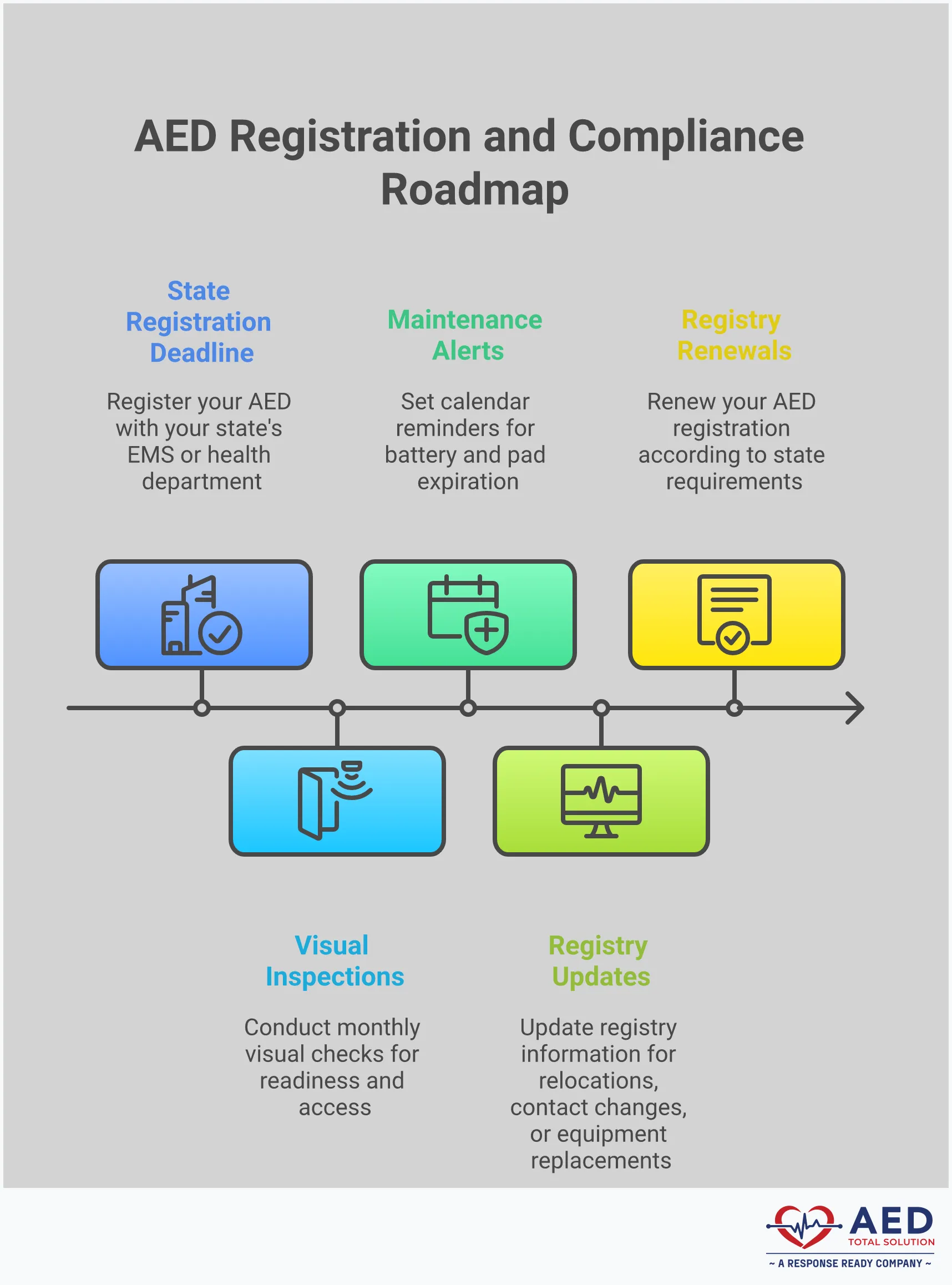
Registration isn’t a one-time task. Think of it as a living document that needs to be maintained. If you move the AED to a new location, replace the device, or change the designated contact person, you must update your registration immediately. An outdated registry entry can be just as unhelpful as no entry at all. Keeping this information current ensures your AED remains a reliable community asset, ready to be located and used when seconds count. This ongoing diligence is a cornerstone of a responsible and effective AED program.
Can Program Management Make This Easier?
Keeping track of registration requirements, renewal dates, and device information can become a heavy lift, especially if you manage multiple AEDs across several locations. This is where an AED program management service can make all the difference. Instead of juggling spreadsheets and calendar reminders, you can have a partner handle the entire process for you. Our full-service AED program management includes initial registration and all ongoing updates, ensuring your program remains compliant without adding to your workload. We take care of the paperwork so you can focus on keeping your people safe.
You’ve Registered Your AED. Now What?
Okay, you’ve checked a major box on your to-do list: your AED is officially registered. That’s a fantastic first step, but the work doesn’t stop here. Think of registration as the beginning of your commitment to readiness, not the end. An AED program is a living system that requires consistent attention to be effective when an emergency strikes. Just like any critical piece of safety equipment, your AED needs ongoing oversight to ensure it’s ready to perform at a moment’s notice.
Keeping your device and its information current is just as important as the initial setup. From routine maintenance checks to updating your registry details, these next steps are what transform a simple device in a box into a reliable, lifesaving tool for your organization and community.
Always Keep Your Registration Details Current
An AED registry is only as good as the information in it. If your device moves to a different floor or the designated contact person leaves the company, that data needs to be updated immediately. Outdated information can send first responders on a wild goose chase during a crisis when every second is critical. Your registry should always reflect the AED’s exact location, accessibility details (e.g., “in the lobby, next to the front desk”), and current maintenance status. A complete AED program management solution handles this for you, sending reminders and tracking details like battery and pad expiration dates to ensure your information is always accurate and audit-ready.
What Are Your Ongoing Responsibilities?
Owning an AED comes with a set of ongoing responsibilities that are key to both compliance and readiness. Most state regulations require you to report any changes to your AED’s status or location within a specific timeframe. Beyond registry updates, this includes performing regular visual inspections to check for readiness indicators, tracking the expiration dates of electrode pads and batteries, and documenting every check. Establishing a consistent maintenance schedule is essential. This routine ensures your device hasn’t been tampered with, that its supplies are within their usable life, and that it will function as expected during an emergency. You can find answers to common questions about these tasks in our AED program FAQ.
Becoming Part of the Emergency Response Network
Have you ever wondered what actually happens with your registration details? When someone calls 911 to report a sudden cardiac arrest near your location, the dispatcher can see your registered AED in their system. They can then direct the caller or a nearby bystander to retrieve your device while medical professionals are on their way. Your registered AED becomes a critical link in the chain of survival, bridging the gap between the onset of an emergency and the arrival of EMS. By simply keeping your information current, you are actively participating in your community’s emergency response network and giving someone a much better chance at survival.
How You’re Making Your Community Safer
A registered and well-maintained AED does more than protect the people within your four walls—it strengthens the safety net for your entire community. When you commit to AED readiness, you become a dependable resource for neighbors, customers, and visitors. This proactive approach to safety demonstrates a deep level of care and responsibility that builds trust and confidence. Your organization is seen as a leader in preparedness, contributing to a heart-safe environment for everyone. This commitment to community well-being is at the core of our mission and is a powerful way to make a tangible, positive impact.
Related Articles
- AED Laws & Requirements Across State — AED Total Solution
- AED Program Management | Compliance and Maintenance
- Why is Defibrillation Important – Legal Guidelines
- AED Certification Meaning: Everything You Need to Know — AED Total Solution
Frequently Asked Questions
Why is registering my AED so important if it’s on my private property? Think of registration as the bridge connecting your private device to the public emergency response system. When you register your AED, its location is logged with 911. If a cardiac arrest happens nearby, the dispatcher can see your device on their map and direct a bystander to it, potentially saving someone’s life before paramedics even arrive. It transforms your AED from a piece of equipment into an active, life-saving community asset.
What are the biggest risks if I forget to register my AED? The most significant risk is that your AED remains invisible during an emergency, meaning a life-saving opportunity could be missed because 911 dispatchers don’t know it exists. Beyond that, failing to register can create serious liability issues for your organization. Many states require registration by law, and non-compliance could be viewed as negligence and may even jeopardize the Good Samaritan protections that shield you and your business.
Is AED registration a one-and-done task? No, registration is a living record that requires ongoing attention. You must update your registry information anytime something changes. This includes moving the AED to a new spot, replacing the device, or changing the designated contact person. Keeping the information current is just as crucial as the initial registration because outdated details can send first responders to the wrong place during a crisis.
How specific do I need to be about the AED’s location? You need to be incredibly specific. Imagine a panicked bystander who has never been in your building trying to find it based on your description. “Third floor” isn’t enough. A better description would be, “On the third floor, mounted on the wall to the left of the main elevators.” The goal is to provide clear, simple directions that eliminate any guesswork when every second counts.
What if I have AEDs in multiple states or cities? Managing AEDs across multiple locations adds a layer of complexity because registration laws and requirements can vary significantly by state and even by county. Each device must comply with its local regulations. This involves tracking different registries, renewal dates, and specific rules for each site, which is why many multi-location organizations partner with a program management service to ensure every device is compliant and ready.