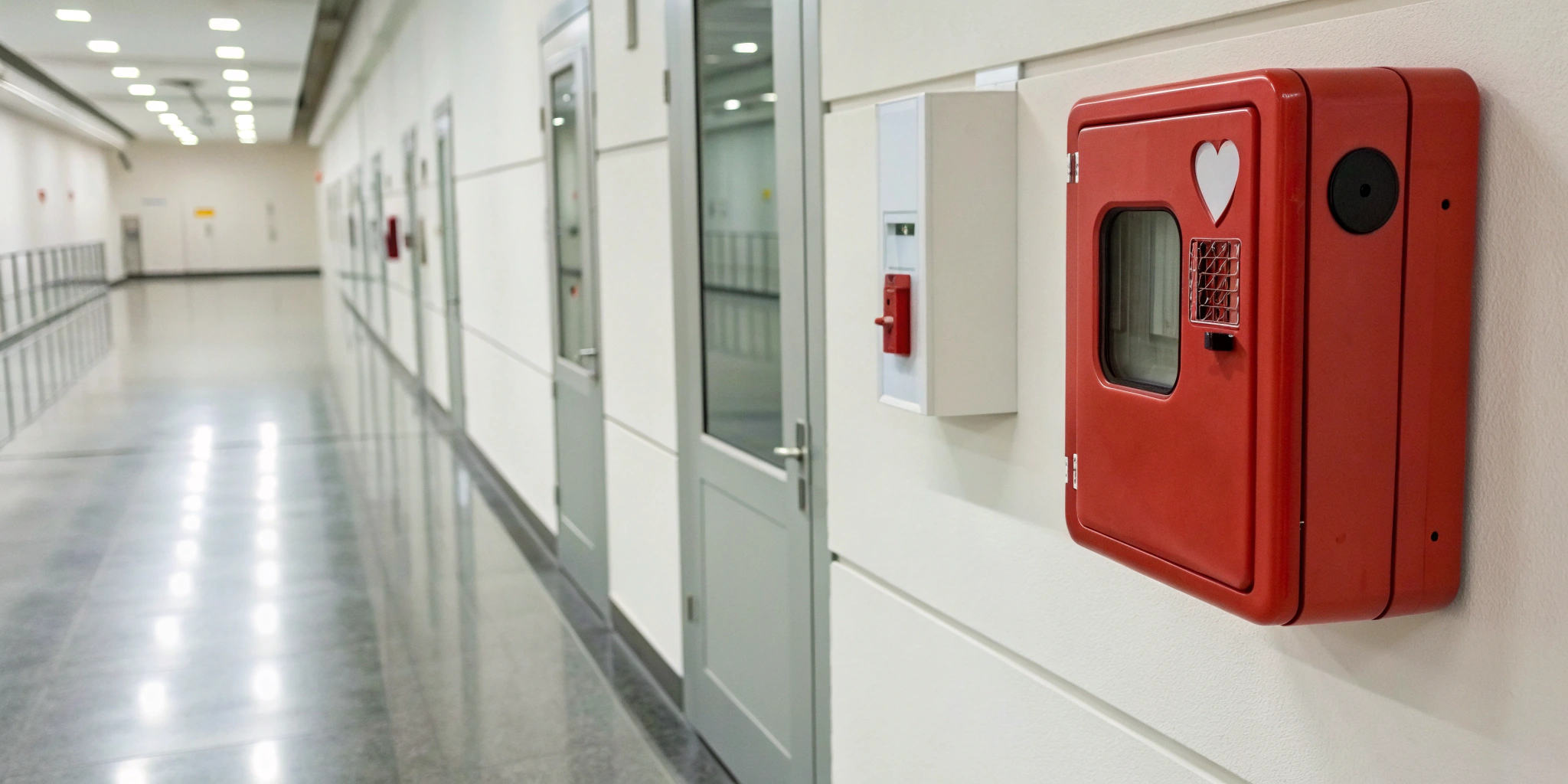
Placing an AED on the wall is more than just an installation task; it’s a strategic decision that directly impacts the chain of survival. A state-of-the-art device is useless if no one can find it or get to it in time. A poorly placed AED—tucked away in a remote office or mounted incorrectly—creates a false sense of security while failing to provide real protection. Understanding the official aed height requirements from the ADA is the first step in transforming your device from a piece of equipment into a life-saving tool that’s truly ready for action in your facility.
An AED is a promise to protect the people in your building, but that promise is only kept if everyone can access it. That’s why specific aed mounting requirements exist. These rules aren’t just bureaucratic red tape; they are thoughtfully designed standards that ensure a person in a wheelchair can reach the device or that someone with a visual impairment won’t be injured by a cabinet sticking out too far. Getting the placement right is a fundamental part of a successful emergency response plan. We’ll break down the key compliance standards from the ADA and OSHA into simple, actionable steps for your program.
Key Takeaways
- Mount for Accessibility and Safety: Ensure your AED is compliant by mounting it so the highest operable part is no more than 48 inches from the floor and the cabinet doesn’t stick out more than 4 inches, making it accessible to everyone and safe for walkways.
- Place for Maximum Visibility and Speed: Position your AED in a central, high-traffic area with clear signage so it’s easy to find. Confirm its location is effective by performing a walk-through drill to ensure it can be retrieved in under three minutes.
- Go Beyond Installation with Consistent Maintenance: A ready AED requires ongoing attention. Create a routine for monthly visual checks, tracking battery and pad expiration dates, and keeping detailed records to ensure your device works when needed most.
What Are the AED Mounting Requirements?
When you’re ready to install an AED, it’s tempting to just find an open wall and call it a day. But where you mount your device is just as important as having one in the first place. Proper placement isn’t just about convenience; it’s about ensuring the AED is accessible, visible, and compliant with key safety standards. Getting this wrong can mean the device is unreachable during an emergency, and it can also create unnecessary liability for your organization.
Think of compliance as your roadmap for a successful AED program. Following the right standards ensures that anyone, including individuals with disabilities, can access the device. It also helps you create a safer environment that aligns with workplace safety recommendations and local building codes. We’ll walk through the three main pillars of compliance you need to know: the Americans with Disabilities Act (ADA), Occupational Safety and Health Administration (OSHA) recommendations, and your local building codes. Understanding these standards will help you place your AED with confidence, knowing it’s ready and accessible when seconds count.
Making Sure You’re ADA Compliant
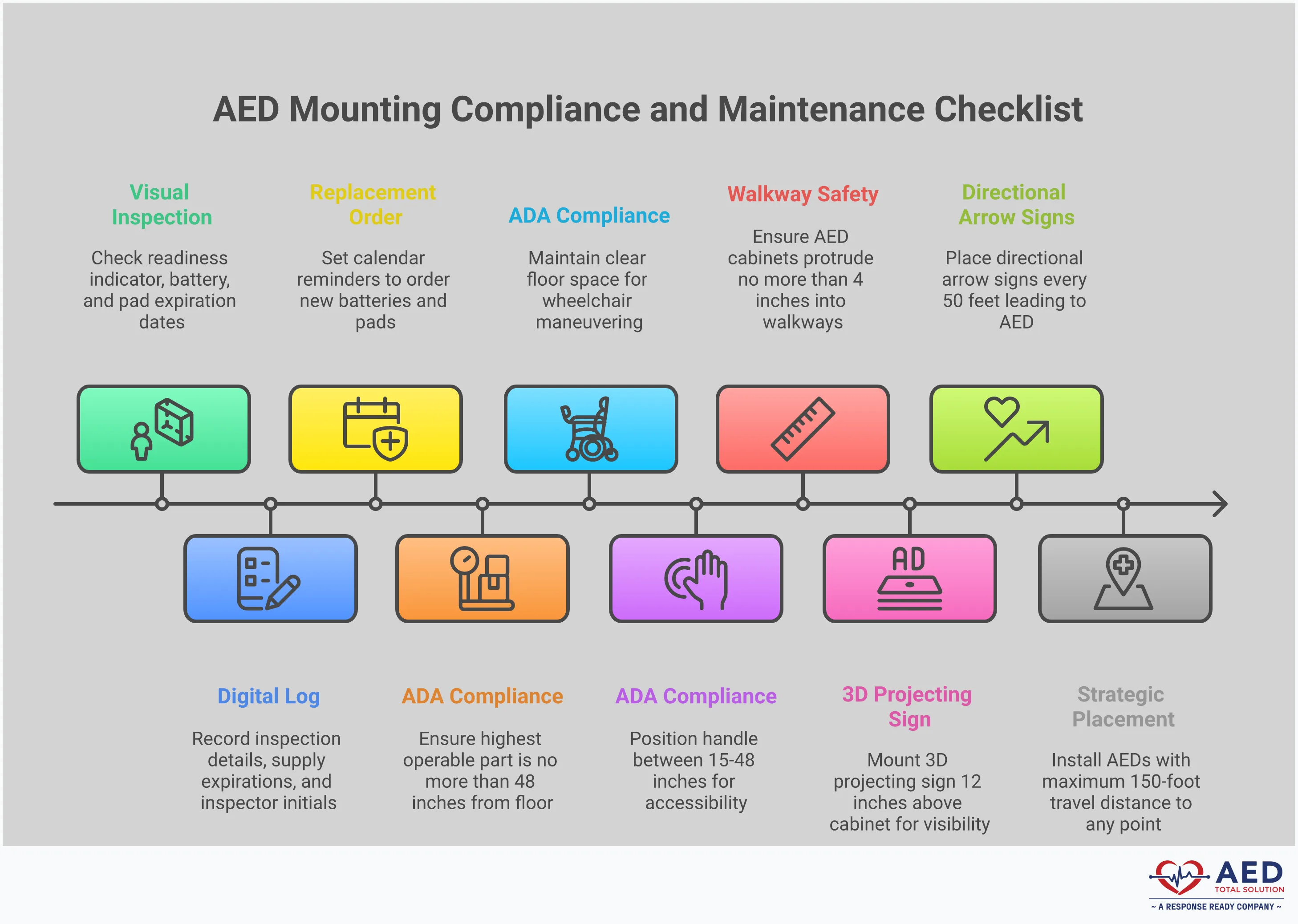
The goal of the Americans with Disabilities Act (ADA) guidelines is to ensure that public spaces are accessible to everyone, and your AED is no exception. For someone in a wheelchair, an AED mounted too high is an AED that can’t be used. To comply, the highest operable part of the device (usually the handle) should be no more than 48 inches from the floor. This ensures a person can approach it from the front and retrieve it without issue. If the location only allows for a side approach, that height can be up to 54 inches. These aren’t just arbitrary numbers; they are carefully determined measurements that make life-saving equipment accessible to all.
What OSHA Recommends for AED Placement
While OSHA doesn’t have a specific, detailed standard for AED installation, it does expect employers to provide a safe workplace. As part of its general guidance, OSHA strongly recommends placing AEDs in areas where they are easy to see and access quickly during an emergency. This falls under their broader mission to support workplace emergency preparedness. Think of it this way: an AED hidden in a back office or a locked closet doesn’t do anyone any good. By placing your AED in a central, unobstructed location, you’re not only following best practices but also demonstrating a clear commitment to employee safety.
Identifying High-Risk Industries
While an AED is a smart addition to any workplace, some environments inherently carry a higher risk of cardiac emergencies. This is especially true for places involving strenuous physical labor, like manufacturing floors or construction sites. It also applies to locations where large groups of people gather, such as schools, fitness centers, and large office buildings. The increased foot traffic or physical exertion in these areas simply raises the probability of an incident. The same logic applies to remote locations where it might take longer for first responders to arrive, making an on-site AED even more critical.
That’s why it’s so important for these organizations to not only have AEDs but to place them strategically. Workplaces with high-risk activities need to think critically about where an emergency is most likely to happen and ensure a device is nearby and ready. Identifying these key areas is a foundational step in creating an effective emergency response plan that truly protects your people. It’s about understanding your specific environment and preparing for the unexpected with the right tools in the right places.
Don’t Forget Local Building Codes
Federal guidelines from the ADA and OSHA provide a great foundation, but you also need to check your local and state regulations. Building codes can vary significantly by city, county, and state, and they often have specific rules for installing safety equipment like AEDs. For example, some codes have strict limits on how far an object can protrude from a wall to keep hallways clear and prevent accidents. This is why you might see recessed cabinets, which are built into the wall. It’s also common for local ordinances to require regular inspections to ensure your AED is in proper working order. Always check with your local fire marshal or building department to get the final word.
Why Proper AED Placement is Critical
Meeting compliance standards is the first step, but creating a truly effective AED program goes beyond just checking boxes. The physical location of your AED is one of the most important factors in determining whether a rescue attempt will be successful. Think about it: a state-of-the-art AED is useless if no one can find it or get to it in time. Placing your device isn’t just an installation task; it’s a strategic decision that directly impacts the chain of survival. A poorly placed AED—tucked away in a remote office or an unmarked cabinet—can create a false sense of security while failing to provide real protection when an emergency strikes.
The goal is to position your AED for maximum impact, which means making it visible, accessible, and quick to retrieve from any point in your building. This is where a thoughtful site assessment becomes invaluable. By analyzing foot traffic, identifying high-risk areas (like a gym or cafeteria), and mapping out response paths, you can ensure your AED is exactly where it needs to be. A well-managed AED program considers these factors from day one, transforming your device from a piece of equipment into a life-saving tool that’s truly ready for action.
The Impact of Response Time on Survival Rates
In a sudden cardiac arrest (SCA) event, the clock is your biggest enemy. The single most critical factor for survival is how quickly the person receives defibrillation. The industry best practice is to aim for a “drop-to-shock” time of less than three minutes. This means that from the moment a person collapses, a bystander should be able to recognize the emergency, call 911, retrieve the AED, and deliver a shock in under 180 seconds. Every second spent searching for the device or fumbling with a locked cabinet eats into this precious window. This is why strategic placement is so vital; it’s about shaving off seconds that can make all the difference between a tragic outcome and a life saved.
Understanding Sudden Cardiac Arrest Statistics
The numbers surrounding SCA are sobering and highlight the urgency of a rapid response. Research consistently shows that a person’s chance of survival decreases by about 7-10% for every minute that passes without defibrillation. As the American Heart Association points out, this drop is especially steep for those experiencing Ventricular Fibrillation, a common cause of SCA. After just five minutes, survival rates can plummet to below 50%. This is why having an AED that is not only available but also immediately accessible is a non-negotiable part of emergency preparedness. Proper placement ensures you can improve the chances of a positive outcome by getting the device to the person in need as quickly as possible.
What Are the ADA’s AED Height Requirements?
When you install an AED, you’re making a commitment to protecting the people in your building. Part of that commitment is making sure the device is accessible to everyone, including individuals with disabilities. That’s where the Americans with Disabilities Act (ADA) comes in. The ADA provides clear standards for accessibility to ensure that public spaces and commercial facilities are usable by all.
Following these guidelines isn’t just about checking a compliance box; it’s about making sure that in a life-or-death situation, anyone can reach and use the AED. An AED that can’t be accessed is no better than not having one at all. Getting the placement right means considering factors like reach range for people who use wheelchairs and ensuring the cabinet doesn’t create a hazard in a busy hallway. Let’s walk through the specific requirements so you can mount your AED with confidence.
Setting the Right Height for Wheelchair Access
The core principle of ADA guidelines for AEDs is ensuring a person in a wheelchair can easily open the cabinet. The maximum mounting height depends on how someone might approach the device. If a person has to face the cabinet head-on (a forward approach), the highest reachable part of the AED cabinet—usually the handle or latch—should be no more than 48 inches from the floor.
If the space allows for a person to approach the cabinet from the side (a parallel approach), the maximum height increases to 54 inches. Following these simple rules ensures that you’re creating an inclusive environment where anyone can be a hero in an emergency. For more detailed information, you can review the official ADA Standards for Accessible Design.
Adjusting Height for Obstructions and Reach
Sometimes, the perfect spot for your AED has a little something in the way—a countertop, a decorative bench, or a piece of furniture. These obstructions can make it harder for someone, especially a person in a wheelchair, to get close enough to the AED cabinet. The ADA anticipated this and created specific guidelines to adjust the mounting height based on how far an object sticks out from the wall. It’s a practical approach that ensures the device remains within reach, even when the surrounding environment isn’t a simple, flat wall. Understanding these adjustments is key to ensuring your AED is truly accessible and compliant, leaving no room for error in an emergency.
Minimum Mounting Height from the Floor
While there isn’t a strict minimum height, the ADA’s focus is on the maximum reachable height to ensure accessibility. As we covered, the highest operable part of the AED should be no more than 48 inches from the floor for a forward approach. However, this rule changes if there’s an obstruction. If an object below the AED, like a counter, is 20 inches deep or less, you can stick with the 48-inch maximum height. But if that obstruction extends further, between 20 and 25 inches, you need to lower the AED. In this case, the maximum height for the handle drops to 44 inches. These specific height adjustments ensure that even with an obstacle present, the AED remains within a safe and accessible reach range for everyone.
Keeping the Area Clear for Easy Access
Beyond height, the ADA also has rules about how far an object can stick out from a wall. To prevent the AED cabinet from becoming a hazard in hallways, corridors, or aisles, it should not protrude more than 4 inches into the path of travel. This is especially important for protecting individuals who are visually impaired.
If your chosen AED cabinet extends further than 4 inches, you’ll need to place it in a location where it doesn’t obstruct a walkway, like an alcove or a corner. Another great solution is to use recessed or semi-recessed AED cabinets that sit flush with the wall. This keeps your hallways clear and safe while ensuring the AED remains visible and accessible when needed.
Ensuring One-Handed Access
In a cardiac emergency, a rescuer might be on the phone with 911 dispatchers while trying to retrieve the AED. This is why your cabinet must allow for one-handed access. The design and placement should be so intuitive that anyone can open the cabinet and grab the device without fumbling or needing to use both hands. This isn’t just a minor convenience; it’s a critical feature designed to reduce crucial seconds in an emergency. The ADA’s 48-inch height requirement plays a big role here, as it positions the handle within an easy-to-reach zone for most adults, facilitating a quick, single-handed motion. When you’re evaluating your AED location, perform this simple test: can you walk up and get the device out with one hand? If the answer is yes, you’re on the right track.
AED Placement Myths You Shouldn’t Believe
Misconceptions about AEDs can sometimes lead to poor placement decisions. One common myth is that AEDs are complex and should only be used by medical professionals. This might lead someone to place the device in a less public area, but modern AEDs are designed for anyone to use, with clear voice prompts guiding the user through every step.
Another dangerous myth is that an AED isn’t necessary if emergency services are nearby. The reality is that a person’s chance of survival from sudden cardiac arrest drops by about 10% for every minute without defibrillation. An AED must be close enough for immediate use. Proper AED program management ensures your device is not only compliant but placed for the fastest possible response time, because every second truly matters.
Where Should You Mount an AED for the Best Access?
An AED is only effective if people can find it and use it quickly. Strategic placement is just as important as the device itself. When every second counts, you don’t want a rescuer wasting precious time searching for a hidden or inaccessible AED. Thinking through where your device will live is a critical step in building a successful emergency response plan. Let’s walk through the key considerations for choosing the perfect spot.
Choose High-Traffic, Visible Spots
The best place for an AED is out in the open where people will see it every day. Think about the busiest spots in your building—lobbies, break rooms, cafeterias, fitness centers, or near main entrances. Placing the device in a central, high-traffic area makes it visible and memorable, so people will know exactly where to go in an emergency. Avoid tucking it away in a manager’s office or a locked supply closet. Your goal is maximum visibility. You can also use clear signage, like 3D wall signs placed above the cabinet, to help people spot the AED from down a long hallway or across a crowded room.
Examples of Ideal AED Locations
So, what does this look like in practice? In an office building, great spots include the main lobby, a busy cafeteria, or near the elevators. For a school, place one near the gymnasium, the main office, and the cafeteria. In a fitness center, the front desk or the main workout floor are prime locations. The golden rule is the three-minute response time: can someone grab the AED and return to the person in need in under three minutes? A simple walk-through drill can help you test your locations. Choosing the right spot can feel overwhelming, especially in a large facility, but getting expert guidance on strategic placement ensures your device is always ready for action.
How to Place AEDs in Multi-Story Buildings
If your building has more than one story, you’ll need more than one AED. A good rule of thumb is to have at least one device on each floor. During a cardiac arrest, you have only a few minutes to act. Expecting someone to run down several flights of stairs to retrieve an AED and then run back up is unrealistic and wastes critical time. Place the AED in a central location on each floor, such as near the elevator bank or main stairwell. This ensures that no matter where an emergency occurs, the AED is just a short walk away. This approach is a core part of a strong AED program management strategy and helps you meet the goal of getting the device to the person’s side within three minutes.
Keeping Your AED Safe From the Elements
Your AED needs to be protected from dust, moisture, and extreme temperatures to stay ready for use. For indoor devices, a wall-mounted cabinet is the standard solution. It keeps the AED secure and clean while remaining visible. If the cabinet will be in a narrow hallway, consider a recessed or semi-recessed cabinet that is built into the wall to prevent it from sticking out too far. For outdoor placements, such as at a sports field or pool, you’ll need a specialized, weatherproof cabinet. These durable AED cabinets are designed to be waterproof and often include heating and cooling elements to keep the device and its accessories within their proper operating temperature range, no matter the weather.
Pick a Spot for the Fastest Response
Don’t just guess where the best spot is—test it. A simple “walk-through drill” can help you confirm your AED placement is truly effective. First, identify the farthest point in your building from your proposed AED location. Now, have someone walk briskly (not run) from that point to the AED, and then back again. Time the entire trip. Ideally, this should take less than three minutes. If it takes longer, your AED is too far away to be effective for that area, and you should reconsider its placement or add another device. This practical test removes the guesswork and ensures your placement strategy is based on real-world response times.
Placing Your AED with an Emergency Response Kit
An AED is the star of the show during a cardiac arrest, but it needs a good supporting cast. That’s why it’s smart to place your AED with a complete emergency response kit. While most AEDs come with basic supplies like pads and a battery, a rescuer may also need trauma shears to cut through clothing, a razor to shave a hairy chest for better pad contact, and personal protective equipment like gloves and a CPR mask. Keeping all these tools together in one clearly marked location saves precious seconds. Instead of having one person run for the AED and another for the first aid kit, everything is centralized, streamlining the entire response and allowing the rescuer to focus on what matters most.
Positioning Near a Phone for 911 Calls
In any emergency, the first step is always to call for professional help. Placing your AED near a landline phone or in an area with reliable cell service is a simple but critical detail. This allows one person to call 911 and communicate with dispatchers while another person retrieves and prepares the AED. This coordinated approach ensures that emergency medical services are on their way as quickly as possible. By thinking through these logistics, you’re not just installing a device; you’re building a more effective and efficient emergency response plan for your entire organization.
Planning for After-Hours and Outdoor Events
Sudden cardiac arrest doesn’t stick to a 9-to-5 schedule. Your emergency plan needs to account for what happens after everyone goes home, during a weekend shift, or at a special event. If parts of the building are locked after hours, make sure there’s still a clear, accessible path to an AED. For outdoor events like company picnics, sporting events, or team-building activities, a permanently mounted indoor device won’t be of any use. This is where portability becomes key. Having a plan to bring a designated AED outside ensures your team is protected no matter where they are. For temporary needs, an AED rental can be a perfect solution to fill coverage gaps without a long-term commitment.
What Are the Protrusion and Safety Rules for AED Cabinets?
Beyond mounting height, you also need to consider how far your AED cabinet sticks out from the wall. This is known as protrusion, and it’s a critical safety and compliance point governed by the Americans with Disabilities Act (ADA). These rules aren’t just about checking a box; they’re designed to keep hallways and walkways safe for everyone, especially individuals with visual impairments.
An object that juts out too far from a wall can become a serious hazard in a busy corridor. The ADA’s guidelines for protruding objects ensure that pathways remain clear and accessible, preventing trips, bumps, and injuries. When you’re planning your AED program management, thinking about protrusion from the start helps you select the right cabinet and location. This ensures your life-saving device doesn’t inadvertently create a safety risk for the people you’re trying to protect. Getting this right is a key part of a well-designed and truly compliant emergency preparedness plan.
What Is the 4-Inch Protrusion Rule?
The ADA has a very specific rule for objects mounted on walls. If the bottom of your AED cabinet is between 27 and 80 inches above the finished floor, it cannot stick out more than 4 inches into the walkway. This rule is in place because objects in this height range are above the standard sweep of a cane used by a person with a visual impairment, making them undetectable.
There is an important exception to this rule. If an object must protrude more than 4 inches, its bottom edge must be no higher than 27 inches from the floor. This lower placement ensures it can be detected by a cane, preventing someone from accidentally walking into it.
Keeping Hallways and Walkways Clear
The 4-inch rule is all about practical safety. AED cabinets are often placed in high-traffic areas like hallways, corridors, and lobbies to ensure they are visible and accessible. However, in these same spaces, a cabinet that sticks out too far can become an obstacle. It can snag bags, catch on clothing, or cause someone to trip, especially during a chaotic emergency when people are moving quickly.
By adhering to the protrusion limit, you ensure the path remains clear and safe for daily foot traffic and urgent situations. It’s a simple but essential step to make sure your AED installation enhances safety without creating an unintended hazard for building occupants and visitors.
Recessed or Surface-Mounted: Which Is Right for You?
Your choice of cabinet style plays a huge role in meeting protrusion rules. A surface-mounted cabinet attaches directly to the face of the wall, so its entire depth juts into the walkway. While common, you must choose a slim model or a location where it won’t violate the 4-inch rule.
A simpler solution is often a recessed or semi-recessed cabinet. A fully recessed cabinet is installed within the wall, making it flush with the surface and eliminating protrusion entirely. A semi-recessed cabinet is partially installed in the wall, which significantly reduces how far it sticks out. Exploring different AED cabinets early in your planning process will help you find the perfect fit for your space and ensure compliance from day one.
Why You Should Never Lock an AED Cabinet
It might seem logical to lock an AED cabinet to prevent theft or tampering, but this is one of the most dangerous mistakes you can make in your emergency preparedness plan. During a sudden cardiac arrest, every second is critical. The goal is to deliver a shock within three minutes of collapse, and a locked cabinet creates a life-threatening delay. A rescuer shouldn’t have to waste precious moments hunting for a key or a manager who can unlock the device. An AED behind a lock is just as useless as one hidden away in a back office. If security is a concern, the best practice is to use an alarmed cabinet. The alarm will sound when the door is opened, alerting people to the emergency without preventing immediate access to the life-saving device.
How Do You Make Sure Your AED Is Easy to Find?
A properly mounted AED is only effective if people can find it when every second counts. During a cardiac arrest, panic and confusion can set in, making it difficult for bystanders to locate life-saving equipment. That’s why visibility is just as crucial as placement. Your goal is to make your AED so obvious that anyone—from a long-time employee to a first-time visitor—can spot it immediately. Clear signage, audible alerts, and an unobstructed path are essential components of a response-ready AED program. By making your device easy to find, you remove critical barriers to a fast response.
Using Alarms and Lights to Grab Attention
To ensure your AED is seen, place it in a well-lit, high-traffic area where people naturally gather or pass by, like a lobby, breakroom, or main hallway. Avoid tucking it away in a closet or an unmarked room. Use bold, 3-D signs that jut out from the wall, making the AED visible from multiple directions and down long corridors. Many modern AED cabinets are also equipped with audible alarms that sound when the door is opened. This feature serves two purposes: it deters theft and, more importantly, alerts everyone nearby that an emergency is happening, drawing helpful attention to the scene.
The Right Way to Use AED Signage
Clear and consistent signage is your best tool for guiding people to an AED. Beyond the 3-D sign directly above the cabinet, consider placing directional signs throughout your facility. These signs, featuring the universal AED symbol and an arrow, can point the way from different floors, remote hallways, or large open spaces. Place them in visible spots at eye level to ensure they catch people’s attention. Effective AED signage removes the guesswork during a high-stress event, helping a rescuer get the device to the person in need much faster. Think of it as creating a clear, easy-to-follow map to your most important piece of emergency equipment.
Maintaining a Clear Path to Your AED
An AED can’t help anyone if you can’t get to it. The area in front of and around your AED cabinet must always be free of obstructions. That means no storage boxes, rolling carts, furniture, or even temporary clutter should block access. It’s a simple rule, but one that’s easy to forget in a busy workplace. Regular walkthroughs are key to ensuring the path remains clear. This also ties into safety standards, as cabinets shouldn’t stick out too far into walkways. Keeping the area clear ensures that anyone, including individuals using wheelchairs, can access the device without delay, which is a core part of a well-managed AED program.
Essential Safety Protocols for AED Use
Once your AED is properly mounted and visible, the next step is ensuring you and your team are confident in how to use it safely. While modern AEDs are incredibly user-friendly, with clear voice prompts that guide you through the entire process, understanding a few key safety protocols can make all the difference in a high-stress situation. These guidelines aren’t meant to be complicated; they’re simple, actionable steps that protect both the rescuer and the person in need. From starting CPR right away to navigating special circumstances like water or pregnancy, knowing these basics helps ensure the rescue is as effective and safe as possible.
Start CPR Immediately
In a cardiac emergency, the first and most important step is to call 911 and start chest compressions immediately. Don’t wait for the AED to arrive. According to the American Heart Association guidelines, CPR should begin as soon as possible to keep oxygen-rich blood flowing to the brain and other vital organs. Think of CPR as the essential bridge that keeps the person alive until the AED can be brought to the scene. The AED’s job is to analyze the heart’s rhythm and deliver a shock if needed, but CPR is what maintains circulation. The two work as a team, so never delay compressions while you wait for the device.
Using an AED on Children
Many people worry about using an AED on a child, but it’s crucial to know that it is safe and necessary. Most modern AEDs come with special pediatric pads or a key that reduces the energy of the shock to a level appropriate for a child under 8 years old or weighing less than 55 pounds. It’s also important to remember a key safety feature of all AEDs: the device will not deliver a shock unless it detects a shockable heart rhythm. This means you cannot accidentally harm a child—or anyone—by applying the pads. The AED makes the decision, removing the guesswork and allowing you to act with confidence.
What to Do if You Don’t Have Pediatric Pads
If you find yourself in an emergency with a child and only have adult AED pads, do not hesitate to use them. An adult-level shock is far better than no shock at all. The key is to place the pads correctly so they don’t touch each other. Place one pad in the center of the child’s chest and the other in the center of their back. Once the pads are on, continue to follow the AED’s voice prompts. The device will still provide a metronome to guide the pace of your chest compressions, helping you maintain the perfect rhythm while you wait for emergency services to arrive.
Safety Warnings During a Shock
When the AED determines that a shock is needed, it will give a clear verbal warning, such as “Shock advised. Charging. Stay clear of patient.” This is your cue to ensure no one is touching the person. Before you press the shock button, loudly announce “Clear!” and do a quick visual check to confirm everyone has stood back. After the shock is delivered, the AED will immediately instruct you to resume chest compressions. The goal is to minimize interruptions in CPR as much as possible, so listen closely to the device and get back to compressions the moment it tells you to.
Using an AED in Special Circumstances
Emergencies don’t always happen in ideal conditions. You might find yourself needing to use an AED in a wet environment or on someone who is pregnant. Knowing how to handle these situations ahead of time will help you act quickly and safely, without second-guessing your actions. Here are the standard protocols for these common scenarios.
Wet Environments and Around Oxygen
Water and electricity don’t mix, so you need to take a few precautions. If the person is in standing water, like a puddle, pull them to a drier spot. If their chest is wet from rain, snow, or sweat, quickly wipe it dry before applying the AED pads to ensure a good connection. If medical oxygen is in use, turn off the tank and move the mask away from the person’s chest before delivering a shock. This prevents any risk of a spark causing a fire. These are the kinds of environmental factors a thorough AED program management plan accounts for when deciding on placement.
Use on Pregnant Women
It is absolutely safe to use an AED on a pregnant woman. The primary goal is to save the mother’s life, which gives the baby the best chance of survival. The electrical current from the AED is focused on the heart and poses a minimal, if any, risk to the fetus. Hesitation can be fatal, as a person’s chance of surviving a sudden cardiac arrest drops by about 10% for every minute that passes without defibrillation. Do not delay. Apply the pads and use the AED just as you would for any other adult.
How to Keep Your Mounted AED Ready for an Emergency
Mounting your AED in a visible, accessible location is a great first step, but the work doesn’t stop there. An AED is only effective if it’s ready to work at a moment’s notice. Consistent maintenance is the key to ensuring your device is prepared for an emergency, and it’s also a critical part of staying compliant and reducing liability. A neglected AED is just as bad as not having one at all.
Building a simple, repeatable maintenance routine protects your investment and, more importantly, the people in your building. Whether you manage one device or one hundred, these essential checks will keep your AED program reliable and response-ready.
How to Do a Monthly Visual Check
Think of this as a quick health check for your AED. At least once a month, you should perform a simple visual inspection to confirm the device is ready. First, look for the readiness indicator—it’s usually a small green light or status symbol that tells you the AED has passed its last self-test. If it’s not green, the device needs immediate attention.
Next, check that the cabinet is in good condition, the device is properly stored, and all supplies are present. Make sure nothing is blocking access to the cabinet. Some states require even more frequent visual inspections, so it’s important to know your local regulations. This simple, two-minute check is your first line of defense in maintaining a life-saving device.
How to Track Battery and Pad Expirations
The most common reason an AED fails during a rescue is due to an expired battery or electrode pads. Both of these components have a specific shelf life, typically lasting between two to five years. It’s absolutely critical to track these expiration dates and order replacements well before they expire. Mark these dates in a calendar or use a spreadsheet to stay organized.
Beyond consumables, your device may also need occasional software updates to keep its treatment protocols current with the latest medical guidelines. A complete AED maintenance checklist should include a plan for managing these essential updates, ensuring your device operates exactly as it should when it’s needed most.
A Simple Guide to Maintenance Records
Proper documentation is your proof of compliance. Every time you perform a visual check or replace a battery or pads, you need to log it. These records are essential for audits and can be invaluable for demonstrating due diligence and protecting your organization from liability. Your maintenance log should include the date of the check, the status of the device, the expiration dates of the pads and battery, and the initials of the person who performed the inspection.
For organizations with multiple locations, managing these records can become a significant administrative task. This is where an AED program management partner can simplify everything by centralizing documentation and ensuring no detail is missed.
How Remote Monitoring Keeps You Prepared
Instead of relying solely on manual checks, you can use technology to keep a constant eye on your AEDs. Remote monitoring systems automatically check the AED’s status every day. If the device fails a self-test, detects a low battery, or identifies any other issue, the system sends an immediate email alert. This proactive approach closes the gap between manual inspections, so you can address problems as soon as they happen.
This technology gives you confidence that your devices are always ready for use, reducing the risk of human error and forgetfulness. It’s a smart way to ensure your entire AED fleet is compliant and prepared, giving you and your team true peace of mind.
Set Your AED Program Up for Success
Properly mounting your AED is a critical first step, but it’s just one piece of a much larger puzzle. A truly effective AED program goes beyond installation. It involves ensuring your team is prepared, your device is always ready, and your compliance documentation is airtight. Building this kind of program gives you confidence that when an emergency strikes, your people and your equipment are prepared to respond effectively. It’s about creating a complete system of readiness that protects your organization and, more importantly, saves lives.
Thinking through the entire lifecycle of your AED—from installation to ongoing maintenance—is the best way to make sure your investment provides real security. Let’s walk through the key components that turn a simple device on a wall into a successful, life-saving program.
Should You Hire a Pro or DIY?
While a do-it-yourself approach might seem like a good way to cut costs, it can introduce significant risks. AED installation involves more than just a few screws; it requires careful adherence to ADA, OSHA, and local building codes. Getting it wrong isn’t just a minor mistake. Organizations that fail to meet regulatory requirements for AED management may face serious legal liabilities and penalties. A professional installation ensures your device is placed correctly, is accessible to everyone, and meets all compliance standards from day one.
Think of professional installation as the foundation of your entire program. When an expert handles the setup, you can be sure the cabinet is secure, the location is optimal for response time, and all initial registration steps are handled correctly. This initial investment provides peace of mind and sets a professional standard for your organization’s commitment to safety.
How to Train Your Team on AED Locations
A perfectly installed AED is only effective if your team can find it instantly. During a sudden cardiac arrest, every second is critical. In fact, every minute that passes without CPR or an AED decreases the chance of survival by 10%. That’s why comprehensive team training is non-negotiable. Your staff shouldn’t be searching for the device when someone’s life is on the line.
Make AED location and awareness a standard part of your employee onboarding process. Run regular emergency drills to help everyone practice locating the device quickly. You can also post clear maps and signage throughout your facility to guide people. This training builds the confidence and muscle memory needed for a swift, effective response, ensuring your team is just as ready as your device.
Spreading Out Responders and Safe Transport
A successful emergency response is a team effort—one person calls 911, another starts CPR, and a third retrieves the AED. Your placement strategy must support this quick, coordinated action. The goal is to get the AED from its cabinet to the person’s side in under three minutes. You can test this with a simple drill: time how long it takes someone to walk briskly from the farthest point in your building to the AED and back. If that round trip takes longer than three minutes, the device is too far away. Proper AED placement ensures the rescuer can return quickly, without getting lost in a maze of hallways, so your team can deliver a shock as fast as possible.
When to Partner for total program management
Once your AED is installed and your team is trained, the work of keeping it ready begins. This involves tracking battery and pad expiration dates, performing regular inspections, and maintaining detailed records for compliance. Managing these tasks manually can be complex and time-consuming, and it’s easy for something to fall through the cracks. This is where a partnership for total program management becomes invaluable.
A comprehensive management service handles all the ongoing oversight for you. It ensures your AEDs are inspected on schedule, your supplies are always up to date, and your program remains compliant with all state and local requirements. With automated alerts and expert support, you can eliminate the administrative burden and close any compliance gaps. This approach gives you complete confidence that your AED program is protected, documented, and ready to function flawlessly when seconds matter most.
Related Articles
- AED Laws & Requirements Across State — AED Total Solution
- AED Program Management | Compliance and Maintenance
- AED Laws & Requirements Across State — Florida AED Statutes & Regulations
- AED Signage Requirements and Laws to Ensure Legal Compliance
Frequently Asked Questions
Why is the 48-inch mounting height so specific for ADA compliance? That 48-inch measurement isn’t an arbitrary number; it’s based on the maximum forward reach of an adult in a wheelchair. The goal of the ADA is to ensure that life-saving equipment is accessible to everyone, and this guideline makes it possible for a person with a disability to open the cabinet and retrieve the device. Following this rule is a simple way to create an inclusive environment where anyone can step in to help during an emergency.
My building has multiple floors. Do I really need an AED on each one? Yes, you absolutely do. During a cardiac arrest, your goal is to get the AED to the person’s side in under three minutes. Expecting someone to run down several flights of stairs, grab the device, and run back up wastes precious time that the person in distress simply doesn’t have. Placing an AED in a central spot on each floor ensures a fast response is possible no matter where the emergency happens.
How can I install an AED in a narrow hallway without it being a safety hazard? This is a common challenge, and it’s why the ADA has a “4-inch protrusion rule.” A standard cabinet that sticks out too far can be a hazard for people with visual impairments. The best solution is to use a recessed or semi-recessed cabinet, which is installed partially or fully inside the wall. This keeps your walkway clear and safe while ensuring the AED remains visible and compliant.
What’s the biggest mistake organizations make after installing an AED? The most common mistake is thinking the job is done after the AED is on the wall. An AED program fails when it’s neglected. This often looks like letting batteries or electrode pads expire, failing to perform regular readiness checks, or not making sure staff knows where the device is located. An AED is only useful if it’s maintained and people are prepared to find it.
Is professional installation really necessary, or can I just do it myself? While it might seem straightforward, professional installation is about much more than just putting screws in a wall. It ensures the placement meets all ADA, OSHA, and local fire code requirements, which can be complex and vary by location. Getting it wrong can create serious liability for your organization. A professional handles these details so you can be confident your program is built on a compliant and effective foundation.