

Choosing an AED management system is about deciding what kind of support your organization needs. Do you just need a tool, or do you need a partner? A simple software platform can help you log inspections, but it still leaves the responsibility of performing checks, tracking regulations, and managing supplies squarely on your team. A true readiness partner, on the other hand, handles these critical tasks for you. This guide explores that key difference. We’ll compare the top platforms, from DIY tracking tools to full-service management solutions, and use real aed management reviews to show you what to expect from each. This will help you determine the right level of support for your program.
Key Takeaways
- Manual tracking creates unnecessary risk: Relying on spreadsheets for AED maintenance often leads to missed inspections and expired supplies. Dedicated management software automates these critical tasks to ensure your devices are always ready and your organization is protected from liability.
- Decide between a DIY tool and a full-service partner: Basic software helps you log data, but a comprehensive management service handles the entire program for you. This includes managing compliance, providing required medical oversight, and ensuring every detail is handled by experts.
- Calculate the true cost beyond the price tag: The cheapest option can cost more in staff hours and compliance gaps. The best value comes from a solution that reduces administrative work, minimizes risk, and gives you complete confidence in your emergency preparedness program.
What is AED Management Software (And Why Is It a Must-Have)?
If you’re tracking your organization’s AEDs with a spreadsheet and calendar reminders, you’re not alone, but you are taking a big risk. Manual tracking is prone to human error, which can lead to missed inspections, expired supplies, and a device that fails when a life is on the line. This is where AED management software comes in. Think of it as a centralized command center for your entire AED program. It’s a specialized tool designed to automate and document every critical aspect of AED ownership, from routine maintenance to compliance reporting.
So, why is it a must-have? First and foremost, it ensures your devices are always ready to use. An AED is useless if its battery is dead or its electrode pads have expired. The software automates alerts for these crucial dates and prompts your team to perform and log regular inspections. This creates an unbroken chain of readiness, giving you confidence that your devices will function during an emergency.
Beyond readiness, this software is essential for managing compliance and liability. AED requirements can vary significantly by state and industry, creating a complex web of rules to follow. Good management software helps you stay on top of these obligations, providing a clear, audit-ready record of every check and service performed. For organizations with devices spread across multiple locations, this centralized oversight isn’t just a convenience; it’s a necessity for maintaining a consistent standard of care and protecting your organization. It replaces guesswork with a clear, documented, and defensible process.
A Head-to-Head Look at Top AED Management Software
Choosing the right AED management software can feel overwhelming. With so many options available, it’s tough to know which one truly fits your organization’s needs. Some platforms are simple digital checklists, while others offer a complete, hands-off service. The best choice depends on your budget, the number of AEDs you manage, and how much time your team can dedicate to compliance tasks.
To make your decision easier, I’ve broken down some of the most popular options on the market. We’ll look at what makes each platform unique, who it’s best for, and what you can expect from its features. Think of this as your guide to finding a system that not only tracks your devices but also strengthens your entire emergency response program. Whether you need a simple tool for a single office or a robust solution for a multi-location enterprise, there’s a platform here for you.
AED Total Solution: For Full-Service Program Management
If you’re looking for a “done-for-you” approach, AED Total Solution is designed for you. This isn’t just software; it’s a complete program management service that handles every detail of keeping your AEDs ready and compliant. It’s the ideal choice for organizations that want to eliminate the administrative burden and reduce liability without hiring a dedicated staff member. The service covers everything from tracking expiration dates and sending replacement supplies to ensuring your program meets all state and local requirements.
This comprehensive approach gives you peace of mind, knowing that experts are managing your entire AED lifecycle. It’s perfect for busy facilities managers, HR leaders, and business owners who need confidence that their AEDs are prepared for an emergency at all times.
AED Log: For Simple, Budget-Friendly Tracking
For organizations that need a straightforward and affordable way to keep tabs on their devices, AED Log is a popular choice. Its main appeal is its simplicity and cost-effectiveness. Many users appreciate that it offers unlimited AED tracking for a single price, making it a great fit for organizations like school districts or companies with dozens of devices to monitor on a tight budget.
This platform is best for hands-on safety managers who are comfortable managing their own compliance tasks but need a centralized digital tool to log inspections, track locations, and stay organized. It provides the essential framework for tracking without the higher cost or complexity of a full-service program.
SafetyCulture iAuditor: For a Mobile-First Approach
SafetyCulture’s iAuditor platform is built for teams that work on the go. Its mobile-first design makes it incredibly convenient for staff to perform and log AED inspections directly from a smartphone or tablet. This is a huge advantage for organizations with multiple sites or a large campus where inspectors are constantly moving between locations. Instead of using paper checklists and transferring data later, your team can complete digital forms in the field, attach photos, and sync the information instantly.
This platform is less about end-to-end program management and more about empowering your team with a powerful inspection tool. It’s a great fit for organizations that prioritize mobile accessibility and want to streamline their internal workplace safety inspection processes.
Inspect N Track: For an Inspection-Focused Platform
As the name suggests, Inspect N Track is laser-focused on creating a powerful and detailed inspection process. This software is ideal for organizations where meticulous documentation and a clear audit trail are top priorities. It goes beyond simple checklists by offering features like automated inspection scheduling, real-time monitoring of your device inventory, and detailed compliance reporting. This level of automation helps ensure that no check is ever missed.
If your organization operates in a highly regulated industry or simply wants to enforce a rigorous maintenance protocol, this platform provides the tools to do so effectively. It’s a solid choice for teams that want more control and automation in their inspection workflow without outsourcing the entire program.
Streamtech: For Cost-Effective Monitoring
Streamtech is another excellent option for organizations looking for core functionality at an affordable price. With a low annual cost, it provides the essential features needed to monitor your AEDs, including device tracking and automated notification alerts for upcoming maintenance or supply expirations. It’s a no-frills solution that gets the job done without a significant financial investment.
This platform is a great starting point for small businesses or non-profits that need a basic system to ensure their AEDs don’t get overlooked. While it may not have the advanced features or hands-on support of a premium service, it provides the fundamental alerts needed to keep your program on track and your devices ready for use.
Comparing Core Features and Pricing
When you start comparing AED management platforms, you’ll quickly see that the features and pricing can vary quite a bit. Some offer simple, no-frills tracking, while others provide a complete, hands-off service. The right choice really comes down to what your organization needs. Are you a small business with one device, or a large enterprise managing dozens of AEDs across the country? Understanding how each platform handles the essentials, from compliance reporting to maintenance alerts, is the first step to finding a solution that fits your team and your budget. Let’s break down the core features you should be looking at.
How They Handle Compliance Tracking and Reporting
Staying compliant with local and state regulations isn’t just good practice; it’s often a legal requirement that protects you from liability. The best AED management software gives you clear guidance on these laws, helping you understand your specific obligations. Some platforms offer basic digital checklists for your monthly inspections, which is a solid starting point. However, more comprehensive systems provide audit-ready reporting and documentation, ensuring you have everything you need at a moment’s notice. This is especially important for demonstrating compliance with Good Samaritan laws and other local requirements that can feel overwhelming to track on your own.
Managing Maintenance Schedules and Alerts
An AED is only effective if it’s ready to use. This means keeping track of battery and electrode pad expiration dates is a critical task that’s easy to forget. A great AED management program sends proactive notifications automatically, making it nearly impossible to miss a key date. While some systems send simple email reminders, more advanced solutions offer remote readiness monitoring that checks the device status daily. This automated oversight ensures your devices are always ready to respond when it matters most, taking the manual work and worry completely off your plate. This level of support is a core part of a full-service AED program management solution.
Capabilities for Multi-Location Management
If you’re managing AEDs at more than one site, things get complicated fast. A simple spreadsheet won’t cut it when you’re tracking different inspection schedules, supply needs, and local contacts across multiple locations. Look for a platform with a centralized dashboard that gives you a clear, at-a-glance view of your entire program. The best systems allow you to assign local managers, track inspections by site, and pull reports for specific locations or your whole organization. A true readiness partner takes on this responsibility, sparing you from the burden of intricate scheduling and tracking across a distributed team.
Access to Medical Oversight and Legal Support
Many states require an AED program to be overseen by a licensed physician. This is called medical oversight, and it involves a doctor approving your response plan and reviewing any event where an AED is used. Finding a physician to take on this role can be a major challenge for many organizations. This is where a full-service management provider becomes invaluable. Many of these services provide the required medical direction, which is a huge relief and a critical component for legal protection. It’s a feature that separates basic tracking software from a truly comprehensive compliance solution.
A Look at Pricing: Per-Device vs. Subscription Models
AED management software is typically priced in one of two ways: a per-device annual fee or a broader subscription model. Per-device pricing is straightforward. For example, you might find options that cost around $150 to $190 per device annually for software that helps you track supplies and readiness. While this can be cost-effective for simple needs, it often doesn’t include hands-on support or supply replacements. A full-service subscription, on the other hand, bundles software with complete program management, including compliance oversight, automated supply replenishment, and medical direction. This white-glove approach often provides better long-term value by reducing administrative work and closing compliance gaps.
What Do Real Users Say? A Look at Reviews
Software features and pricing tables only tell part of the story. To get a real feel for how these platforms perform, it helps to see what actual safety managers and compliance officers are saying. When you look at online forums and discussions, a few key themes pop up again and again. People are looking for solutions that are simple, affordable, and reliable, but they often run into outdated systems with frustratingly high costs.
Below, we’ll explore the most common praises, complaints, and overall experiences people have with different AED management systems. This gives you a clearer picture of what to expect and what to watch out for as you compare your options.
What Users Love Most Across Platforms
Across the board, users celebrate simplicity and affordability. Many safety professionals feel that some of the legacy AED management software is overly expensive and complicated for what it offers. They’re looking for modern, streamlined alternatives to track inspections and expiration dates without a hefty price tag. According to user discussions, platforms that offer a flat-rate subscription for an unlimited number of AEDs are especially popular. This model removes the financial penalty for growing your program and makes budgeting much more predictable, which is a huge win for organizations of any size.
Common Complaints and Frustrations
One of the biggest frustrations you’ll find in user reviews is the high cost associated with per-device management plans. Some providers charge nearly $200 per AED each year, a cost that quickly adds up for organizations with multiple locations. This pricing model is often seen as outdated and unsustainable. Beyond pricing, users also report dissatisfaction with certain full-service providers, citing poor customer service and a lack of responsiveness. It’s a common sentiment that some larger, established names in the industry haven’t kept up with modern technology or customer expectations, leaving clients searching for better alternatives.
Experiences with Customer Support
Positive customer support experiences often center on partners who provide more than just software. For many organizations, securing medical oversight is a legal requirement for maintaining compliance and liability protection, but finding a physician to fill this role can be a major hurdle. Users praise management services that include this as part of their package. They also value partners who proactively manage maintenance schedules and compliance tasks. Having an expert team that handles the intricate details of readiness, from tracking expirations to dispatching technicians, spares internal teams from a significant administrative burden and provides true peace of mind.
A Note on System Reliability and Performance
At the end of the day, an AED management system is only as good as its reliability. Users expect their software to perform flawlessly because the stakes are incredibly high. A key function of modern systems is the ability to capture and review AED data after a cardiac arrest event. This information is vital for first response teams to identify what went well and where they can improve. As technology advances, safety professionals are increasingly looking for powerful tools like remote monitoring to get real-time status updates on their devices. A reliable system doesn’t just track data; it strengthens your entire emergency preparedness strategy.
Breaking Down the Pros and Cons of Each Platform
Choosing the right AED management software really comes down to what your organization needs and the resources you have available. Some platforms are great for simple tracking, while others offer a complete, hands-off solution. Let’s look at the key strengths and potential drawbacks of the top contenders so you can find the perfect fit.
AED Total Solution: Strengths and Weaknesses
The biggest strength of AED Total Solution is its comprehensive, white-glove approach. This is the “peace of mind” option. Their full-service program management handles everything from compliance and readiness checks to maintenance and documentation, which is a huge relief for busy safety managers. The main drawback isn’t a flaw in the service itself, but rather that it might be more robust than a very small organization with just one AED needs. If you’re looking for a partner to completely manage your program and remove all the guesswork, this is the gold standard. However, if you prefer a more hands-on, DIY approach, you might find a simpler tool is enough.
AED Log: Benefits and Limitations
AED Log is a popular choice because it’s straightforward and affordable, especially for organizations with many devices. Its major benefit is the ability to manage an unlimited number of AEDs for a single flat cost, which makes it very budget-friendly for large fleets. The platform is great for basic tracking and logging. The main limitation, however, is that it’s primarily a tracking tool, not a full management service. You are still responsible for ensuring inspections happen, following up on compliance tasks, and interpreting regulations. It puts the administrative burden on your team, which can be a challenge for organizations without a dedicated safety professional.
SafetyCulture iAuditor: Advantages and Drawbacks
SafetyCulture iAuditor is a powerful and versatile inspection tool that many organizations already use for daily safety checks. Its advantage is its flexibility; you can create custom checklists, upload service records, and get expiration reports right on your mobile device. It’s excellent for standardizing your inspection process. The primary drawback is that it’s a general-purpose safety app, not a specialized AED management platform. It won’t provide AED-specific compliance guidance, medical oversight, or the dedicated support you’d get from a provider focused solely on emergency readiness. You’ll need to build out the AED-specific workflows yourself.
Inspect N Track and Streamtech: Key Trade-offs
Both Inspect N Track and Streamtech offer practical solutions with their own set of trade-offs. Inspect N Track is an all-in-one system that can manage other safety equipment alongside your AEDs. This is great if you want to consolidate your inspection software, but it may lack the deep, specialized features of a dedicated AED platform. Streamtech’s main appeal is its low cost, making it a solid choice for organizations with tight budgets. It effectively tracks devices and sends notifications. The trade-off with both is that you get what you pay for. They are effective tools for tracking, but they don’t offer the hands-on program management or compliance assurance that reduces liability and administrative work.
How to Choose the Right AED Software for Your Organization
Selecting the right AED management software isn’t just about tracking expiration dates. It’s about finding a system that fits your organization’s size, industry, and budget. The best platform for a single-location gym will be very different from what a multi-state hospital system needs. Think about your daily operations, compliance requirements, and long-term goals. Are you looking for a simple tool to log inspections, or do you need a comprehensive partner to manage your entire program? Answering these questions first will help you narrow down the options and find a solution that truly supports your emergency preparedness plan.
For Small Businesses vs. Large Enterprises
The scale of your organization plays a huge role in what you’ll need from an AED management platform. Small businesses often prioritize simplicity and affordability. A straightforward tool for tracking inspection logs and expiration dates might be enough to stay organized without a hefty price tag. For large enterprises with dozens or hundreds of devices, the focus shifts to scalability and centralized control. You’ll need robust reporting features, user permission levels, and the ability to oversee an entire fleet of AEDs from a single dashboard. A full-service AED program management solution often makes more sense here, as it handles the complexity that comes with scale.
Meeting Healthcare Facility Requirements
Healthcare facilities operate under a microscope of regulatory oversight, and their AED programs are no exception. Standard tracking software often falls short of meeting these strict compliance demands. When choosing a platform, look for one that specifically addresses healthcare standards, including detailed, audit-ready reporting and integration with medical oversight. The system should help you document everything from routine checks to post-event data, ensuring you can always demonstrate compliance with state requirements and industry best practices. A simple checklist tool won’t cut it when patient safety and legal liability are on the line.
What to Consider for Multiple Locations
Managing AEDs across multiple locations introduces a whole new layer of complexity. You’re not just tracking one set of pads and batteries; you’re juggling different device models, varying local regulations, and multiple points of contact. A system designed for multi-location management is essential. Look for a centralized dashboard that gives you a bird’s-eye view of your entire program. Key features should include location-specific alerts, standardized inspection protocols that can be deployed company-wide, and clear reporting that breaks down readiness by site. This consolidation is critical for maintaining consistency and accountability across your organization.
Balancing Your Budget and Feature Priorities
It’s easy to get sticker shock, but the cheapest option isn’t always the best value. When evaluating costs, think about the total investment of time and risk. A basic, low-cost platform might save you money upfront, but how many staff hours will it take to manage? Does it send proactive alerts to prevent a device from becoming non-compliant? For some organizations, options like AED rentals with a service contract can be a smart financial move. This approach provides a predictable monthly cost and outsources the management, ensuring your program is always ready without the administrative burden.
What to Expect During Implementation
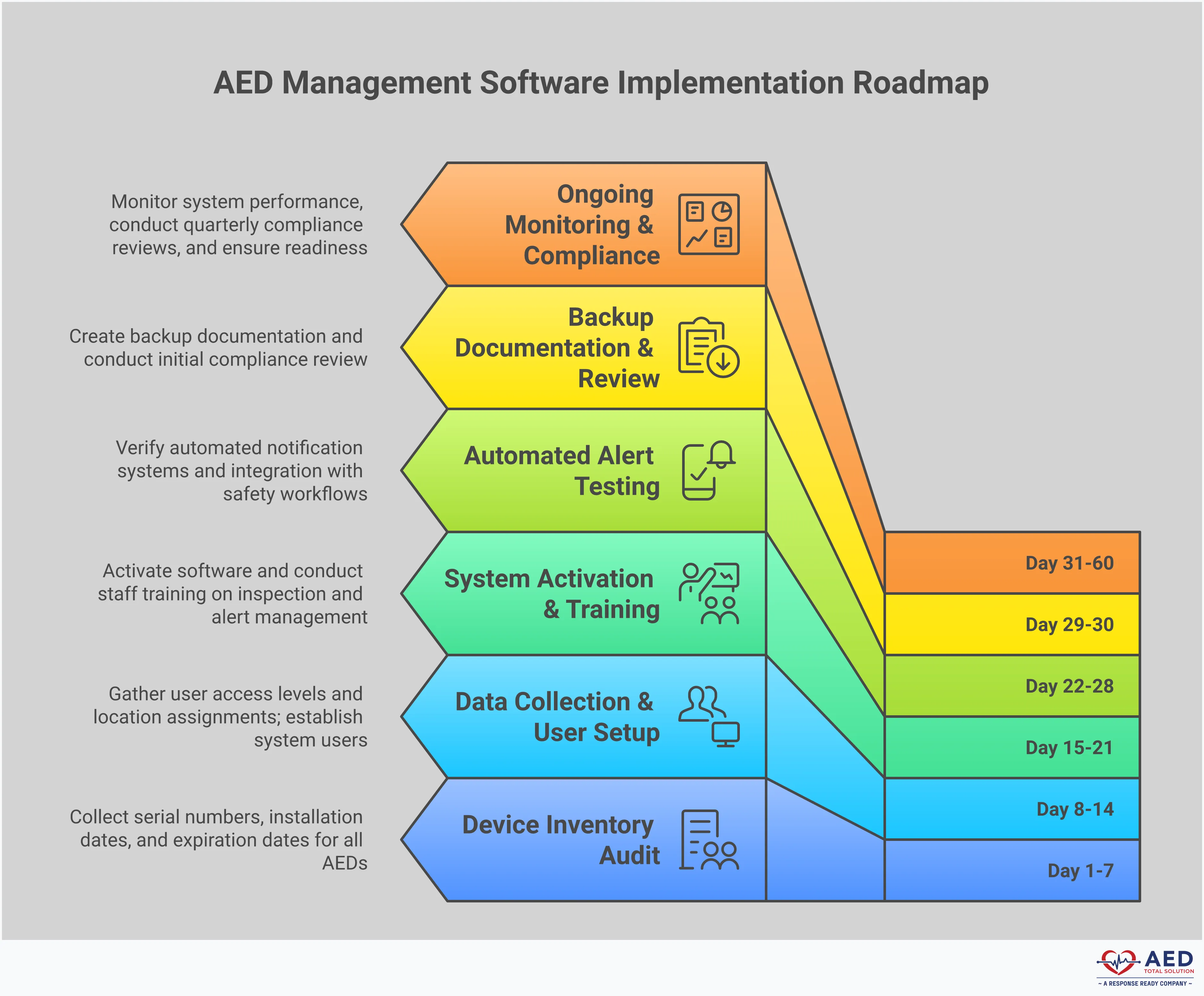
Switching to a new AED management platform is a big step toward strengthening your emergency preparedness. A smooth transition sets the foundation for a successful program, but it helps to know what’s involved. From getting your team comfortable with the new system to understanding the full cost, here’s a look at the key phases of implementation. A great provider will guide you through each step, making the process feel less like a chore and more like a partnership.
Getting Your Team Onboard
A new system is only effective if your team uses it correctly. Your AED management provider should act as an extension of your safety team, helping everyone understand their roles and responsibilities. This often starts with a clear onboarding process that includes training on how to use the software to log inspections and view device status. The goal is to build confidence and ensure every person responsible for an AED feels prepared. A hands-on partner will make sure your staff is not just trained on the software, but also remains ready to save a life. This support is a core part of any effective AED program management service.
Integrating with Your Existing Systems
Your AED management software shouldn’t create more work. Instead, it should fit neatly into your existing safety and compliance workflows. The right platform will centralize all your AED information, becoming the single source of truth for device readiness, inspection schedules, and compliance documentation. This eliminates the need for scattered spreadsheets or manual reminders. The implementation process should focus on making this integration seamless, so your team can manage every aspect of your AED program from one place. This gives you peace of mind and ensures every device is accounted for and ready to go when you need it most.
Migrating Your Data
Moving your existing AED information is a critical step. This includes details like device serial numbers, locations, maintenance histories, and the expiration dates for all your batteries and electrode pads. A reliable provider will help you migrate this data accurately, ensuring no details are lost in the transition. Having a complete and correct history in the new system is essential for maintaining compliance and tracking the lifecycle of each device. This data is also invaluable for post-event reviews, helping your team identify what went well and where there are opportunities for improvement in your response protocol. You can often find answers to common setup questions on a provider’s website.
Watching Out for Hidden Fees
Before you commit to a provider, make sure you have a clear picture of the total cost. Ask direct questions about what’s included in your subscription. Are there separate charges for implementation, data migration, or ongoing training and support? It’s also important to understand how the provider handles the cost of replacement supplies. A transparent partner will offer clear, upfront pricing without surprising you with hidden fees later on. A great program also includes proactive notifications for expiring supplies, which helps you budget accordingly and ensures your devices are always ready to respond when it matters most.
How to Evaluate Customer Support and System Uptime
The software you choose is only as good as the company behind it. When you’re managing life-saving devices, you can’t afford to deal with unresponsive support or a system that’s constantly down. You’re not just buying a product; you’re investing in a partnership that ensures your AED program runs smoothly and without interruption. Before you commit to a provider, it’s essential to look beyond the feature list and assess the quality of their support and the reliability of their platform. After all, these factors are what make the difference between a tool that creates more work and a solution that gives you true peace of mind.
Judging Response Times and Support Quality
When a battery is about to expire, you need to know before it happens. A top-tier provider acts as a true AED readiness partner, proactively managing maintenance tasks so nothing falls through the cracks. They don’t just wait for you to call with a problem; their system should send automated alerts for inspections, pad replacements, and recalls. Before signing a contract, ask about their support availability. Do they offer phone support during business hours? What are their guaranteed response times for emails? A provider who is hard to reach before you’re a customer will likely be even harder to reach when you need them most.
Finding Training Resources and Documentation
A great AED management platform should be intuitive, but your team will still need guidance. Look for a provider that offers more than just a login. Do they have a library of training videos, user guides, and clear documentation? More importantly, do they support your team’s overall emergency preparedness? Some of the best AED program management services help facilitate AED and CPR education for your staff. This ensures your team is not only compliant but also confident and ready to act effectively during an emergency. A partner invested in your team’s training is invested in your program’s success.
Checking System Uptime and Performance Standards
Your AED management software is your central hub for readiness and compliance. If the system goes down, you’re flying blind. You could miss a critical alert that a device has failed its self-test or that a battery needs replacing. That’s why you should always ask about system uptime. Ask potential providers if they have a public status page or offer a Service Level Agreement (SLA) that guarantees a certain percentage of uptime. Look for modern features like wireless AED monitoring, which provides real-time data on device status. This technology is a strong indicator of a reliable, forward-thinking platform.
Red Flags to Watch for When Choosing a Provider
Choosing an AED management provider is a big decision, and not all services are created equal. While many platforms promise to simplify compliance, some fall short, leaving you with hidden risks and extra work. As you compare your options, keep an eye out for these common red flags to ensure you’re selecting a partner that truly protects your organization.
A major warning sign is a service that functions as a simple reminder system. Some platforms do little more than send automated emails telling you an inspection is due or a battery is about to expire. While that’s better than a spreadsheet, it still puts the entire burden of action and documentation on you. These systems often rely on your memory to complete the work, which can lead to missed tasks and compliance gaps, especially when staff members change roles. Look for a provider that offers proactive, hands-on management, not just another notification to add to your inbox.
Another critical red flag is the absence of medical oversight. To be fully compliant, your AED program must be overseen by a licensed physician who provides a medical prescription for the device and approves your emergency response protocols. Any provider that doesn’t include or facilitate medical oversight is not offering a complete solution. This isn’t just a box to check; it’s a fundamental requirement for a legally defensible program.
Finally, be wary of outdated software with surprisingly high costs. Some users report paying steep per-device fees for clunky, unintuitive platforms that haven’t been updated in years. Your AED management system should be a modern, easy-to-use tool that saves you time, not a frustrating piece of software that adds to your workload. Always ask for a demo and be clear on the total cost of ownership before you commit.
Finding the Best Value for Your Program
When you’re comparing AED management options, it’s easy to get stuck on the price tag. But the best value isn’t always the cheapest option. True value comes from finding a solution that saves you time, reduces stress, and genuinely protects your organization. A low-cost tracking tool might seem like a win, but it can end up costing you more in staff hours and compliance headaches down the road.
Many software platforms charge on a per-device basis, which can add up quickly if you’re managing multiple locations. Some organizations find themselves paying nearly $200 per AED each year for software that feels outdated. Instead of just looking at the subscription fee, think about the total cost. How much time is your team spending on manual checks and updating spreadsheets? A full-service program management solution handles these tasks for you, freeing up your team to focus on their core responsibilities.
Think of it as the difference between buying software and hiring an expert. A simple app gives you a tool, but you still have to do all the work. A true AED readiness partner takes on the responsibility of tracking expiration dates, logging inspections, and ensuring every device is compliant and ready to use. This proactive approach is what truly helps you reduce liability exposure and gives you confidence that your program is always protected. The real value lies in knowing that every detail is managed correctly, so you can be sure your AEDs will work when seconds matter most.
Related Articles
Frequently Asked Questions
Why can’t I just use a spreadsheet to track my AEDs? While a spreadsheet is a common starting point, it relies entirely on manual updates and calendar reminders, which makes it prone to human error. It’s easy to miss an expiration date or forget to log an inspection, especially with staff turnover. AED management software automates these critical alerts and creates a clear, documented history of readiness for every device. This provides a reliable, audit-ready record that is essential for compliance and protecting your organization from liability.
What does “full-service program management” actually include? Think of it as having an expert team dedicated to your AED program. It goes far beyond just providing software. A full-service partner handles all the administrative work for you, from tracking battery and pad expiration dates and automatically shipping replacements to ensuring your program meets specific state and local laws. It also typically includes the required medical oversight, so you have a complete, hands-off solution that ensures your devices are always ready and your program is legally sound.
How should I think about the cost? Is the cheapest software the best deal? The cheapest option isn’t always the best value. A low-cost tracking tool might save you money on the subscription, but you should also consider the cost of your team’s time spent managing inspections, ordering supplies, and documenting everything. A comprehensive service may have a higher upfront cost, but it can save you significant time and resources by handling all of that work for you. The real value is in the peace of mind that comes from knowing your program is always compliant and your devices are ready to use.
What is medical oversight and why is it so important? Medical oversight is a legal requirement in many states where a licensed physician must oversee your AED program. This doctor provides a prescription for the device, approves your emergency response plan, and reviews any data after the AED is used. Finding a physician to fill this role can be a major challenge. A management service that includes medical oversight is a huge benefit because it handles this critical compliance step for you, ensuring your program is legally protected.
My organization has AEDs in several different buildings. How does this software help with that? Managing devices across multiple sites is where this software truly shines. Instead of trying to coordinate with different people and track separate spreadsheets, a good platform gives you a single, centralized dashboard. From there, you can see the status of every AED in your organization at a glance. It allows you to standardize your inspection process, assign local managers, and ensure every location is held to the same standard of readiness, which is key for maintaining consistency and control.