An AED program isn’t just about checking a box; it’s about being genuinely prepared to save a life. When a sudden cardiac arrest occurs, every second counts, and you can’t afford to discover that a device has a dead battery or expired pads. True readiness comes from having a system that guarantees every AED is functional and accounted for at all times. This guide explores how AED inspection software provides the structure, automation, and oversight needed to build that confidence. It helps close the gap between simply owning an AED and managing a program that is truly response-ready when it matters most.
Key Takeaways
- Automate inspections to eliminate human error: Manual tracking with paper logs or spreadsheets leaves your program vulnerable to missed checks and compliance gaps. AED software creates a reliable, automated system for reminders and inspections, ensuring your devices are always ready to use.
- Look for a complete solution, not just a tool: Basic software can track inspections, but a full-service program offers much more. To truly reduce your workload and liability, choose a solution that includes hands-on support, automatic supply replacements, and essential medical oversight.
- Integrate the software into your daily operations: A new tool is only useful if your team uses it correctly and consistently. Get the most from your investment by training your staff, sticking to a regular inspection schedule, and using the dashboard to keep your entire program optimized and compliant.
What Is AED Inspection Software?
Think of AED inspection software as a digital command center for your entire Automated External Defibrillator (AED) program. It’s a tool designed to help you manage, monitor, and maintain every device your organization owns, all from one place. Instead of relying on paper logs or scattered spreadsheets, this software gives you a clear, real-time view of your AEDs’ readiness.
The main goal is to make sure every single AED is properly maintained and ready to use in an emergency. Good AED compliance software provides a single dashboard where you can see the status of every device, no matter where it’s located. This centralized view helps you confirm that inspections are happening on schedule and that all your devices are compliant with safety regulations. It takes the guesswork out of managing your program, giving you confidence that your equipment is prepared for a sudden cardiac arrest event. By streamlining these essential checks, the software helps you build a more reliable and effective emergency response plan.
What It Does and Why It Matters
At its core, AED inspection software is about improving compliance and reducing your organization’s liability. One of the biggest challenges with AED maintenance is inconsistent record-keeping. Software solves this by providing digital checklists and guided steps for every inspection. This ensures that all checks are documented accurately and that you have an easily accessible digital trail for audits or reviews. Keeping organized records is a critical part of a responsible AED program.
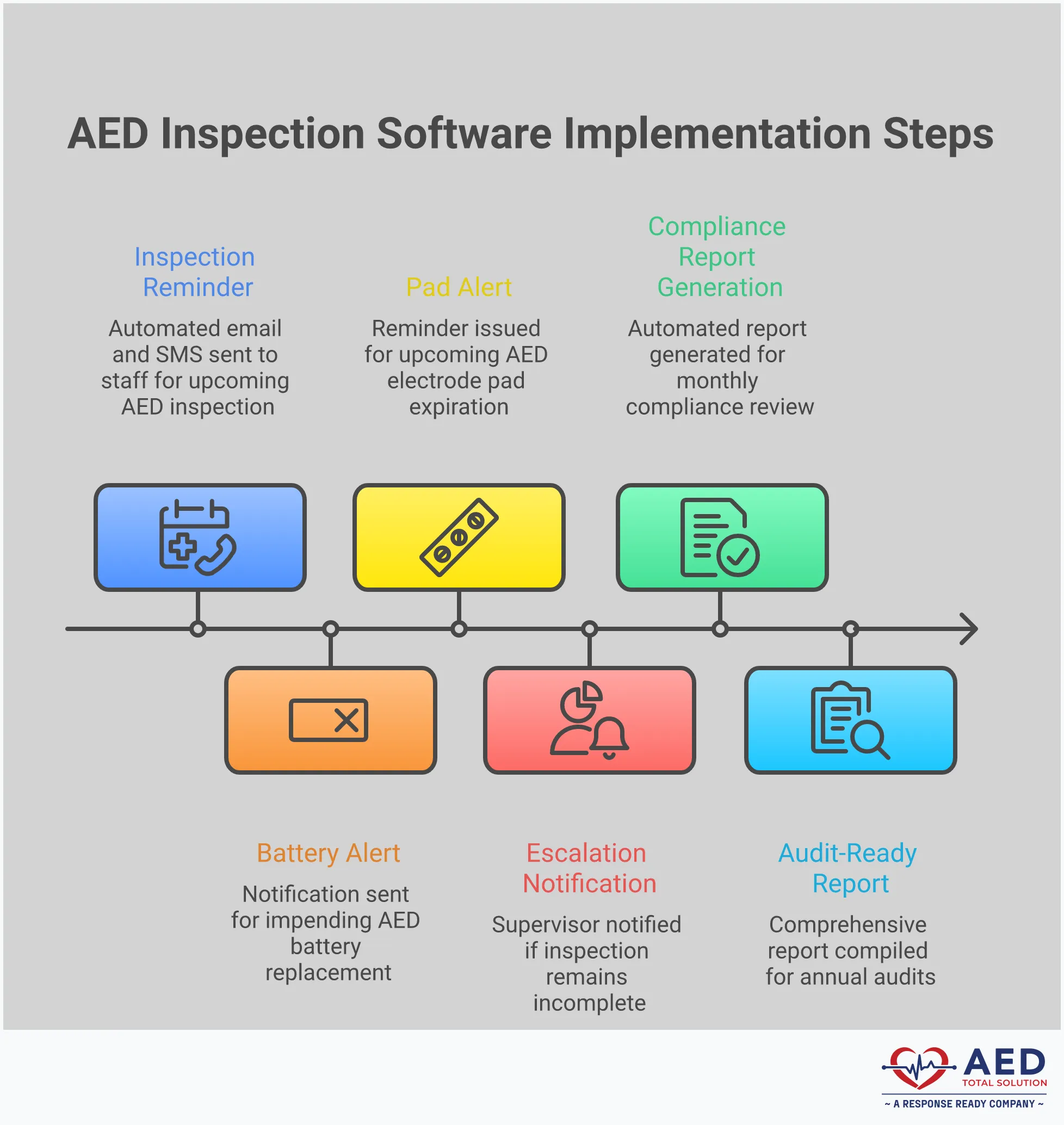
This matters because a well-maintained AED can be the difference between life and death. By implementing a systematic approach to inspection reminders, you can significantly improve your program’s readiness and decrease risks. When your team receives automated alerts for upcoming checks, battery expirations, or pad replacements, critical tasks are far less likely to be forgotten. Ultimately, this structured process helps ensure your AEDs are always operational, protecting both the people in your buildings and your organization.
How Digital Management Keeps Your AEDs Ready
Digital management tools use specific features to keep your AEDs in a constant state of readiness. Digital checklists, for example, guide your staff through each inspection, making sure every step is completed the same way each time. This consistency is key to effective maintenance because it eliminates variations and reduces the chance of human error. It creates a uniform standard for every device check across all your locations.
These software solutions also automate scheduling and reminders for all essential tasks. The system can be set up to prompt staff when inspections are due or when accessories like batteries and electrode pads are nearing their expiration dates. This proactive approach means nothing gets missed. Instead of manually tracking dates for dozens of components, the software does the heavy lifting, helping your organization stay compliant and fully prepared for an emergency without adding a major administrative burden to your team.
Key Features of Effective AED Inspection Software
When you start looking at AED inspection software, you’ll find plenty of options. But to truly protect your organization and ensure your devices are always ready for an emergency, you need a system with the right tools. The best platforms go beyond simple tracking to create a reliable, transparent, and easy-to-manage program. They replace messy binders and spreadsheets with a streamlined process that keeps everyone accountable and every device in perfect working order.
Effective software gives you a clear, real-time view of your entire AED inventory, automates tedious tasks, and makes compliance almost effortless. Think of it as your program’s command center. From guiding inspections to tracking expiration dates and generating reports, these key features are the foundation of a successful and liability-proof AED program. Let’s look at the non-negotiable features you should expect from any quality AED management solution.
Digital Inspection Checklists
Paper checklists are prone to getting lost, damaged, or filled out incorrectly. Digital inspection checklists solve this by guiding your staff through a systematic and complete check every time. The software provides step-by-step instructions on a mobile device, prompting the inspector to verify the AED’s status indicator, check for physical damage, and confirm that rescue kits are fully stocked. This process ensures that no steps are skipped and creates a consistent, time-stamped digital record for every inspection. It’s a simple feature that dramatically improves the accuracy and reliability of your readiness checks.
Automated Reminders and Scheduling
Manually tracking expiration dates for AED pads and batteries is a recipe for compliance gaps, especially when you manage more than one device. Effective software automates this entire process. You can set up recurring schedules for monthly inspections and receive automatic email or text alerts when supplies are nearing their expiration date. These reminders ensure that critical maintenance tasks are never forgotten, keeping your devices compliant and ready for use. This proactive approach is a core part of any modern AED program management service, as it prevents costly oversights before they happen.
Compliance Tracking and Reporting
Proper documentation is your best defense against liability. AED management software simplifies this by automatically logging every inspection, maintenance activity, and supply replacement. With just a few clicks, you can generate detailed, audit-ready reports that demonstrate a complete history of due diligence for any device in your program. This makes it easy to prove compliance with OSHA guidance and state-specific regulations. For compliance officers and facility managers, this feature transforms a time-consuming task into a simple, straightforward process, providing peace of mind that your records are always accurate and accessible.
Mobile Access for On-the-Go Inspections
Your team needs to perform inspections where the AEDs are located, not from behind a desk. That’s why mobile access is essential. Quality AED software works seamlessly on any smartphone or tablet, allowing your staff to conduct inspections directly at the device cabinet. They can log results, take photos of the unit, and sync the data to the central dashboard in real time. This eliminates the need to carry around a clipboard and prevents the errors that often come with transcribing handwritten notes into a computer later. It makes the entire inspection process faster, more accurate, and much more efficient.
Centralized Record-Keeping
For organizations with AEDs spread across multiple floors, buildings, or even cities, a centralized dashboard is a game-changer. Instead of juggling separate spreadsheets for each location, the software provides a single, clear view of your entire AED inventory. From this one screen, you can see the readiness status of every device, identify which units need attention, and manage your whole program at a glance. This bird’s-eye view is critical for maintaining consistency and control, ensuring that every AED in your fleet is managed to the same high standard, no matter where it’s located.
Evaluating AED Management Solutions
When you start looking for AED inspection software, you’ll find solutions generally fall into two categories: software-only platforms and full-service programs. Understanding the difference is key to choosing a partner that truly simplifies your workload and reduces risk. A great solution doesn’t just give you a tool; it gives you a complete system for readiness and compliance, backed by real people who know what they’re doing.
Think about what your organization truly needs. Do you just want a digital checklist, or do you want a partner to handle the details so you can focus on your core responsibilities? Let’s break down the key factors to consider.
Software-Only vs. Full-Service Programs
AED compliance software is a fantastic starting point. It gives you a single, clear dashboard to see every device, no matter its physical location, and confirm its inspection status. This digital overview is a huge step up from paper logs. However, a software-only approach still puts the responsibility squarely on your team’s shoulders. You get the alerts, but you have to perform the checks, order the supplies, and manage the documentation yourself. A full-service program, on the other hand, combines that powerful software with hands-on management for a white-glove approach.
The Importance of Hands-On Support
Let’s be honest: even with the best intentions, managing an AED program can be a challenge. Many organizations struggle with the follow-through, leading to expired equipment or missed checks. An automated reminder is only effective if someone acts on it. This is where hands-on support becomes so important. Instead of just sending an alert that a battery is about to expire, a full-service partner ensures a replacement is ordered and installed. This level of support from a team of experts closes the gap between knowing what needs to be done and actually getting it done.
Integrated Supply and Hardware Management
An AED is only as good as its components. The electrode pads and batteries have firm expiration dates, and keeping track of them across multiple devices can quickly become a logistical headache. While many software tools can track when your AED pads and batteries need to be replaced, a truly integrated solution does more than just track. A comprehensive program manages the entire lifecycle of your hardware and supplies. This means having a system in place for automatically ordering and shipping new pads and batteries before they expire, removing the administrative burden of supply management.
Access to Expert and Medical Oversight
Did you know that the FDA considers AEDs “Class III medical devices”? This means they must be used under a physician’s prescription or order. This is why medical oversight is a critical, and often overlooked, component of a compliant AED program. It’s not just a best practice; it’s a requirement. A robust management solution will include this medical oversight, which involves a physician signing off on your AED program and reviewing protocols. This expert guidance ensures your program meets medical and legal standards, which is one of the most important compliance questions to ask when evaluating any solution.
How Much Does AED Inspection Software Cost?
When you start looking at AED inspection software, you’ll find that most options operate on a subscription model, typically billed annually per device. The costs can vary quite a bit, so it helps to know what to expect. Basic, software-only plans for simple tracking might start as low as $50 per year for a single AED. More comprehensive plans that offer greater support and automation often fall in the range of $200 to over $300 annually. These tiered packages are designed to scale with your organization. Whether you have one AED in a single office or hundreds across multiple locations, the pricing structure is usually built to accommodate your program’s size, sometimes with discounts for a larger number of devices.
Understanding Subscription Models
Most AED software is sold as a service, meaning you pay a recurring fee for access to the platform. This model ensures you always have the most up-to-date software and continuous support. A basic subscription usually covers one AED and provides core features like digital checklists and automated reminders. As you move up in tiers, the price per device might decrease, especially for large-scale deployments. It’s important to look at the total cost over time and understand what’s included in each package, so you can find a plan that fits both your budget and your compliance needs without any surprises.
How Features Affect Pricing
The price of AED software is directly tied to its capabilities. A lower-cost plan will likely give you the essentials: digital checklists and email reminders. While that’s a step up from a paper logbook, more advanced platforms offer features that handle the most complex parts of AED management. Higher-tiered plans often include critical services like medical oversight, access to loaner AEDs if one of yours is out for service, and automated tracking of battery and pad expiration dates. These premium features are what truly reduce your administrative burden and close compliance gaps. A more robust AED management program justifies its cost by delivering a system that does the heavy lifting for you.
Looking Beyond Price to True Value
It’s easy to focus on the annual subscription fee, but the real value of AED management isn’t just in the software; it’s in the readiness it guarantees. When an AED is used on someone who has suffered a sudden cardiac arrest, it can more than double their chance of survival. If a shock is delivered within the first minute, that survival rate can jump to an incredible 90%. An AED that fails because of an expired battery or a missed inspection is more than a compliance issue, it’s a tragedy. Investing in a reliable management system is about ensuring your device is ready when seconds matter most. It’s about protecting your people, reducing liability, and having confidence in your emergency response plan.
Why Switch from Manual to Digital AED Inspections?
If you’re managing your AEDs with a paper log or a spreadsheet, you already know how challenging it can be to stay on top of everything. While these methods might seem simple, they leave your program vulnerable to missed checks, compliance gaps, and a surprising amount of administrative work. Moving to a digital system isn’t just about getting new software; it’s about creating a more reliable and efficient safety net for your organization.
Reduce Human Error and Missed Checks
Let’s be honest, manual tracking relies on human memory, and we all have a lot on our plates. It’s far too easy for a monthly inspection to be forgotten, a battery expiration date to be overlooked, or a paper log to get misplaced. These small oversights can have huge consequences, leaving an AED unusable when it’s needed most. AED inspection software replaces this guesswork with automated reminders and a clear, structured process. Instead of relying on a sticky note, your team gets automatic notifications for upcoming tasks, ensuring nothing falls through the cracks. This systematic approach helps you maintain a consistent inspection schedule and gives you confidence that every device is accounted for.
Improve Compliance and Accuracy
Meeting compliance standards is non-negotiable, but proving it can be difficult with manual records. Digital inspections solve this by providing guided, step-by-step checklists for every device. This ensures each inspection is performed correctly and consistently, no matter who on your team is doing it. Every check is time-stamped and logged in a central system, creating a clean, indisputable record of your program’s health. This documentation is essential for staying aligned with manufacturer guidelines and state regulations. With AED compliance management software, you can pull an audit-ready report in minutes, demonstrating due diligence and protecting your organization from liability.
Lower Your Administrative Workload and Liability
Chasing down inspection forms, manually updating spreadsheets, and tracking supply expiration dates across multiple locations is a major time drain. Digital management consolidates all this information into a single dashboard, giving you a clear view of your entire program at a glance. You can instantly see the status of every AED without digging through files or sending reminder emails. This efficiency not only frees up your team’s time but also strengthens your legal standing. A well-documented program managed through software demonstrates a clear commitment to readiness and safety, which is your best defense against potential liability. By automating routine tasks, you can focus less on paperwork and more on maintaining a truly response-ready environment.
What AED Compliance Requirements Should You Know?
Placing an AED on the wall is just the first step. To truly be prepared and protected, your organization needs to follow a specific set of rules. AED compliance isn’t a single checkbox; it’s a layered system of federal, state, and manufacturer guidelines that work together to ensure your device is ready for an emergency. Understanding these requirements is essential for reducing liability and, most importantly, making sure your AED can save a life when called upon. Let’s walk through the three main areas of compliance you need to have on your radar.
OSHA Workplace Safety Standards
The Occupational Safety and Health Administration (OSHA) requires employers to provide a safe workplace, and in many environments, that includes having life-saving equipment available. While OSHA doesn’t mandate AEDs in every office, if you have them, they are considered part of your safety program. This means you are responsible for ensuring they are properly maintained and accessible. Following OSHA guidance on AEDs involves regular inspections and keeping clear records that prove your devices are functional. This is where documentation becomes critical. Consistent, logged inspections show you are actively managing your safety equipment and meeting your obligation to keep your team safe.
State-Specific AED Laws
Managing AEDs can get complicated quickly because compliance laws vary significantly from one state to another. These local regulations can dictate everything from where an AED must be placed and what signage is required to specific training and maintenance schedules. For organizations with locations in multiple states, tracking these different rules manually is a huge challenge and a major source of risk. A missed inspection in one state could put your entire program out of compliance. A comprehensive AED program management service removes this burden by tracking local requirements for you, ensuring every device in your fleet meets the specific standards for its location.
FDA and Manufacturer Guidelines
The Food and Drug Administration (FDA) classifies AEDs as Class III medical devices. This designation means they must be managed under a physician’s prescription or order. This requirement, known as medical oversight, is a critical and often overlooked part of compliance. It ensures your program is guided by medical expertise. Additionally, every AED manufacturer has its own specific guidelines for maintenance, including when to replace electrode pads and batteries. These dates are non-negotiable. Using expired supplies can cause the device to fail during a rescue. Following these federal and manufacturer rules is essential for ensuring your AED works as intended and for protecting your organization from liability.
The Risks of Managing AEDs Without Software
Relying on a spreadsheet or a paper checklist to manage your AEDs might feel like you have things under control, but this approach leaves your organization open to serious risks. When an emergency happens, you can’t afford to discover that a battery has expired or an inspection was missed. Without a dedicated system, you’re not just managing a device; you’re managing a significant liability. Let’s look at the specific dangers of trying to handle AED readiness without the right tools.
Common Misconceptions About AED Readiness
One of the biggest myths is that simply buying an AED makes you prepared. But an AED is only effective if it’s ready to work at a moment’s notice. This means charged batteries, unexpired pads, and regular inspections. Another common belief is that CPR alone is enough, but for a person in sudden cardiac arrest, their best chance of survival comes from the combination of CPR and a timely shock from an AED. Adopting new technology can feel like a big step, but relying on outdated assumptions puts lives at risk. True readiness means having a system that guarantees your device is always functional and compliant.
The Dangers of Poor Tracking and Compliance Gaps
Inconsistent record-keeping is a major problem with manual AED maintenance. A forgotten signature on a checklist or a misplaced spreadsheet can create dangerous compliance gaps. Without clear, centralized records, you can’t prove your program meets OSHA guidance or state laws, exposing your organization to potential fines and liability. More importantly, a compliance gap often signals a readiness gap. An uninspected device could have a dead battery or missing supplies, rendering it useless in an emergency. AED management software provides a single dashboard view of every device, ensuring nothing gets overlooked and your program is always audit-ready.
Why Manual Processes Can’t Keep Up
Let’s be honest: paper checklists and spreadsheets are inefficient and prone to human error. Using these manual methods makes it incredibly difficult to track inspections and prove you’re following the rules. When your team is already busy, manual tracking takes up valuable time, which can lead to rushed checks or skipped steps. This problem only gets worse as your organization grows. Imagine tracking dozens of AEDs across multiple locations with a spreadsheet. It’s a recipe for missed deadlines and compliance failures. A dedicated AED program management system automates these tasks, reduces the administrative burden, and ensures every device is accounted for.
How to Choose the Right AED Inspection Software
Choosing the right AED inspection software is a critical decision for any organization. The right platform streamlines your entire program, while the wrong one can create more headaches than it solves. Instead of getting overwhelmed by a long list of features, it’s better to focus on a few key questions that get to the heart of what your organization truly needs. A great solution should feel like a natural extension of your safety team, not another complicated system to manage.
Think about it this way: your AED program is only as strong as its weakest link. If inspections are missed, supplies expire, or records are incomplete, your liability increases and, more importantly, the device may not be ready when a life is on the line. The goal of any software is to eliminate those weak links. It should provide clarity, accountability, and confidence. As you evaluate your options, consider how each platform addresses the core challenges of AED management. Does it make your team’s job easier? Does it provide a clear view of your compliance status? Can it grow with you? And what happens when you need help? The answers to these questions will guide you to a solution that not only checks the boxes for compliance but also fits seamlessly into your daily operations, protecting both your people and your organization.
Does It Scale with Your Organization?
Your AED program might start with one device, but what happens when you open a new office or expand your facility? The software you choose must be able to grow with you. A scalable solution easily accommodates new AEDs, locations, and users without a complicated overhaul or a massive price jump. It should simplify compliance and reduce liability, no matter how large your program becomes. Look for a solution that offers flexible program management that adapts to your changing needs. This ensures you’re prepared for today and for the future, without having to switch systems down the road.
Is It Easy for Your Team to Use?
The most advanced software is useless if your team finds it difficult to use. Inconsistent record-keeping is a major challenge in AED maintenance, and clunky software only makes it worse. Your goal should be to find a platform with an intuitive interface and straightforward digital checklists. A team member should be able to grab their phone, complete an inspection in minutes, and have the record instantly sync. This simplicity encourages consistent use and eliminates the gaps left by paper logs. When the process is easy, compliance becomes a natural part of your team’s routine, not a chore they avoid.
What Kind of Support Is Included?
When you invest in AED software, you’re not just buying a tool; you’re investing in a safety system. It’s important to know what kind of support comes with it. Can you call a real person for help? Is there assistance with initial setup and training? Some providers offer software-only solutions, leaving you to manage everything else. Others provide a full-service partnership. Think about whether you want a DIY tool or prefer partnering with a dedicated team that can guide you through compliance, recalls, and everything in between for total peace of mind.
Can You Pull Audit-Ready Reports?
In an emergency or during an audit, you need to prove your AEDs are properly maintained. Can the software provide that proof instantly? A key feature of effective AED management is the ability to generate clear, audit-ready reports with just a few clicks. The system should give you a centralized dashboard view of every device, its inspection history, and the status of its accessories. This visibility allows you to confirm readiness at a glance and provides the documentation needed to demonstrate compliance, which helps ensure your program is protected and reduces organizational liability.
How to Get the Most from Your AED Software
Choosing the right AED inspection software is a huge step toward a safer, more compliant workplace. But the software itself is just a tool. To truly protect your organization and ensure your devices are always ready, you need to build solid habits around it. Think of it like a high-quality gym membership: you have access to all the best equipment, but you still have to show up and do the work to see results.
The best way to maximize your investment is to integrate the software into your daily operations. This means making it a central part of your safety culture, not just another task on a checklist. When your team is trained, your schedule is consistent, and you’re actively using the data to improve, your AED program transforms from a reactive requirement into a proactive asset. By focusing on these three key areas, you can be confident that your program is not only compliant but genuinely prepared for an emergency.
Train Your Team for Consistent Use
Your AED software is only as effective as the people using it. Before you roll it out, make sure everyone responsible for inspections understands how to use the platform, whether it’s on a desktop or a mobile app. They should know exactly what to check, how to log the inspection, and what to do if they find an issue. Consistent training prevents confusion and ensures that every inspection is performed to the same standard.
Beyond the software, remember that technology supports a human response. Team members should feel confident in their ability to act during an emergency. As one expert puts it, “Learning to perform CPR and use an AED makes you better prepared for emergencies.” Pairing your software training with practical, hands-on emergency response courses creates a culture of readiness that goes far beyond compliance.
Stick to a Regular Inspection Schedule
Consistency is the foundation of a reliable AED program. Manual tracking often fails because of forgotten checks and messy paperwork, but software solves this by creating a clear, repeatable process. Use your platform’s automated reminders and digital checklists to build a routine that your team can stick to without constant oversight. These tools remove the guesswork and make it easy for anyone to perform a correct and thorough inspection.
Your software’s dashboard is your command center. It gives you a single, clear view of every device, no matter where it’s located. Make it a habit to review the dashboard regularly to confirm every AED has been inspected on schedule. This simple check-in helps you spot and address missed inspections immediately, closing compliance gaps before they become a liability and ensuring your AED program management stays on track.
Keep Your Program Optimized
A great AED program doesn’t just run; it improves over time. Use the data from your software to look for opportunities to make your program stronger. Are certain devices showing recurring faults? Are supplies like batteries and pads nearing their expiration dates? The reports and analytics within your software can help you answer these questions and address small issues before they become big problems. This systemic approach helps you maintain readiness and reduce risk.
For organizations with multiple locations, features like remote readiness monitoring are invaluable for optimization. Instead of relying solely on manual checks, remote monitoring automatically verifies that your AEDs are ready to go, offering an extra layer of security. By leveraging these advanced features, you can manage your entire AED inventory efficiently, ensuring every device is compliant and prepared to save a life.
Related Articles
- AED Inspection Software: Top 5 Benefits for Safety & Compliance | AED Total Solution
- 5 Advantages of AED Inspection Software for Better Management
- AED Inspection and Maintenance: A Complete Guide — AED Total Solution
- AED Maintenance: A Step-by-Step Guide
Frequently Asked Questions
What’s the real difference between a software-only tool and a full-service program? Think of it this way: a software-only tool gives you a digital checklist and sends you reminders, but you and your team are still responsible for doing all the work. A full-service program combines that same great software with hands-on management. This means you have a partner who not only sends the alert that a battery is expiring but also helps ensure a replacement is ordered and installed. It closes the gap between knowing what to do and making sure it actually gets done.
My team is already busy. Is this software difficult to learn and use? Not at all. In fact, it’s designed to reduce your team’s workload, not add to it. The best platforms are incredibly intuitive, especially with mobile access. An employee can use their phone to follow a simple, step-by-step checklist right at the AED cabinet. The whole process takes just a few minutes and the results are logged automatically, which is much faster and more accurate than filling out a paper form and filing it away.
What happens if an inspection is missed, even with the software reminders? This is a great question because it highlights a key weakness in many programs. With a basic software plan, a missed reminder simply becomes a compliance gap that you are responsible for. A comprehensive management service, however, provides an extra layer of accountability. If a scheduled check is missed, a dedicated program manager can follow up to ensure the inspection is completed, protecting your organization from the liability that comes with incomplete records.
Why is medical oversight so important if my team is already trained in CPR and AED use? Medical oversight isn’t about your team’s ability to use the device; it’s a legal requirement from the FDA. Because AEDs are classified as Class III medical devices, they must be managed under a physician’s direction. This means a doctor reviews your program’s protocols and provides a prescription for the device. It’s a critical piece of compliance that protects your organization and ensures your program meets established medical standards.
Can’t I just manage my one or two AEDs with a spreadsheet? While it might seem manageable at first, using a spreadsheet puts all the risk and administrative burden on you. A spreadsheet can’t send you an automatic alert when your pads are about to expire, create a clean, time-stamped audit trail, or guide a user through a consistent inspection. Every manual entry is a chance for human error, which can lead to a device failing when you need it most. Software automates these critical tasks to ensure nothing gets missed.