Many organizations buy an AED with the best of intentions, placing it on a wall and hoping for the best. But hope isn’t a strategy. Over time, batteries die, electrode pads expire, and devices can be moved or damaged without anyone noticing. An AED inspection policy is the system that turns good intentions into a reliable, life-saving program. It creates accountability and a consistent routine, so you can be confident that your equipment is functional when seconds matter most. This guide will walk you through creating a policy that closes these common gaps and ensures your program is always prepared for an emergency.
Key Takeaways
- Establish a Formal Policy for Accountability: A written AED inspection policy is your program’s foundation. It should clearly define who is responsible for inspections, establish a consistent schedule, and detail how every check is documented to ensure nothing is missed.
- Implement a Multi-Layered Inspection Schedule: Your AEDs require more than a single check. Create a routine that includes quick daily visual checks for readiness indicators and more thorough monthly inspections to verify the expiration dates of batteries and pads.
- Leverage Technology or a Managed Service: Overcome common challenges like inconsistent record-keeping and staff oversight by using digital tools to automate reminders and log inspections. For complete peace of mind, a full-service program management partner can handle every detail for you.
What Is an AED Inspection Policy (And Why You Need One)
An automated external defibrillator (AED) is a powerful tool, but it’s not a set-it-and-forget-it device. An AED inspection policy is your organization’s formal, written plan for making sure every AED is ready to use at a moment’s notice. Think of it as a roadmap that details who is responsible for checking the devices, what they need to look for, and how often those checks should happen. It turns good intentions into a reliable, life-saving system.
Without a clear policy, AED maintenance can easily fall through the cracks. Batteries die, electrode pads expire, and devices can be moved or damaged without anyone noticing. A formal policy creates accountability and a consistent routine, so you can be confident that your equipment is functional. It’s the foundation of a responsible and effective AED program, providing peace of mind that you’re prepared for an emergency. More than just a document, a well-executed policy protects your people and your organization.
Protect Your Organization from Liability
Simply owning an AED creates a responsibility to maintain it. If a device fails during an emergency because of neglect, like an expired battery or missing pads, your organization could face serious legal consequences. Without a structured plan for physical inspections and verification, these critical issues can go unnoticed for months, leaving you exposed. An inspection policy is your first line of defense against liability claims.
By creating and following a formal policy, you establish a clear record of due diligence. This documentation proves you’ve taken reasonable steps to keep your AEDs in working order. It shows you are committed to safety and compliance, which is essential for protecting your organization. A comprehensive AED program management solution can further reduce this risk by handling every detail for you.
Ensure Your AED Works When It Matters Most
The most important reason for an AED inspection policy is simple: to save a life. During a sudden cardiac arrest, every second counts. An AED can be the difference between life and death, but only if it works correctly. A device with a dead battery or expired pads is useless in an emergency. Your policy is the framework that guarantees your equipment is always ready for action.
Regular inspections, timely replacement of parts, and a trained team are what ensure your AED will perform when it’s needed most. A written policy should also formally document where each AED is located, making it easy to find during a high-stress event. This turns your AED program from a collection of devices into a dependable emergency response system. It’s about creating a process you can trust when someone’s life is on the line.
What to Include in Your AED Inspection Policy
A solid AED inspection policy is your roadmap to a ready and compliant program. It removes the guesswork and ensures everyone knows their role in keeping your devices prepared for an emergency. Think of it as the foundation of your entire AED program. Without clear guidelines, critical tasks can fall through the cracks, putting your organization at risk and, more importantly, jeopardizing a life. A great policy doesn’t have to be complicated, but it does need to cover a few key areas to be effective.
Define Your Documentation Process
One of the most common issues with AED maintenance is inconsistent record-keeping. Your policy should clearly outline how every inspection is documented. Specify what information needs to be recorded, such as the date, the inspector’s name, the status of the AED, battery and pad expiration dates, and any corrective actions taken. This creates a clear, auditable trail that proves your organization is diligent about readiness. Moving away from paper logs to a digital system can solve many documentation headaches. A comprehensive program management solution often includes software that provides digital checklists and automatically logs every inspection, giving you a reliable and accessible record.
Assign Clear Roles and Responsibilities
When everyone thinks someone else is handling it, it’s likely no one is. Your policy must assign specific individuals or a team to be accountable for the AED program. Clearly name the program coordinator and a backup. Their responsibilities should be spelled out, including performing regular inspections, restocking supplies after use, and checking for manufacturer recalls or software updates. The American Heart Association emphasizes the importance of having a designated team to implement an AED program effectively. This clarity ensures that tasks are completed on time and that there is a clear point of contact for any issues that arise with a device.
Set a Consistent Inspection Schedule
Your AEDs should be inspected on a regular, predictable basis. Your policy needs to define this schedule clearly. State the frequency of inspections, whether they are monthly, weekly, or follow another timeline based on manufacturer guidelines and state laws. The policy should also detail what each inspection involves, from simple visual checks to more hands-on assessments of the device and its accessories. This written schedule ensures that inspections are performed consistently across all your locations. It also helps your team build a routine, making it less likely for a check to be missed. A formal schedule is a core part of any successful AED readiness program.
How Often Should You Inspect Your AEDs?
Creating a consistent inspection schedule is one of the most important parts of your AED program. The right frequency ensures your device is always ready for an emergency and keeps you compliant with manufacturer guidelines and state laws. A forgotten AED is often a failed AED, and the consequences can be devastating. The key is to build a multi-layered inspection routine that catches everything from obvious physical damage to hidden technical issues.
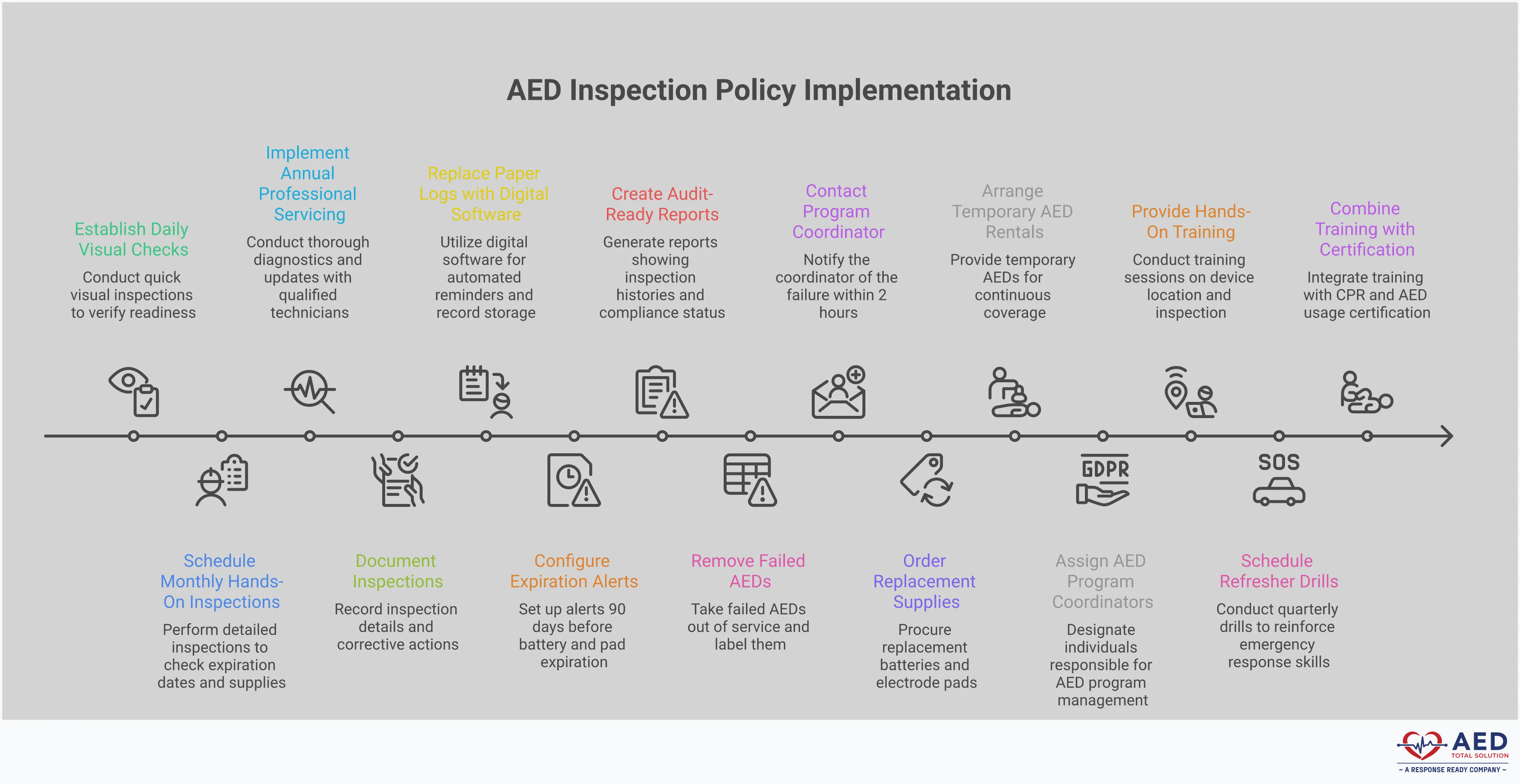
Think of it as a system of checks and balances. Quick daily glances catch immediate problems, detailed monthly reviews confirm supply readiness, and annual professional servicing handles the technical upkeep. This approach removes the guesswork and creates a culture of preparedness within your organization. It might seem like a lot to manage, but breaking it down into daily, monthly, and annual tasks makes it much more approachable. With a clear plan, you can feel confident that your AED is ready to perform when seconds matter most. A comprehensive AED program management service can also handle this entire process for you, ensuring nothing ever falls through the cracks.
Daily Visual Checks
A daily visual check is a quick, simple look at your AED that takes less than a minute but can make a world of difference. The goal is to spot any obvious issues right away. Think of it as a first line of defense. A primary reason AEDs fail is because they are not properly maintained, and this daily habit is the easiest way to prevent that.
Make this check part of your team’s opening or closing routine. The designated person should confirm two things: the AED is in its proper location and accessible, and its readiness indicator shows a “ready” or “OK” status (this is usually a green light or checkmark). This simple glance ensures the device hasn’t been moved, tampered with, or is signaling an error that needs immediate attention.
Monthly Hands-On Inspections
Once a month, your AED needs a more thorough, hands-on inspection. This goes beyond a quick visual check and involves a closer look at the device and its accessories. During this inspection, you should open the AED case to confirm that the electrode pads and battery are in place and have not passed their expiration dates. Check that all necessary supplies, like razors and gloves, are present and accounted for.
This is also the time to document everything in your inspection log. Record the status of the readiness indicator, the expiration dates of the pads and battery, and the date of the inspection. This log is critical for demonstrating compliance. Some states have very specific rules, so it’s important to understand your local AED requirements.
Annual Professional Servicing
While your team can handle daily and monthly checks, an annual professional service is essential for maintaining the long-term health of your AED. This in-depth inspection should be performed by a qualified technician who can run device diagnostics, install any necessary software updates from the manufacturer, and assess the AED’s internal circuitry. These technical checks can identify potential problems that are not visible during routine inspections.
Without a structured service plan, underlying issues can go unnoticed for long periods, leaving your device vulnerable to failure. An annual service call verifies that your AED is not only compliant but also functioning exactly as it should. This is a critical step for risk management and provides peace of mind that your investment is protected and, most importantly, ready to save a life.
What to Put on Your AED Inspection Checklist
A great inspection checklist is your roadmap to a ready and compliant AED program. It translates your policy into simple, repeatable actions that anyone on your team can follow. Your checklist doesn’t need to be complicated, but it does need to be thorough. It should cover every critical component that ensures your device is ready to use at a moment’s notice. By breaking the inspection down into these key areas, you can create a clear, effective process that protects both your people and your organization.
Check Status Lights and Indicators
Think of the status indicator as the AED’s way of telling you how it’s doing. Most AEDs perform routine self-tests to check their internal circuitry, battery, and pads. After a self-test, the device will display a clear visual cue, like a green checkmark or a flashing light, to show it’s ready for action. If something is wrong, it will show a red “X” or make a chirping sound. This is the first and most important item on your checklist. A quick glance at the indicator can tell you immediately if the device needs attention. Make sure your team knows what the ready signal looks for your specific AED model.
Verify Battery and Pad Expiration Dates
AED batteries and electrode pads don’t last forever. Over time, batteries lose their charge and the gel on electrode pads dries out, preventing them from sticking to a person’s chest. Using expired supplies can cause a rescue to fail, which is why checking expiration dates is a non-negotiable part of every inspection. The dates are clearly printed on the battery and the sealed pad packaging. Be sure to record these dates in your inspection log and have a plan to order replacement pads and batteries well before they expire. This simple step is one of the most common and easily avoidable points of failure in an AED program.
Assess Physical Condition and Accessibility
An AED can’t help anyone if it’s damaged or hidden. During your inspection, give the device a quick physical check. Look for any cracks in the casing or signs of wear and tear. Make sure the rescue kit, which usually includes items like scissors and a razor, is sealed and attached to the AED. Just as important is the AED’s location. Is the cabinet unlocked and easy to open? Is it blocked by boxes, furniture, or other clutter? The path to the AED should always be clear. Verifying that the device is visible, accessible, and in good condition is a core part of ensuring total readiness, something our program management services are designed to handle for you.
Understanding AED Inspection Laws and Regulations
Creating a solid AED inspection policy isn’t just about internal best practices; it’s also about meeting external legal requirements. The rules for AEDs can feel like a patchwork of federal guidelines, state laws, and industry-specific standards. Staying on top of these regulations is essential for protecting your organization from liability and, most importantly, ensuring your program is truly effective. Knowing what’s required is the first step toward building a compliant and life-saving AED program.
OSHA Workplace Standards
While you won’t find a specific OSHA rule dedicated solely to AEDs, that doesn’t mean they aren’t on the radar. Instead, AEDs fall under OSHA’s broader requirements for workplace safety and first aid. The agency expects employers to address serious recognized hazards, and sudden cardiac arrest certainly qualifies. Having an AED is a key part of a comprehensive first aid response. Think of it this way: OSHA’s general rules about first aid in workplaces cover the need to prepare for emergencies, and a well-maintained AED is a critical tool in that preparation. Your inspection policy is your proof that you’re taking that responsibility seriously.
State-Specific AED Requirements
This is where compliance can get complicated. Nearly every state has laws governing AEDs, but the specifics vary widely. Some states have detailed rules covering everything from device placement and maintenance schedules to required training and medical oversight. For example, some laws mandate that you register your device with local emergency services. Others specify exactly who needs to be trained and how often. Because these state-specific regulations are not uniform, you have to do your homework to understand exactly what your obligations are. A misstep here can lead to significant compliance issues and liability exposure.
Industry-Specific Compliance Rules
Beyond federal and state rules, your specific industry might have its own set of standards or best practices. Fitness centers, schools, dental offices, and healthcare facilities often face higher expectations for emergency preparedness due to the nature of their activities and the populations they serve. For these organizations, a basic inspection plan might not be enough. A structured AED service plan that includes regular, hands-on verification is often necessary to meet the standard of care. This ensures your devices are not just present but are confirmed to be response-ready at all times, closing any gaps that could put people at risk.
How to Document Your AED Inspections Effectively
An inspection is only as good as its record. Proper documentation is your proof of due diligence, creating a clear historical trail that shows your AEDs are consistently checked and maintained. Without it, you can’t verify readiness, demonstrate compliance, or protect your organization from liability. A well-documented inspection history is the backbone of a responsible and effective AED program.
Whether you use a simple paper log or a sophisticated digital system, your goal is to create a reliable record that can be accessed and understood easily. Let’s explore a few ways to keep your inspection documentation in order.
Using Digital Tools and Software
One of the most common issues with AED maintenance is inconsistent record-keeping. Modern AED program management software addresses this by providing digital checklists and automated reminders, ensuring every inspection is logged accurately and on time. These platforms create a centralized, easily accessible digital trail for every device you manage. Instead of chasing down paper logs from different sites, you can pull up a complete history with just a few clicks. This is especially valuable for organizations managing AEDs across multiple locations, as it standardizes the process and provides a real-time view of your entire program’s readiness.
Keeping Manual Logs and Records
For some organizations, a manual log is still the standard method. This often involves a paper tag attached to the AED cabinet or a logbook kept in a nearby binder. Keeping a manual log of inspections can help you track critical activities, like checking battery life and replacing expired electrode pads. A thorough log should include the date of the inspection, the inspector’s signature, the status of the device, and notes on any actions taken. While this method can work for a single device, it becomes much harder to manage at scale. Paper records can get lost, handwriting can be hard to read, and there’s no simple way to monitor compliance across your entire organization.
Prepare for Audits with Clear Reporting
Regardless of your system, your documentation should always be audit-ready. An internal safety audit or an external regulatory review can happen at any time, and you’ll need to provide clear, organized proof of your inspection history. This is where having a solid reporting process becomes essential. Clear reporting not only helps you demonstrate compliance with state-specific AED requirements but also gives you valuable insights into your program. It allows you to spot trends, identify recurring issues with specific devices, and prove that you are maintaining a safe and effective AED program. Your records are your best defense and the ultimate proof of your commitment to safety.
How to Train Your Team on AED Inspections
A written policy is a great start, but it’s the people who bring it to life. Effective training ensures your team doesn’t just know what to do, but feels confident and prepared to do it correctly every time. When your designated inspectors understand their role and the importance of each step, your AED program shifts from a compliance task to a core part of your safety culture. A well-trained team is your best defense against equipment failure and liability risks.
Building a competent inspection team comes down to three key actions: providing practical, hands-on experience with the devices, clearly communicating everyone’s role in the process, and reinforcing that knowledge with regular practice. Let’s walk through how to implement each of these steps.
Provide Hands-On Training
Reading a checklist is one thing; confidently handling the equipment is another. The best way to prepare your team is with hands-on training that goes beyond a manual. Your inspectors should physically locate the AEDs, identify the status indicator, open the device, and know exactly where to find the expiration dates on batteries and electrode pads. This practical experience builds muscle memory and removes hesitation. While you’re at it, consider broader emergency preparedness. It’s highly recommended that your team members also complete training in CPR and AED usage, as this ensures they are ready to respond effectively during a cardiac emergency, not just maintain the equipment beforehand.
Communicate Policies Clearly
Confusion is the enemy of compliance. To ensure nothing falls through the cracks, you need to assign and communicate responsibilities with total clarity. Designate a specific person or a small team to own the inspection process. Everyone involved should know exactly what they need to check, how to document their findings, and who to notify if they discover an issue, like a chirping device or an expired battery. This structure creates accountability and a clear chain of command. When your policy is straightforward and roles are well-defined, your team can execute inspections efficiently and consistently. Our program management services are designed to help organizations establish this clarity from day one.
Schedule Regular Drills and Refreshers
Preparedness isn’t a one-time event; it requires ongoing attention. Over time, details can be forgotten and procedures can get sloppy. Scheduling regular drills and refresher sessions keeps your team’s skills sharp and your inspection process reliable. These drills don’t have to be complicated. You can run a quick “what-if” scenario: “The AED is chirping, what do you do?” or “Show me where the inspection log is.” These exercises reinforce training, help new team members get up to speed, and allow you to identify any gaps in your process before they become a problem. Regular practice builds a culture of readiness, ensuring your team is always prepared to keep your AEDs in working order.
Common AED Inspection Challenges (And How to Solve Them)
Even with a solid policy on paper, running an AED inspection program comes with its own set of challenges. Juggling staff responsibilities, maintaining standards across different sites, and keeping perfect records can feel like a full-time job. These common hurdles can create serious compliance gaps if left unaddressed. Fortunately, with the right approach, you can solve these issues before they become problems. Let’s look at the most frequent challenges and their practical solutions.
Managing Staff Time and Accountability
It’s easy to assign inspection duties, but it’s much harder to ensure they actually get done. When your team is busy with their primary roles, routine tasks like checking an AED can fall to the bottom of the to-do list. Without a clear system for accountability, these small oversights can lead to a device that isn’t ready during an emergency.
The solution is to build a structure that makes follow-through easy. Start by assigning the inspection task to a specific person or a small team. Then, provide clear, hands-on training on AED usage and inspection protocols so they feel confident in their role. Most importantly, implement a verification system, whether it’s a digital checklist that sends reminders or a managed service that confirms every check is completed on schedule.
Ensuring Consistency Across Multiple Locations
Managing one AED is one thing; managing dozens across multiple buildings or cities is another challenge entirely. Without a centralized approach, each location can end up with its own version of an inspection process, leading to inconsistent standards and a lack of visibility for your organization. You can’t be sure every device is ready if you don’t have a clear, unified view of your entire program.
To solve this, standardize your inspection policy across all locations. Create one master checklist and one set of procedures that every site must follow. For true peace of mind, consider using remote monitoring technology to automate readiness checks. These systems can track the status of every AED in your fleet, sending real-time alerts if a device’s battery is low or if it requires attention, giving you a single source of truth for your entire program.
Closing Gaps in Your Record-Keeping
Messy or missing paperwork is one of the biggest liabilities in any AED program. Manual logs can get lost, digital files can be saved in the wrong place, and inconsistent entries can make it impossible to prove compliance during an audit. If you can’t produce a clean, complete history of your inspection activities, you’re exposing your organization to significant risk.
The best way to close these gaps is to move away from manual tracking. Using digital inspection software creates a secure, centralized home for all your records. Digital checklists ensure every step is completed, time-stamped entries create an automatic audit trail, and cloud-based storage means your documentation is always accessible. This not only simplifies compliance but also gives you an accurate, at-a-glance history of each device’s maintenance and readiness status, so you’re always prepared.
What to Do When an Inspection Fails
Discovering that your AED isn’t ready can be stressful, but it doesn’t have to be a crisis. A failed inspection is a sign that your policy is working because you’ve caught a problem before an emergency happened. The key is to have a clear plan for what comes next. By acting quickly and methodically, you can resolve the issue, maintain compliance, and ensure your workplace remains protected. This process involves three critical stages: your immediate response, handling the necessary repairs or replacements, and managing compliance while the device is temporarily out of service.
A structured approach turns a potential liability into a manageable task. Instead of scrambling, your team will know exactly what to do to get your AED back online. This not only keeps your program on track but also reinforces a culture of safety and preparedness throughout your organization. Let’s walk through the exact steps to take when an AED fails its inspection.
Your Immediate Response Plan
The moment you identify a problem, your first priority is to prevent anyone from attempting to use a faulty device in an emergency. Immediately remove the AED from its cabinet or wall mount and clearly label it as “Out of Service.” This simple step prevents confusion and ensures a first responder doesn’t grab a device that won’t work.
Next, notify the person responsible for your AED program, whether that’s a facilities manager, safety director, or HR leader. They need to be aware of the situation to set the repair process in motion. Finally, document everything. In your inspection log, record the date, the name of the inspector, and the specific reason for the failure. Detailed notes create a clear paper trail for compliance and help diagnose the problem correctly.
How to Handle Repairs and Replacements
Once the device is secured, it’s time to fix the problem. Start by identifying the cause of the failure. Often, the issue is straightforward, like an expired battery or used electrode pads that need replacing. You can order these essential AED accessories right away to minimize downtime. Check the manufacturer’s guide for troubleshooting steps, as the device’s indicator light or audible chirps can often tell you exactly what’s wrong.
If the issue isn’t a simple fix, you’ll need to contact the manufacturer or a certified service technician for professional support. Don’t attempt to perform complex repairs yourself, as this could void the warranty and create further risks. Keep a detailed record of all actions taken, including who you contacted, when you placed orders, and any reference numbers for service calls.
Staying Compliant During Downtime
An out-of-service AED can create a gap in your emergency preparedness plan. To stay compliant and keep your team safe, communication is key. Inform your trained responders and staff that the device is temporarily unavailable. If you have other AEDs on-site, remind everyone of their locations.
For organizations with only one AED or those in states with strict requirements, leaving a location unprotected isn’t an option. In this case, an AED rental is an excellent short-term solution to ensure you have a functional device while yours is being repaired. Once your original AED is fixed and returned to service, perform a final inspection, update your logs, and notify your team that the device is ready for use again.
Simplify Your AED Inspection Program for Good
Managing an AED program doesn’t have to be a constant source of stress. Juggling spreadsheets, chasing down staff for inspection reports, and worrying about compliance can feel overwhelming, especially across multiple locations. But you can move from a reactive, manual process to a streamlined, confident system. By putting a few key strategies in place, you can ensure your devices are always ready for an emergency without adding more to your plate. It’s all about creating a solid foundation, using the right tools, and knowing when to ask for help.
Develop a Clear Policy and Train Your Team
The first step to simplifying your program is to get everything in writing. A formal AED policy acts as your playbook, clearly outlining where every device is located and who is responsible for what. This document should be easy for anyone to find and understand. Just as important is making sure your team is prepared to act. Providing regular training in CPR and AED use ensures that in an emergency, your people have the confidence and skills to respond effectively. Make this training a standard part of your onboarding process and offer refreshers to keep everyone’s skills sharp.
Use Technology to Automate Checks
Manual checklists and paper logs are prone to human error. A forgotten signature or a misplaced binder can create serious compliance gaps. This is where technology can make a huge difference. Modern AED management software automates your entire inspection process with digital checklists, scheduled reminders, and a central dashboard for all your records. Instead of manually tracking expiration dates for batteries and pads, the system does it for you, sending alerts when it’s time for a replacement. This not only saves time but also creates a perfect, audit-ready trail of documentation.
Partner with a Program Management Expert
For many organizations, the most effective solution is to hand the reins to an expert. A dedicated AED program management service takes the entire lifecycle of your devices off your shoulders. This goes beyond simple software reminders. A true partner handles everything from initial device placement and registration to routine readiness checks, supply replenishment, and compliance reporting. With expert oversight and remote monitoring, you can be confident that every device is accounted for and ready to perform. This approach eliminates guesswork and gives you complete peace of mind, knowing your program is always protected.
Related Articles
- AED Inspection and Maintenance: A Complete Guide — AED Total Solution
- AED Maintenance: A Step-by-Step Guide
- AED Inspection Software: Top 5 Benefits for Safety & Compliance | AED Total Solution
- 5 Advantages of AED Inspection Software for Better Management
- AED Signage Requirements & Laws for Compliance | AED Total Solution
Frequently Asked Questions
Do I really need a formal, written policy if we only have one AED? Yes, absolutely. A written policy isn’t about the number of devices you have; it’s about creating a reliable process. Even with just one AED, a formal policy ensures that the responsibility for checking it doesn’t get lost in the shuffle of daily work. It assigns clear ownership, sets a consistent schedule, and creates a record that proves you are taking the necessary steps to keep it ready. This documentation is your best defense against liability and gives you confidence that your single device will work when you need it most.
My AED has a green light. Isn’t that enough to know it’s ready? The green light is a great start, but it’s only part of the story. The AED’s self-test primarily checks its internal electronics and battery voltage. It can’t tell you if the electrode pads have expired, if the cabinet is blocked by a new filing cabinet, or if the rescue kit has been opened and supplies are missing. A hands-on inspection is necessary to verify these physical details that are just as critical for a successful rescue.
What’s the most common reason an AED fails an inspection? The most frequent and easily avoidable issues are expired supplies. AED batteries and electrode pads have a limited shelf life, and they are the first things that should be checked during every inspection. A dead battery or dried-out pads make the device completely useless in an emergency. This is why having a consistent inspection schedule and a clear documentation process is so important; it helps you catch these dates well before they become a problem.
We have multiple locations. What’s the best way to make sure every site is doing its inspections correctly? Managing AEDs across different sites is a common challenge, and the key is standardization. Create one master policy and one universal inspection checklist for all locations to follow. This ensures everyone is held to the same standard. To truly simplify oversight, consider a centralized management system that uses software to track every inspection digitally. This gives you a single, real-time view of your entire program’s readiness without having to chase down paper logs from each site.
What should I do if I find an expired battery or pads during an inspection? If you discover expired supplies, the first step is to take the AED out of service immediately so no one tries to use it in an emergency. Clearly label the device as non-functional. Next, notify your program coordinator and order replacement parts right away. Document the issue and the actions you’ve taken in your inspection log. If this is your only device, you might consider a short-term rental to avoid leaving your location unprotected while you wait for the new supplies to arrive.