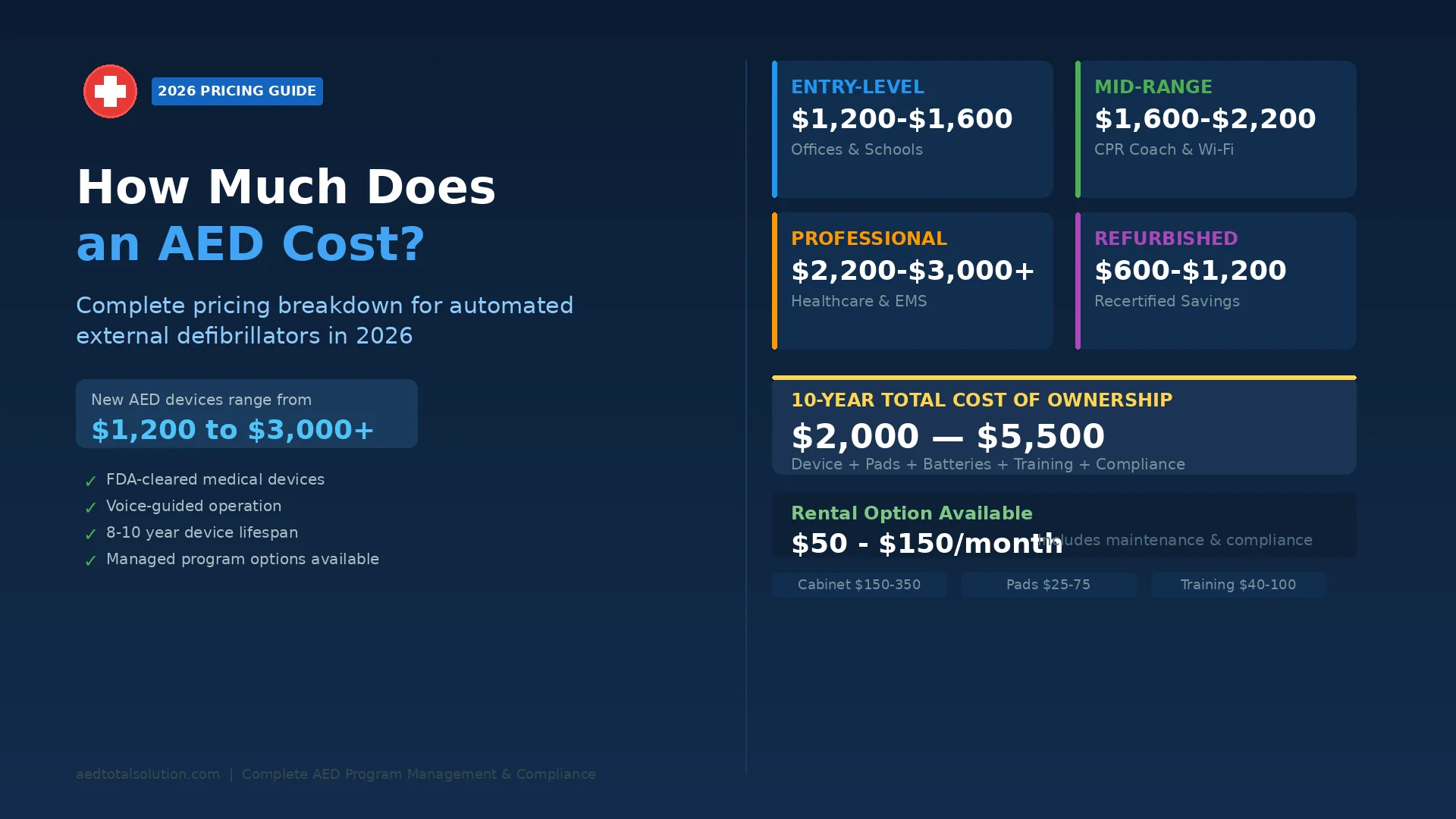
An AED typically costs between $1,200 and $3,000 for a new device, but the real investment goes beyond the sticker price. When you factor in replacement pads, batteries, cabinets, training, and ongoing compliance management, the total cost of ownership over a 10-year lifespan ranges from $2,000 to $5,500 per device. This guide breaks down every cost you need to plan for, from initial purchase to long-term program management, so you can budget accurately and protect your organization.
AED Price Ranges: What to Expect in 2026
The upfront cost of an AED depends on whether you need a basic public-access model or a professional-grade device with advanced features. Here is what organizations typically pay in 2026:
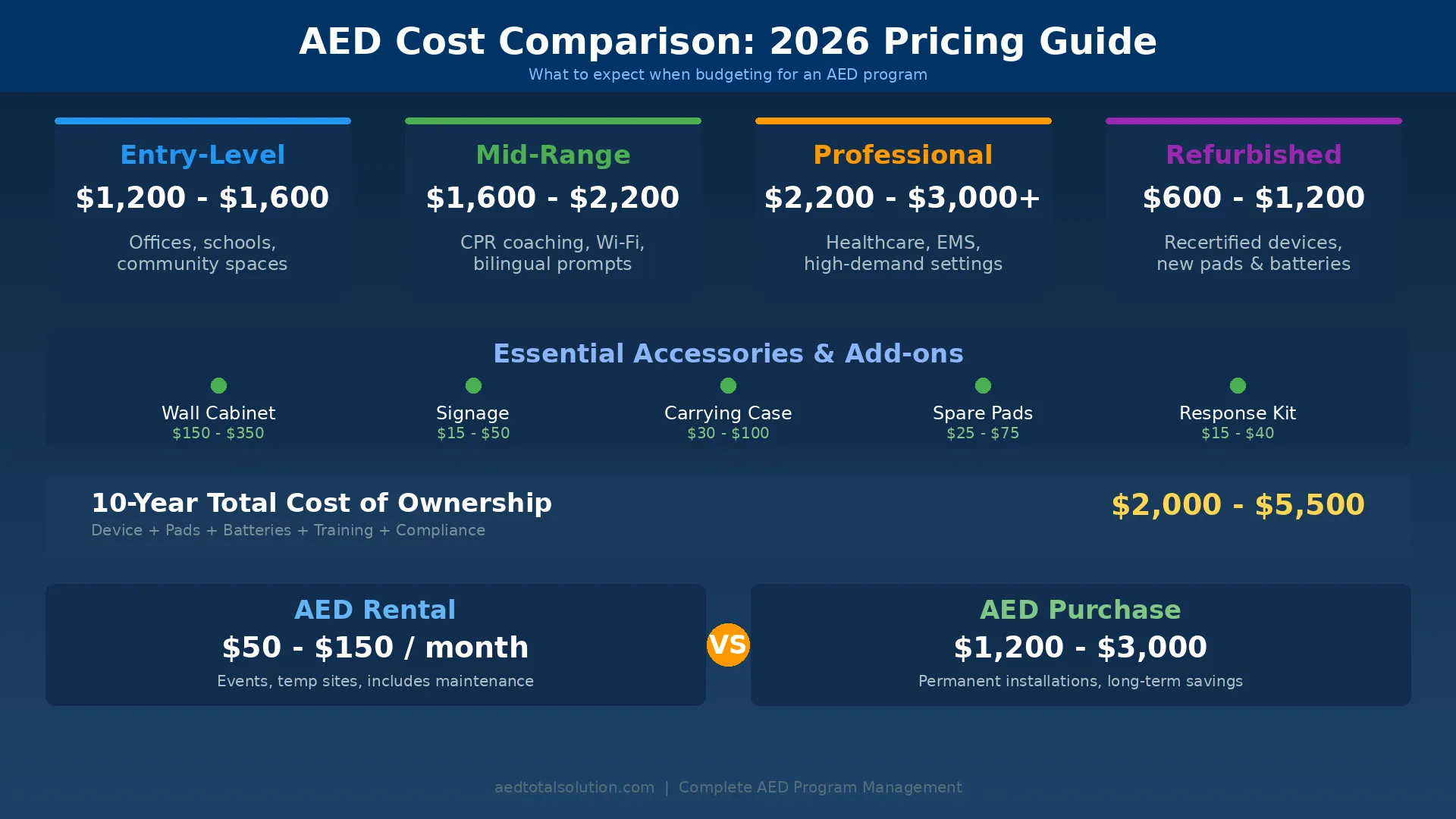
Entry-level AEDs ($1,200 to $1,600): These devices are designed for offices, schools, and community spaces. They include clear voice prompts, standard electrode pads, and a battery. Models in this range are straightforward to operate and meet the needs of most workplaces. They are FDA-cleared and deliver the same lifesaving shock as higher-priced models.
Mid-range AEDs ($1,600 to $2,200): Mid-range devices add features like real-time CPR coaching, longer battery life, and bilingual voice prompts. Some include Wi-Fi connectivity for remote monitoring. These AEDs are a strong fit for organizations that want enhanced rescue support and simplified maintenance tracking.
Professional-grade AEDs ($2,200 to $3,000+): Built for healthcare facilities, EMS, and high-demand environments, these devices include advanced heart rhythm analysis, data recording, rugged construction, and higher IP ratings for dust and water resistance. They often come with extended warranties and are designed for frequent use.
Refurbished AEDs ($600 to $1,200): Professionally recertified devices offer significant savings. These units are inspected, tested, and supplied with new pads and batteries. They are a solid option for organizations with tight budgets, provided they come from a reputable source with proper documentation.
Key Factors That Influence AED Cost
Several variables determine how much you will actually spend on an AED. Understanding these factors helps you compare options accurately.
Brand and Model Features
Not all AEDs are created equal. The price difference between a basic unit and a feature-rich device comes down to technology. CPR feedback, which coaches the rescuer on compression depth and rate, is one of the most impactful features for survival outcomes. Devices with this technology tend to cost more but can significantly improve rescue effectiveness. Other features that increase price include pediatric capability, multilingual support, touchscreen displays, and automatic self-testing.
Accessories and Starter Packages
The AED device itself is only part of the initial purchase. Most organizations also need:
- Wall-mount cabinet with alarm: $150 to $350
- AED signage: $15 to $50
- Carrying case: $30 to $100
- Spare set of electrode pads: $25 to $75
- Emergency response kit (CPR mask, gloves, razor, scissors): $15 to $40
Many AED retailers offer bundled packages that include these accessories at a lower combined price than purchasing each item separately.
New vs. Refurbished
A refurbished AED can cost 40% to 60% less than a new unit. The tradeoff is typically a shorter remaining warranty period and potentially older technology. If you choose a refurbished device, confirm that it has been tested to manufacturer standards, comes with new pads and a fresh battery, and includes documentation of the recertification process.
Total Cost of Ownership: The Expenses Beyond the Purchase Price
The sticker price of an AED tells only part of the story. Regulatory bodies including OSHA and the American Heart Association (AHA) emphasize that AEDs must be maintained in a state of constant readiness. This means budgeting for ongoing costs throughout the device’s 8 to 10 year lifespan.
Replacement Pads and Batteries
Electrode pads typically expire every 2 to 4 years and cost $25 to $150 per set depending on the brand. Batteries last 2 to 5 years and cost $100 to $300 to replace. Over a 10-year device lifespan, expect to spend $400 to $900 on pads and batteries alone. These are not optional expenses. An AED with expired pads or a depleted battery may fail during a cardiac emergency. Tracking these expiration dates is a critical part of AED maintenance and monitoring.
Training Costs
The AHA recommends that organizations train designated responders in CPR and AED use. CPR/AED certification courses typically cost $40 to $100 per person through community programs, and $200 to $500 for on-site group training sessions. Certifications generally need to be renewed every two years. While some states do not legally require training to use an AED, trained responders act faster and with greater confidence, which directly impacts survival rates.
Inspection and Compliance
OSHA’s General Duty Clause requires employers to maintain a workplace free from recognized hazards. For organizations with AED programs, this means conducting regular inspections, documenting readiness, and staying current with state-specific AED requirements. Many states have specific laws governing AED registration, maintenance schedules, signage, and post-use reporting. Failing to meet these requirements can expose your organization to liability and void Good Samaritan protections.
The cost of managing compliance in-house includes staff time for monthly inspections, documentation, and tracking regulatory changes. For organizations with multiple locations, these administrative costs multiply quickly.
AED Program Management Costs
For organizations that want to eliminate the administrative burden of AED compliance, managed program services handle every aspect of AED readiness. This includes device registration, inspection scheduling, pad and battery tracking, recall monitoring, audit-ready documentation, and remote readiness monitoring.
Program management pricing varies based on the number of devices, locations, and services included. Typical costs range from $150 to $400 per device per year for comprehensive management. While this adds to the annual budget, it removes the internal labor cost, reduces compliance risk, and ensures every device is response-ready at all times.
For multi-location organizations, centralized program management provides consistent compliance across all sites, even when state laws differ. This is particularly valuable for organizations operating in states with detailed AED mandates, such as California, New York, and Massachusetts.

Rental vs. Purchase: Which Makes More Financial Sense?
Not every organization needs to buy an AED outright. AED rental programs offer a flexible alternative, especially for:
- Events and temporary venues: Conferences, sporting events, festivals, and construction sites where AED coverage is needed for a limited period
- Organizations evaluating their program: Renting allows you to assess AED needs before committing to a full purchase
- Budget-conscious deployments: Rental programs typically include maintenance, pad and battery replacement, and compliance support in the monthly fee
Rental costs generally range from $50 to $150 per month per device, depending on the model and included services. Over time, purchasing is more cost-effective for permanent installations. But for short-term needs or organizations that want predictable monthly expenses with built-in maintenance, renting eliminates the upfront capital investment and ongoing management responsibility.
Hidden Costs to Consider
Several expenses are easy to overlook when budgeting for an AED program:
- Medical direction fees: Many states require a licensed physician to oversee your AED program. Some program management providers include this; others charge separately
- Software and monitoring subscriptions: Connected AEDs may require annual subscription fees for cloud-based monitoring dashboards
- Cabinet installation: Wall-mount installation may require professional labor, especially in buildings with concrete or masonry walls
- Post-event expenses: After an AED is used in a cardiac emergency, the electrode pads must be replaced immediately, and the device may need inspection or service before being returned to ready status
- Regulatory changes: AED laws are evolving. States regularly update requirements for registration, signage, and maintenance. Staying current requires ongoing attention or a compliance partner
The ROI of an AED Investment
More than 350,000 out-of-hospital cardiac arrests occur in the United States each year, according to the AHA. When an AED is applied within the first few minutes of cardiac arrest, survival rates can exceed 70%, compared to less than 10% with CPR alone.
Beyond the human value, AEDs represent sound risk management. The cost of a single AED program, even at the higher end, is a fraction of the potential liability from failing to provide adequate emergency response. Organizations in industries with high physical demand, large public traffic, or older workforce populations face elevated cardiac event risk.
OSHA strongly encourages AED programs as part of comprehensive workplace safety plans. Having a well-managed program demonstrates your commitment to employee safety, supports compliance with the General Duty Clause, and strengthens your standing under state Good Samaritan laws.
Business Pricing Considerations
When planning your AED budget as a business decision-maker, consider these factors:
Number of devices needed: The AHA recommends placing AEDs so that any person who collapses can receive a shock within 3 to 5 minutes. For large facilities, this may require multiple devices. Volume purchases often qualify for discounted pricing.
Lease vs. capital expenditure: Some businesses prefer to lease AEDs to keep the expense operational rather than capital. Leasing spreads costs over time and may include maintenance and compliance services.
Tax deductions: AEDs purchased for workplace safety may be deductible as a business expense. Consult your tax advisor for guidance specific to your situation.
Insurance considerations: Some insurance carriers offer premium discounts for organizations with active AED programs. While health insurance typically does not cover AED purchases, the device may reduce workers’ compensation risk and general liability exposure.
Scalability: If your organization plans to expand, choose a provider that offers scalable program management to add devices and locations without rebuilding your compliance framework.
Frequently Asked Questions About AED Costs
How much does a basic AED cost for a small office?
A new entry-level AED suitable for a small office typically costs between $1,200 and $1,600. Add $200 to $400 for essential accessories like a wall cabinet, signage, and a spare set of pads, bringing the total initial investment to approximately $1,400 to $2,000.
Are refurbished AEDs a safe choice?
Yes, when purchased from a reputable provider. Refurbished AEDs are professionally inspected, tested to manufacturer standards, and supplied with new electrode pads and batteries. They typically cost $600 to $1,200 and are a solid option for budget-conscious organizations.
How much does it cost to maintain an AED each year?
Annual maintenance costs typically range from $100 to $300, covering pad and battery replacements as they expire and routine inspections. Organizations that use a managed AED compliance service pay an additional fee but eliminate the internal labor and compliance risk.
Does insurance cover the cost of an AED?
In most cases, health insurance does not cover AED purchases. However, the device may qualify as a tax-deductible business expense, and some liability insurance carriers offer premium reductions for organizations with documented AED programs.
Is renting or buying an AED more cost-effective?
For permanent installations, purchasing is more cost-effective over time. For temporary needs like events or construction sites, AED rentals are more practical and include maintenance in the monthly fee. Typical rental costs range from $50 to $150 per month.
What is the total cost of owning an AED over 10 years?
Including the device, replacement pads and batteries, training, and basic compliance management, the total 10-year cost of ownership for a single AED ranges from approximately $2,000 to $5,500 depending on the model and level of program management.