An AED is designed to save a life, but a poorly managed program can create serious legal and financial risks for your organization. While Good Samaritan laws protect individuals who use an AED in good faith, they don’t always shield the business that owns the device from liability. If an AED fails due to negligence, such as an expired battery or pads that were never replaced, the consequences can be severe. This is where meticulous management becomes your best defense. Protecting your organization means understanding every responsibility, from medical oversight to detailed record-keeping. This guide provides a comprehensive AED compliance requirements checklist to ensure your program is always ready, reliable, and audit-proof.
Key Takeaways
- Commit to a consistent inspection schedule: A reliable AED program is built on routine. Perform monthly visual checks and diligently track battery and electrode pad expiration dates to ensure your device is always ready to use.
- Document everything to protect your organization: Your records are your proof of compliance. Keeping organized logs for inspections, maintenance, and staff training is the best way to reduce liability and pass any potential audit.
- Build a complete response system: True preparedness involves more than just the device. A compliant program also requires a documented emergency plan, properly trained staff, and a clear understanding of your state’s specific laws.
What Are the Legal Requirements for AEDs?
Understanding the legal side of owning an AED is crucial. Compliance isn’t one single rule but a mix of federal, state, and local guidelines that work together to ensure your device is safe and effective. Getting these requirements right prepares you for an emergency and protects your organization from liability. Let’s walk through the key legal pieces you need to have on your radar.
Federal Rules and FDA Oversight
At the federal level, the U.S. Food and Drug Administration (FDA) classifies AEDs as Class III medical devices. This is the most stringent category, meaning every AED requires a medical prescription from a physician before it can be sold. This initial step is fundamental to a compliant program, as it establishes a baseline of responsible ownership and ensures a medical professional has signed off on the device from day one.
State Laws and Registration
While federal rules apply everywhere, AED laws vary significantly by state. One state might mandate AEDs in schools, while another may only recommend them. Regulations also differ on key details like registering your device with local emergency services and required staff training. Staying on top of these local requirements is essential for compliance. A program management service can handle the tracking of these specific details for you.
Good Samaritan Law Protections
All 50 states have Good Samaritan laws that offer civil liability protection to anyone who uses an AED in good faith during an emergency. These laws were created to encourage bystanders to act without fear of being sued. This protection is a huge relief, but it often depends on having a properly managed AED program. This means the device must be correctly maintained and inspected regularly to ensure you’re fully covered.
Medical Oversight and Prescriptions
Beyond the initial prescription, many states require ongoing medical oversight. This means a licensed physician must oversee your AED program, review your protocols, and ensure they align with medical best practices. This physician provides medical direction and confirms your emergency response plan is sound. The doctor’s involvement ensures clinical integrity and accountability. Services like AED Total Solution can integrate this oversight directly into their management programs.
Your Essential AED Compliance Checklist
Keeping your AED program compliant can feel like a moving target, but it doesn’t have to be complicated. At its core, compliance is about ensuring your device is ready to save a life and that you have the documentation to prove it. While specific rules can vary, most requirements fall into a few key categories. Think of this checklist as your guide to building a solid foundation for your program.
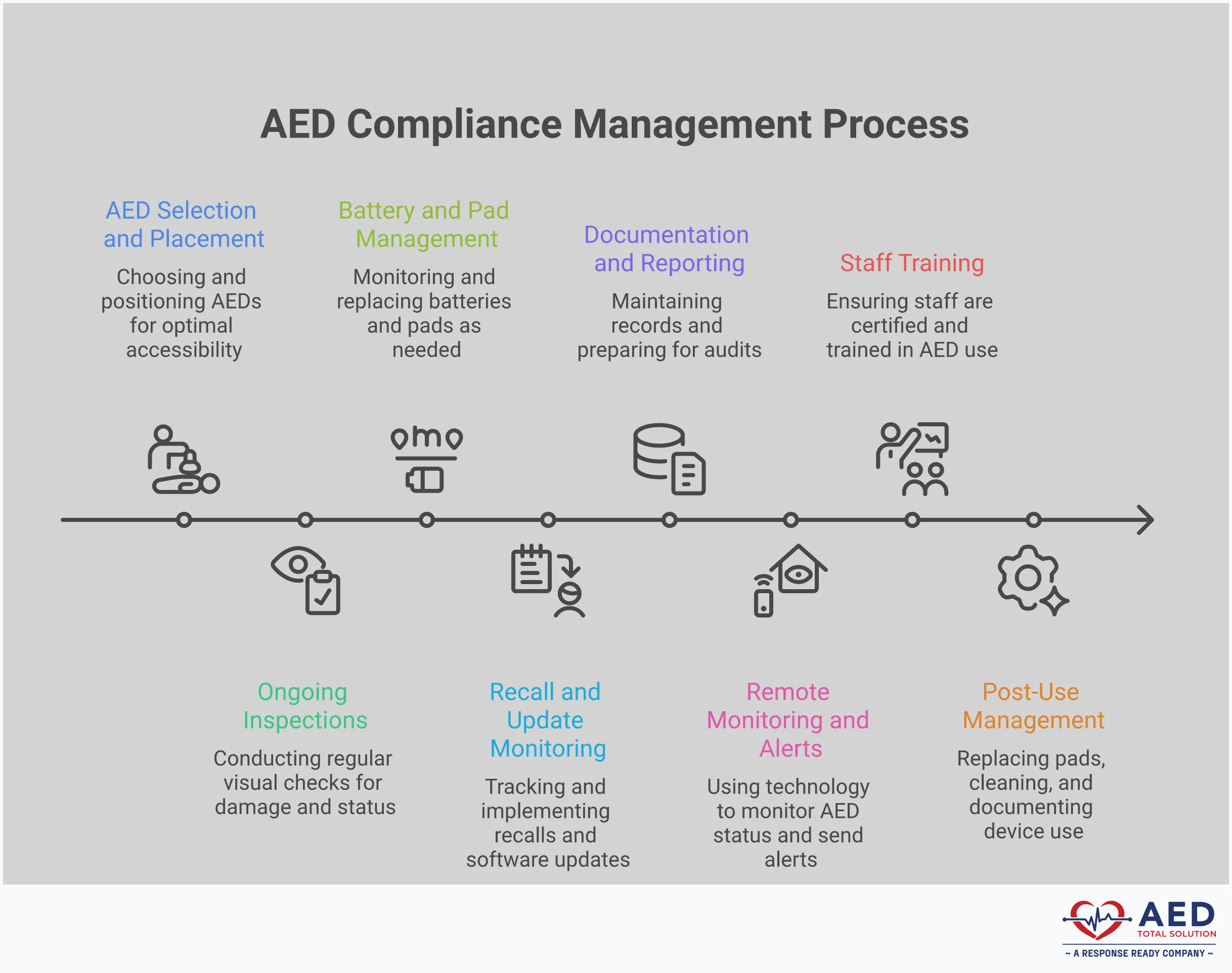
Following these steps helps you meet legal standards and, more importantly, creates a reliable system for responding to a sudden cardiac arrest emergency. From registering your device with local EMS to tracking every last expiration date, each item on this list plays a vital role in your organization’s readiness. Let’s walk through the essential components every AED program needs to have in order.
Device Registration
One of the first steps after acquiring an AED is registering it with your local emergency services. Many states require you to file your AED’s location with a local or state agency. This isn’t just red tape; it serves a critical purpose. When someone calls 911, the dispatcher can see a registered AED nearby and direct the caller or a bystander to its location, potentially saving precious minutes. The specific AED laws by state can differ, so it’s important to check the requirements for your area. Proper registration integrates your device into the community’s emergency response network, making it a true public safety asset.
Training Records
Having an AED is only half the battle; you also need people who are prepared to use it. Many states require that a certain number of employees are trained in CPR and AED use, especially in places like gyms, schools, and large offices. Maintaining organized training records is a key part of compliance. Your records should clearly show who is certified, the date of their training, and when their certification expires. This documentation proves you’ve met your legal obligations and demonstrates your commitment to safety. Keeping these records up-to-date ensures your designated responders are always ready to act with confidence.
Maintenance and Inspection Logs
Consistent inspections are the backbone of a reliable AED program, and your maintenance logs are the official record of your efforts. These logs prove your device is checked regularly and kept in working order. Each entry should include the date of the inspection, the name of the person who performed it, the status of the battery and pads, and a confirmation that the readiness indicator is green. Detailed logs are your best defense in an audit or legal situation. They show you’re performing the necessary due diligence, which is why a comprehensive AED program management service always includes meticulous record-keeping.
Emergency Response Plan
An AED is a tool, but you also need a clear plan for how to use it during an emergency. A documented Emergency Response Plan (ERP) outlines exactly what to do when someone experiences a sudden cardiac arrest. The plan should specify who calls 911, who retrieves the AED, who begins CPR, and how to direct emergency responders when they arrive. This plan should be easy to understand and accessible to all staff. Regularly reviewing and practicing the ERP ensures your team can respond quickly, calmly, and effectively, turning a chaotic moment into a coordinated and life-saving effort. For step-by-step guidance on building your ERP, read our guide on creating an AED emergency response plan.
Expiration Date Tracking
AED electrode pads and batteries don’t last forever. Using an AED with expired components can cause the rescue to fail, which is why tracking these dates is a non-negotiable part of compliance. Pads typically expire every two to three years, while batteries last between two and five years. Manually tracking these dates for one or more devices can be challenging and is a common point of failure for many programs. A proactive system for monitoring and replacing these items before they expire is essential. This ensures your device is always ready to deliver a shock when needed.
How Often Should You Inspect and Maintain Your AED?
An Automated External Defibrillator (AED) is a life-saving device, but it can only do its job if it’s ready to go at a moment’s notice. Simply mounting it on a wall isn’t enough. Consistent inspections and AED maintenance and compliance are the foundation of a reliable AED program. Think of it as a simple routine that protects your investment and, more importantly, prepares you to save a life. Here’s a breakdown of the schedule you should follow to keep your device in perfect working order.
Monthly Inspections
At a minimum, you should perform a visual inspection of your AED every month. Some state laws even require more frequent checks, so it’s important to know your local requirements. During this quick check, you’re looking for a few key things. First, ensure the device has no visible damage, like cracks or signs of tampering. Next, confirm that the status indicator light is green, signaling it’s ready for use. A red light or a chirping sound means something needs immediate attention. This simple, regular check-in is your first line of defense in catching potential issues. A good AED maintenance checklist can help you stay organized and ensure nothing gets missed.
Battery and Pad Replacement Schedule
The batteries and electrode pads are the most critical components of your AED, and they don’t last forever. AED batteries typically have a lifespan of two to five years, while pads usually last between two and four years. These items have clearly marked expiration dates that you must track carefully. Using an AED with an expired battery or pads could cause it to fail during a rescue. Make it a habit to check these dates during your monthly inspections and order replacements well before they expire. Proactive management ensures you’re never caught with a device that isn’t ready. You can find replacement AED batteries and pads for all major brands to keep your supplies current.
Semi-Annual Maintenance Checks
Beyond your monthly once-over, it’s a good practice to schedule more thorough maintenance checks at least twice a year. This is a chance to do a deeper dive into the device’s condition and your program’s overall health. Assigning this responsibility to a specific person or team helps maintain accountability. During this check, you should review your supply inventory, confirm the device’s placement is still appropriate and accessible, and update your maintenance log. Meticulous documentation is not just a best practice; it’s a core part of compliance. A detailed log provides a clear record of your AED’s readiness and can be invaluable during an audit, proving you’ve followed a consistent defibrillator service schedule.
Software Updates and Recalls
Like any sophisticated piece of technology, AEDs sometimes require software updates to improve performance or address potential issues. Manufacturers may also issue recalls for specific components. Keeping track of these updates and notices on your own can be challenging, especially if you manage multiple devices. An outdated device might not function according to the latest resuscitation guidelines, creating both a safety and a liability risk. This is where an AED program management service becomes essential. A dedicated partner handles all manufacturer communications, ensuring your device software is always current and that you’re immediately notified of any recalls. Our full-service management handles every detail for you, giving you confidence that your AED is truly response-ready.
What to Check During a Monthly AED Inspection
Regular monthly inspections are the foundation of a reliable AED program. Think of it as a quick health checkup for your device to ensure it’s ready to perform when an emergency strikes. These checks don’t take long, but they are absolutely critical for compliance and, more importantly, for saving a life. Walking through these steps each month gives you confidence that your equipment is in working order. A great AED program management service can automate reminders for these checks, so nothing ever falls through the cracks.
Check for Physical Damage
First, give the AED unit a thorough visual inspection. You’re looking for any signs of wear and tear that could affect its performance. Carefully examine the outer casing for cracks, deep scratches, or other damage. A compromised case could allow dust or moisture to get inside and damage the sensitive electronic components. Check that all sockets and connectors are clean and free of debris. Make sure nothing looks loose or out of place. If the AED is stored in a cabinet, check the cabinet for damage, too. This simple once-over helps you catch small issues before they become major problems during an emergency.
Test the Battery and Status Indicator
An AED is useless without a charged battery. Fortunately, modern AEDs perform regular, automated self-tests to check their battery and internal systems. Your main job during a monthly inspection is to confirm the results of these self-tests. Most devices have a clear status indicator, usually a light or a symbol on the screen. A green light or a checkmark typically means the device is ready for use. If you see a red light, an “X” symbol, or hear a chirping sound, the AED needs immediate attention. This usually signals a low battery or another issue that requires troubleshooting.
Verify Electrode Pad Condition
The electrode pads are a single-use, critical component of any AED. During your inspection, you need to check two key things. First, find the expiration date printed on the pad packaging. The conductive gel on the pads dries out over time, which can prevent them from adhering properly to the skin and delivering an effective shock. Always replace the pads before they expire. Second, make sure the pad package is completely sealed and has no tears or openings. A broken seal can cause the gel to dry out prematurely and compromises sterility, making the pads unusable.
Confirm the Readiness Light Is On
The readiness indicator is your fastest way to confirm an AED is good to go. This small light provides an immediate status update, showing that the AED has passed its most recent self-test. A green, flashing light is the universal sign for “all systems go.” If the light is red or off, or if the device is chirping, it’s an alert that something is wrong. It could be an expired battery, expired pads, or an internal malfunction. Make it a habit to glance at the readiness indicator every time you walk past the AED, not just during your official monthly inspection.
Check Rescue Supplies and Accessibility
Finally, make sure the AED and its accessories are accessible and fully stocked. The device should be stored in a visible, unobstructed location. Check that the cabinet is unlocked and the signage is easy to see. You should also have a rescue kit stored with the AED. A basic kit includes essentials like trauma scissors to cut away clothing, a razor for clearing chest hair, gloves for personal protection, and a CPR mask. Confirm you have a spare set of electrode pads and a backup battery on hand. These essential supplies ensure you have everything you need to respond effectively.
What to Do After Using an AED
After an AED is used in an emergency, the work isn’t over. Taking the right steps immediately following an incident is essential for ensuring the device is ready for the next emergency and that your program remains compliant. The post-use process involves several critical tasks, from cleaning and restocking the unit to documenting the event for your records.
Think of it as a reset button for your emergency preparedness. Each step ensures your equipment is in perfect working order and that you have a clear record of what happened. This follow-through is just as important as the initial response. Properly managing your AED after a rescue protects your investment, supports your responders, and fulfills legal and medical oversight requirements. A comprehensive program management service can help automate these steps, but every AED owner should know what the process involves.
Post-Use Safety Steps
Once the emergency is over and medical professionals have taken over, your first step is to take the AED out of service temporarily. You can’t just put it back in the cabinet. The device needs to be thoroughly inspected, cleaned, and restocked before it can be considered response-ready again. This process includes replacing the used electrode pads, checking the battery life, cleaning the unit’s exterior, and ensuring all rescue kit supplies are replenished. It’s also the time to download the event data and document the incident in your maintenance log.
Clean and Sanitize the Device
An AED is a medical device, and it needs to be cleaned and sanitized after use. Start by wiping down the exterior of the unit with a soft cloth and a cleaner approved by the manufacturer. Avoid using harsh or abrasive chemicals that could damage the device’s casing or screen. Pay close attention to any areas that may have come into contact with the patient or first responders. Keeping your AED clean not only ensures it’s hygienic but also helps you spot any potential damage, like cracks or wear, that might have occurred during the rescue.
Replace Components and Restock Supplies
The electrode pads are single-use only and must be replaced immediately after an event. This is the most critical post-use step. Always have a spare set of pads on hand so you can get your device back into service quickly. You should also check the battery’s status, as a rescue can drain its power. Beyond the device itself, inspect your rescue kit. You’ll likely need to restock items like gloves, scissors, razors, and CPR masks. You can find all the necessary AED accessories to keep your kit fully prepared.
Document the Incident
Thorough documentation is a cornerstone of a compliant AED program. After a device is used, you need to record the details of the incident in your AED logbook. Note the date, time, and location of the event. If possible, include information about the responder and the outcome. This record is essential for liability protection, internal reviews, and demonstrating compliance during an audit. A detailed log shows that your program is actively managed and that your equipment is properly maintained, creating a complete history for each device in your care.
Download and Analyze Event Data
Modern AEDs record important data during a cardiac arrest event, including the patient’s heart rhythm (ECG) and the timing of any shocks delivered. This information is incredibly valuable for the medical professionals who provide post-event care and is often required by your medical director. Downloading and forwarding this data is a key part of the post-use protocol. The event data provides a clear picture of the rescue, helps improve future response protocols, and satisfies medical oversight requirements for your program.
Meeting Training and Certification Requirements
Having a ready-to-use AED is only half the battle; your team needs the confidence and skills to act decisively during an emergency. Proper training and certification are non-negotiable parts of a compliant and effective AED program. They ensure your designated responders know exactly what to do when seconds count, while also protecting your organization from liability. Think of it as the human element of your emergency preparedness plan. A well-trained team can turn a piece of life-saving equipment into a successful rescue.
Required Training Programs
While specific requirements vary, most states and workplaces expect designated responders to be certified in CPR and AED use. These courses, often offered by the American Heart Association or the Red Cross, teach people how to recognize the signs of sudden cardiac arrest, perform CPR, and operate an AED correctly. Some industries or facility types, like schools or fitness centers, may have stricter mandates. It’s essential to check your local and state regulations to understand exactly what training is required for your organization. This ensures you not only meet legal standards but also equip your team with the right skills.
Staff Certification Rules
A common concern for business owners is the liability involved when an employee uses an AED. Fortunately, all 50 states have Good Samaritan laws that offer legal protection to individuals who act in good faith to help during a medical emergency. These laws are designed to encourage people to assist without fear of being sued. For these protections to apply, it’s important that your staff is properly trained and their certifications are current. Following the device’s instructions and acting within the scope of their training is key. This legal shield is a critical component of a well-managed AED program.
How to Keep Training Records
Keeping accurate and organized training records is just as important as the training itself. In the event of an incident or an audit, you’ll need to prove that your staff was certified. Create a centralized file, either digital or physical, to store copies of each employee’s certification card. Be sure to track expiration dates, as most CPR and AED certifications are valid for two years. Using a spreadsheet or a dedicated compliance calendar can help you stay on top of renewal deadlines. For organizations with multiple locations, an AED program management service can automate record-keeping and send reminders, ensuring no one’s certification lapses.
Scheduling Refresher Courses
CPR and AED skills are perishable. Without practice, it’s easy to forget the proper steps, especially in a high-stress situation. That’s why scheduling regular refresher courses is crucial for maintaining readiness. Don’t wait until a certification is about to expire. Plan for refresher training well in advance to give your team members plenty of notice. Regular practice builds muscle memory and confidence, ensuring your responders can act quickly and effectively. A proactive approach to ongoing training keeps your team sharp and your entire emergency response plan strong.
Keep Your AED Paperwork in Order
An AED program is only as strong as its documentation. Keeping detailed and organized records is not just about checking a box; it’s about proving your program is active, compliant, and always ready. Proper paperwork protects your organization from liability and ensures every critical task is accounted for. Think of it as the official story of your AED’s life and readiness, from its initial setup to every inspection and update along the way.
A well-documented program shows you are proactive about safety. It provides a clear trail of evidence that you are meeting manufacturer guidelines and state requirements. When everything is in order, you can confidently handle an audit or inquiry, knowing your records demonstrate a solid commitment to preparedness. This level of organization is a cornerstone of a successful and defensible AED program. Without it, you leave your organization exposed to unnecessary risks and create confusion when it matters most.
Monthly Inspection Logs
Consistency is key, and your monthly inspection logs are the proof. Every time you check your AED, you should document it on a dedicated log or tag attached to the device’s cabinet. This record should include the date, the inspector’s initials, and confirmation that the status indicator is green, the supplies are intact, and the device is accessible. These logs provide a clear, at-a-glance history of the AED’s readiness. In the event of an audit or incident, this documentation demonstrates your commitment to regular oversight and is a fundamental part of a well-managed program.
Maintenance and Service Records
Beyond routine checks, you need a comprehensive record of all maintenance and service activities. This file should document every time you replace the AED’s batteries or electrode pads, perform a software update, or have the device serviced. Note the date and the specific action taken. This detailed history is essential for tracking the device’s lifecycle, anticipating future needs, and ensuring you follow the manufacturer’s recommendations. Keeping these records organized helps you manage your inventory of AED accessories and guarantees your device is always equipped with components that are within their expiration dates.
Training Certificates
Having trained responders is often a legal requirement, and your training certificates are the official proof. Keep a centralized file of current CPR, AED, and first aid certifications for all designated staff members. This documentation is crucial for demonstrating compliance with state-specific regulations and protecting your organization from potential liability. Since certifications expire, it’s a good idea to set calendar reminders several months in advance to schedule refresher courses. This proactive approach ensures your team’s skills stay sharp and your program remains compliant without any last-minute scrambling to get people recertified.
Incident Reports
After an AED is used in an emergency, documenting the event is a critical final step. A post-use incident report should be completed immediately to capture key details, including what happened, who responded, and the outcome. This report should also outline the steps taken to return the device to service, such as cleaning the unit, replacing used pads, and downloading the event data for medical review. This process is vital for continuous quality improvement, providing valuable insights for your medical director and helping refine your emergency response plan for the future.
What Happens If You’re Not Compliant?
Staying on top of AED compliance is about more than just checking boxes on a list. It’s about protecting your organization from serious, real-world consequences. When an AED program falls out of compliance, the fallout can be significant, affecting your legal standing, finances, and even your ability to get insurance coverage when you need it most. Understanding these risks is the first step toward building a truly resilient and protected emergency response plan.
Legal Liability and Financial Risks
While all 50 states have Good Samaritan laws to protect people who use an AED during an emergency, these protections aren’t guaranteed for the organization that owns the device. If an AED fails to work because of poor maintenance, like an expired battery or used pads that were never replaced, your organization could be found negligent. This opens the door to lawsuits, which can be incredibly costly in terms of both legal fees and settlement payouts. The best way to minimize legal risk is to ensure your program is impeccably managed, documented, and always ready for an audit.
Regulatory Fines and Penalties
Beyond civil liability, you also have to consider regulatory penalties. Federal and state laws dictate specific requirements for AEDs, from initial registration and placement to ongoing maintenance and staff training. These rules can be complex and vary quite a bit from one state to another, making it challenging to keep up. Forgetting to register a device or missing a required monthly inspection can result in hefty fines. Government agencies take these regulations seriously because a non-compliant AED is a major public safety risk. Staying current with all AED laws and requirements is critical to avoiding these penalties.
Problems with Insurance Coverage
If an incident involving your AED occurs, you can be sure your insurance carrier will conduct a thorough investigation. They will want to see all your documentation, including inspection logs, maintenance records, and training certificates. If they discover that your program was not compliant at the time of the event, they may have grounds to deny your claim. This would leave your organization to cover all associated costs, from legal defense to potential damages. Proper AED program management provides the audit-ready documentation you need to prove compliance and ensure your insurance coverage stands strong.
How to Maintain Ongoing AED Compliance
Staying compliant isn’t a one-time task; it’s an ongoing commitment to readiness. Once your AED program is set up, you need a solid plan to keep everything in order. These strategies will help you maintain compliance consistently, ensuring your devices are always prepared for an emergency.
Conduct Regular Internal Audits
Think of an internal audit as a complete health check for your AED program. It goes beyond the monthly physical inspection to review your entire system. During an audit, you should examine your maintenance logs, confirm that staff training certifications are current, and review your emergency response plan. Regularly checking and maintaining your AED is critical; if you don’t, it might not work when someone’s life is on the line. Scheduling these audits quarterly or semi-annually helps you spot small gaps in your documentation or procedures before they become serious compliance issues. This proactive approach ensures every part of your program is ready for an emergency and an official inspection.
Use Automated Monitoring and Alerts
Manually tracking every AED, especially across multiple locations, can be a huge challenge. This is where technology can be a game-changer. Remote AED monitoring tracks the status of your devices from a distance and alerts you to maintenance issues, like a low battery or expired pads. This automated oversight acts as a constant safety net, catching potential problems that a manual check might miss. It reduces the risk of human error and frees up your team from tedious tracking tasks. An automated system gives you confidence that your devices are ready to perform at a moment’s notice, simplifying one of the most critical parts of AED program management.
Partner with a Program Management Service
Keeping up with state laws, medical oversight, and device maintenance can feel like a full-time job. Partnering with an AED program management service removes that burden from your shoulders. A dedicated partner handles every detail, from tracking expiration dates and documenting inspections to ensuring you meet all local and federal requirements. This service provides expert oversight to ensure your program is always compliant and audit-ready. Instead of juggling spreadsheets and calendar reminders, you can trust that a team of professionals is managing the entire lifecycle of your AEDs, giving you complete peace of mind and significantly reducing your organization’s liability.
Create a Compliance Calendar
A simple yet powerful tool for staying on top of your responsibilities is a compliance calendar. This is your master schedule for every recurring task related to your AED program. Be sure to keep a log or inspection card and sign and date it every time you check your AED. Your calendar should include reminders for monthly inspections, battery and electrode pad expiration dates, and staff CPR and AED training renewal deadlines. By mapping out these key dates, you turn compliance into a routine, proactive process instead of a reactive scramble. This system creates accountability and ensures that no critical deadline is ever missed.
Common AED Compliance Mistakes to Avoid
Managing an AED program involves more than just mounting a device on the wall. It’s an ongoing commitment to readiness, and a few common slip-ups can undermine the entire system. These mistakes are often unintentional, stemming from a “set it and forget it” mindset. But when it comes to a life-saving device, small oversights can have significant consequences, including legal liability and, most importantly, a device that fails when needed.
The good news is that these errors are entirely preventable with a clear process and a little diligence. The most frequent issues we see are incomplete documentation, missed inspection deadlines, and outdated staff training. Each one represents a critical gap in a program’s reliability. Think of compliance as a three-legged stool: if one leg is weak, the whole thing becomes unstable. Let’s walk through each of these common mistakes so you can make sure your program is built on a solid foundation and ready for an emergency.
Incomplete Documentation
If an incident occurs, your documentation is the first thing regulators and legal teams will look at. In their eyes, if it wasn’t written down, it didn’t happen. That’s why keeping meticulous records is non-negotiable. A simple logbook or inspection card kept with the AED is a great start. Every time you check the device, sign and date the log. This creates a clear, consistent history of readiness and accountability.
Your AED’s user manual is your best friend here, as it outlines the specific checks and documentation your model requires. Following those manufacturer guidelines is key to maintaining compliance. A well-managed AED program ensures this paperwork is never an afterthought, providing a clear and defensible record of your commitment to safety.
Missed Inspection Deadlines
An AED can sit on a wall for months or even years without being used, making it easy for routine checks to fall off the radar. However, regular inspections are essential to confirm the device is ready to function at a moment’s notice. You should perform a detailed visual and functional check at least once a month.
During your inspection, look for any signs of physical damage and confirm the status indicator light shows it’s ready for use. This simple monthly habit can catch issues like a dying battery or an expired component before they become a problem during an emergency. Setting calendar reminders is a good first step, but an automated monitoring system is the best way to guarantee these critical deadlines are never missed.
Outdated Staff Training
One of the biggest misconceptions about AEDs is that they are only for medical professionals. In reality, modern AEDs are specifically designed for anyone to use, with clear voice prompts to guide the user through every step. However, even the most intuitive device can be intimidating in a high-stress situation. That’s why proper, up-to-date training is so important.
Training gives your team the confidence to act decisively when seconds count. It’s not a one-time event; certifications expire, and skills get rusty. Regularly scheduled refresher courses are vital for keeping your staff prepared. Managing training records and certification deadlines for your entire team can be a challenge, but it’s a critical piece of a truly effective emergency response plan.
Related Articles
- AED Legal Requirements for Businesses: Stay Compliant
- AED Laws & Requirements Across State — AED Total Solution
- 4 Best AED Compliance Management Software (2026)
- Why is Defibrillation Important – Legal Guidelines
Frequently Asked Questions
Do I really need a doctor to oversee my AED program? Yes, in many cases, you do. This is called medical oversight, and it’s a requirement in many states. A physician’s involvement ensures your emergency plan is medically sound and that your device protocols are correct. Think of it as having a clinical expert sign off on your program’s safety and effectiveness. This oversight is a key piece of a compliant program and something a full-service management partner can arrange for you.
What’s the biggest mistake people make with their AEDs? The most common mistake is treating it like a fire extinguisher that you can just hang on the wall and forget about. An AED is an active medical device that requires consistent attention. Forgetting to do monthly checks or track expiration dates for pads and batteries are the most frequent slip-ups. These small oversights can lead to device failure during an emergency, which is why creating a routine for inspections and documentation is so important.
How can I keep track of all the different state and local AED laws? Keeping up with specific regulations can be challenging since they change and vary so much between states and even cities. A good starting point is to check your state’s department of health website for AED-specific legislation. However, for total confidence, this is where a program management service is incredibly valuable. A dedicated partner stays on top of these legal details for you, ensuring your program meets every requirement where your facilities are located.
Can anyone use an AED in an emergency, or only people who are certified? Modern AEDs are designed to be used by almost anyone, as they provide clear, step-by-step voice instructions. Good Samaritan laws in every state offer liability protection to bystanders who step in to help. That said, formal training is still highly recommended. Training gives your team the confidence to act quickly and correctly in a stressful situation, which can make all the difference.
What should I do if my AED starts chirping or the status light turns red? A chirping sound or a red status light is your AED’s way of telling you it needs immediate attention. Don’t ignore it. The first step is to consult the device’s user manual to understand what the specific alert means. It most often signals that the battery is low or the electrode pads have expired. Address the issue right away by replacing the necessary components to get the device back into a ready state.