

One of the biggest myths about AEDs? That they’re complicated and only for medical pros. That couldn’t be further from the truth. Modern AEDs are designed for anyone to use, with clear voice prompts guiding you through every single step. But this misconception can cause dangerous hesitation in an emergency. Our goal is to replace that fear with facts. We’ll show you how effective AED program management clears up the confusion, tackles common myths, and gives your team the confidence to act when it matters most.
Key Takeaways
- The right AED fits your specific environment: Consider who will use the device and where it will be located, as features like CPR coaching, durability, and clear voice prompts are often more important than the initial cost.
- Budget for the complete life-saving system: The initial purchase is just the start; a truly effective program includes essential accessories, ongoing supply replacements, and proper storage to ensure the AED is always visible and ready to use.
- Ongoing management is non-negotiable for compliance and confidence: Create a routine for monthly inspections, track battery and pad expiration dates without fail, and document everything to ensure your program is always audit-ready and prepared for an emergency.
What Is an AED and How Does It Save Lives?
An AED, or Automated External Defibrillator, is a portable, life-saving device designed to help someone experiencing sudden cardiac arrest (SCA). Think of it as a smart first aid tool for the heart. When a person has SCA, their heart’s electrical activity becomes chaotic, causing it to stop beating effectively. This is different from a heart attack, which is more of a “plumbing” problem caused by a blockage. SCA is an “electrical” problem, and an AED is designed to fix it.
The device works by analyzing the heart’s rhythm and, if it detects a life-threatening irregularity, delivering a controlled electric shock called defibrillation. This shock can stop the chaotic rhythm, giving the heart a chance to reset and resume a normal beat. Modern AEDs are incredibly user-friendly, with clear voice prompts and visual diagrams that guide a rescuer through every step. They are specifically designed for bystanders with little to no medical training to use effectively in an emergency. While CPR is crucial for keeping oxygenated blood flowing to the brain and vital organs, an AED is the only thing that can restart a heart in certain types of cardiac arrest, making it an essential part of any emergency response plan. Having a well-managed AED program ensures your device is ready to go when seconds count.
How an AED Works to Save a Life
When you open and turn on an AED, it immediately begins speaking to you, walking you through the process. Your first step is to apply two electrode pads to the person’s bare chest, following the simple diagrams shown on the pads themselves. Once the pads are in place, the device takes over the critical task of analysis. It automatically assesses the person’s heart rhythm to determine if a shock is needed. The AED is programmed to detect specific, life-threatening arrhythmias, like ventricular fibrillation. If one of these shockable rhythms is identified, the device will charge up and instruct you to deliver a shock. It’s designed to be foolproof—it will not advise a shock unless it is absolutely necessary, removing any guesswork for the rescuer.
The Impact of AEDs in the Workplace
In a sudden cardiac arrest emergency, the clock is your biggest enemy. The chance of survival decreases significantly for every minute that passes without defibrillation. Having an AED on-site can cut the response time by three to five minutes, a window that can dramatically change the outcome. But simply mounting a device on the wall isn’t enough to create a safe environment. An AED is only effective if it’s ready to work at a moment’s notice, which requires consistent oversight. This is why a well-managed program is so critical. It ensures the device is regularly inspected, the batteries and pads are within their expiration dates, and your entire team knows they can count on it when it matters most, turning a piece of equipment into a reliable, life-saving system.
Recognizing the Signs: When to Use an AED
You should use an AED on anyone who is unresponsive and not breathing normally. If you find someone who has collapsed, first check for a response by tapping their shoulders and shouting. If they don’t respond and are not breathing or are only gasping for air, it’s time to act. Have someone call 911, start high-quality CPR, and use an AED as soon as it’s available. Many people worry they might hurt someone by using an AED, but the device is designed to be incredibly safe. It will only deliver a shock if its analysis confirms a life-threatening heart rhythm is present. You cannot accidentally shock someone who doesn’t need it. In a cardiac arrest emergency, using an AED can only help. You can find answers to more common questions on our FAQ page.
A Guide to the Different Types of AEDs
When you start looking at AEDs, you’ll quickly notice they aren’t all the same. While every modern AED is designed to guide a rescuer through the process with clear voice prompts, they differ in one key way: how they deliver the life-saving shock. Understanding this difference is the first step in choosing the right device for your organization. The two main categories you’ll encounter are semi-automatic and fully automatic. Let’s break down what each one does and how to decide which is the best fit for your team and environment.
Semi-Automatic vs. Fully Automatic: What’s the Difference?
The core difference between these two types comes down to a single action: pushing a button. A semi-automatic AED analyzes the person’s heart rhythm and, if a shock is needed, it instructs you to press a button to deliver it. This design gives the rescuer complete control over the moment the shock is administered, allowing them to perform a final safety check and ensure everyone is standing clear.
A fully automatic AED, on the other hand, handles that last step for you. After analyzing the heart rhythm and determining a shock is necessary, it will provide a clear verbal warning to stand back and then deliver the shock on its own. This can help reduce any hesitation a rescuer might feel and minimizes the time between CPR and the shock.
Choosing the Right AED for Your Organization
So, which one is right for your workplace? The best choice depends on your environment and who is most likely to use the device. If your team includes trained first responders or medical professionals, they may prefer a semi-automatic model for the added control it provides. However, for the general public or in a workplace with minimal training, a fully automatic AED can be simpler and removes the potential for hesitation during a stressful moment. Consider your specific needs and the level of AED program management your organization requires. The goal is to select a device that empowers anyone to act confidently in an emergency.
Comparing the Top AED Brands
Choosing the right AED can feel like a big decision, but you don’t have to make it alone. While many devices on the market are effective, a few brands have earned a reputation for reliability, ease of use, and innovative technology. The best AED for your organization will depend on your specific environment, the potential users, and your overall emergency response plan. Think about who is most likely to use the device—employees with minimal training, or medical professionals? Will the AED be stored in a climate-controlled office or a more rugged environment like a manufacturing floor or sports field?
Understanding these factors will help you select a model that fits seamlessly into your workplace. To get you started, we’ll walk through some of the most trusted names in the industry. These brands consistently deliver high-quality devices that are designed to empower anyone to act confidently in an emergency. You can find a wide selection of these top-tier devices in our online shop. Let’s look at what makes each one a solid choice for your program.
A Look at Philips AEDs
Philips is a leader in the AED space, known for creating intuitive devices that are perfect for public access defibrillation programs. The Philips HeartStart OnSite AED is one of the most popular models available and is designed for people with little to no training. It provides clear, calm voice instructions that guide the user through every step of the rescue process, from pad placement to CPR.
For environments that demand a bit more durability, the Philips HeartStart FRx AED is an excellent option. It’s built to withstand rough handling, dust, and water, making it ideal for schools, industrial sites, and police vehicles. Its rugged design ensures it’s ready to perform in challenging conditions, giving you peace of mind that your equipment is protected.
A Look at Zoll AEDs
Zoll stands out for its focus on improving CPR quality. The ZOLL AED Plus is famous for its Real CPR Help® technology, which gives rescuers real-time feedback on the depth and rate of their chest compressions. During a stressful rescue, it can be difficult to know if you’re pushing hard and fast enough. The device’s voice and visual prompts, like “Push harder,” guide the user to deliver high-quality CPR, which is critical for survival.
This feature makes the ZOLL AED Plus a fantastic choice for any organization, as it provides an extra layer of support that can dramatically improve outcomes. It essentially acts as a coach, helping even an inexperienced rescuer perform like a trained professional.
A Look at Physio-Control AEDs
Physio-Control, now part of Stryker, has a long history of creating life-saving technology trusted by medical professionals. The LIFEPAK CR2 AED brings that professional-grade quality into a device that’s simple enough for anyone to use. It features a clean, user-friendly interface and ClearVoice™ technology that adjusts the volume of its prompts to be heard in a noisy environment.
One of its most advanced features is its ability to analyze the heart rhythm during CPR, which reduces pauses in chest compressions and gets a shock delivered faster if needed. This makes the rescue process more efficient and is why the LIFEPAK CR2 is a top choice for corporations, schools, and public spaces.
A Look at HeartSine AEDs
HeartSine, another Stryker brand, is known for producing some of the most compact, portable, and user-friendly AEDs available. The HeartSine Samaritan PAD 350P is incredibly lightweight and easy to manage, making it a great fit for mobile settings or organizations with multiple buildings. Its simple two-button operation and clear visual and voice prompts make it approachable for users of all skill levels.
The Samaritan also features a combined battery and pad pack, known as the Pad-Pak, which has a single expiration date. This simplifies maintenance by reducing the number of items you need to track and replace, a key benefit for anyone managing an AED program.
How Much Does an AED Cost?
When you’re ready to add an Automated External Defibrillator (AED) to your safety plan, one of the first questions you’ll have is about the cost. While it’s easy to look up the price of a device, the sticker price is only the beginning. To budget effectively and ensure your program is sustainable, it’s important to understand the full scope of the investment, from the initial purchase to ongoing maintenance. Thinking about the total cost of ownership from day one sets you up for a successful and compliant program that’s always ready to save a life.
Breaking Down AED Price Ranges
A new AED unit typically costs between $1,100 and $2,500. This range depends on the brand, model, and specific features, such as real-time CPR feedback, bilingual capabilities, or ruggedness for harsh environments. Basic models are on the lower end, while devices with more advanced technology are at the higher end. To get a clear idea of what different models offer, you can browse a variety of devices in our online shop. This will help you compare features and find a unit that fits both your needs and your budget. Remember, this price generally covers only the device itself, along with its initial set of pads and a battery.
What Determines the Price of an AED?
The initial price tag is just one part of the overall cost. To create a complete AED program, you’ll need to budget for several other essential items. Beyond the device, you’ll need a storage solution, like a wall-mounted cabinet, and visible signage to ensure people can find it quickly in an emergency. The biggest ongoing costs are the consumables: electrode pads and batteries, which must be replaced every few years, even if the AED is never used. Finally, consider the cost of AED/CPR training for your team and the administrative time required to track inspections and maintain compliance records. These factors together determine the true cost of your program.
Beyond the Sticker Price: Total Cost of Ownership
The most accurate way to budget for an AED is to consider its total cost of ownership. This includes the initial purchase price plus all the recurring expenses over the device’s entire lifespan, which is typically about eight to ten years. These ongoing costs include replacing batteries every 2–5 years and electrode pads every 2 years or after each use. When you factor in regular inspections, staff training renewals, and program management, the long-term investment becomes clearer. For organizations looking for predictable, bundled pricing, AED rental programs can be a great alternative, often including the device, maintenance, and supply replacements in one consistent fee. This approach helps ensure your program remains effective and compliant without any surprise expenses.
Choosing an AED: Key Features to Compare
Choosing an AED isn’t just about buying a piece of equipment; it’s about investing in a life-saving tool that needs to perform flawlessly under pressure. While all modern AEDs are designed to be effective, certain features can make a significant difference in a real emergency, especially for a layperson responder. When you’re comparing devices, think about who will be using the AED and where it will be located. A device for a quiet office building might have different requirements than one for a bustling school gym or a rugged construction site. Considering these key features will help you select an AED that is reliable, easy to use, and perfectly suited to your organization’s unique environment.
Look for Simplicity: Voice Prompts and User-Friendliness
In the middle of a cardiac emergency, clarity is everything. The most critical feature of any AED is how simple it is to operate. Look for devices with a clean, user-friendly interface and clear, calm voice prompts that guide the rescuer through every step, from applying the electrode pads to performing CPR. These instructions are designed to empower anyone—even someone with zero training—to act confidently. Some models even include visual aids like diagrams or flashing lights to show exactly where to place the pads. When you’re exploring different AED models, pay attention to how they communicate instructions, as this can make all the difference when seconds count.
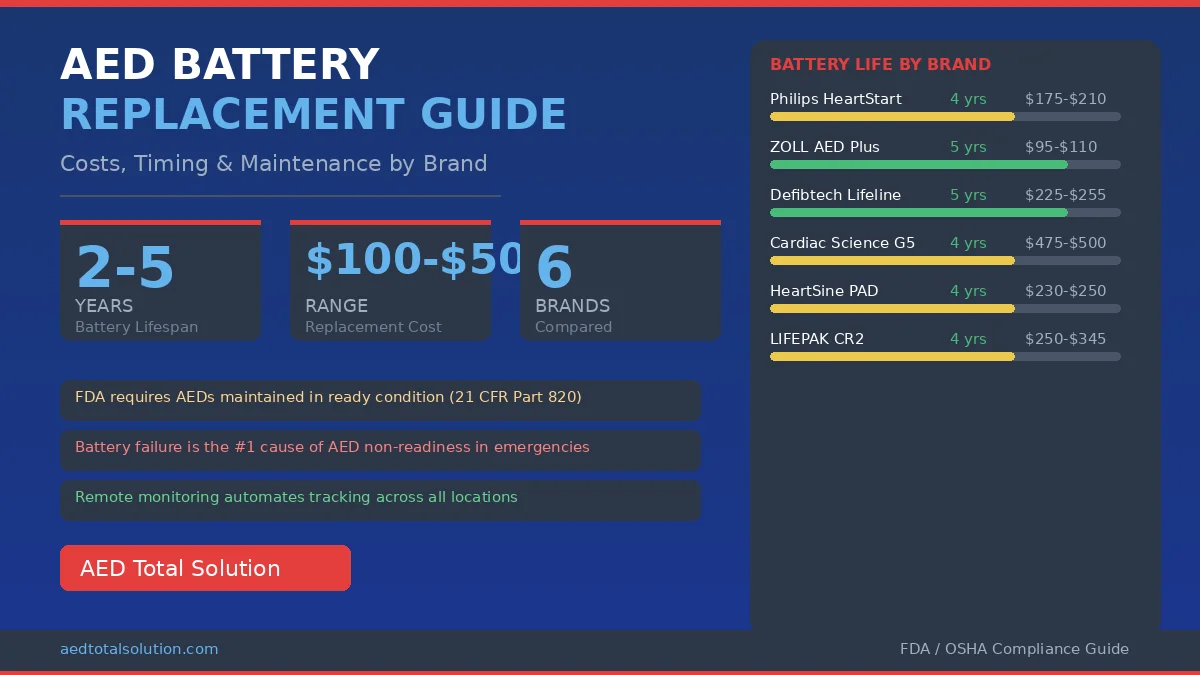
Considering Battery Life and Ongoing Maintenance
An AED is only useful if it’s ready to go at a moment’s notice. That’s why battery life and self-maintenance features are so important. Most modern AEDs perform regular self-tests to check the battery, pads, and internal circuitry, and they will signal an alert if something is wrong. Look for devices with long-life batteries and easily visible readiness indicators that show the device’s status at a glance. Keeping track of battery and pad expiration dates is crucial for compliance and readiness, which is where a comprehensive AED program management service can remove the guesswork and ensure your device is always prepared for an emergency.
Assessing Portability and Durability
Consider where your AED will be stored and used. Will it stay in a climate-controlled office, or does it need to withstand tougher conditions? If your AED will be moved around—for example, to athletic fields or different job sites—look for a lightweight and compact model with a sturdy carrying case. For more demanding environments like pools, manufacturing plants, or construction sites, durability is key. Check the device’s IP (Ingress Protection) rating, which indicates its resistance to dust and water. A higher rating means better protection. For temporary needs or special events, renting an AED can also be a practical option.
Essential Safety and Support Features
A common fear among rescuers is that they might accidentally hurt the person they’re trying to help. Fortunately, AEDs have built-in safety features to prevent this. The device will analyze the person’s heart rhythm and will only advise a shock if it detects a life-threatening arrhythmia. It will not allow a shock to be delivered otherwise. This critical safety check ensures the user can’t make a mistake. Many devices also offer extra support, such as CPR feedback that provides real-time coaching on the rate and depth of chest compressions. These features are designed to build confidence and improve the quality of care provided before professional help arrives, and you can find answers to other common questions about their use.
What AED Accessories Do You Need?
An AED is the centerpiece of your emergency response plan, but it doesn’t work alone. Having the right accessories on hand is just as critical as having the device itself. These tools ensure your AED is protected, visible, and ready to use the moment an emergency strikes. Without them, even the best AED can be rendered useless by a dead battery, missing pads, or simply being locked away in a closet when someone needs it most. A successful rescue depends on a system where every piece is in place and ready to go.
Think of your AED program as a complete ecosystem. The device is the heart of it, but the accessories are the essential support structures that keep it alive and functioning. From essential replacement parts that keep the device operational to storage that makes it easy to find, every component plays a vital role. These items also support compliance and give your team the confidence to act decisively. Investing in the right accessories removes guesswork during a high-stress situation, empowering anyone to step in and help save a life. Let’s walk through the key categories of accessories you should consider to make sure your program is fully prepared from every angle.
Stocking Up on Essential Supplies and Parts
Your AED comes with a set of electrode pads and a battery, but these items don’t last forever. Pads are single-use and must be replaced after any deployment, and both pads and batteries have expiration dates that need careful tracking. It’s a smart move to keep at least one spare set of adult pads and a backup battery with your AED. If your organization serves children, you’ll also need pediatric pads, as adult pads are too large for small children. A well-stocked response kit with these essential supplies ensures you’re never caught unprepared when a second emergency occurs or when your primary supplies expire.
Protecting Your Device: Cabinets and Cases
How you store your AED is just as important as what’s inside it. The goal is to keep the device safe, secure, and instantly accessible. For a stationary location like an office lobby or a school hallway, a wall-mounted cabinet is the best choice. It keeps the AED visible and protected from dust or damage. Many cabinets are equipped with an alarm that sounds when the door is opened, which deters tampering and alerts everyone that an emergency is in progress. If your AED needs to be mobile—for a sports team or a security vehicle—a durable carrying case is a must-have to protect it on the go.
Tools for Effective AED Training and Support
While modern AEDs are designed for anyone to use, training is what builds the confidence to act without hesitation. AED trainers are non-shocking devices that mimic the look and feel of a real AED, allowing your team to practice applying pads and following voice prompts in a stress-free environment. This hands-on practice helps build muscle memory and reduces anxiety. You should also equip your AED station with a first-aid response kit containing items like CPR face shields, gloves, and trauma shears. These tools help a rescuer perform their duties safely and effectively. A comprehensive program management service can help you integrate training and readiness checks into your overall plan.
Debunking Common Myths About AEDs
When a cardiac arrest emergency happens, hesitation can be costly. Unfortunately, common misconceptions about AEDs can cause people to pause when they should be taking action. Let’s clear up a few of the biggest myths surrounding these life-saving devices so your team can feel confident and prepared to respond. Understanding the truth is the first step toward building a truly effective emergency response plan.
Myth 1: AEDs Are Hard or Dangerous to Use
One of the most persistent fears is that a rescuer could accidentally harm the person in cardiac arrest or even themselves. The reality is that modern AEDs are designed with incredible built-in safety features to prevent this. The device will not deliver a shock unless it analyzes the heart’s rhythm and determines a shock is necessary. You simply cannot shock someone who doesn’t need it.
Furthermore, AEDs are made for bystanders, not medical experts. Once you turn it on, the device provides clear, calm voice instructions and visual diagrams to walk you through every step, from placing the electrode pads correctly to when to stand clear. They are intentionally designed to be straightforward and nearly foolproof, even in a high-stress situation.
Myth 2: Only Medical Professionals Can Use an AED
While formal training is a key part of a compliant AED program, you don’t need to be a doctor or paramedic to use one. AEDs were specifically created for the public to use during an emergency. The simple, step-by-step audio and visual prompts are there to guide anyone, regardless of their level of training. The device does the complex work of analyzing the heart rhythm and deciding if a shock is needed.
Think of it this way: the AED is the expert in the room. The user’s job is to listen and follow its instructions. Getting your team certified through proper AED and CPR training is crucial for building confidence and ensuring compliance, but the device itself is accessible to all.
Myth 3: CPR Is All You Need
Many people believe that performing high-quality CPR is all that’s needed to save someone from cardiac arrest. While CPR is absolutely vital, it serves a different purpose. CPR manually pumps the heart to keep oxygenated blood flowing to the brain and other organs, which buys critical time and prevents brain damage. However, CPR alone cannot correct the underlying electrical problem in the heart.
Only an electrical shock from an AED can restore a normal heart rhythm. For a person in sudden cardiac arrest, the combination of immediate CPR and a shock from an AED offers the best chance of survival. The two work together as a powerful team: CPR keeps the person viable until the AED can do its job.
Staying Compliant: What You Need to Know About AED Laws
Owning an AED is a huge step toward protecting your team and community, but it comes with responsibilities. It’s not enough to just mount a device on the wall and hope for the best. AED compliance means following a set of rules designed to ensure your device is always ready for an emergency and that you’re protected from liability. These requirements can feel complex, as they vary by state and industry, but they generally cover three key areas: the laws you must follow, the training your team needs, and the records you must keep. Let’s break down what you need to know.
Following Federal and State AED Laws
AED regulations exist at both the federal and state levels. Federally, the FDA oversees manufacturers to make sure devices are safe and effective. There are also laws like the Cardiac Arrest Survival Act, which applies to federal buildings. However, the most important rules for your organization will likely come from your state. State-specific AED laws can dictate everything from where an AED must be placed to how it’s registered with local emergency services. For example, some states require routine maintenance checks and detailed record-keeping. Staying on top of your local requirements is critical for ensuring your program is fully compliant and legally sound.
Understanding Medical Oversight and Prescription Requirements
One of the most surprising aspects of owning an AED is that it requires a doctor’s involvement. This is called Medical Oversight, and it means a licensed physician must oversee your entire AED program. Because the FDA classifies AEDs as Class III medical devices, you also need a prescription to purchase one. The overseeing physician is typically the one who provides this prescription, ensuring your program starts on the right foot. This isn’t just a suggestion; it’s a legal requirement in most states, designed to make sure your program is safe and effective.
Navigating these requirements is essential for compliance and for protecting your organization under Good Samaritan laws, which often hinge on proper program maintenance. The rules can get tricky because every state has its own specific guidelines on top of federal regulations. Keeping track of physician oversight, prescription documentation, and local registration can feel overwhelming. This is where having a partner to manage the details becomes so valuable. A comprehensive program management service handles all the compliance paperwork for you, so you can be confident that your program is legally sound and always ready to save a life.
What Are the Rules for Training and Certification?
An AED is only as effective as the person using it. That’s why many states require that you have trained responders on-site. These rules aren’t just suggestions; they’re often tied to Good Samaritan laws, which offer legal protection to those who step in to help during an emergency. Providing CPR and AED certification gives your team the skills and confidence to act decisively when seconds count. Failing to meet your state’s training requirements can not only reduce the chances of a successful rescue but also expose your organization to significant legal risks if something goes wrong.
The Importance of Proper Documentation
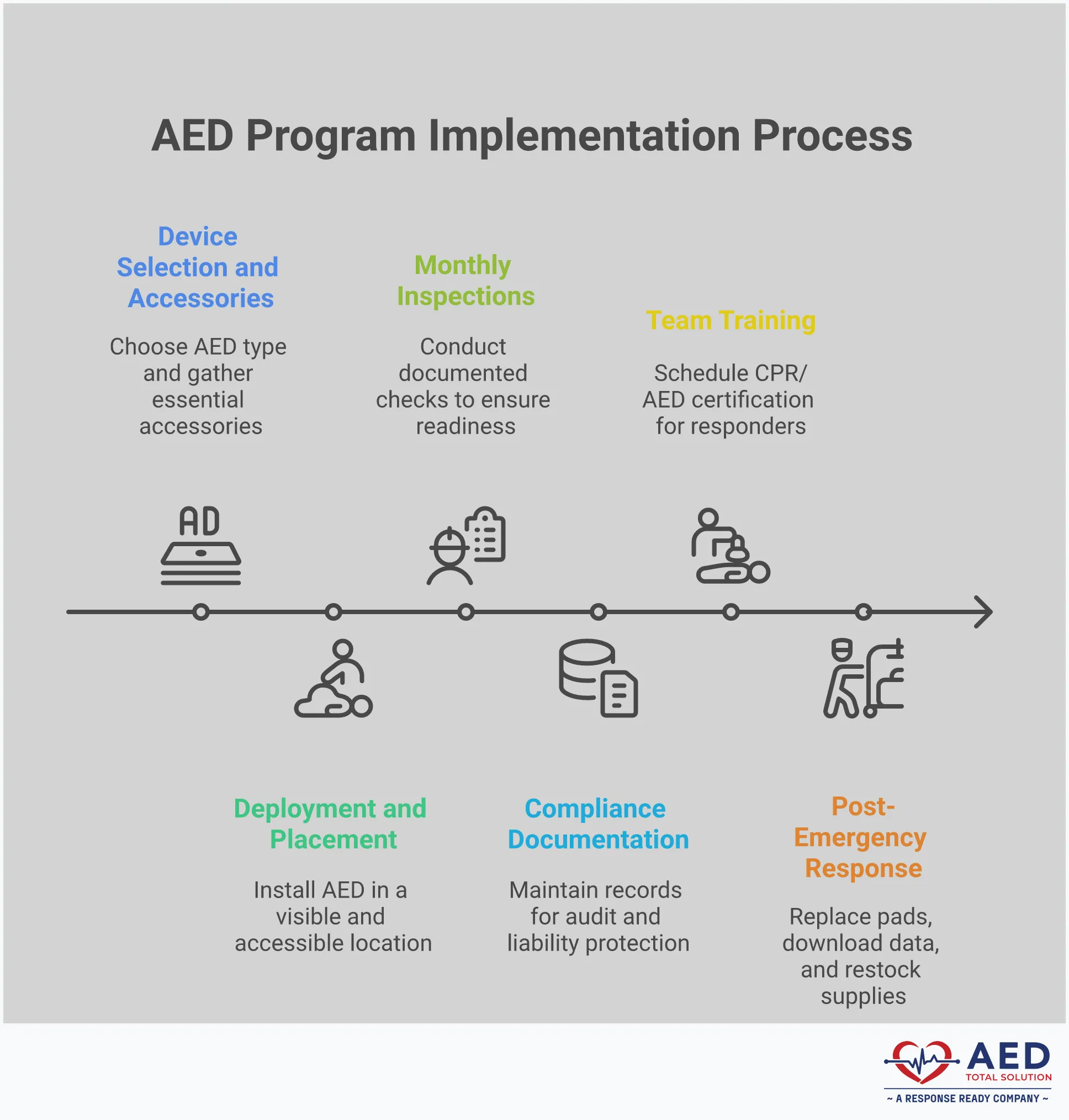
Proper documentation is the backbone of a compliant AED program. You need a clear, consistent record of everything related to your device. This includes tracking routine inspections, battery and electrode pad expiration dates, and any software updates from the manufacturer. If the AED is ever used, you must document the event thoroughly. These records are your proof that you’ve done everything right. They are essential for passing audits and protecting your organization from liability. Managing this paperwork can be overwhelming, which is why many organizations rely on a comprehensive program management service to handle the details for them.
How to Manage Your AED Program Effectively
Having an AED on-site is a critical first step, but the real responsibility lies in making sure it’s ready to work when you need it most. A well-managed AED program isn’t just about compliance; it’s about confidence. It ensures your device is functional, your team is prepared, and your organization is protected. Without a solid plan, even the best AED can become just a box on the wall.
Effective AED management involves three core components: a consistent inspection routine, diligent tracking of supplies, and clear program oversight. Many organizations struggle to juggle these tasks, leading to expired equipment and gaps in readiness. Creating a structured approach removes the guesswork and ensures every device is accounted for and ready for an emergency. This isn’t just an administrative task—it’s a vital part of your overall safety strategy. A comprehensive AED program management plan is the best way to make sure your investment in safety pays off when seconds count.
Setting Up a Regular Inspection Schedule
An AED can’t be a “set it and forget it” device. Regular inspections are essential to confirm it’s ready to perform. Many organizations struggle to manage their AED programs effectively, which can lead to costly oversights and equipment that fails during an emergency. Your inspection schedule should be consistent—monthly checks are a common best practice—and meticulously documented.
During each check, you should verify that the AED’s status indicator shows it’s ready for use, check that supplies like pads and rescue kits are present and intact, and ensure the device is visible and accessible. This simple routine can catch issues like a low battery or missing supplies before they become a problem. A documented inspection log is also crucial for demonstrating compliance and due diligence.
Why You Must Track Battery and Pad Expiration
The single most common reason for an AED to fail is a dead battery. Both batteries and electrode pads have a limited shelf life, and using expired components can render the device useless. In fact, many state regulations, like California’s Health and Safety Code, require that you maintain and test your AED according to the manufacturer’s guidelines and keep records of all maintenance and expiration dates.
For one or two devices, a simple calendar reminder might work. But as your program grows, tracking these dates across multiple locations becomes complex. It’s vital to have a reliable system for monitoring the expiration dates for every set of pads and every battery in your inventory. This ensures you can order and install replacement parts well before they expire, keeping your entire fleet of AEDs ready to go.
Maintaining Oversight of Your AED Program
Proper oversight is the glue that holds your AED program together. It means having a clear person or team responsible for ensuring everything from inspections to training records is handled correctly. Without this accountability, even the best-laid plans can fall apart. Organizations that fail to meet regulatory requirements for AED management may face significant legal liabilities and penalties.
This is where a partner can make all the difference. An AED readiness partner acts as an extension of your safety team to ensure your organization is fully prepared. They handle the tracking, documentation, and compliance headaches for you. This approach not only reduces your administrative burden but also provides peace of mind that an expert is keeping your program on track, audit-ready, and prepared to save a life.
Implementing an AED Program in a Large Organization
Setting up an AED program across a large organization involves more than just buying a few devices; it requires a strategic plan. It starts with a thorough assessment to determine how many AEDs you need and where they should go—considering high-traffic areas, remote corners of your facility, and emergency response times. From there, you can build a realistic budget that covers not just the devices, but also cabinets, signage, and ongoing maintenance. The real key to success is establishing a robust management routine. This means designating a program champion to oversee regular inspections, track supply expirations across all locations, and ensure your team receives proper CPR and AED training. A well-documented plan not only ensures compliance but also gives your entire organization the confidence that you’re prepared for an emergency. For complex, multi-location setups, partnering with a program management service can simplify every step, from initial placement to long-term readiness.
Finding the Right AED Training and Support
An AED is a powerful tool, but its effectiveness depends on the people prepared to use it and the program in place to support it. Simply mounting a device on the wall isn’t enough to create a life-saving resource. Building a truly response-ready program means ensuring your team is trained, confident, and supported long after the initial purchase. This involves finding the right certification programs to build skills, partnering with experts to manage the logistics, and having a plan for ongoing support when you need it most.
When an emergency happens, you want a team that can act without hesitation and a program that you know is compliant and ready. Let’s walk through how to set up this crucial support system for your organization. It’s about creating a culture of preparedness where everyone knows their role and has the resources they need to save a life. A well-supported AED program protects your people and your organization by ensuring every detail, from training to maintenance, is handled correctly. This proactive approach turns your AED from a piece of equipment into an active, life-saving program that gives everyone peace of mind. It closes the gap between having an AED and being ready to use it effectively.
How to Find Local Certification Programs
The best way to build confidence is through hands-on training. Practicing with a training device helps develop muscle memory and reduces the anxiety someone might feel during a real emergency. Reputable organizations like the American Heart Association and the American Red Cross offer CPR and AED certification courses across the country. These programs teach participants how to recognize the signs of sudden cardiac arrest, perform high-quality CPR, and use an AED correctly. Many providers can even bring the training directly to your workplace, which is a convenient way to get your entire team certified together. Investing in training empowers your staff to become immediate responders, ready to take action when every second counts.
Should You Use an AED Program Management Partner?
Managing an AED program involves more than just tracking one or two expiration dates. Many organizations struggle with the complexities of inspections, compliance documentation, and readiness checks, especially across multiple locations. This is where a dedicated AED program management partner can make all the difference. Think of them as an extension of your safety team, handling all the behind-the-scenes work to ensure your devices are always ready and compliant. A good partner will manage everything from routine inspections and supply replacements to recall tracking and audit-ready reporting. This frees up your internal resources and gives you confidence that your program is being managed by experts.
Centralized Online Tracking and Automated Alerts
For organizations with more than one AED, trying to keep track of everything on a spreadsheet is a recipe for disaster. A key benefit of a management partner is access to a centralized, web-based system that monitors your entire fleet of devices in one place. This software acts as your digital command center, sending automated alerts for upcoming battery and pad expirations, scheduled inspections, and other critical tasks. Instead of relying on manual calendar reminders that can easily be missed, you get proactive notifications that ensure nothing falls through the cracks. This technology provides a clear, at-a-glance view of your program’s health, making it easy to spot and address any issues before they become a liability.
Compliance and Registration Management
Navigating the maze of local and state AED regulations can feel like a full-time job. Many states require you to register your AEDs with local emergency medical services (EMS) so that 911 dispatchers know a device is available nearby and can direct a bystander to it. A program management partner takes this critical administrative task off your plate. They handle the initial registration and ensure it stays current, making sure you meet all local requirements. This service not only saves you time and prevents compliance headaches but also integrates your AED into the wider community emergency response system, strengthening the chain of survival for everyone.
Post-Event Support and Data Management
The moments after an AED is used can be chaotic and stressful. A full-service management partner provides crucial post-event support to get your program back up and running smoothly. If you use your AED, they will often provide a loaner device while yours is being serviced so you’re never without protection. They will also download the event data from your AED, which is then reviewed by a physician to ensure proper protocols were followed. This medical oversight is often a legal requirement and provides valuable feedback. The partner also handles restocking the used supplies and completing all necessary incident reports, ensuring your program is ready for the next emergency without delay.
On-Site Maintenance and Training Services
While software alerts are helpful, they don’t replace the need for hands-on attention. Some management partners offer on-site services to provide an extra layer of assurance and accountability. This can include annual visits where a technician physically inspects each AED, replaces expiring batteries and pads, performs any necessary software updates, and ensures rescue kits are fully stocked. This white-glove approach verifies that your devices are not just monitored, but truly response-ready. It closes the loop between a digital reminder and the physical task, giving you complete confidence that your equipment is in perfect working order when it matters most.
Comparing Program Management Costs and Models
When you start looking at AED program management, you’ll find that services and pricing can vary quite a bit. The cost often depends on the level of support you need. Some companies offer basic, software-only tracking tools for a low monthly fee per device. These systems are great for sending automated reminders but still require you to handle all the physical tasks, like inspections and supply replacements, yourself. This model can work for smaller organizations with the internal resources to manage the hands-on work, but it leaves the responsibility for follow-through entirely on your team, which can lead to gaps in readiness.
On the other end of the spectrum are comprehensive, full-service programs. These solutions bundle software tracking with hands-on support, post-event services, compliance guarantees, and medical oversight into one package. While the initial cost may be higher, this all-inclusive approach removes the administrative burden and reduces the risk of human error. When comparing options, look beyond the price tag and consider the total value. A white-glove service like AED Total Solution provides peace of mind by ensuring every aspect of your program is expertly managed, protecting your investment and, more importantly, your people.
Getting the Ongoing Support You Need
Your AED program doesn’t end after installation and initial training; it requires continuous oversight to remain effective. Ongoing support is crucial for handling the unexpected. What happens after your AED is used in an emergency? Who do you call if a device starts beeping unexpectedly? A comprehensive support plan ensures you have answers to these questions. This includes post-event services like data downloads and device servicing, as well as proactive reminders for replacing expiring pads and batteries. This level of support is what turns your AED from a passive safety device into an active, life-saving program. For more answers to common questions, you can always check out a detailed AED FAQ page.
Related Articles
- Top AED Program Management | AED Program Management
- Top AED Program Management | AED Program Management
- Top AED Program Management | AED Program Management
- Top AED Program Management | AED Program Management
- Top AED Program Management | AED Program Management
Frequently Asked Questions
What’s the difference between sudden cardiac arrest and a heart attack? It’s easy to confuse the two, but they are very different problems. A heart attack is a “plumbing” issue where a blockage stops blood flow to the heart muscle. The person is usually awake and can talk. Sudden cardiac arrest (SCA) is an “electrical” issue where the heart’s rhythm becomes chaotic and it suddenly stops beating effectively. The person collapses and is unresponsive. An AED is designed to correct this electrical problem, which is why it’s the only tool that can restart a heart during SCA.
Can I hurt someone or get in legal trouble for using an AED? This is a common fear, but you can rest assured the answer is no. AEDs are designed with powerful safety features that prevent you from harming someone. The device analyzes the person’s heart rhythm and will only advise a shock if it detects a life-threatening arrhythmia. It is impossible to accidentally shock someone who doesn’t need it. Additionally, Good Samaritan laws in all states provide legal protection for bystanders who act in good faith to help someone in an emergency.
How often do I need to replace the pads and battery? The replacement schedule depends on the specific model of your AED, but there are general guidelines. Electrode pads typically need to be replaced every two years or after a single use. Batteries have a longer lifespan, usually lasting between two and five years. Keeping track of these dates is one of the most critical parts of managing an AED program, as an expired battery is the most common reason for a device to fail during a rescue.
Why can’t I just buy an AED and forget about it? An AED requires ongoing attention to ensure it’s ready when an emergency strikes. Think of it like a fire extinguisher—it needs regular checks to be effective. Batteries and pads expire, and state laws often require documented monthly inspections to ensure the device is functional and accessible. Without a management plan, you risk having a device that won’t work when you need it most, and you could fall out of compliance with local regulations.
What should I do after the AED has been used in an emergency? After an emergency response, your AED needs immediate attention to be ready for the next event. The single-use electrode pads must be replaced right away. You should also contact your program manager or the device manufacturer to have the event data downloaded for medical review. The device will also need to be inspected and serviced to ensure it is properly restocked and returned to a ready state.