


That spreadsheet you use to track your AEDs is a liability waiting to happen. Relying on manual logs and sticky notes is a recipe for human error. A missed inspection or an expired battery can render a device useless in an emergency, exposing your organization to serious risk. This is exactly the problem AED compliance management software is built to solve. This type of AED software replaces guesswork with a centralized system for AED compliance tracking with automated reminders. It ensures every device is ready, giving you confidence that your program is prepared to save a life.
Key Takeaways
- Go Beyond Spreadsheets: Relying on manual tracking for AEDs is a major liability. The right software automates alerts for expiring supplies and missed inspections, creating an audit-ready record that proves your program is compliant and ready.
- Focus on Actionable Oversight: The best software provides more than just data storage. Look for essential features like a centralized dashboard for multi-location views, mobile inspection logs, and automated alerts that actively prevent compliance failures.
- Choose Your Level of Support: Decide whether you need a simple software tool for internal management or a full-service partner. A comprehensive service handles everything from medical direction to compliance reporting, which is ideal for organizations wanting to minimize their administrative workload.
Get certified in CPR

CPR & AED Training
3-hour in-person training with a 2-year nationally recognized certification.
CPR, AED & First Aid Certification
Instructor-led on-site. Practice on real manikins and AED trainers.
What Is AED Compliance Management Software?
Think of AED compliance management software as your digital command center for every automated external defibrillator in your organization. Instead of relying on spreadsheets, sticky notes, or memory to keep track of your life-saving devices, this software automates and organizes the entire process. At its core, it’s a tool designed to ensure your AEDs are always ready for an emergency and that your program meets all legal requirements.
This type of software helps you manage everything from routine inspections and maintenance schedules to tracking the expiration dates of batteries and electrode pads. It sends you reminders when a task is due, logs every check and update, and keeps a detailed record of your program’s health. For organizations with AEDs spread across multiple floors or locations, it provides a single, clear view of every device. A comprehensive AED program management system goes beyond just software; it combines this technology with expert oversight to make sure nothing ever falls through the cracks, giving you confidence that your equipment is compliant and ready to use when seconds count.
The Critical Role of AEDs in Sudden Cardiac Arrest
Automated External Defibrillators (AEDs) are absolutely essential for saving lives during a sudden cardiac arrest. These devices deliver a life-saving shock to restore a normal heart rhythm, but their effectiveness hinges entirely on one thing: readiness. An AED with an expired battery or used electrode pads is just a box on the wall. As experts point out, a device that isn’t properly maintained might not work in an emergency, putting lives at risk. This is why simply purchasing a device isn’t enough. Because AEDs are classified as medical devices, they come with legal requirements for medical oversight and routine maintenance. Ensuring every unit is compliant and ready to use is a significant responsibility, especially for organizations managing multiple locations.
How It Works and Why It’s Essential
AED compliance software streamlines all the critical tasks required to maintain your devices. It allows you to schedule and log monthly inspections, receive automated alerts for upcoming battery and pad expirations, and maintain a complete history of every action taken for each AED. This matters because an AED with an expired battery or dried-out pads is useless in an emergency.
The software creates a reliable system of record, proving that you are properly maintaining your equipment. This documentation is essential for staying compliant with state and local regulations. By simplifying these maintenance duties, the software ensures your AEDs are not just present, but are truly prepared to save a life at a moment’s notice.
Does Your Organization Need AED Software?
Simply owning an AED isn’t enough—you have a responsibility to maintain it. Failing to meet regulatory requirements can expose your organization to significant legal liabilities and fines. More importantly, it can lead to a device failing during a sudden cardiac arrest emergency. AED compliance software helps you build a strong, defensible emergency response program by creating a framework for proper oversight.
It closes the gaps left by manual tracking, which is often prone to human error. For any organization, but especially those with multiple devices, this software provides the structure and accountability needed to manage risk effectively. It’s about protecting your people, protecting your organization, and ensuring you’re prepared for the worst-case scenario.
Managing Programs in Large Organizations
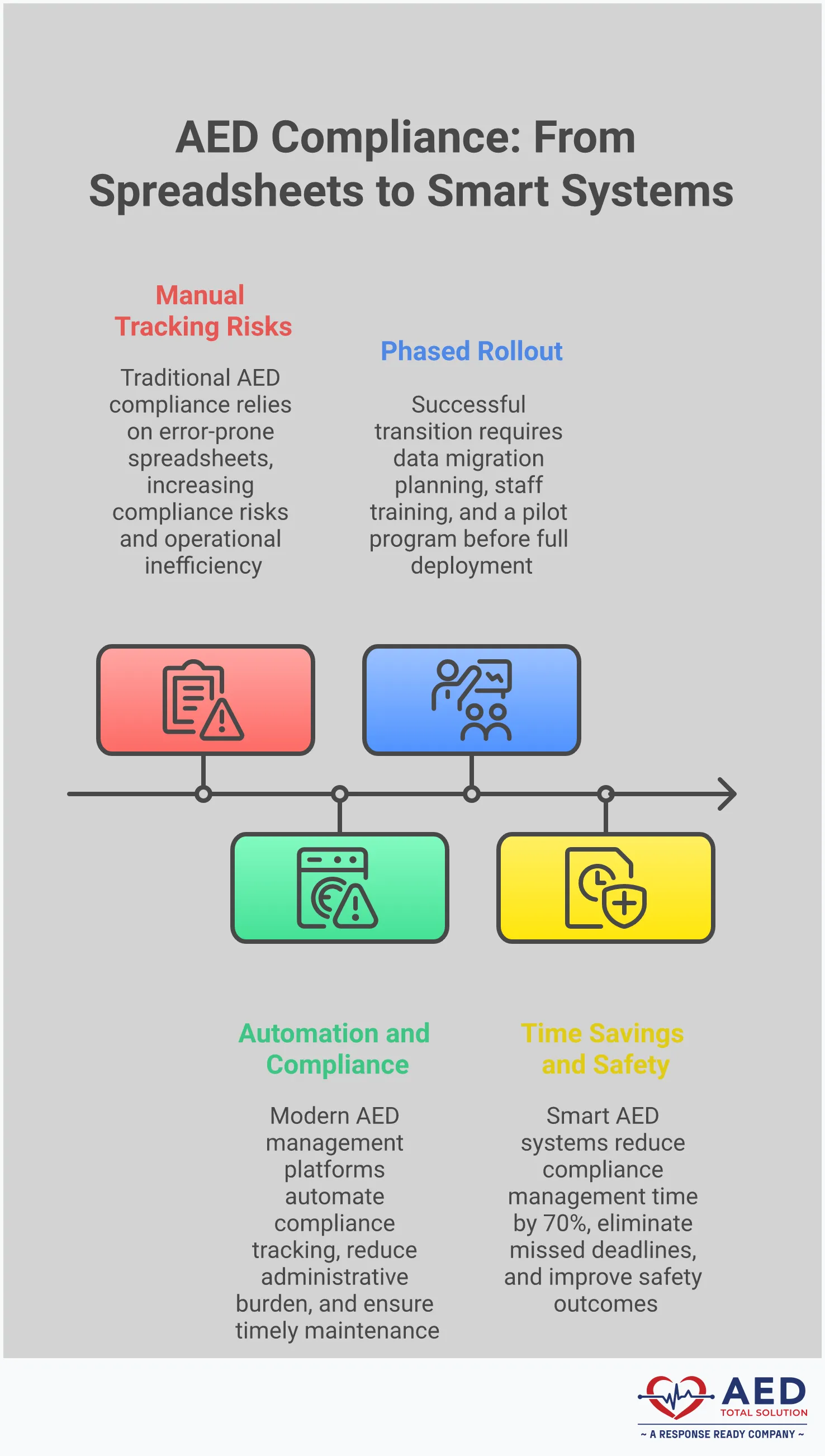
When you’re responsible for dozens or even hundreds of AEDs across a large campus or within multiple departments, the complexity can be overwhelming. Different device models, varying purchase dates, and decentralized oversight can create significant compliance gaps. This is where the right software becomes indispensable. It centralizes your entire inventory, allowing you to manage any number of AEDs from any brand in one place. A comprehensive AED program management system takes this a step further by pairing powerful software with expert oversight, ensuring that no detail—from a single expiring battery to a missed inspection—ever falls through the cracks. This integrated approach provides the structure needed to maintain readiness at scale.
Overseeing Devices in Multiple Locations
How can you be certain the AED in your satellite office three states away was inspected this month? For organizations with a distributed footprint, maintaining consistent oversight is a major challenge. AED compliance software provides a single, clear dashboard view of every device, no matter its physical location. This allows you to confirm inspection status, track supply expirations, and pull compliance reports from one central hub. The software creates a reliable and defensible system of record, which is critical for demonstrating due diligence and meeting state and local regulations. By simplifying remote maintenance duties, it ensures every AED in your network is not just on the wall, but is truly prepared to save a life.
Are You Meeting Your Legal AED Obligations?
Placing an AED in your facility is a critical first step, but your responsibility doesn’t end there. Owning an AED comes with a set of legal duties designed to ensure the device is always ready to save a life. While the specifics can feel complex, they all point to a single goal: readiness. Failing to maintain your AED and keep proper records can create significant liability risks for your organization.
Understanding your obligations is key to building a compliant and effective emergency response program. These responsibilities generally fall into three main categories: meeting federal guidelines, following state-specific laws, and maintaining meticulous records. Getting a handle on these areas protects your organization and, more importantly, ensures your AED is a reliable asset in a cardiac emergency. A well-managed program gives you confidence that you’re prepared for the worst-case scenario and have taken the right steps to meet your legal duties.
Staying Compliant with OSHA Guidelines
While the Occupational Safety and Health Administration (OSHA) doesn’t require AEDs in most workplaces, it does have expectations if you choose to provide them. OSHA views an AED as part of your overall first aid and emergency response plan. Because federal law classifies AEDs as medical devices, they require a doctor’s oversight to ensure they are managed correctly. This is often called medical direction, where a physician signs off on your program protocols.
Properly managing your AED program, including regular checks and maintenance, is also essential for protection under your state’s Good Samaritan laws. These laws are designed to shield people who provide emergency aid in good faith, but that protection often assumes the equipment used was properly maintained.
Understanding Your State’s AED Regulations
AED laws can vary significantly from one state to another, creating a complicated compliance landscape, especially for organizations with multiple locations. As an AED owner, you are legally responsible for making sure your device is ready to respond in an emergency. This responsibility often includes specific actions mandated by state law, such as registering your device with local emergency services, performing and logging routine inspections, and ensuring proper signage is in place so the AED is easy to find.
Some states also have rules about where AEDs must be placed and what kind of training your staff needs. Keeping up with these local requirements is non-negotiable for compliance and is a core function of any good AED program management service.
How to Maintain Audit-Proof AED Records
If an incident occurs, having clear, organized documentation is your best proof that you’ve managed your AED program responsibly. Your records should tell the whole story of your device’s life, from its initial placement to every inspection and maintenance task. This includes tracking battery and pad expiration dates, logging the results of monthly readiness checks, and keeping a record of which team members have completed their CPR and AED training.
With modern AED management software, keeping these records is no longer a chore. It’s simple to see a history of previous inspections, get reminders for upcoming maintenance, and pull a complete report in minutes. This documentation is crucial for passing any audit and demonstrating that your organization is committed to readiness.
Key Features to Look for in AED Software
When you’re looking for the right software to manage your AED program, the options can feel overwhelming. At their core, these platforms are designed to make sure your devices are ready to use in an emergency while keeping you compliant with legal requirements. But not all software is built the same. The best systems move beyond simple spreadsheets and offer dynamic features that actively protect your organization and simplify your workload. Think of it as the difference between a basic to-do list and a smart assistant that handles the details for you.
A truly effective platform automates critical tasks, provides a clear view of your entire program, and keeps an organized record of every action. These are the non-negotiable features that separate a simple tracking tool from a comprehensive compliance management solution. They work together to close compliance gaps, reduce administrative headaches, and give you confidence that your program is always prepared.
Never Miss a Check with Automated Alerts
It’s easy for important dates to slip through the cracks, especially when you’re managing multiple AEDs or job responsibilities. Automated maintenance alerts are your program’s safety net. Instead of relying on a calendar reminder you might accidentally dismiss, the software sends proactive notifications for upcoming monthly inspections, expiring supplies, and other essential tasks. This simple feature helps prevent the most common reason for AED failure: human error. By getting timely reminders sent directly to you or your team, you can be confident that critical checks are never forgotten. This ensures your devices are always prepared for an emergency and that your program remains compliant without constant manual oversight.
Customizable Alert Timelines
A one-size-fits-all reminder system just doesn’t cut it for managing something as important as an AED. That’s why customizable alert timelines are such a critical feature. This allows you to tailor notifications to fit your organization’s unique operational rhythm. Instead of getting generic pings that are easy to ignore, you can set specific schedules for monthly inspections, battery replacements, and pad expirations. For example, a school might adjust its inspection schedule during summer break, while a retail business can align checks with its slower seasons. This level of control ensures that alerts are always relevant and actionable. A great AED management program sends these proactive notifications automatically, making it nearly impossible to forget a critical task and ensuring your devices are always ready to respond when it matters most.
Effortless Inspection Scheduling and Logging
Regular inspections are a cornerstone of any successful AED program. Good software doesn’t just remind you to do them; it guides you through the process. It provides digital checklists to ensure every step—from checking the status indicator to confirming supplies are present—is completed correctly. Many platforms allow you to log inspections directly from a mobile device, sometimes even prompting you to take photos for visual verification. This creates an accessible, time-stamped digital log for every device in your fleet. This audit-ready trail is invaluable for demonstrating compliance and protecting your organization from liability, proving that you have a consistent and thorough AED maintenance protocol in place.
Track Battery and Pad Expirations Automatically
An AED with an expired battery or dried-out electrode pads is useless in an emergency. These components have a limited shelf life, and manually tracking their expiration dates across multiple devices is a recipe for disaster. Quality AED software automates this entire process. The system logs the installation date and shelf life of every battery and set of pads, automatically alerting you months before they are set to expire. This gives you plenty of time to order and install replacement supplies without any last-minute panic. This feature is fundamental to ensuring your AED is always response-ready when a life is on the line.
Confirm AED Readiness from Anywhere
Modern AEDs are getting smarter, and your management software should be, too. Many new devices can connect to Wi-Fi and perform their own daily, weekly, and monthly self-tests. Remote readiness monitoring allows your software to receive this data automatically. Instead of waiting for a person to physically inspect the device, the system can immediately flag an issue—like a low battery or a hardware fault—the moment the AED detects it. This is a huge advantage for organizations with devices spread across large facilities or multiple locations. It provides real-time confidence that your AEDs are functional and compliant, closing the gap between scheduled inspections.
See Everything on One Centralized Dashboard
Managing an AED program, especially one with multiple devices, requires a bird’s-eye view. A centralized dashboard brings all your critical information into one place, giving you an at-a-glance look at the status of your entire program. You can quickly see which devices are compliant, which need attention, and what tasks are overdue. When it’s time for an audit or a management review, you can generate comprehensive reports with just a few clicks. This level of organization not only simplifies compliance but also gives you the data you need to make informed decisions about your emergency preparedness strategy, reducing your organization’s overall liability and risk.
Easily Track Your Team’s Training Certifications
A ready AED is only half the equation; you also need trained and confident responders. A complete AED management platform should include features for tracking your team’s CPR and AED certifications. The software can store training dates, certificate copies, and expiration dates for each team member. Just like with device supplies, it can send automated reminders when certifications are about to expire, ensuring your response team is always qualified and prepared. This feature helps you maintain a fully-rounded program that prioritizes both the equipment and the people who will use it, demonstrating a deep commitment to workplace safety.
Manage Any Brand of AED
Your organization might have a mix of AEDs from different manufacturers, acquired over several years. This can create a logistical nightmare, forcing you to juggle multiple maintenance schedules and supply types. The best software solves this by being brand-agnostic. It allows you to manage your entire fleet—whether it includes devices from Zoll, Philips, or Cardiac Science—all within a single, unified system. This feature is essential for creating a consistent standard of readiness across your whole organization. Instead of wrestling with different requirements for each model, you can apply the same inspection protocols and oversight to every device, simplifying compliance and ensuring no AED gets overlooked, regardless of its brand.
Order Supplies Directly Through the Platform
When your software alerts you that electrode pads are about to expire, what’s the next step? A truly efficient system closes the loop by letting you order replacements directly through the platform. This integrated feature saves you valuable time and prevents costly mistakes, like ordering the wrong pads for a specific AED model. Instead of getting an alert and then having to search a separate website, you can resolve the issue in just a few clicks. This seamless process ensures that your life-saving equipment experiences minimal downtime. Having a direct line to order AED supplies turns a multi-step chore into a simple, streamlined action, keeping your program ready at all times.
Schedule CPR and AED Training Classes
Beyond tracking certification dates, a comprehensive platform should help you proactively manage your team’s training needs. The ability to schedule CPR and AED training directly through the software is a game-changer for maintaining a skilled team of responders. This feature connects your equipment readiness with your human readiness, ensuring you always have confident people prepared to act in an emergency. It simplifies the logistics of coordinating classes, sending reminders to participants, and updating certification records once the training is complete. By integrating training management into your AED compliance software, you create a truly holistic safety program that addresses every component of a successful emergency response.
Protect Your Investment with GPS Tracking
An AED is a significant investment in safety, but its value is lost if it’s stolen or moved without your knowledge. This is a real concern for devices placed in public or easily accessible areas. Some advanced AED management platforms offer GPS tracking to protect your assets. If a device is moved from its designated location, the system can send you an immediate alert and provide its real-time location. This technology not only helps you recover stolen equipment but also ensures that your AED is exactly where it needs to be when an emergency occurs. It provides an extra layer of security and peace of mind, safeguarding both your investment and your ability to respond.
Access an Up-to-Date Law Library
AED regulations are not only complex, but they also change over time and vary significantly from state to state. For organizations operating in multiple locations, staying on top of these legal requirements can feel like a full-time job. A key feature of top-tier AED software is an integrated, up-to-date law library. This resource provides clear, accessible information on the specific compliance obligations for every state where you have a device. It removes the guesswork from managing your legal duties, helping you stay informed about new legislation or changes to existing rules. This turns your software into more than just a management tool—it becomes an essential resource for mitigating risk and ensuring your program is always on solid legal ground.
Comparing the Best AED Management Software
Once you start looking, you’ll find several software options designed to help you keep your AED program on track. While they share the common goal of ensuring readiness and compliance, they differ in their approach and the level of support they provide. Some are straightforward tracking tools that put the management responsibility on you, while others offer a more hands-on partnership. Let’s walk through four of the top platforms so you can see how they stack up.
AED Total Solution
Think of AED Total Solution as more than just software—it’s a complete, white-glove service. This option is built for organizations that want to hand off the complexities of AED management and focus on their core operations. Instead of just giving you a tool to track everything yourself, their team manages every detail for you. This includes ensuring you meet all state requirements, monitoring your devices, tracking accessory expirations, and handling documentation. It’s an end-to-end AED program management system that combines smart software with expert oversight to make sure your program is always compliant and response-ready without adding to your team’s workload.
AEDSafetrack by Cardiac Life
AEDSafetrack is a dedicated online tool designed to help you manage your AED program and stay compliant with local and state laws. It serves as a central hub for tracking all the important information about your devices. The platform is focused on giving you the features you need to oversee your own program effectively, helping you reduce liability by making sure all compliance requirements are met. If you’re looking for a straightforward software solution to organize your data and keep your AEDs ready for use, AEDSafetrack provides the essential tools to get the job done.
LifeShield AED Compliance Management
LifeShield is a digital management tool that zeroes in on one of the most critical parts of AED readiness: making sure your device is always operational. Its primary function is to simplify the tracking of AED pads and batteries, sending you reminders before they expire so you can replace them in time. This focus on consumables is key, as an AED with expired pads or a dead battery is useless in an emergency. LifeShield is a great fit for organizations that need a reliable system specifically for monitoring the lifecycle of their AED accessories to ensure their devices are always ready to save a life.
Arch Online AED Management Program
The Arch Online AED Management Program is another strong software option for organizations that want to handle their AED oversight internally. This platform gives you an easy-to-use online portal to track the status of all your AEDs. You can monitor everything from serial numbers to the condition of batteries and pads, all in one place. The system is designed to help you make sure your program follows all the necessary rules and that your devices are prepared for an emergency. It’s a solid choice for teams that want a clear, centralized dashboard to manage their AED inventory and maintenance schedules.
Beyond Software: What Full-Service AED Program Management Includes
While software is a powerful tool, some organizations need more than just a digital platform—they need a true partner. Full-service AED program management combines technology with hands-on oversight, taking the entire burden of compliance and readiness off your plate. This white-glove approach is ideal for businesses that want to eliminate administrative work and ensure every detail is handled by experts. Instead of you logging into a system to manage tasks, a dedicated team actively manages your program for you. This comprehensive service ensures your AEDs are not just monitored, but are meticulously maintained, documented, and always ready for an emergency, giving you complete peace of mind.
On-Site Maintenance and Professional Inspections
A full-service solution often includes professional, on-site visits to physically inspect your equipment. During these checks, a technician will do more than just glance at the status indicator. They will perform a thorough assessment of each AED, replace expiring batteries and pads, update device software if needed, and confirm that your rescue kits are fully stocked and accessible. This hands-on approach provides an invaluable layer of assurance that goes far beyond what a digital checklist can offer. It guarantees that your devices are not only compliant on paper but are physically prepared to function correctly in a high-stress emergency.
Automatic EMS Registration and Medical Direction
Navigating the legal requirements for AED ownership can be a major headache. A key benefit of a full-service program is that it handles all the necessary paperwork for you. This includes automatically registering each of your devices with local EMS agencies as required by state law, creating a verified record that you’ve met your obligations. Furthermore, these programs provide the required medical direction, where a licensed physician oversees your program, provides a prescription for each device, and signs off on your emergency response protocols. This ensures your program is medically sound and legally compliant from day one.
Ensuring Medical Oversight in All 50 States
For organizations with locations in multiple states, maintaining compliance is especially challenging because AED laws vary widely. A comprehensive program management service solves this by providing medical direction from licensed physicians in all 50 states. This means you have a single partner who can ensure every device in your portfolio, no matter where it’s located, meets the specific requirements of that state. This centralized oversight simplifies management, reduces risk, and guarantees a consistent standard of readiness across your entire organization, saving you from having to become an expert in dozens of different state regulations.
Dedicated Post-Emergency Support
What happens after your AED is used is just as critical as being ready for the event itself. A full-service partner provides immediate post-event support to guide you through the necessary steps. As soon as an event is reported, they spring into action to ensure your program doesn’t miss a beat. This includes everything from providing a loaner device to handling data downloads and restocking your original AED. This support system is designed to minimize device downtime and handle the complex post-use logistics, allowing you to focus on your team while your partner ensures you’re prepared for another emergency.
Receiving a Loaner Device Immediately
After an AED is used in a rescue, it must be taken out of service to have its data downloaded and its supplies replenished. To prevent a gap in your emergency coverage, a top-tier management service will immediately ship a loaner AED to your location, often overnight. This ensures your facility remains protected while your original device is being serviced. You never have to worry about being without a functional, life-saving device, providing continuous safety for your employees and visitors while the necessary post-event procedures are completed.
Assistance with Data Downloads and Reporting
The data recorded by an AED during a cardiac arrest event is vital medical information that needs to be reviewed by a physician. A full-service partner manages this entire process for you. They coordinate the data download from the device and submit it for medical review. They also assist in filing any reports required by local EMS or other authorities. This removes a complex and often stressful administrative burden from your team, ensuring all post-event protocols are handled correctly and efficiently by experienced professionals.
Servicing and Restocking Your Used AED
Once the data has been retrieved, your original AED needs to be prepared to go back into service. Your program partner will handle the complete refurbishment process. This includes a thorough inspection of the device, cleaning, and restocking it with a fresh set of electrode pads and a new battery if necessary. After it’s been fully serviced and confirmed to be response-ready, the AED is returned to you. This end-to-end process ensures your equipment is properly maintained and ready for deployment without you having to manage any of the logistics.
Responsive Customer and Technical Help
One of the biggest advantages of a full-service model is having access to a team of experts who are ready to help. Instead of submitting a ticket to a faceless help desk, you get a dedicated partner who understands your program’s specific needs. This team can provide guidance on changing AED regulations, answer technical questions about your devices, and offer advice on safety and liability matters. It’s a true partnership focused on giving you the support you need to run a confident and effective emergency response program.
Access to a 24-Hour Support Helpline
Emergencies don’t stick to a 9-to-5 schedule, and questions about your life-saving equipment can arise at any time. Many full-service providers offer access to a 24-hour helpline, so you can get answers and assistance whenever you need them. Whether you have an urgent question about your AED’s status indicator or need guidance during a post-event situation, knowing that expert help is just a phone call away provides an essential layer of confidence and support for your entire team.
Proactive Phone Call Reminders for Missed Checks
Automated email alerts are helpful, but they can easily be missed or ignored in a crowded inbox. A full-service partner goes a step further to ensure nothing falls through the cracks. If a scheduled monthly inspection is missed, they won’t just send another email—they’ll make a phone call to follow up with your designated contact. This proactive, human touch provides an extra layer of accountability, ensuring that essential maintenance checks are always completed and your program remains fully compliant and ready.
RECOMMENDED
HeartSine Samaritan 350P AED Package
Compact, fully-automatic AED designed for first-time responders. Pads, battery, carry case and wall sign included.
How Much Does AED Compliance Software Cost?
When you start looking at AED compliance software, you’ll find that pricing isn’t one-size-fits-all. The cost typically depends on two main factors: the number of AEDs you need to manage and the level of service included. Some platforms offer basic tracking software, while others provide a more hands-on, full-service approach that includes everything from medical oversight to managing replacement parts.
Think of it like this: you can buy the software and manage the program yourself, or you can partner with a service that handles the heavy lifting for you. The right choice depends on your team’s capacity, the number of devices you have, and how much risk you’re willing to take on internally. Understanding the different pricing structures is the first step to figuring out which solution fits your budget and your organization’s needs.
Breaking Down Common Pricing Models
Most AED compliance software is sold as a subscription, usually priced per AED, per year. This model is straightforward and makes it easy to calculate costs as you add more devices to your program. For example, some platforms like Arch Online AED Management start at around $149 per device annually. Others, like LifeShield, might be closer to $190 per device. You’ll also see tiered packages. A provider might offer a basic plan for simple online tracking and more expensive tiers that include essential services like medical direction and oversight. These packages allow you to choose a service level that matches your compliance requirements and budget.
Annual vs. Multi-Year Subscriptions
When choosing a subscription, you’ll often have the option to pay annually or commit to a multi-year plan. While an annual subscription offers flexibility, a multi-year agreement usually comes with a discount, which can be a smart move for long-term budget planning. The right choice really depends on how you view your AED program. If you’re just looking for a basic tool to try out, an annual plan might seem safer. However, if you see AED oversight as a permanent and critical part of your safety strategy, a multi-year subscription makes more sense. It locks in your pricing and solidifies your relationship with a provider, which is especially important if you’re opting for a comprehensive program management service that handles compliance for you.
How Top Platforms Compare on Price
As you compare options, you’ll notice a wide price range. A basic plan from a provider like AEDSafetrack might start as low as $50 per year, but this often only covers online tracking. Mid-range plans that include more comprehensive features and medical direction can run between $150 and $300 per AED annually. While it’s tempting to go for the lowest price, it’s critical to look at what’s included. A cheaper plan might leave you with significant compliance gaps, forcing you to manage critical tasks like tracking expiration dates and local regulations on your own. The goal is to find a platform that provides complete, audit-ready AED program management, not just a digital checklist.
Examples of Tiered Pricing Plans
When you look at specific plans, you’ll see this tiered approach in action. For instance, a basic plan like the one from AEDSafetrack by Cardiac Life might start around $50 per year, but it typically covers just online tracking. Stepping up, you’ll find options like the Arch Online AED Management Program at about $150 per device annually, or LifeShield AED Compliance Management for around $190, which offer more robust features for tracking supplies and readiness. While these tools are helpful, they still require you to do the work. This is where it’s important to distinguish between a software tool and a fully managed service. A comprehensive program management solution handles the oversight for you, ensuring nothing is missed and freeing up your team’s time.
How to Calculate Your Return on Investment
The cost of compliance software is more than just an expense—it’s an investment in safety and efficiency. To calculate the real ROI, consider the costs of not having a reliable system in place. Think about the administrative hours your team spends manually checking devices, logging inspections, and tracking expiration dates. Then, factor in the significant financial and legal risks of non-compliance, including fines and potential liability if an AED fails during an emergency. When you weigh these factors, the annual subscription fee for a robust management program often pays for itself by reducing administrative burden, closing compliance gaps, and giving you confidence that your AEDs are always ready to save a life.
What Problems Can AED Software Solve for You?
Managing an AED program involves much more than just mounting a device on the wall. It’s an ongoing commitment that includes routine inspections, tracking expiration dates for pads and batteries, maintaining records, and staying current with state and local laws. When you’re juggling these tasks manually with spreadsheets and calendar reminders, it’s easy for critical details to slip through the cracks, leaving your organization exposed. An AED with expired pads or a dead battery is no better than having no AED at all. This is where AED compliance software steps in to bridge the gap between good intentions and true readiness.
This technology is designed to automate and centralize every aspect of your AED program. Instead of reacting to expired supplies or missed inspections, you can proactively manage your devices to ensure they are always ready for an emergency. Good software brings clarity and control to your program, whether you oversee one device or hundreds across multiple locations. It streamlines tedious administrative tasks, ensures you meet all legal requirements, and ultimately gives you the confidence that your program is protecting both your people and your organization. It transforms AED management from a source of anxiety into a well-oiled, documented, and reliable safety function.
Spend Less Time on Administrative Tasks
If you’ve ever spent hours updating spreadsheets or chasing down colleagues for monthly inspection reports, you know how much time AED management can consume. Compliance software automates the most time-consuming parts of the job. It sends automatic reminders for upcoming battery and pad expirations and prompts designated staff to complete their routine readiness checks. Instead of relying on paper logs, your team can record inspection results directly on a mobile device, creating a clean, digital trail. This real-time data collection eliminates manual entry and gives you an instant overview of your program’s health. By handling the repetitive follow-ups and record-keeping, the software frees up your team to focus on other essential safety initiatives, turning AED maintenance from a manual chore into a simple, automated process.
Eliminate Dangerous Compliance Gaps
Staying compliant with AED regulations can feel like hitting a moving target. Requirements vary by state, and keeping track of everything from device registration to Good Samaritan laws is a significant challenge. An unmanaged AED program can easily fall out of compliance, creating serious liability for your organization. AED compliance software acts as your safety net. It helps you track every critical compliance detail in one place, from initial device registration with local EMS to ongoing maintenance checks required by law. The system sends alerts for performance checks and can help you stay informed about the latest AED legislation in your area. By creating a complete and accessible record of your program’s activities, the software ensures you have the documentation needed to prove compliance during an audit or inspection.
Preventing Unexpected Battery Drain
An AED’s battery won’t last forever, and a device with no power is just a plastic box on the wall during a cardiac arrest. Manually tracking expiration dates for batteries and pads, especially across multiple locations, is a recipe for failure. This is one of the most critical problems that AED software solves. It automates the entire process by logging the installation date and shelf life of every battery and set of pads. The system then sends you automated alerts months before they are set to expire, giving you plenty of time to order replacement supplies without any last-minute panic. This proactive approach ensures your device is always powered and ready to perform when a life is on the line.
Keeping Device Software Up to Date
Just like your phone or computer, some AEDs require periodic software updates to stay current. These updates aren’t for new features; they’re essential for complying with the latest resuscitation guidelines from medical experts. Staying up-to-date ensures your AED follows the most effective, evidence-based protocols for cardiac care. However, manufacturers don’t always make it easy to track these updates. This is another area where a robust management system helps. The software can track firmware versions and notify you when an update is available for your specific model, ensuring your device is always aligned with the current best practices. This is a key component of a full-service program management solution.
Easily Manage AEDs Across Multiple Locations
Managing AEDs across multiple offices, facilities, or even states adds another layer of complexity. Without a centralized system, it’s nearly impossible to get a clear picture of your entire program’s readiness. You’re left wondering if the AED in a satellite office was inspected this month or if its pads are about to expire. This is one of the biggest problems that AED program management software solves. It provides a single dashboard where you can see the status of every device in your inventory, no matter its physical location. You can assign responsibilities to local staff, track inspection completion rates by site, and identify issues before they become critical problems. This centralized oversight ensures consistency and accountability across your entire organization, making it simple to manage a growing AED program.
Protect Your Organization and Reduce Liability
An AED that fails during a sudden cardiac arrest emergency is more than a tragedy—it can also become a significant legal liability. If a device wasn’t properly maintained, your organization could be found negligent. Proving that you took every reasonable step to keep your AEDs in working order is your best defense. AED compliance software is a powerful risk management tool. It creates an audit-ready record of every inspection, battery replacement, and service event, demonstrating your commitment to due diligence. By ensuring your program adheres to manufacturer guidelines and state requirements, the software helps protect your organization from potential lawsuits. It provides peace of mind that you have not only provided life-saving equipment but have also responsibly managed it. This documented oversight is key to a defensible AED program.
How to Choose the Right AED Software for Your Needs
Selecting the right AED management software isn’t just about ticking boxes on a feature list. It’s about finding a solution that fits the unique operational and compliance needs of your organization. The best platform for a single-location gym will be different from what a multi-state corporation requires. The key is to look for a system that simplifies your workload, reduces your organization’s liability, and ultimately gives you confidence that your AEDs are ready to go at a moment’s notice.
Think of this as choosing a partner, not just a product. You need a system that can grow with you and a team that can provide expert guidance when you need it. As you evaluate your options, focus on four key areas: your organization’s scale, your budget and required features, the level of customer support you’ll need, and how the software will fit into your existing safety programs. Getting clear on these points will help you move beyond a simple tracking tool and find a comprehensive management solution that truly protects your people and your organization.
Do You Need a Single or Multi-Location Solution?
The complexity of managing an AED program grows exponentially with each new location. If you have a single site, you might think a basic spreadsheet will do, but a dedicated software solution still offers critical benefits like automated alerts and audit-ready documentation. For organizations with multiple locations, a robust platform is non-negotiable. You need centralized oversight to track device status, inspections, and supply expirations across every site from one dashboard. Without it, you’re left trying to manage a patchwork of spreadsheets and local contacts, creating significant compliance gaps and administrative headaches. The right software provides a single source of truth, ensuring every device meets the same standard of readiness, no matter where it is.
Finding the Right Features for Your Budget
When you look at pricing, it’s easy to focus on the monthly or annual fee. However, it’s more productive to think about the return on investment. The cost of a failed audit, a lawsuit stemming from a non-working device, or the administrative hours spent manually tracking everything far outweighs the price of a good software subscription. Most platforms offer tiered pricing, allowing you to choose a plan with the features you actually need. Don’t pay for an enterprise-level system if you only have two devices. Conversely, don’t skimp on essential features like remote monitoring or compliance reporting just to save a few dollars. The goal is to find a balance that provides total compliance and peace of mind within your budget.
Why Great Customer Support Matters
Customer support for AED software should go far beyond a simple IT help desk. You are managing a critical life-saving program, and you need access to compliance experts who can help you handle the details. When evaluating providers, ask about their support model. Do they offer medical oversight and a physician’s prescription, which are required in many states? Will they help you with state and local registration? A top-tier partner will act as an extension of your team, providing proactive guidance on changing regulations and ensuring your program follows all best practices. This level of hands-on support is what separates a basic tool from a complete management solution.
Does It Integrate with Your Existing Systems?
In this context, “integration” isn’t about connecting with other software—it’s about how seamlessly the platform integrates into your overall safety and compliance workflow. The system should work for you, not create more work. Can it send automated inspection reminders to the specific people responsible at each location? Does it generate clear, audit-ready reports that you can easily share with your leadership team or a safety inspector? A great platform will also allow you to track responder training and certification deadlines alongside your device maintenance, creating a single, unified hub for your entire emergency response program. This ensures nothing falls through the cracks.
What to Expect When Getting Started
Switching to a new system or starting an AED program from scratch can feel like a huge undertaking, but it doesn’t have to be. A great partner will guide you through every step, making the transition smooth and straightforward. The goal is to get your program running efficiently so you can have confidence that your devices are ready and compliant. Here’s a look at what the initial process typically involves.
A Look at the Typical Setup Process
Getting your AED program management software up and running is usually a quick and organized process. It starts with an initial consultation to understand your organization’s specific needs, including how many AEDs you have and where they are located. From there, your provider will help you gather and input all the essential information for each device into the system. This includes serial numbers, placement details, and maintenance histories.
The timeline can vary depending on the size of your program, but the goal is always to get you fully operational as soon as possible. With a full-service AED program management partner, much of this initial setup is handled for you. They’ll ensure every device is registered correctly and that your dashboard is configured to provide clear, at-a-glance readiness status from day one.
How to Get Your Team Onboard and Trained
Your AED program is only as strong as the people behind it. Bringing your team into the fold is a critical step. This involves assigning roles and responsibilities for routine inspections and ensuring everyone knows how to use the software to log their checks. The best platforms are intuitive, making it easy for team members to follow prompts and report on an AED’s status without extensive training.
Beyond the software, it’s essential to track CPR and AED certifications. Many management systems include features to monitor your team’s training status, sending reminders when certifications are about to expire. This ensures you not only have ready-to-use equipment but also a prepared team of responders, which is a key part of a successful emergency action plan.
Tips for a Smooth Data Migration
If you already have an AED program in place, you’re not starting from zero. You likely have records—even if they’re just in a spreadsheet—of your device locations, battery and pad expiration dates, and past inspection logs. A key part of the setup process is migrating this existing data into your new software. Don’t worry, you won’t have to spend hours on manual data entry.
Your provider should make this step painless. They will work with you to import all your historical data, ensuring a seamless transition without losing any important information. This process establishes a complete and accurate record within the new system, giving you a solid foundation for maintaining compliance and tracking the entire lifecycle of your devices moving forward.
Related Articles
- 5 Advantages of AED Inspection Software for Better Management
- AED Program Management | Compliance and Maintenance
- Home AED Solutions – Expert Service & Support

Not sure which AED or program fits your facility?
An AED Total Solution program expert walks you through it — no obligation.
Frequently Asked Questions
Can’t I just use a spreadsheet to track my AEDs? While a spreadsheet might seem like a simple solution, it relies entirely on manual effort and is prone to human error. It can’t send you automated alerts when a battery is about to expire or an inspection is overdue. More importantly, in the event of an incident, a spreadsheet doesn’t provide the clear, time-stamped, and defensible audit trail that dedicated compliance software does. This software creates a reliable system of record that proves you are responsibly managing your life-saving equipment.
What’s the difference between just buying software and using a full-service program? Think of it as the difference between buying a toolkit and hiring an expert contractor. Basic software is a tool that helps you manage your AED program yourself—you are still responsible for tracking every detail and ensuring compliance. A full-service program, like AED Total Solution, combines that software with expert oversight. This means a dedicated team is actively managing your program for you, from handling state registrations to monitoring device readiness, ensuring nothing ever falls through the cracks.
What is “medical oversight” and why is it so important? Because AEDs are classified as medical devices by the FDA, many states require that a physician oversee your program. This is known as medical oversight or medical direction. It involves a doctor reviewing your emergency response protocols and providing a prescription for the device. This is a critical compliance step that ensures your program meets medical best practices and is often necessary to be protected by Good Samaritan laws. A comprehensive management service will provide this for you.
How does the software handle AEDs in different states with different laws? This is one of the biggest advantages of a robust management platform, especially for organizations with multiple locations. The software is designed to manage the specific compliance requirements for each device based on its physical address. It helps ensure that every AED in your inventory, whether it’s in California or Florida, meets its unique local and state regulations for registration, maintenance, and signage, all from a single, centralized dashboard.
What if my team isn’t very tech-savvy? Is this hard to use? Not at all. Modern AED compliance software is designed to be intuitive and straightforward. Routine tasks, like logging a monthly inspection, can often be done in seconds from a mobile phone with a simple checklist to follow. A good provider will also offer clear onboarding and ongoing support to make sure your team feels confident using the system from day one. The goal is to make compliance easier, not to add another complicated tool to your workload.