

When you’re deciding on an AED for your office, it’s helpful to think about who will actually be using it. In a sudden cardiac arrest, there’s no time to read a complicated manual. The person grabbing the device will likely be a coworker from accounting or marketing, not a doctor, and they’ll be acting under immense pressure. This simple fact changes everything. It shifts the focus from complex medical technology to straightforward, intuitive design. The best defibrillator for office use is the one that provides calm, clear instructions that anyone can follow without hesitation. It’s a device that feels like a coach, not a complex piece of medical equipment.
Key Takeaways
- Build a complete readiness program: An AED is only effective when supported by team training, a clear emergency response plan, and proper placement, ensuring a swift and organized response.
- Choose a device designed for any responder: The best office AED provides calm voice instructions, visual cues, and CPR feedback to help even untrained individuals act confidently during a high-stress emergency.
- Automate maintenance to stay ready and compliant: Manually tracking expiration dates and state laws is risky. A managed system that handles inspections, supply replacements, and documentation is the most reliable way to keep your AED prepared to save a life.
Get certified in CPR

CPR & AED Training
3-hour in-person training with a 2-year nationally recognized certification.
CPR, AED & First Aid Certification
Instructor-led on-site. Practice on real manikins and AED trainers.
Why Your Office Needs an AED: More Than Just a Box on the Wall
An AED is one of the most important safety tools you can have in your workplace, but it’s often misunderstood as just another item on a safety checklist. In reality, it’s a lifeline. Sudden cardiac arrest (SCA) can happen to anyone at any time, regardless of age or health history, and the office is one of the most common places for it to occur. Having an AED accessible means you are empowering your team to take immediate, life-saving action. It transforms bystanders into first responders during the critical minutes before paramedics arrive. This isn’t just about mitigating risk; it’s about fostering a culture of safety and demonstrating a genuine commitment to the well-being of every employee, client, and visitor who walks through your doors.
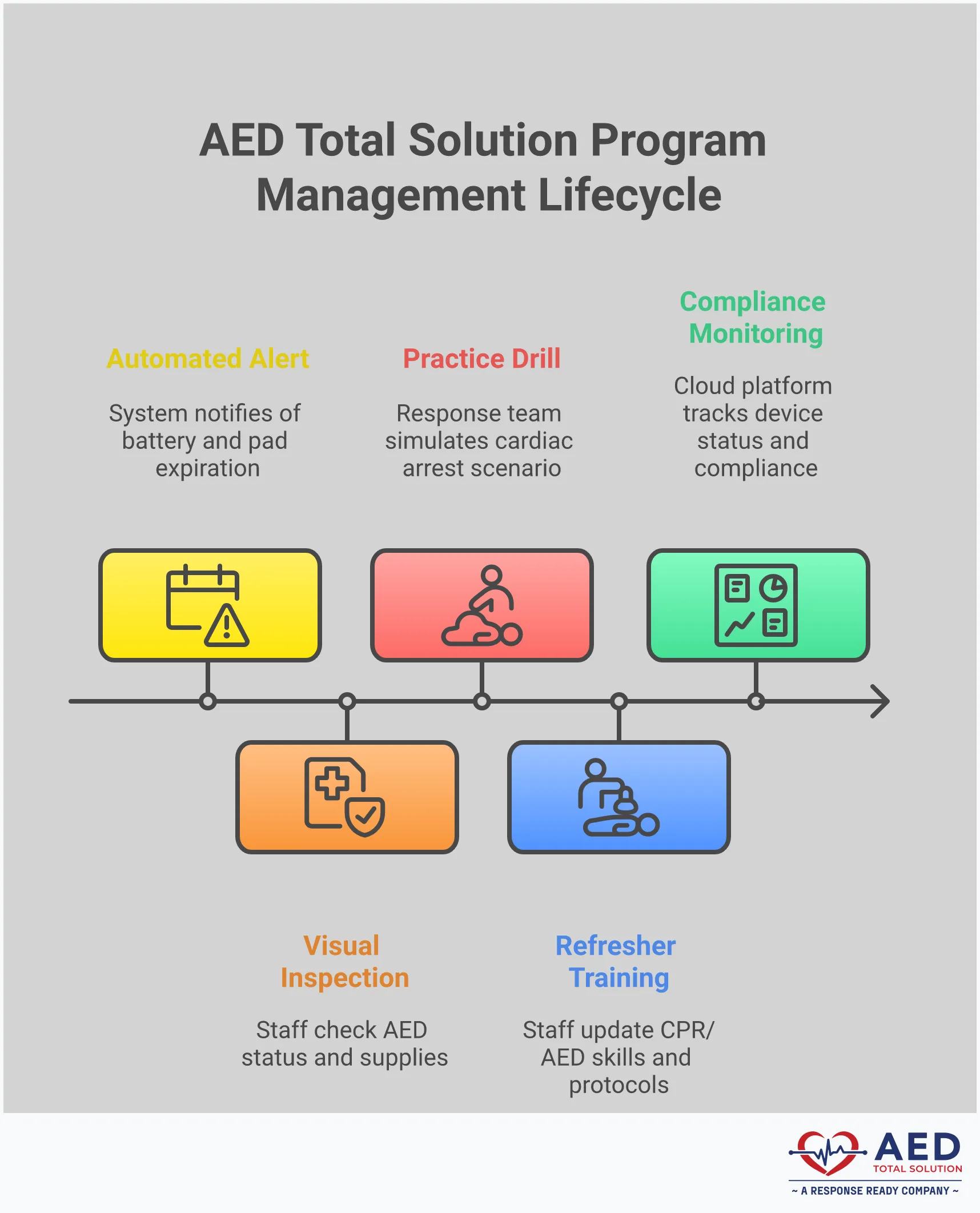
Of course, simply mounting a device on the wall isn’t enough to guarantee readiness. A successful outcome depends on a well-thought-out emergency response plan. This means ensuring the AED is easy to find, your team knows it exists, and the device itself is properly maintained and ready to work at a moment’s notice. From tracking battery and pad expiration dates to complying with local regulations, managing an AED program involves ongoing attention to detail. That’s why many organizations choose to implement comprehensive AED program management to handle the logistics, ensuring their device is always prepared to save a life without adding extra work for their staff.
The Hard Numbers: Sudden Cardiac Arrest Survival Rates
The statistics surrounding sudden cardiac arrest are sobering, but they also highlight the incredible impact an AED can have. In the United States, more than 450,000 people die from cardiac arrest each year. When SCA strikes, the clock starts ticking immediately. For every minute that passes without defibrillation, the chance of survival drops significantly. However, when an AED is used within the first minute, the survival rate can be as high as 90%. If defibrillation is administered within three minutes, the chance of survival is still around 70%. An AED in your office bridges the crucial time gap between a person’s collapse and the arrival of emergency medical services, giving your team the power to make a life-or-death difference.
SCA in the Workplace: A Reality Check
While we often associate medical emergencies with hospitals, the workplace is a surprisingly common setting for them. In fact, sudden cardiac arrest accounts for about 13% of all workplace fatalities. Even if your state or local laws don’t mandate an AED, having one is a critical best practice that shows your employees you prioritize their safety. For maximum effectiveness, an AED should be accessible within a three- to five-minute round trip from anywhere in your building, which often means placing at least one device per floor. As your organization grows, managing multiple devices across different locations can become complex, but a structured readiness program ensures every device remains compliant and ready for use.
How to Choose the Best Defibrillator for Your Office
Choosing the right AED for your workplace can feel like a big decision, but it doesn’t have to be complicated. The best device for an office isn’t necessarily the one with the most features; it’s the one that empowers anyone on your team to act confidently in an emergency. In an office setting, the first responder is more likely to be an accountant or a marketing manager than a paramedic. That’s why the most important qualities to look for are simplicity, reliability, and clear guidance.
Think of an AED as a calm, expert coach that arrives on the scene to walk your team through a stressful event. It needs to be intuitive from the moment someone grabs it. From clear instructions to straightforward maintenance, every aspect of the device should be designed to reduce confusion and inspire action. A great office AED is one that’s always ready, easy to find, and even easier to use. As you explore different AED models, keep these core principles in mind. They’ll help you cut through the noise and select a defibrillator that truly fits your team and your environment, forming the foundation of a strong emergency response program.
Is It Simple Enough for Anyone to Use?
In a sudden cardiac arrest, there’s no time to read a complicated manual. The best office AEDs are designed for people with little to no medical training. Look for a device with a simple, clean interface—often with just a few buttons and clear diagrams. The goal is for someone to be able to open the device and immediately understand what to do. Some models even have features like pre-connected electrode pads, which removes a potentially confusing step from the process. When anyone on your staff can operate the AED without hesitation, you’ve chosen well.
Automatic vs. Semi-Automatic: What’s the Difference?
When you look at different AED models, you’ll see two main types: fully automatic and semi-automatic. The difference is simple. A fully automatic AED analyzes the heart rhythm and, if a shock is needed, it delivers it on its own after a verbal warning. This design is great for office settings because it removes the final step from the rescuer’s hands, reducing hesitation and potential error during a high-stress moment. A semi-automatic AED also analyzes the heart rhythm and advises a shock, but it requires the rescuer to press a flashing button to deliver it. This gives the user final control, allowing them to ensure no one is touching the patient. For most workplaces, the straightforward nature of a fully automatic device makes it an excellent choice for empowering any team member to respond effectively.
Does It Give Clear Step-by-Step Prompts?
During a high-stress emergency, clear communication is everything. A great office AED should provide calm, loud, and easy-to-understand voice instructions to guide the user through every step. These prompts should cover everything from applying the pads to standing clear before a shock is delivered. Visual cues, like flashing lights or on-screen diagrams, are also incredibly helpful, especially in a noisy environment. Devices like the Philips HeartStart OnSite are well-regarded for their direct and simple voice commands, which help keep a rescuer focused and effective when it matters most.
Think About Portability and Storage
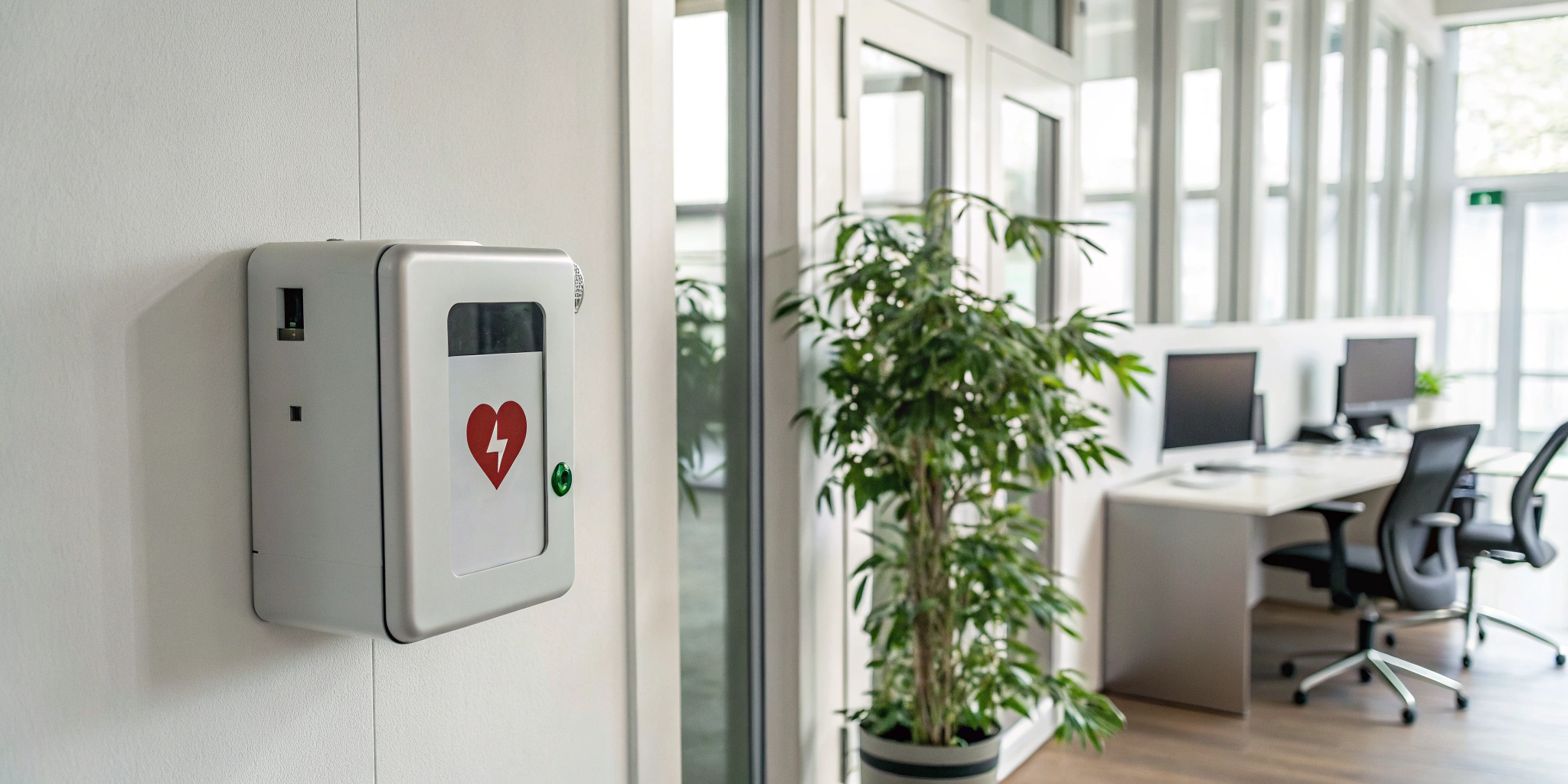
Your AED needs to get to the patient’s side within minutes. A lightweight, compact, and durable device is essential for an office environment. Consider how quickly someone could carry it up a flight of stairs or across a large floor plan. Most AEDs come with a carrying case that makes them easy to grab and go. You’ll also need to think about storage. A visible, wall-mounted cabinet is the standard for a reason—it keeps the AED secure, accessible, and easy for anyone to locate in a panic.
Consider Durability and Environment (IP Rating)
Not all office environments are created equal. While some are clean and climate-controlled, others might be adjacent to a dusty warehouse, a humid kitchen, or a fitness center. This is where an AED’s durability becomes a critical factor. Look for the device’s IP rating, which stands for Ingress Protection. This two-digit score tells you how well the AED is sealed against dust and water. A higher number means better protection. For most standard offices, a basic rating is fine, but if your workplace has any environmental challenges, choosing a more rugged device with a higher IP rating ensures it will be ready to perform flawlessly when you need it most.
Check the Battery Life and Maintenance Schedule
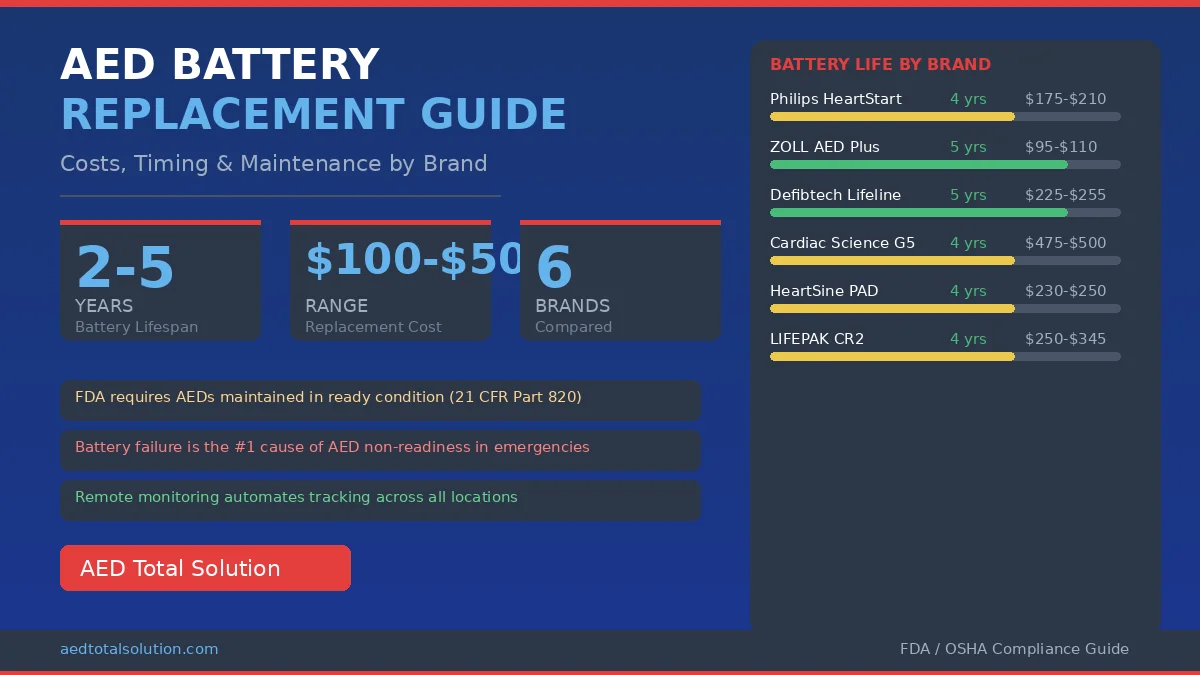
An AED is only effective if it’s ready to work. Every device requires routine maintenance, including battery and electrode pad replacements. These components have specific expiration dates, and keeping track of them is a critical compliance task. When choosing a model, look at the lifespan of its consumables. Some batteries and pads last up to five years, which can simplify your maintenance schedule. Many modern AEDs also perform routine self-checks to ensure they’re operational, but it’s still vital to have a system in place for managing these lifecycle needs.
Does It Offer Real-Time CPR Feedback?
Effective CPR is just as important as the shock from an AED. High-quality chest compressions keep blood flowing to the brain and heart. Some of the best AEDs for an office include real-time CPR coaching. Using sensors in the electrode pads, these devices can provide audible and visual feedback, telling the rescuer to “push harder” or “good compressions.” This feature can dramatically improve CPR quality, especially for untrained responders. Models like the ZOLL AED Plus are known for this integrated feedback, giving your team an extra layer of support.
Does It Monitor Itself and Send Alerts?
You need to know your AED is ready to perform at a moment’s notice. Look for a device that conducts automatic self-tests on a daily, weekly, and monthly basis. These checks verify the battery, pads, and internal circuitry are all functioning correctly. A simple status indicator—like a green checkmark—should show you that the device is ready. More advanced, connected AEDs can even send email alerts if an issue is detected during a self-test, giving you peace of mind that your device is being monitored. This automated oversight is a cornerstone of a reliable AED program.
Can It Be Used on Children?
It’s a question that comes up often: what happens if a child has a cardiac emergency in our building? Thankfully, many modern AEDs are designed to be used on children, but you need to know what to look for. The key is a device with pediatric capabilities. For example, some models use special infant/child electrode pads that, once connected, tell the AED to automatically reduce the shock energy to a safer level. The Philips HeartStart Onsite does exactly this, adjusting its voice prompts and energy delivery for children under 55 pounds or 8 years old, ensuring the response is both safe and effective.
Other devices, like the ZOLL AED 3, have a built-in child mode that you can activate with a simple button or key, eliminating the need to swap out pads in a stressful moment. Whether it’s through specialized pads or a dedicated setting, having a pediatric option is a critical feature to consider when choosing from the various AEDs available. Even if children aren’t in your office every day, preparing for visitors, family events, or unexpected emergencies makes your safety program that much stronger. It’s an essential detail for ensuring you’re ready for any situation.
Our Picks: The Best AEDs for the Office
Choosing the right AED for your workplace can feel like a big decision, but it doesn’t have to be complicated. While many models share core life-saving technology, some are better suited for an office environment where a first responder could be anyone from a trained safety officer to an untrained administrative assistant. The best devices are intuitive, reliable, and require minimal guesswork during a high-stress emergency. They provide clear, calm instructions that anyone can follow.
As you explore your options, remember that the device itself is only one piece of the puzzle. True readiness comes from a well-managed program that includes routine inspections, supply tracking, and compliance documentation. A great AED is one that’s ready to work when you need it, and that’s where comprehensive AED program management makes all the difference. Below, we’ll walk through some of the most trusted AEDs on the market to help you find the perfect fit for your team and your space.
At a Glance: Our Top Picks
Here are six of the most popular and effective AEDs for office settings. We’ve broken down what makes each one a strong contender, from user-friendliness to advanced features, so you can make an informed choice.
Philips HeartStart OnSite: The User-Friendly Choice
The Philips HeartStart OnSite is one of the most popular AEDs for a reason: it’s designed for absolute simplicity. This device is a favorite for public spaces and offices because it’s incredibly intuitive for people with no medical background. It guides the user with calm, clear voice instructions that walk you through every step, from placing the pads to performing CPR. The pads and battery come pre-installed, which saves precious time and reduces the chance of errors during an emergency. With an 8-year warranty, it’s a reliable, straightforward choice for any workplace focused on ease of use.
ZOLL AED Plus: Built for Real-Time Feedback
If you want to empower your team to perform high-quality CPR, the ZOLL AED Plus is an outstanding option. Its standout feature is Real CPR Help®, which gives you real-time audio and visual feedback. It will tell you to “push harder” or confirm “good compressions,” coaching you to the correct depth and rate. This guidance can dramatically improve CPR quality. The ZOLL AED Plus is also known for its durability and low long-term ownership costs, thanks to consumer-grade batteries and pads that last five years. It’s a smart investment for organizations that prioritize hands-on rescuer support.
HeartSine Samaritan 350P/360P: Compact and Durable
For offices where space and portability are key, the HeartSine Samaritan 350P/360P is an excellent choice. It’s one of the most compact and lightweight AEDs available, making it easy to store in a small office or carry to an emergency. Despite its small size, it’s tough and user-friendly, with simple visual and voice prompts to guide the rescuer. The device uses a combined battery and pad pack, known as a Pad-Pak, which simplifies maintenance with just one expiration date to track. It’s a practical, budget-friendly option that delivers reliable performance without taking up much room.
Cardiac Science Powerheart G5: Advanced and Reliable
The Cardiac Science Powerheart G5 is built for clarity and confidence. It features Rescue Ready® technology that performs daily, weekly, and monthly self-tests on the battery, pads, and internal circuitry, so you always know it’s ready. During a rescue, it provides both voice prompts and on-screen text instructions, which is a huge advantage in noisy environments or for responders who are hard of hearing. Many models also offer bilingual capabilities, making the G5 a great fit for diverse workplaces. Its combination of reliability and clear guidance helps ensure anyone can step in to help.
Defibtech Lifeline View: Full-Color Video Guidance
The Defibtech Lifeline VIEW is the first and only AED with a full-color video display that shows you exactly what to do. Instead of just telling you, it shows you—with videos demonstrating everything from pad placement to CPR and rescue breathing. This visual guidance is perfect for responders who may feel overwhelmed by audio-only instructions in a chaotic moment. The Lifeline VIEW is also lightweight and durable, designed to be easy to grab and go. For workplaces that want to provide the most detailed, step-by-step support possible, this device is a top-tier choice.
ZOLL AED 3: Modern Tech for Faster Response
As one of the newest models on the market, the ZOLL AED 3 is packed with modern technology to simplify rescues and maintenance. Like the AED Plus, it features enhanced Real CPR Help, but with a full-color display that shows the depth of each compression. It also uses a universal set of pads for both adults and children, eliminating the need to switch pads. One of its biggest advantages is built-in Wi-Fi connectivity, which allows it to automatically report its readiness status to your program management system. This feature streamlines compliance and gives you peace of mind that your device is always ready.
Physio-Control LIFEPAK CR2: Connected and Efficient
The Physio-Control LIFEPAK CR2 is a fantastic choice for modern offices that value both simplicity and smart technology. It’s designed to be incredibly user-friendly, with clear, calm voice instructions that guide a rescuer through every step of the process. This is essential in a high-stress situation where the first responder is likely a coworker with no medical training. The CR2 also provides real-time CPR feedback, helping to ensure chest compressions are effective. But its standout feature is Wi-Fi connectivity. The device can automatically report its readiness status, sending alerts if it detects an issue. This feature integrates perfectly with a managed readiness program, taking the burden of manual inspections off your team and ensuring your AED is always prepared to save a life.
What’s the Real Cost of an Office AED?
When you start looking into getting an AED for your workplace, the first thing you’ll probably notice is the price tag. But that initial number is just one piece of the puzzle. The true cost of owning an AED goes far beyond the device itself. You also have to think about the ongoing maintenance, essential accessories, team training, and the administrative time it takes to keep everything compliant and ready to go.
Understanding the total cost of ownership from the start helps you budget accurately and, more importantly, ensures your AED program is sustainable and effective for the long haul. A life-saving device is only useful if it’s properly maintained and ready to use at a moment’s notice. Let’s break down the different costs you should expect so you can make an informed decision for your office. From the upfront purchase to recurring expenses, we’ll cover what you need to know to avoid surprises down the road.
Understanding the Upfront Cost
The initial cost for a new AED typically falls between $1,350 and $3,000. You can find many high-quality, reliable models for under $1,800 that are perfect for most office environments. This price usually gets you the defibrillator unit, one battery, and one set of electrode pads.
However, you’ll also need a few other items to complete your setup. Think about a wall-mounted cabinet to keep the AED secure and visible, clear signage to direct people to its location, and a first-response prep kit with essentials like scissors and razors. These are often sold separately, so be sure to factor them into your initial budget. You can find a range of AEDs and accessories to fit different needs and budgets.
Calculate the Cost of Ongoing Maintenance
An AED isn’t a “set it and forget it” device. To keep it rescue-ready, you’ll have recurring maintenance costs. The two main consumables are the battery and the electrode pads, both of which have expiration dates. Electrode pads generally need to be replaced every two years, while batteries last anywhere from two to five years, depending on the model. These replacements are critical—an AED with an expired battery is useless in an emergency.
Manually tracking these dates, along with software updates and state-specific compliance laws, can quickly become a logistical headache, especially if you have more than one device. This is where many well-intentioned AED programs fall short, leaving the organization vulnerable. A comprehensive program management service can handle this for you, ensuring your device is always compliant and ready.
Don’t Forget These Additional Expenses
Beyond the device and its parts, there are other costs to consider. Your team needs to know how to use the AED, so you’ll need to budget for CPR and AED training and certification. This isn’t a one-time expense; refresher courses are necessary to keep skills sharp and certifications current.
There are also significant “soft costs” related to administrative time. Someone on your team will need to perform regular inspections, keep detailed records for compliance, and stay on top of changing regulations. Common problems like expired pads, locked cabinets without a key, or a lack of documentation for auditors can create serious liability issues. These hidden tasks are essential for a successful program and represent a real cost to your business.
Replacement Pads and Batteries
An AED isn’t a “set it and forget it” device. To keep it rescue-ready, you’ll have recurring maintenance costs. The two main consumables are the battery and the electrode pads, both of which have expiration dates that are critical to track. Electrode pads generally need to be replaced every two years, while batteries last anywhere from two to five years, depending on the model. These replacements are non-negotiable—an AED with an expired battery or dried-out pads is useless in an emergency. Staying on top of these dates is a core part of any effective AED program and ensures your device is always prepared to perform when seconds matter most.
Wall Cabinets and Signage
Once you have your AED, you need to make sure people can find it—fast. A clearly marked, wall-mounted cabinet is the best way to keep your device secure, visible, and protected from dust or damage. Paired with clear signage that directs people to its location, a cabinet turns your AED into a well-marked safety station. You should also include a first-response prep kit, which contains essentials like scissors for cutting clothing and razors for clearing a patient’s chest. These essential accessories are often sold separately but are vital for a complete and effective setup.
Program Management and Compliance Tracking
Manually tracking expiration dates, software updates, and state-specific compliance laws can quickly become a logistical headache, especially if you manage more than one device. This is where many well-intentioned AED programs fall short, leaving the organization vulnerable to compliance gaps and liability risks. A comprehensive program management service removes that burden by automating every aspect of readiness. It handles inspection reminders, tracks supply expirations, and ensures your program is always audit-ready, giving you confidence that your AEDs are not just present, but truly prepared to save a life.
Budget vs. Premium: Is a Pricier AED Worth It?
When you browse AEDs, you’ll see a range of prices. Is it worth paying more for a premium model? The answer depends on your specific needs. Budget-friendly AEDs are FDA-approved and will save a life, but premium models often come with advanced features that can be incredibly helpful. These might include real-time CPR feedback that coaches the rescuer on the rate and depth of compressions, bilingual voice prompts, or Wi-Fi connectivity that sends readiness alerts automatically.
For organizations with multiple locations, scaling a program can be a challenge. A more advanced device with remote monitoring capabilities can simplify management and reduce logistical hurdles. If the upfront cost of a premium model is a concern, an AED rental program can be a great alternative, giving you access to top-tier technology for a predictable monthly fee.
Should You Buy or Rent Your Office AED?
Deciding whether to purchase an AED outright or rent one is a common crossroads for many businesses. There isn’t a one-size-fits-all answer, and the best choice really hinges on your organization’s budget, long-term goals, and how much hands-on management you’re prepared to handle. Buying an AED gives you full ownership, which can feel straightforward, but it also puts the responsibility for maintenance and compliance squarely on your shoulders. Renting, on the other hand, offers more flexibility and often bundles maintenance into a predictable monthly fee, but it might cost more over the device’s lifespan.
Think of it like buying vs. leasing a car. One path leads to ownership with full responsibility for upkeep, while the other provides a newer model every few years with maintenance included, but you never actually own it. Both options can get you where you need to go. The key is to understand the road ahead for each, so you can choose the route that best aligns with your company’s resources and priorities. Let’s break down the specifics to help you figure out which path is right for you.
Buying vs. Renting: Weighing the Pros and Cons
When you buy an AED, you own the device outright. This is often the most cost-effective solution if you plan to keep the AED for its full lifespan, which is typically around eight to ten years. However, ownership means you are solely responsible for everything that comes after the purchase. This includes tracking and paying for battery and electrode pad replacements, performing routine inspections, and ensuring the device stays compliant with state and federal regulations.
On the flip side, renting an AED provides incredible flexibility. It’s a great way to get a life-saving device in your office with a lower upfront cost. Most rental agreements bundle the costs of supplies and maintenance into one recurring payment, which simplifies budgeting. The main drawback is that over several years, the total cost of renting can exceed the purchase price.
When Does Renting Make More Sense?
Renting isn’t just for businesses trying to manage cash flow; it’s a strategic choice for many different situations. An AED rental is often the perfect fit for organizations with temporary or short-term needs. Think of a construction site that will only be active for 18 months, a seasonal business like a summer camp, or an annual conference or festival. In these cases, purchasing a device that will sit in storage for most of the year doesn’t make financial sense.
Renting is also ideal for organizations that want to avoid the complexities of long-term maintenance and compliance management. If you prefer a predictable, all-inclusive operational expense rather than a capital investment with variable upkeep costs, renting is a smart move.
How the Costs Add Up Over Time
The sticker price of an AED is just the starting point. When you buy, you also need to budget for ongoing expenses that are essential for keeping the device ready to use. Electrode pads typically need to be replaced every two years, and batteries last anywhere from two to five years, with replacement costs running into the hundreds of dollars. You also have to consider the “soft costs”—the staff time required for monthly inspections, record-keeping, and managing recalls.
Renting transforms these unpredictable expenses into a single, consistent payment. While the total amount paid over five or ten years might be higher than buying, you gain budget certainty and peace of mind. A comprehensive rental or program management plan handles all the tracking and supply replacement for you, eliminating surprise costs and reducing your administrative burden.
RECOMMENDED
HeartSine Samaritan 350P AED Package
Compact, fully-automatic AED designed for first-time responders. Pads, battery, carry case and wall sign included.
How to Keep Your Office AED Ready and Compliant
Placing an AED in your office is a fantastic first step, but the work doesn’t stop there. An automated external defibrillator is a medical device that requires ongoing attention to ensure it’s ready to perform during an emergency and that your program meets legal standards. Neglecting it isn’t an option—a poorly maintained device can fail when you need it most, creating a tragic outcome and significant liability for your organization.
True readiness means having a system in place to manage every detail, from routine inspections to complex state regulations. Common problems often arise from simple oversights, like having an AED with expired pads, a locked cabinet with no key nearby, or zero documentation when an auditor asks. Manually tracking battery expiration dates, pad replacements, and software updates is a logistical challenge that leaves too many organizations vulnerable. Building a proactive maintenance and compliance plan is the only way to have confidence that your device is prepared to save a life. This involves regular checks, diligent tracking of supplies, and staying current on a shifting landscape of rules and manufacturer updates. It’s not just about having the device; it’s about ensuring it’s a reliable asset in your emergency response plan.
Your Simple Daily and Monthly Checklist
A quick visual check can be the difference between a successful rescue and a device failure. At least monthly, and ideally more often, someone should confirm that the AED’s status indicator shows it’s ready for use (usually a green light or checkmark). Make sure the device is accessible, unobstructed, and that its supplies, like pads and a rescue kit, are intact. These simple inspections help you catch issues like a low battery or a missing component before an emergency strikes. A documented log of these checks is also a key piece of evidence that you are properly maintaining your device.
Stay Ahead of Battery and Pad Expirations
AED batteries and electrode pads don’t last forever. They have specific expiration dates, and using them past their shelf life can cause the AED to deliver an ineffective shock or fail completely. Manually tracking these dates in a spreadsheet can be a real challenge, especially if you have more than one device. Forgetting to order and replace these critical components on time is one of the most common—and dangerous—compliance gaps. An automated system for tracking and reordering is the best way to ensure your AED is always equipped with functional supplies and ready for an emergency.
How to Handle Software Updates and Recalls
Just like your computer or phone, AEDs run on software that manufacturers occasionally update to improve performance or fix bugs. Manufacturers may also issue recalls for certain components. It’s your responsibility to stay informed about these communications and take the required action. If you miss a critical software update, your device might not function according to the latest life-saving protocols. Managing these updates and potential recalls for every device in your inventory requires careful attention and adds another layer of administrative work to your program, especially as it scales.
Meeting FDA and OSHA Requirements
The FDA classifies AEDs as medical devices, which means they fall under federal oversight. While OSHA doesn’t require AEDs in most workplaces, it provides clear guidance on AED programs as part of a comprehensive first-aid and emergency response plan. Following these best practices, which include maintenance, training, and medical oversight, is crucial for reducing your organization’s liability exposure. Proper documentation and adherence to these standards demonstrate that you are running a responsible and effective program, which can be a key factor in mitigating negligence claims.
Know Your State-Specific AED Laws
AED requirements aren’t just federal; they vary significantly from state to state. These laws can dictate everything from where you must register your device to specific training and maintenance protocols. If your organization has offices in multiple states, you’re responsible for navigating a patchwork of different rules, which can quickly become overwhelming. Staying compliant means you need to understand the specific laws for every location where you have an AED and ensure your program meets each one. This is often one of the biggest compliance hurdles for multi-location businesses and a primary reason many seek expert compliance solutions.
Beyond the AED: Building a Full Response Kit
An AED is the most critical part of your emergency response plan, but it shouldn’t be the only tool in your arsenal. To give a rescuer the best chance of success, you need a complete response kit stored right alongside the device. This kit should include essential accessories like medical scissors to quickly cut away clothing, a razor to shave a hairy chest for good pad-to-skin contact, and disposable gloves for personal protection. These items remove common obstacles that can waste precious seconds. A well-managed program ensures these supplies are always stocked and ready, turning a simple AED on a wall into a fully-equipped life-saving station. True readiness means thinking through the entire rescue process, not just the moment the shock is delivered.
Are You Legally Protected? Owning an Office AED
One of the biggest hurdles for organizations considering an AED program is the fear of legal trouble. It’s a valid concern, but it’s often based on myths rather than reality. Let’s clear the air and talk about the legal protections in place and the simple steps you can take to ensure your organization is covered.
How Good Samaritan Laws Protect You
If you’ve ever hesitated to help in an emergency for fear of making things worse—and getting sued for it—you’re not alone. That’s exactly why Good Samaritan laws exist. These laws are on the books in all 50 states to protect bystanders who offer reasonable assistance to someone in distress. When it comes to AEDs, these protections generally extend to any person who uses the device in good faith during a cardiac arrest emergency. The goal is to encourage action, not inaction. By providing this legal shield, states empower everyday people to step up and use an AED, which can dramatically increase survival rates from sudden cardiac arrest. So, you can feel confident that the law is on your side when you’re trying to save a life.
Clearing Up Common Liability Myths
Let’s tackle the biggest myth head-on: that having an AED on-site opens you up to lawsuits. While it’s true that any business has some level of liability risk, the reality is that you’re often at a greater legal risk by not having an AED. In some cases, failing to provide an AED in a high-traffic public space could be viewed as negligence. The key to protecting your organization is demonstrating due diligence. This means you’ve chosen a reliable device, placed it in an accessible location, and followed a reasonable maintenance schedule. The fear of liability shouldn’t stop you from implementing a life-saving program. In fact, a well-managed AED program is one of the best ways to protect both your people and your organization from harm.
The Real Liability: The Risk of Not Having an AED
It’s natural to worry about liability when bringing a medical device into your workplace. But here’s something that might surprise you: the greater legal risk often comes from not having an AED. In a world where these devices are becoming more common, failing to provide one in a busy office could be viewed as negligence. The key to protecting your organization isn’t avoiding an AED program; it’s implementing a good one. Demonstrating due diligence is your best defense. This means you’ve chosen a reliable device, placed it in an accessible location, and followed a consistent maintenance schedule. A well-managed AED program shows you’ve taken reasonable steps to protect your team, which is the foundation of legal protection.
Understanding Medical Prescription Requirements
Here’s a detail that often catches people off guard: because an AED is a Class III medical device, the FDA requires it to be sold with a medical prescription. Don’t let that sound complicated. This isn’t like a prescription you pick up at the pharmacy; it’s a form of medical authorization that allows your organization to own and use the device. Any reputable provider will handle this for you as a standard part of the purchasing process. This prescription is overseen by a physician who provides medical direction for your program, ensuring it aligns with best practices. It’s a seamless, behind-the-scenes step designed to ensure safety and compliance, not to create a hurdle for you.
The Importance of Training and Good Record-Keeping
Good Samaritan laws provide a great safety net, but they work best when you’ve done your part to maintain your AED program. This is where training and documentation become your best friends. Keeping clear, consistent records of everything—from monthly readiness checks to battery and pad expiration dates—proves that you’re taking your responsibility seriously. Think of it as your compliance paper trail. Should an incident ever occur, you’ll have a complete history showing your device was ready to perform. Proper documentation isn’t just about checking boxes for auditors; it’s about ensuring your AED is always prepared for an emergency. A comprehensive management solution can automate this tracking, giving you peace of mind that every detail is accounted for.
Where Should You Place Your Office AED?
You’ve chosen the right AED for your office—that’s a huge step. But where you put it is just as critical. An AED tucked away in a supply closet or a locked office won’t do anyone any good during an emergency. The goal is to make it so obvious and easy to find that anyone can grab it without a second thought. Proper placement can literally be the difference between life and death. Let’s walk through the three most important factors to consider when deciding on the perfect spot.
Choose a Visible, High-Traffic Location
The best location for your AED is a central spot where people frequently pass by. Think about your office layout—places like the main reception area, the employee breakroom, or a busy central hallway are all excellent candidates. You want the device to be seen daily so people instinctively know where to go in a moment of panic. Placing it in a clearly marked, wall-mounted cabinet makes it even more visible and protects it. The key is to eliminate any guesswork. When someone suffers a sudden cardiac arrest, every second counts, and no one should waste time searching for life-saving equipment.
Make Sure It’s Unlocked and Accessible
Visibility is one thing, but accessibility is another. Your AED must be available 24/7, without any barriers like a locked door or a cabinet that requires a key. An emergency can happen at any time. A good rule of thumb is the three-minute response time: a rescuer should be able to retrieve the AED and return to the victim’s side in under three minutes. Test this out from various points in your office. If it takes longer, you may need another device. Having an AED at work can dramatically increase someone’s chance of survival, but only if people can get to it quickly.
Use Clear Signage to Guide Responders
Even the most visible AED cabinet can be overlooked in a moment of chaos. That’s why clear, directional signage is a non-negotiable part of your placement strategy. Think beyond just the sign on the cabinet itself. Use universally recognized AED signs in main entryways, elevator lobbies, and at key hallway intersections to point people in the right direction. The goal is to create a clear visual path so that anyone, even a visitor unfamiliar with your building, can find the device without losing a single second. It’s a simple step that reinforces your commitment to readiness and helps ensure a swift, effective response when every moment matters.
Consider a Professional Site Assessment
While these guidelines are a great starting point, every workplace has its own unique layout, potential hazards, and high-risk zones. To eliminate any uncertainty, consider a professional site assessment. An expert can analyze your floor plan, identify the most strategic locations based on employee density and response time, and ensure your placement strategy is fully optimized. This process goes beyond just picking a wall; it helps build a cohesive emergency response plan that integrates your AEDs seamlessly. A professional assessment is one of the best ways to ensure your program is not only compliant but truly prepared to save a life, giving you confidence that you’ve covered all your bases.
Check for Proper Storage Conditions
AEDs are durable, but the environment where you store your device matters. Extreme temperatures, high humidity, and excessive dust can degrade the AED’s battery and electrode pads over time. Always check the manufacturer’s recommended operating temperature range and choose an indoor, climate-controlled location. A proper storage cabinet also protects the device from dirt and moisture. This is where ongoing oversight becomes so important. A comprehensive AED program management service helps track these details, making sure your device is not just present, but truly response-ready when you need it most.
What AED Training Does Your Team Need?
Placing an AED in your office is a fantastic first step, but the device itself is only one part of the equation. True preparedness comes from empowering your team with the knowledge and confidence to act decisively in an emergency. A well-structured training program transforms your employees from bystanders into a capable response team. Here’s what that program should look like.
Why CPR and AED Certification Is a Must
Even though modern AEDs are designed for simplicity, formal training is what removes hesitation when panic sets in. A nationally recognized CPR and AED certification course gives your team hands-on practice and builds the confidence needed to act effectively. These courses teach participants how to recognize the signs of sudden cardiac arrest, perform high-quality chest compressions, and use an AED correctly. Having an AED shows you care about your team’s safety; ensuring they are trained to use it proves you’re committed to it. Aim to certify a core group of responders across different departments and shifts so someone is always prepared to step up.
Keep Skills Sharp with Regular Refresher Courses
Emergency response skills are perishable. The knowledge gained in a certification course can fade over time, which is why ongoing training is so important. It’s a great practice to schedule annual or biennial refresher courses for your certified responders. These sessions keep life-saving techniques fresh in their minds and reinforce the muscle memory needed to perform CPR and use the AED without delay. Regular practice drills also help your team work together seamlessly, clarifying roles and ensuring a more coordinated response. Think of it as a fire drill for a medical emergency—practice is what ensures people can perform under pressure.
Create a Clear Emergency Response Plan
Your trained responders and your AED need to operate within a larger framework. An emergency response plan is a simple document that outlines exactly what to do when someone collapses. It answers critical questions before an emergency happens: Who calls 911? Who retrieves the AED? Who starts chest compressions? Who will meet the paramedics at the door to guide them? Your plan should be clear, concise, and easily accessible to all employees. Including your AED as a key part of this formal emergency plan ensures that your device is integrated into a swift, organized response, maximizing the chance of a positive outcome.
Common Compliance Hurdles (And How to Clear Them)
Placing an AED in your office is a fantastic first step, but the work doesn’t stop there. True readiness comes from managing the device properly over its entire lifecycle. Many organizations run into the same few obstacles that can undermine their program, turning a life-saving device into a liability. These challenges might seem daunting, but they are completely manageable with the right approach. Let’s walk through the most common hurdles and discuss clear, actionable ways to overcome them.
The Challenge of Accurate Record-Keeping
One of the biggest compliance gaps isn’t the AED itself, but the paperwork that supports it. It’s all too common to find AEDs with expired pads, devices locked in cabinets, or no record of which employees are trained. When an auditor asks for documentation, a missing file can create serious problems. The solution is to establish a single, centralized system for all your AED information. Moving away from scattered spreadsheets to a dedicated program management service ensures nothing gets lost and that you’re always prepared to demonstrate compliance.
How to Simplify Maintenance Tracking
Manually tracking battery expiration dates, pad replacement schedules, and software updates is a logistical headache. For a single device, it’s a chore; for multiple devices, it’s a recipe for failure. These critical components have different lifecycles, and letting even one expire means your AED may not function in an emergency. Automating your maintenance tracking is the key. An effective management program sends you alerts for upcoming expirations and service needs, taking the guesswork out of readiness and closing the loop on every critical task.
Handling Compliance for Multiple Offices
As your organization grows, so does the complexity of your AED program. Managing devices across different floors, buildings, or even cities introduces significant logistical challenges. Each AED requires its own inspections and maintenance, and ensuring consistency across all sites can quickly become overwhelming. A centralized dashboard that provides a complete overview of your entire AED inventory is essential. This allows you to monitor the status of every device from one place, track maintenance needs, and ensure uniform compliance standards are met everywhere.
Staying on Top of Different State Laws
AED laws aren’t one-size-fits-all; they vary significantly from one state to another. These regulations can dictate everything from where an AED must be placed to what kind of post-event reporting is required. Keeping up with the specific state laws on cardiac arrest and defibrillators for every location you operate in is a major challenge. Partnering with a compliance expert who understands these nuances removes the burden from your team and ensures your program meets all legal mandates, protecting you from potential liability.
Related Articles
- AED Models for Business: Best Devices for Small Companies
- AED Guidelines for All Ages | Expert Tips & Advice — AED Total Solution
- Best AEDs for Every Situation | Expert Reviews & Buying Guide
- Refurbished AED Defibrillators for Businesses | Affordable & Reliable

Not sure which AED or program fits your facility?
An AED Total Solution program expert walks you through it — no obligation.
Frequently Asked Questions
With so many options, how do I really know which AED is best for my specific office? There isn’t one single “best” AED for every situation, but there is a best fit for your team and your space. The most important thing to remember is that in an office, the user will likely have no medical training. Because of this, your top priority should be simplicity. Look for a device with extremely clear voice instructions and a straightforward design. Features like CPR feedback can be incredibly helpful for an untrained rescuer, while a model with a video screen might be perfect for a noisy environment where audio prompts could be missed.
Does everyone in the office need to be trained to use the AED? No, not every employee needs to be formally certified. Modern AEDs are designed to be used by anyone, and the device will talk the rescuer through every step of the process. However, having a designated group of trained responders is a fantastic idea. Formal training builds the confidence and muscle memory needed to act quickly and calmly under pressure. It helps remove the hesitation that can cost precious seconds in an emergency.
What’s the biggest mistake companies make with their AEDs after they buy them? The most common mistake is treating an AED like a fire extinguisher—something you hang on the wall and forget about until you need it. An AED is an active medical device with components, like batteries and electrode pads, that expire. Forgetting to perform routine readiness checks and replace these supplies on time is the single biggest reason a well-intentioned AED program fails. An AED with a dead battery is just a box on the wall.
We’re worried about liability. Are we more likely to get sued for having an AED or for not having one? This is a very common and understandable concern, but the fear is often misplaced. Every state has Good Samaritan laws that provide legal protection to people who use an AED in good faith to try to save a life. In reality, the legal risk of not having an AED can be greater, as it could be viewed as negligence. The best way to protect your organization is to have a well-managed program with documented maintenance checks, ensuring your device is always ready to work as intended.
This all seems like a lot to manage. What’s the first step I should take to get a program started? It can feel like a lot, but you can start small. Before you even buy a device, walk through your office and identify a central, visible, and accessible location for it. Then, think about who on your team will be responsible for checking the device each month and tracking the expiration dates for its supplies. Answering that one question—who will own this process?—is the most important first step. It will help you decide whether you can manage the program internally or if a service that handles it for you is a better fit.