When your AED says “no shock advised,” do not panic and do not stop. This message means the device analyzed the heart rhythm and determined it is not one that can be corrected with an electrical shock at this moment. Your immediate next step is to resume high-quality CPR. Keep the pads on, follow the device’s voice prompts, and continue until EMS arrives or the person recovers.
This guide explains exactly what “no shock advised” means, why it happens, and the critical steps you must take to give the person the best chance of survival.
What Does “No Shock Advised” Mean on an AED?
An AED (automated external defibrillator) analyzes the heart’s electrical activity through electrode pads placed on the chest. When it says “no shock advised,” the device has detected a heart rhythm that will not respond to an electrical shock. This is not a malfunction. The AED is working exactly as designed.
There are two types of heart rhythms an AED can shock:
- Ventricular fibrillation (V-fib) — the heart quivers chaotically instead of pumping blood
- Pulseless ventricular tachycardia (V-tach) — the ventricles fire too rapidly to pump effectively
When the AED does not detect either of these shockable rhythms, it advises “no shock.” This typically occurs for three reasons:
- The heart is in asystole (flatline) — there is no electrical activity to reset with a shock
- Pulseless electrical activity (PEA) — electrical signals are present but the heart is not pumping blood
- A normal rhythm has returned — CPR or a previous shock successfully restored the heartbeat
In all three scenarios, a shock would be ineffective or harmful. The correct response is always to follow the AED’s guidance and continue CPR if the person remains unresponsive.
Get certified in CPR

CPR & AED Training
3-hour in-person training with a 2-year nationally recognized certification.
CPR, AED & First Aid Certification
Instructor-led on-site. Practice on real manikins and AED trainers.
4 Steps to Take When Your AED Says “No Shock Advised”
When you hear “no shock advised,” follow these four steps immediately:
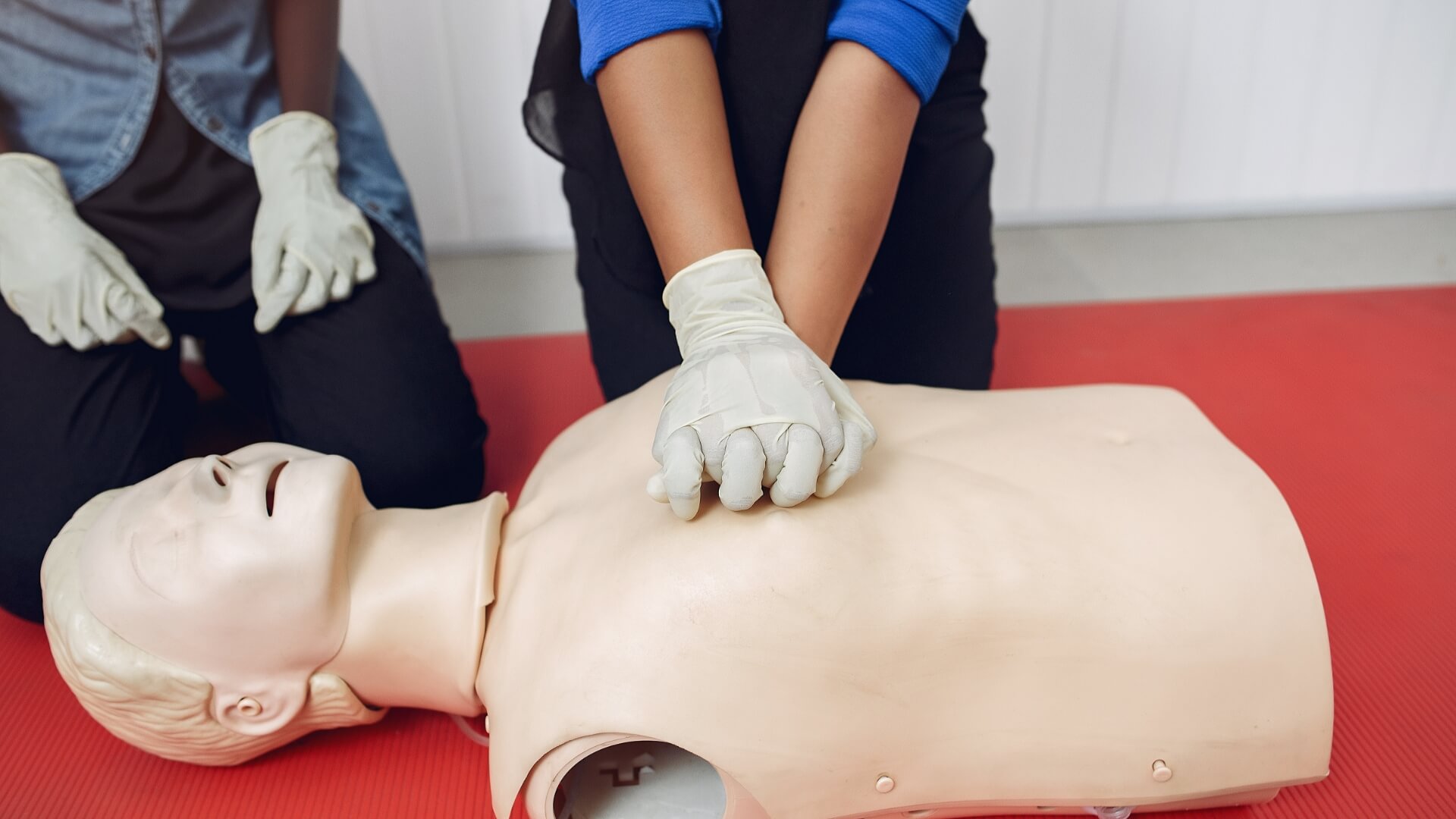
- Resume CPR immediately. Begin chest compressions without delay. Push hard and fast (at least 2 inches deep, 100 to 120 compressions per minute). Every second without blood flow can cause brain damage.
- Keep the AED pads attached. Do NOT remove the electrode pads. The AED will continue monitoring the heart rhythm and will re-analyze automatically every two minutes.
- Follow the AED’s voice prompts. Modern AEDs provide a CPR metronome and real-time feedback on compression depth and rate. Listen carefully and adjust your technique as guided.
- Continue until EMS arrives or the person recovers. Do not stop CPR unless the person starts breathing normally and is clearly responsive, or emergency medical services take over care.
The AED will prompt you to pause briefly every two minutes for rhythm re-analysis. If a shockable rhythm develops, the device will advise a shock at that point. Otherwise, it will instruct you to continue CPR.
Why an AED Won’t Shock Every Heart Rhythm
AEDs are designed to shock only specific rhythms where an electrical reset can restore a normal heartbeat. Understanding why certain rhythms are non-shockable helps explain the “no shock advised” message.
Shockable Rhythms: V-Fib and Pulseless V-Tach
Ventricular fibrillation is the most common shockable rhythm during sudden cardiac arrest. The heart’s ventricles quiver chaotically instead of contracting. A shock can disrupt this chaotic electrical activity and give the heart’s natural pacemaker a chance to resume normal rhythm.
Pulseless ventricular tachycardia occurs when the ventricles beat dangerously fast, preventing effective blood circulation. A shock can reset this rapid firing. Without treatment, V-tach often deteriorates into V-fib.
Non-Shockable Rhythms: Asystole and PEA
Asystole (flatline) means no electrical activity in the heart. Since there is no rhythm to reset, a shock cannot help. Survival rates in asystole are very low, making immediate CPR and rapid EMS response critical.
Pulseless electrical activity (PEA) occurs when the heart shows electrical signals on a monitor but is not actually pumping blood. The problem is mechanical, not electrical, so a shock will not fix it. CPR and addressing the underlying cause (such as severe blood loss or tension pneumothorax) are the correct treatments.
When “No Shock” Means Good News
Sometimes “no shock advised” occurs because a normal heart rhythm has returned, often after successful CPR or a previous AED shock. In this case, the AED correctly avoids delivering an unnecessary shock to a functioning heart. If the person begins breathing normally and becomes responsive, you can stop CPR but should keep the pads in place and continue monitoring until EMS arrives.
How Defibrillators Respond to Sudden Cardiac Arrest
Sudden cardiac arrest strikes without warning, affecting approximately 1,000 people in the U.S. every day. It differs from a heart attack: a heart attack is a circulation problem (blocked blood flow), while cardiac arrest is an electrical problem (the heart stops beating effectively).
Signs of cardiac arrest include:
- Sudden collapse
- Loss of consciousness
- No normal breathing (may show agonal breathing, which is gasping)
Using an AED within the first five minutes can dramatically improve survival chances. The device analyzes the heart’s rhythm and determines whether a shock is needed. If so, it guides you through delivering one. If not, it directs you to continue CPR.
Step-by-Step Guide to Using an AED
AEDs are designed for anyone to use, even without formal AED training. They provide clear voice instructions for every step.
1. Prepare the Person and Area
If someone collapses and is unresponsive and not breathing, call 911 immediately. Have someone retrieve the nearest AED. Move the person to a safe, flat surface away from water. Expose their chest and wipe away any moisture so the pads make good contact.
2. Apply AED Pads Correctly
Open the pad package and follow the diagrams printed on the pads. Place one pad on the upper right chest below the collarbone. Place the other on the lower left side below the armpit. Press firmly. For detailed guidance, see our AED pad placement guide.
3. Let the AED Analyze
Once pads are connected, the AED will analyze the heart rhythm. Everyone must stand clear during analysis. The device will either advise a shock or say “no shock advised.”
4. Follow the Prompt
If a shock is advised, announce “Clear!” and press the shock button (or the device will shock automatically). If no shock is advised, immediately resume CPR. Either way, the AED continues monitoring and will re-analyze every two minutes.
What to Do Immediately After a Shock Is Delivered
When an AED delivers a shock, the rescue is not over. The shock interrupts a chaotic heart rhythm, giving the heart a chance to reset. But it does not guarantee the heart will resume pumping effectively on its own.
Resume CPR Without Delay
Start chest compressions immediately after the shock. Do not pause to check for a pulse. The heart needs time to recover, and compressions keep oxygenated blood flowing to the brain and vital organs. The AED will guide you to perform CPR for two minutes before re-analyzing.
Minimize Pauses in Compressions
Every second without chest compressions reduces the chance of survival. Keep your hands in position on the chest between cycles. Modern AEDs include a metronome to help you maintain the correct compression rate (100 to 120 per minute). Whether the AED advises a shock or says “no shock advised,” the next step is almost always to continue CPR. For more on technique, see our guide to CPR and AED use together.
RECOMMENDED
HeartSine Samaritan 350P AED Package
Compact, fully-automatic AED designed for first-time responders. Pads, battery, carry case and wall sign included.
AED Troubleshooting: When the Device Won’t Deliver a Shock
If your AED repeatedly says “no shock advised” and you believe the person is in cardiac arrest, consider these troubleshooting steps:
- Check pad contact. Ensure pads are firmly adhered to dry, bare skin. Poor contact can prevent accurate rhythm analysis.
- Minimize movement. Any motion (including chest compressions or vehicle movement) during analysis can interfere with rhythm detection.
- Check for excessive chest hair. Dense chest hair can prevent pad adhesion. Use a razor (often included in AED kits) to shave the area if needed.
- Verify the device is functioning. Check that the AED powered on correctly and pads are properly connected. Regular AED maintenance and inspections prevent device failures.
If the device is functioning correctly and still advises no shock, trust it. The heart rhythm is genuinely non-shockable, and your best action is high-quality CPR.
Using an AED on Children and Infants
Cardiac arrest in children is less common but requires quick action. Pediatric cardiac arrest is usually caused by a respiratory problem (choking, drowning) rather than an electrical issue.
- Use pediatric pads if available, which deliver a reduced shock appropriate for a child’s size
- If only adult pads are available, place one on the chest and one on the back to prevent the pads from touching
- If the AED says “no shock advised,” continue CPR using age-appropriate technique (one-hand compressions for children, two-finger compressions for infants)
If you are alone with a child who collapses, perform two minutes of CPR before calling 911, as the cause is often respiratory and immediate CPR can be the most critical intervention.
After the Emergency: Post-Event Steps
Handing Off to EMS
When paramedics arrive, provide a brief summary: when the person collapsed, how long CPR has been performed, and how many shocks (if any) were delivered. Do not turn off the AED or remove pads unless EMS instructs you to do so.
Post-Event AED Management
After use, an AED needs servicing: electrode pads must be replaced (they are single-use), battery status should be checked, and event data should be downloaded. This is where having a professional AED program management service ensures your device is returned to a ready state quickly without administrative burden. Learn more about proper AED inspection requirements.
Frequently Asked Questions
Why does my AED say “no shock advised”?
The AED analyzed the heart rhythm and determined it is not shockable. This happens when the heart is in asystole (flatline), pulseless electrical activity (PEA), or has returned to a normal rhythm. In all cases, continue CPR and follow the device’s prompts.
What should I do immediately when an AED says “no shock advised”?
Resume high-quality CPR immediately. Keep the AED pads attached, follow the device’s voice prompts, and continue chest compressions until EMS arrives or the person becomes responsive and starts breathing normally.
Does “no shock advised” mean the person is dead?
No. “No shock advised” simply means the current heart rhythm cannot be treated with a shock. The person may still be saved with high-quality CPR and rapid EMS response. CPR keeps blood flowing to the brain and organs, and the heart rhythm may change to a shockable one during the rescue.
Should I remove the AED pads if no shock is advised?
Never remove the pads. The AED continuously monitors the heart and will re-analyze the rhythm every two minutes. If a shockable rhythm develops, the device will alert you immediately. Keeping the pads in place is essential for ongoing monitoring.
What is the difference between shockable and non-shockable rhythms?
Shockable rhythms (ventricular fibrillation and pulseless ventricular tachycardia) involve chaotic or dangerously rapid electrical activity that a shock can reset. Non-shockable rhythms (asystole and PEA) cannot be corrected by a shock because the problem is either a complete absence of electrical activity or a mechanical failure of the heart muscle.
What should I do after an AED delivers a shock?
Resume CPR immediately after the shock. Do not check for a pulse. Perform two minutes of chest compressions, then allow the AED to re-analyze. The device will tell you whether another shock is needed or whether to continue CPR.
Can an AED shock a person who doesn’t need it?
No. AEDs are designed with safety algorithms that only allow a shock when a shockable rhythm is detected. The device will not deliver a shock to someone with a normal heartbeat, making it safe for anyone to use, even without medical training.
How often does the AED re-analyze the heart rhythm?
Most AEDs re-analyze automatically every two minutes. The device will prompt you to stop CPR briefly, stand clear, and wait for the new analysis. Afterward, it will instruct you to either deliver a shock or continue CPR.
Be Prepared: Ensure Your AED Is Always Ready
Knowing how to respond when an AED says “no shock advised” is as critical as knowing how to deliver a shock. In both scenarios, your immediate action, continuing CPR and following the AED’s prompts, is what gives the person the best chance of survival.
Regular AED maintenance, proper training, and a comprehensive AED program management plan ensure your device and your team are ready for any emergency. Contact AED Total Solution to learn how our white-glove program keeps your organization compliant and prepared.

Not sure which AED or program fits your facility?
An AED Total Solution program expert walks you through it — no obligation.
Key Takeaways
- “No Shock Advised” means resume CPR immediately. The AED detected a non-shockable rhythm. Your job is to keep blood circulating with chest compressions until EMS arrives.
- Never remove the AED pads. The device continuously monitors the heart and will advise a shock if the rhythm changes to a shockable one.
- Follow the AED’s voice prompts without hesitation. Whether it advises a shock or not, trust the device. It is your most reliable guide during a cardiac emergency.
- Regular AED maintenance saves lives. A properly maintained device ensures accurate rhythm analysis and reliable performance when every second counts.