

A heart attack can last anywhere from a few minutes to several hours, depending on severity and how quickly you receive treatment. Understanding the timeline of a heart attack, including early warning signs and when to call 911, can help you act fast and potentially save a life.
Key Takeaway: Most heart attacks develop over minutes to hours, not seconds. Mild symptoms may last 2 to 5 minutes and stop with rest, while a complete arterial blockage can cause symptoms lasting 20 minutes or longer. The American Heart Association recommends calling 911 immediately if symptoms last more than 5 minutes. Every minute without treatment increases the risk of permanent heart damage.
How Long Does a Heart Attack Last?
The duration of a heart attack varies based on the type and severity of the blockage. A heart attack, medically known as a myocardial infarction, occurs when blood flow to part of the heart muscle is blocked, usually by a blood clot in a coronary artery. Without oxygen-rich blood, the affected heart tissue begins to sustain damage.
Here is a general breakdown of how long heart attacks can last:
- Mild heart attack (partial blockage): Symptoms may last 2 to 5 minutes and may ease with rest. These are sometimes called “mini heart attacks” or NSTEMI (non-ST-elevation myocardial infarction).
- Moderate heart attack: Symptoms typically persist for 15 to 30 minutes or longer. This often indicates a significant blockage requiring immediate medical intervention.
- Severe heart attack (complete blockage): Also known as a STEMI (ST-elevation myocardial infarction), symptoms can last several hours if the blockage is not treated. In some cases, symptoms may persist for a full day.
Research shows that once blood flow to the heart is cut off, irreversible damage to the heart muscle can begin within 30 minutes. This is why the American Heart Association emphasizes that every minute counts during a heart attack.
The bottom line: Heart attacks do not resolve on their own. If you or someone near you is experiencing symptoms, call 911 immediately. Do not wait to see if symptoms pass.
Warning Signs of a Heart Attack
Recognizing heart attack symptoms early is critical to reducing the duration of the event and minimizing damage to the heart. Symptoms can appear suddenly or build gradually over hours or even days before the actual heart attack occurs.
Common Heart Attack Symptoms
- Chest pain or discomfort: Often described as pressure, squeezing, fullness, or a heavy feeling in the center or left side of the chest. This is the most common symptom and may last more than a few minutes or come and go.
- Pain radiating to other areas: Discomfort may spread to one or both arms, the back, neck, jaw, or stomach.
- Shortness of breath: May occur with or without chest pain and can make it difficult to breathe deeply.
- Cold sweats: Breaking into a cold sweat without physical exertion is a warning sign.
- Nausea or lightheadedness: Some people feel nauseous, dizzy, or unusually fatigued before or during a heart attack.
Heart Attack Symptoms in Women
Women are more likely to experience less obvious symptoms that can be mistaken for other conditions. According to the American Heart Association, women may experience:
- Unusual fatigue that lasts for days
- Shortness of breath without chest pain
- Pain in the jaw, neck, or upper back
- Nausea, vomiting, or indigestion
- Discomfort in one or both arms
These differences in symptom presentation can lead to delayed treatment, which is why awareness is especially important.
How Long Can a Heart Attack Last If Untreated?
Without medical treatment, a heart attack can last for hours and cause extensive, irreversible damage to the heart muscle. The longer the heart goes without adequate blood flow, the more tissue is destroyed.
According to the CDC, approximately 805,000 people in the United States have a heart attack each year. Many of these cases involve delayed treatment because symptoms were not recognized or were dismissed as something less serious, such as indigestion or muscle strain.
Here is what can happen if a heart attack goes untreated:
- Within 30 minutes: Heart muscle cells begin to experience irreversible damage from oxygen deprivation.
- After 1 to 2 hours: A significant portion of the affected heart muscle may be permanently damaged.
- After several hours: The risk of life-threatening complications increases dramatically, including heart failure, dangerous arrhythmias, and sudden cardiac arrest.
Sudden cardiac arrest is different from a heart attack. While a heart attack is a circulation problem caused by a blocked artery, sudden cardiac arrest is an electrical malfunction where the heart suddenly stops beating. However, a heart attack can trigger sudden cardiac arrest, which is why immediate treatment is so important.
What to Do If You Think You Are Having a Heart Attack
If you or someone around you shows signs of a heart attack, act immediately. Do not wait to see if symptoms improve on their own.
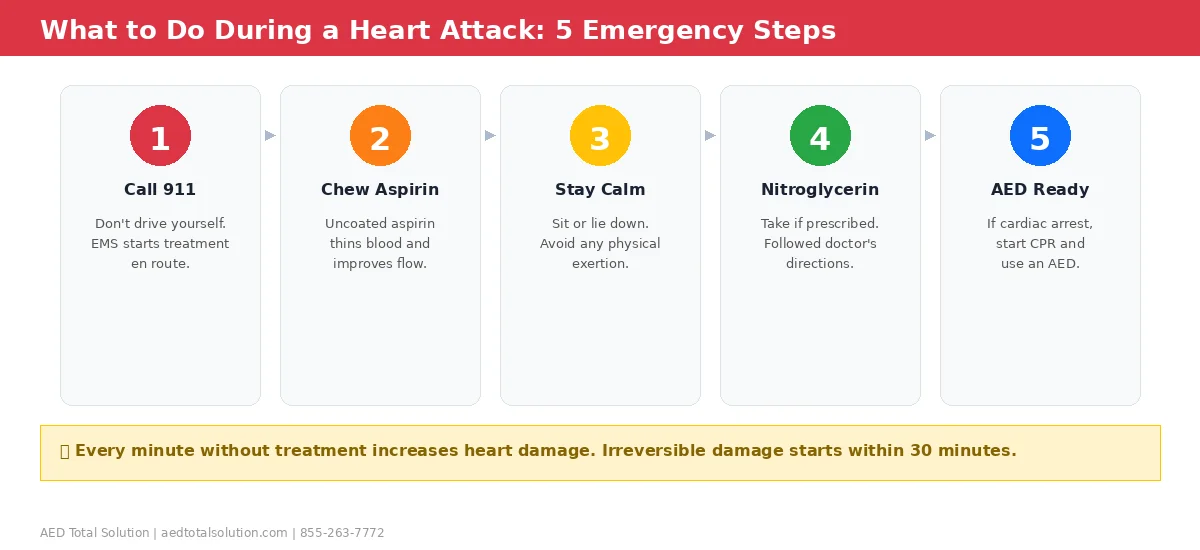
Step-by-Step Response
- Call 911 immediately. Emergency medical services can begin treatment on the way to the hospital. Do not drive yourself to the emergency room.
- Chew an aspirin (if not allergic). A regular, uncoated aspirin can help thin the blood and improve flow to the heart. Chewing it allows it to work faster.
- Stay calm and rest. Sit or lie down in a comfortable position. Avoid physical exertion, which can put additional strain on the heart.
- Take prescribed nitroglycerin. If you have been prescribed nitroglycerin, take it as directed while waiting for emergency services.
- Be prepared to perform CPR. If the person loses consciousness and stops breathing, begin CPR immediately. If an automated external defibrillator (AED) is available, use it. AEDs analyze the heart’s rhythm and deliver a shock if needed to help restore normal heart function.
Why AEDs Matter in Heart Attack Emergencies
A heart attack can lead to sudden cardiac arrest at any point during the event. When this happens, the heart stops pumping blood effectively, and the person collapses. CPR keeps blood flowing, but an AED is the only device that can correct the dangerous heart rhythm (ventricular fibrillation) that causes cardiac arrest.
Studies show that immediate AED use combined with CPR can increase survival rates to over 70 percent when applied within the first few minutes. This is why organizations, workplaces, and public spaces benefit from having AEDs on site with a maintained compliance program.
Heart Attack Duration by Type
Not all heart attacks are the same. The type of heart attack affects how long it lasts and how it is treated.
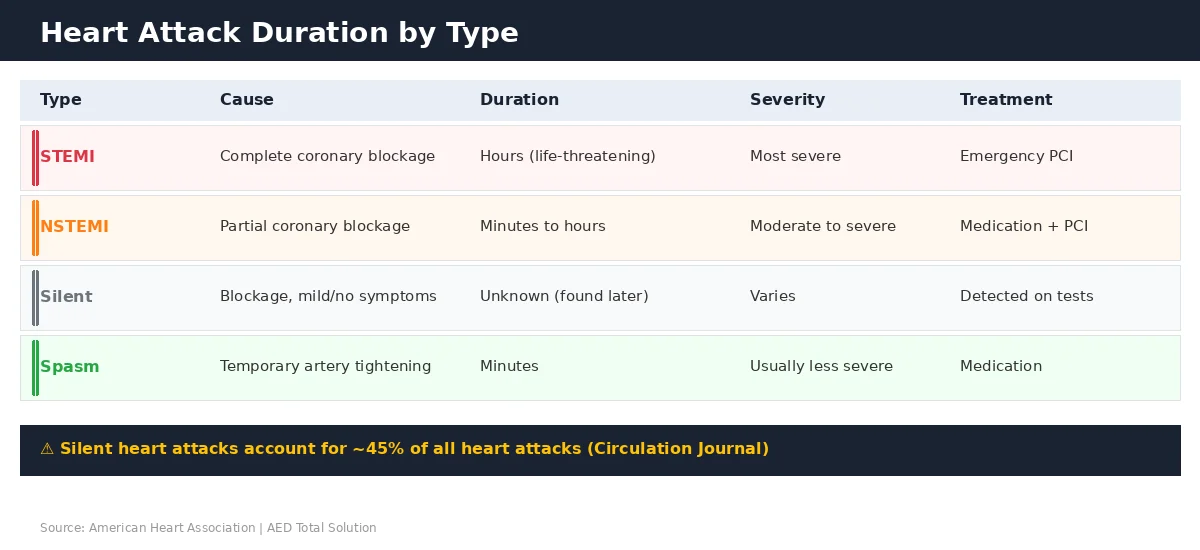
STEMI heart attacks are the most dangerous because the artery is fully blocked. Treatment for STEMI typically involves emergency percutaneous coronary intervention (PCI), commonly known as angioplasty and stenting, to reopen the artery.
NSTEMI heart attacks involve a partial blockage. While still dangerous, symptoms may come and go, which can lead some people to delay seeking treatment. This is why any chest pain lasting more than 5 minutes should be treated as a potential emergency.
Silent heart attacks account for approximately 45% of all heart attacks, according to research published in the journal Circulation. Because symptoms are mild or absent, many people do not realize they have had a heart attack until it is discovered during a later medical examination.
Factors That Affect How Long a Heart Attack Lasts
Several factors influence the duration and severity of a heart attack:
- Location of the blockage: Blockages in the left anterior descending artery (often called the “widowmaker”) tend to cause more extensive and longer-lasting heart attacks.
- Degree of blockage: A complete blockage causes a more prolonged event compared to a partial one.
- Speed of medical treatment: The faster blood flow is restored, the shorter the heart attack and the less damage to the heart muscle. Cardioversion and defibrillation are among the interventions used when heart rhythm complications arise.
- Pre-existing health conditions: Conditions such as diabetes, high blood pressure, and coronary artery disease can worsen heart attack outcomes.
- Age and overall health: Older adults and those with multiple risk factors may experience longer and more damaging heart attacks.
Recovery After a Heart Attack
Recovery time depends on the severity of the heart attack, how quickly treatment was received, and your overall health. Here is what to expect:
- Hospital stay: Typically 3 to 7 days, depending on the type of heart attack and treatment received.
- First 90 days: The most critical recovery period. Cardiac rehabilitation programs help patients rebuild strength and adopt heart-healthy habits.
- Full recovery: Can take several weeks to several months. Some patients return to normal activities within a few weeks, while others require longer recovery periods.
Long-Term Implications
A heart attack can weaken the heart muscle and increase the risk of:
- Heart failure
- Recurrent heart attacks
- Arrhythmias (irregular heartbeats)
- Stroke
- Anxiety and post-traumatic stress
Following your cardiologist’s recovery plan, taking prescribed medications, and participating in cardiac rehabilitation are essential for reducing these risks.
How to Reduce Your Risk of a Heart Attack
While not all heart attacks can be prevented, adopting healthy habits can significantly reduce your risk:
- Schedule regular health screenings. Monitor blood pressure, cholesterol, and blood sugar levels.
- Maintain a heart-healthy diet. Focus on fruits, vegetables, whole grains, lean proteins, and foods low in saturated fat and sodium.
- Exercise regularly. The American Heart Association recommends at least 150 minutes of moderate-intensity aerobic activity per week.
- Quit smoking. Smoking significantly increases the risk of coronary artery disease and heart attacks.
- Manage stress. Chronic stress contributes to high blood pressure and other heart disease risk factors.
- Control existing conditions. Work with your doctor to manage diabetes, hypertension, and high cholesterol.
- Be prepared for emergencies. Ensure your workplace or organization has AEDs available and a compliance program in place. AED Total Solution provides full-service AED program management that includes device selection, installation, training, ongoing inspections, and compliance documentation.
Frequently Asked Questions
How long does a heart attack last in minutes?
A mild heart attack may last as little as 2 to 5 minutes, while a more severe heart attack with a complete blockage can last 20 minutes to several hours. The American Heart Association recommends calling 911 if symptoms last more than 5 minutes.
How long can a heart attack last before you should call 911?
You should call 911 immediately if you suspect a heart attack. Do not wait more than 5 minutes. Heart muscle damage begins within 30 minutes of blood flow being cut off, and delays in treatment significantly increase the risk of complications.
Can a heart attack last for days?
While the acute heart attack itself typically lasts minutes to hours, warning symptoms such as intermittent chest pain, fatigue, and shortness of breath can occur days or even weeks before the main event. If you notice recurring symptoms, see a doctor immediately.
How long do heart attacks last in women?
Heart attacks in women last the same general duration as in men, but women are more likely to experience atypical symptoms that can lead to delayed treatment. Women should be especially aware of symptoms such as unusual fatigue, jaw pain, nausea, and shortness of breath without chest pain.
What is the difference between a heart attack and sudden cardiac arrest?
A heart attack is a circulation problem caused by a blocked coronary artery, while sudden cardiac arrest is an electrical malfunction that causes the heart to stop beating. A heart attack can trigger sudden cardiac arrest. An AED is the primary treatment for sudden cardiac arrest, while heart attacks are treated by restoring blood flow to the heart.
Can an AED help during a heart attack?
An AED is designed to treat sudden cardiac arrest, not a heart attack directly. However, because heart attacks can lead to cardiac arrest, having an AED nearby is critical. If someone having a heart attack suddenly collapses and becomes unresponsive, use the AED immediately and follow its prompts. Learn more about what to do when an AED says no shock advised.
Written by Prabakar Mahalingam, Managing Partner at AED Total Solution and recognized national provider of safety training, products, and proprietary compliance software dedicated to addressing Sudden Cardiac Arrest (SCA).
This article is for informational and educational purposes only and does not constitute medical advice. Always consult a qualified healthcare provider for medical concerns. In a cardiac emergency, call 911 immediately.
Be Prepared for Cardiac Emergencies: AED Total Solution provides full-service AED program management to ensure your organization is equipped and prepared. Explore our AED rental program for affordable access to FDA-approved defibrillators starting at $45/month.