What Is AED Training?
AED training teaches you how to recognize sudden cardiac arrest (SCA), perform CPR, and use an automated external defibrillator to restore a normal heart rhythm. Sudden cardiac arrest claims over 350,000 lives in the United States each year, and the survival rate drops 7 to 10 percent for every minute defibrillation is delayed. AED training equips everyday people with the skills to act fast and save lives before emergency responders arrive. If your organization needs help building or managing an AED program, contact AED Total Solution for a free consultation.
Modern AEDs are designed for use by people with no medical background. The devices provide voice prompts and visual instructions that guide users step by step. However, formal AED training builds confidence, reduces hesitation during emergencies, and teaches critical supporting skills like CPR and scene safety assessment. Whether you are a safety officer, HR leader, teacher, or concerned parent, AED training prepares you to be the first line of defense during a cardiac emergency.
Who Needs AED Training?
AED training is valuable for virtually everyone, but it is especially important for people in roles where they may need to respond to a cardiac emergency:
- Workplace safety teams and designated first responders: OSHA recommends that employers with AEDs on-site also maintain trained personnel as part of a comprehensive first-aid program.
- Healthcare professionals: Nurses, medical assistants, dental staff, and other clinical workers are typically required to maintain current BLS (Basic Life Support) certification, which includes AED training.
- Teachers, coaches, and school staff: Many states require schools to have AEDs and trained staff, particularly at athletic events where exertion-related cardiac events can occur.
- Fitness center and gym employees: Several states mandate AEDs in health clubs, and staff training is often a legal requirement.
- Corporate employees and office managers: Organizations with AEDs in the workplace benefit from having trained team members across departments and shifts.
- Parents, caregivers, and community members: SCA can strike anyone regardless of age or health. Community members trained in AED use can intervene during emergencies at home, sporting events, or public spaces.
- Property managers and facility directors: Those responsible for buildings where the public gathers should ensure staff can operate on-site AEDs.
Types of AED Training Programs
Several nationally recognized organizations offer AED training programs. The right course depends on your role, industry requirements, and preferred learning format.
American Heart Association (AHA) Heartsaver CPR AED
The AHA Heartsaver CPR AED course is the most widely recognized AED training program for non-healthcare professionals. It is designed for anyone with little or no medical background who needs a course completion card for work, OSHA compliance, or personal preparedness. The course covers adult CPR and AED use, with optional modules for child and infant CPR.
- Format: Classroom (instructor-led), blended learning (online + hands-on skills session), or self-guided learning
- Duration: Approximately 2 to 3.5 hours depending on format
- Certification: Valid for 2 years
- Cost: Typically $50 to $100 depending on provider and location
AHA Heartsaver First Aid CPR AED
This expanded course adds comprehensive first aid training to CPR and AED skills. It covers medical emergencies, injury emergencies, environmental emergencies, and opioid-associated life-threatening emergencies. This is the most common choice for meeting OSHA workplace training requirements.
- Format: Classroom, blended learning, or self-guided
- Duration: Approximately 3 to 5 hours
- Certification: Valid for 2 years
- Cost: Typically $60 to $120
AHA Basic Life Support (BLS)
BLS is designed for healthcare professionals and clinical staff. It teaches single-rescuer and team-based life support skills, including high-quality CPR, AED use, and bag-mask ventilation. BLS certification is typically required for nurses, EMTs, paramedics, dental professionals, and medical students.
- Format: Classroom or blended learning (HeartCode BLS online + skills session)
- Duration: Approximately 3 to 4 hours
- Certification: Valid for 2 years
- Cost: Typically $50 to $100
American Red Cross First Aid/CPR/AED
The Red Cross offers first aid, CPR, and AED courses for both workplace and community settings. Their program follows the same evidence-based science as the AHA and is equally recognized by employers and regulatory agencies. Courses are available in classroom, blended (Simulation Learning), and online-only formats.
- Format: In-person, blended (online + in-person skills session), or online-only
- Duration: 2 to 5 hours depending on format and modules
- Certification: Valid for 2 years
- Cost: Typically $35 to $100
Note: In-person and blended formats satisfy OSHA workplace requirements. Online-only courses may not meet employer or regulatory compliance needs, as they lack hands-on skills verification.
Online AED Training Providers
Several accredited online providers offer CPR and AED courses that can be completed entirely from a computer or tablet. Providers like ProTrainings, ASHI (American Safety and Health Institute), and others offer courses ranging from $15 to $60. These courses follow AHA and ILCOR guidelines and are accepted by many employers.
However, it is important to verify whether your employer or state requires a hands-on skills component. Fully online courses are a convenient refresher, but blended courses with in-person skills verification provide more thorough preparation and are more widely accepted for regulatory compliance.
What Does AED Training Cover?
Regardless of which provider or course format you choose, AED training programs cover a core set of life-saving skills. Here is what you can expect to learn:
Recognizing Sudden Cardiac Arrest
Trainees learn to quickly identify the signs of SCA: sudden collapse, unresponsiveness, no normal breathing, and no pulse. Recognizing these signs immediately is critical because every second counts. This is the first link in the Chain of Survival. AED training emphasizes the importance of activating emergency medical services (calling 911) right away while simultaneously beginning the rescue response.
CPR Basics
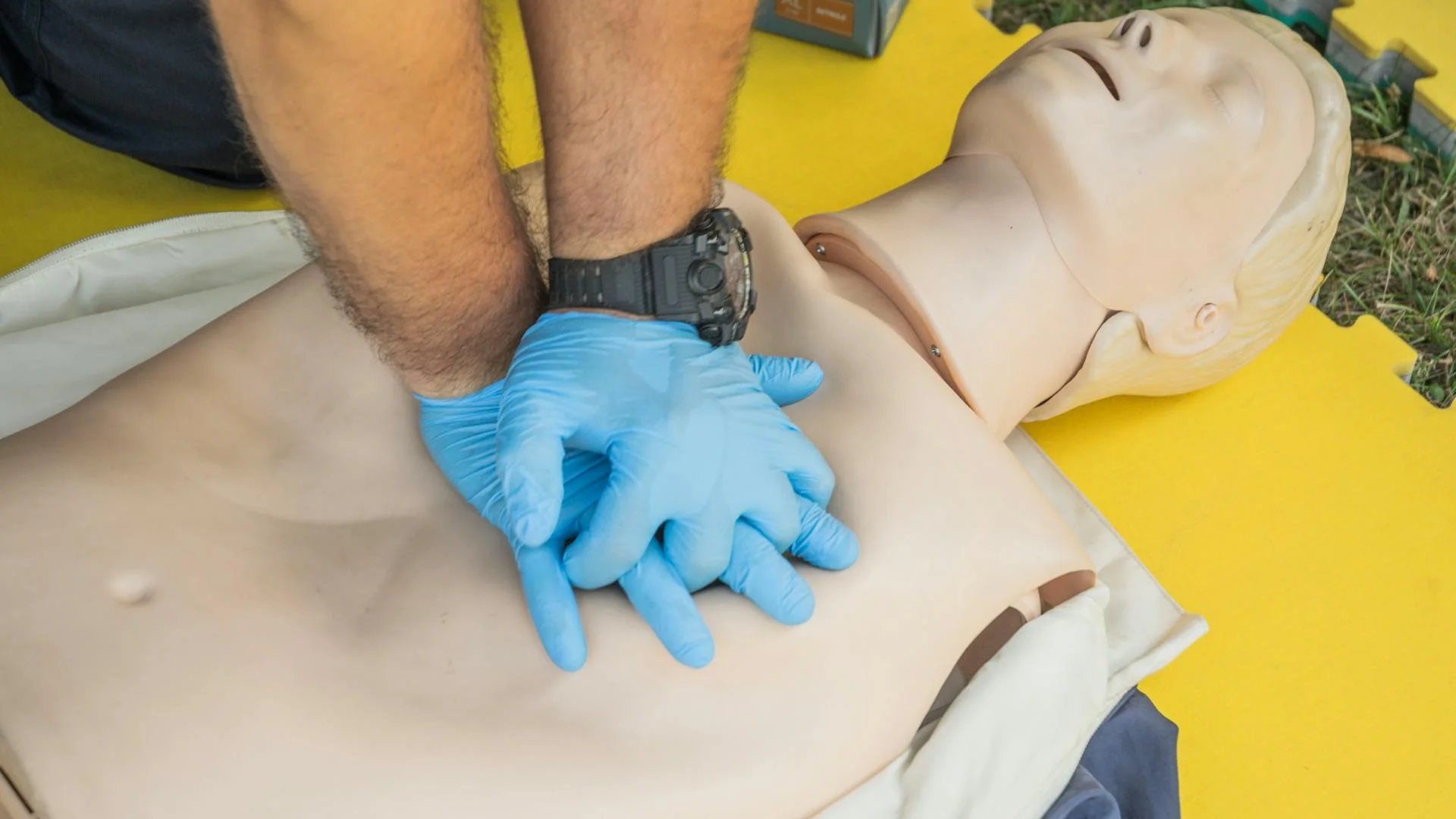
CPR is performed in conjunction with AED use. Training covers proper hand placement, compression depth (at least 2 inches for adults), compression rate (100 to 120 per minute), full chest recoil between compressions, and rescue breathing. High-quality CPR maintains blood flow to the brain and vital organs until the AED can deliver a shock.
AED Operation Step by Step
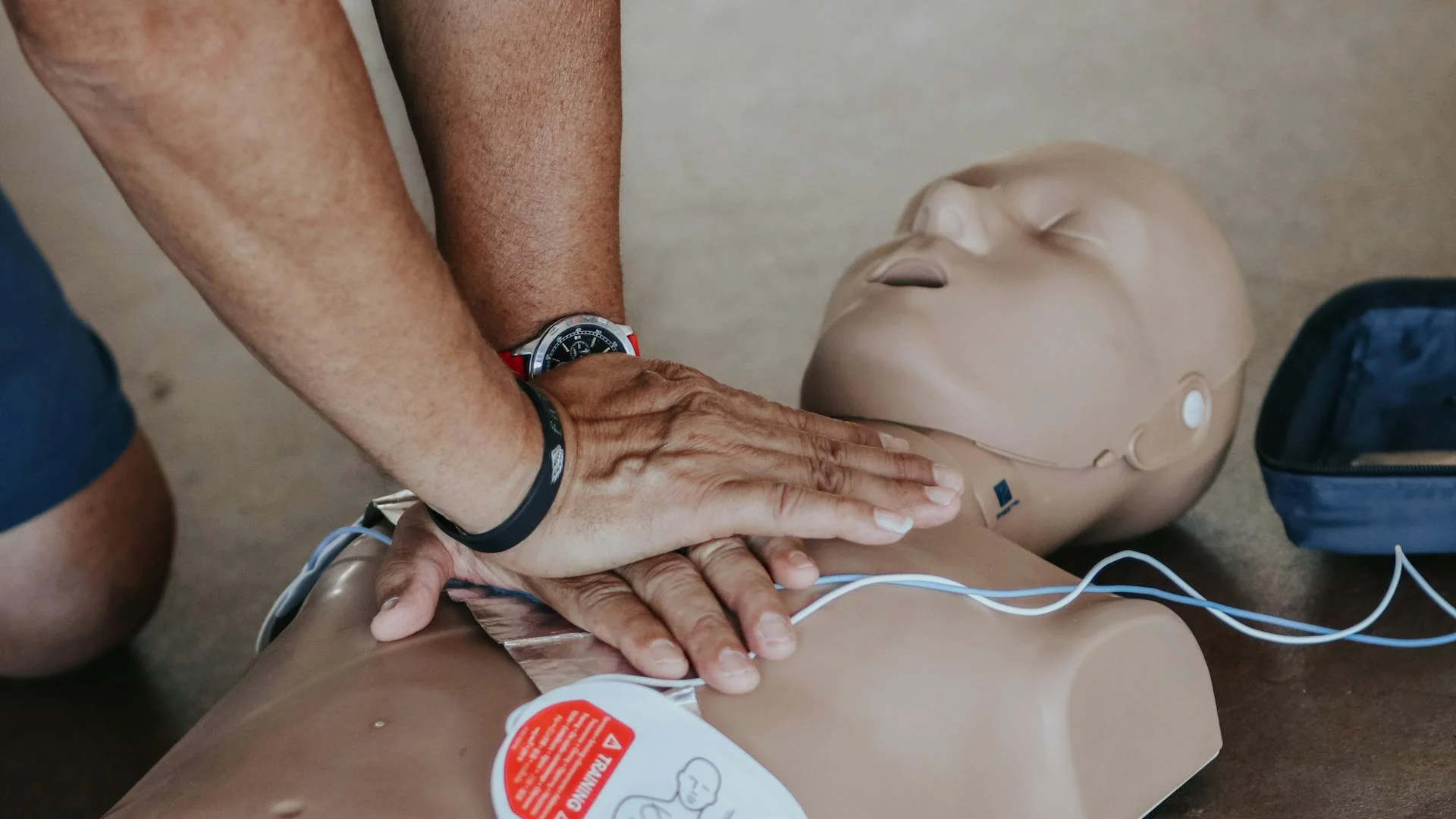
Trainees practice the full AED sequence: powering on the device, attaching electrode pads to the patient’s bare chest, allowing the AED to analyze the heart rhythm, standing clear during the shock delivery, and resuming CPR immediately after the shock. Modern AEDs guide users through each step with audio and visual prompts.
Special Populations and Scenarios
AED training covers how to adapt the response for children (using pediatric pads or reduced energy settings), patients with implanted pacemakers (place pads at least one inch away from the device), patients with medication patches on the chest (remove the patch before applying pads), wet environments (move the patient to a dry surface), and patients with excessive chest hair (quickly shave or remove hair for proper pad adhesion).
Need help setting up an AED training program for your workplace? AED Total Solution can help coordinate training alongside device management, compliance tracking, and readiness monitoring, so your organization is always prepared. Need a defibrillator? Explore our AED rental program for affordable monthly plans with full compliance management included.
AED Training Requirements by State
There is no single federal law that mandates AED training for all employers. However, many states have passed legislation requiring AEDs and trained personnel in specific settings. Understanding your state’s requirements is essential for compliance. Here is an overview of common state-level patterns:
- Schools: At least 25 states require AEDs in schools. States like New York, California, Georgia, Texas, Virginia, and Massachusetts mandate AEDs on school campuses and at athletic events, often requiring staff to be trained in CPR and AED use.
- Fitness centers and gyms: States including California, Illinois, Louisiana, and Oregon require health clubs to have AEDs and trained staff on-site.
- Government buildings: The federal Cardiac Arrest Survival Act (CASA) mandates AED placement guidelines in federal buildings.
- Dental offices: Several states require dental practices to maintain AEDs and ensure staff training.
- General workplaces: While most states do not mandate AEDs in all workplaces, OSHA strongly recommends them as part of a comprehensive first-aid program, particularly in high-risk industries.
Because requirements vary significantly by state and even by city, organizations should research their specific state laws and local ordinances. Multi-location organizations face particular complexity and should consider a centralized AED compliance management approach to stay current across jurisdictions.
How Long Does AED Certification Last?
AED certification from all major providers, including the American Heart Association, American Red Cross, and ASHI, is valid for two years. After two years, you must complete a renewal or recertification course to maintain your credentials.
The two-year expiration exists because studies show that CPR and AED skills decline significantly after 12 to 24 months without practice. Renewal courses are typically shorter than initial certification and focus on updated guidelines, hands-on skills verification, and any changes to best practices.
Some employers require annual refresher training even though the formal certification lasts two years. This is considered best practice, as regular review keeps response times fast and muscle memory sharp.
Employer Obligations for AED Training
If your organization has AEDs on-site, training is not optional. It is a core component of a compliant AED program. Here is what employers should know:
- OSHA recommendations: While OSHA does not have a specific standard requiring AEDs, it recommends them as part of workplace first-aid programs under 29 CFR 1910.151 (general industry) and 29 CFR 1926.50 (construction). Where AEDs are present, OSHA expects employers to have trained personnel available.
- Good Samaritan protections: All 50 states provide some form of Good Samaritan immunity for individuals who use an AED in good faith. However, many of these laws require that the AED program includes proper training, maintenance, and medical oversight. Without trained staff and documented maintenance, organizations may lose their liability protections.
- Written AED program: OSHA guidelines recommend a written AED program that includes physician oversight, AED placement strategy, maintenance schedules, training records, and coordination with local EMS. Learn more about OSHA requirements for AEDs in the workplace.
- Regular drills: Beyond initial certification, employers should conduct regular emergency response drills so team members can practice their roles under simulated pressure.
For organizations managing AED programs across multiple locations, maintaining consistent training standards is critical. A managed AED program helps ensure every site has trained responders and up-to-date certifications. Explore how a comprehensive AED program for businesses can simplify compliance.
How Much Does AED Training Cost?
The cost of AED training varies by provider, format, and location. Here is a general breakdown:
| Course | Provider | Typical Cost |
|---|---|---|
| Heartsaver CPR AED | AHA | $50 – $100 |
| Heartsaver First Aid CPR AED | AHA | $60 – $120 |
| Basic Life Support (BLS) | AHA | $50 – $100 |
| First Aid/CPR/AED | Red Cross | $35 – $100 |
| Online CPR/AED Certification | Various (ProTrainings, ASHI, etc.) | $15 – $60 |
| Group/On-site Training | Varies | $30 – $75 per person |
Group and on-site training is often the most cost-effective option for employers. Many AHA and Red Cross training centers offer discounted rates for corporate groups, and on-site instruction eliminates travel time and scheduling disruptions for employees.
Some AED program management providers include training coordination as part of their service package, bundling device management, compliance tracking, and staff certification into a single program.
How to Find AED Training Near You
Finding AED training in your area is straightforward. Here are the best resources:
- American Heart Association: Visit cpr.heart.org to search for AHA training centers and courses by ZIP code.
- American Red Cross: Visit redcross.org/take-a-class to browse courses by location and format.
- Local fire departments and community centers: Many fire departments, community colleges, and parks and recreation departments offer low-cost CPR and AED classes.
- Your employer: Many organizations arrange on-site training through authorized training providers. Ask your HR or safety department about upcoming sessions.
- Online providers: For renewal or supplemental training, accredited online providers like ProTrainings offer flexible, self-paced courses.
When selecting a course, confirm that the provider is authorized by the AHA, Red Cross, or another nationally recognized organization. Verify whether the course includes a hands-on skills component, which is required for OSHA compliance and most employer policies.
Strengthen Your AED Program with Professional Support
AED training is one piece of a larger puzzle. A truly prepared organization pairs staff training with a comprehensive AED program that covers device maintenance, compliance tracking, medical oversight, and emergency action planning. Without all of these components working together, even the best-trained responders can be held back by expired pads, dead batteries, or missing documentation.
AED Total Solution provides full-service AED program management that goes beyond the device itself. From physician oversight and compliance tracking to readiness monitoring and post-event support, we help organizations build and maintain AED programs that are always response-ready. Our platform provides real-time visibility into your entire AED fleet, automated inspection reminders, and centralized documentation that keeps you audit-ready at all times.
Contact AED Total Solution to learn how we can help your organization build a compliant, life-saving AED program.
Frequently Asked Questions About AED Training
How long does AED training take?
Most AED training courses take between 2 and 5 hours, depending on the provider and format. The AHA Heartsaver CPR AED course takes approximately 2 to 3.5 hours, while the more comprehensive Heartsaver First Aid CPR AED course takes 3 to 5 hours. Online-only refresher courses can be completed in as little as 1 to 2 hours.
Do I need AED training to use an AED?
No. AEDs are designed to be used by anyone, even without formal training. The devices provide step-by-step voice prompts and visual instructions. However, formal AED training significantly improves response time, builds confidence, and teaches critical supporting skills like CPR and scene safety assessment. Good Samaritan laws in all 50 states protect individuals who use an AED in good faith during an emergency.
How often do I need to renew my AED certification?
AED certification from all major providers (AHA, Red Cross, ASHI) is valid for two years. After that, you must complete a renewal or recertification course. Some employers require annual refresher training as a best practice, even though the certification lasts two years.
Is AED training required by OSHA?
OSHA does not have a specific standard requiring AEDs or AED training. However, OSHA strongly recommends AEDs as part of workplace first-aid programs under 29 CFR 1910.151 (general industry) and 29 CFR 1926.50 (construction). Where AEDs are present, OSHA expects employers to have trained personnel available during all working hours.
Can I get AED training online?
Yes. Several accredited providers offer online AED training courses. However, online-only courses may not satisfy OSHA workplace requirements or employer policies because they lack hands-on skills verification. Blended courses (online learning plus in-person skills session) are the recommended option for regulatory compliance.
Written by Prabakar Mahalingam, Managing Partner at AED Total Solution. Prabakar is a renowned national provider of safety training, products, and proprietary compliance software dedicated to addressing Sudden Cardiac Arrest (SCA).