Creating a truly safe workplace goes beyond meeting minimum legal standards. While many leaders ask, “are AEDs required in the workplace in California?”, the more proactive question is, “how can we be best prepared for a medical emergency?”. An AED is a cornerstone of any strong emergency response plan, empowering your team to act decisively when seconds matter most. Even if your business isn’t legally mandated to have one, installing an AED demonstrates a powerful commitment to employee and customer well-being. In this guide, we’ll cover the legal requirements, but we’ll also explore why every business should consider an AED program to foster a culture of safety and confidence.
Key Takeaways
- Know your legal requirements: California law mandates AEDs in specific places like gyms, schools, and large-occupancy buildings. Check state and local rules based on your industry and building capacity to confirm if you are required to have one.
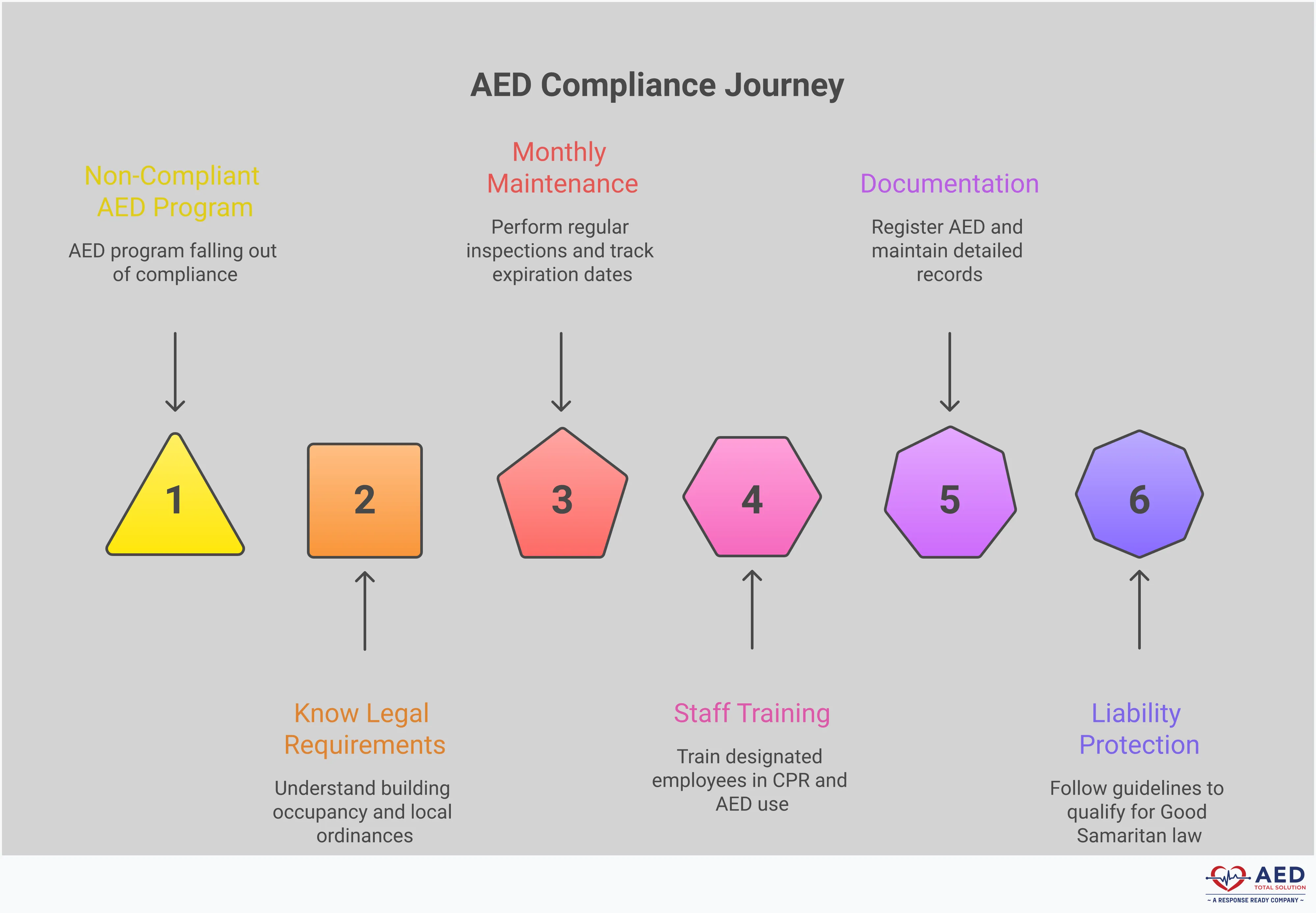
- Active management is non-negotiable: A compliant program requires more than just owning a device. You must perform consistent monthly inspections, track battery and pad expiration dates, train staff in CPR and AED use, and keep detailed records of all activities.
- A compliant program is your best protection: Following all state requirements for your AED program is essential to qualify for Good Samaritan liability shields. A well-documented and maintained program is your strongest defense against negligence claims.
Understanding California’s AED Laws for Workplaces
California has specific laws that require certain businesses and public places to have an Automated External Defibrillator (AED) on-site. While not every workplace is mandated to have one, the requirements are broad enough that many organizations fall under these rules. It’s important to know that these laws go beyond simply purchasing a device and mounting it on a wall. They also cover critical details like regular maintenance, staff training, and proper registration with local emergency services.
Understanding your legal obligations is the first step toward creating a safer environment and protecting your organization from liability. The state’s goal is to ensure that if an AED is present, it is properly maintained and ready to be used effectively in an emergency. Following these guidelines not only ensures you are compliant but also strengthens your entire emergency response plan. Our AED program management services are designed to handle these details for you, so you can have confidence that your program meets all state requirements.
Key Legislation Governing AEDs
California law is clear about where AEDs are required. The state mandates their presence in a variety of public and private settings to ensure they are accessible during a sudden cardiac arrest emergency. According to the California Emergency Medical Services Authority, AEDs are required in K-12 schools, public swimming pools, and commuter rail systems. The law also extends to certain buildings, particularly those with a high occupancy of 200 or more people. This means if your workplace is in a large office building or a venue that hosts many people, you likely need an AED to stay compliant.
The Health and Safety Code Explained
A major concern for many business owners is the liability associated with providing and using an AED. Fortunately, California’s Health and Safety Code includes Good Samaritan protections for those who respond to an emergency. This law shields individuals from civil liability when they use an AED in good faith to save a life. These protections extend to the business or property owner, but they are conditional. To be protected, you must ensure your AED program follows all state requirements, including proper maintenance, placement, and training. This makes adhering to AED statutes a critical part of your risk management strategy.
Rules for Specific Industries
Beyond general occupancy rules, California has specific requirements for certain types of businesses. Health and fitness studios are legally required to have an AED on-site due to the increased risk of cardiac events during physical exertion. The same rule applies to public swimming pools that have lifeguards on duty. Additionally, the law targets large buildings constructed or significantly renovated after January 1, 2017, mandating that they include AEDs in their safety plans. State-owned and leased buildings are also required to have AEDs and establish clear protocols for their placement, use, and associated staff training.
Which California Businesses Are Required to Have AEDs?
California law specifies that certain types of businesses and public spaces must have an automated external defibrillator (AED) on-site. These regulations are designed to protect people in places where the risk of sudden cardiac arrest is higher or where large groups of people gather. If your organization falls into one of these categories, having a properly maintained and accessible AED isn’t just a good idea, it’s a legal requirement. Understanding these state-specific rules is the first step toward ensuring your workplace is both safe and compliant.
The laws target health clubs, schools, public pools, and large commercial buildings, each with its own set of guidelines. Following these requirements helps create a safer environment for your employees, customers, and visitors. It also significantly reduces your organization’s liability risk. A comprehensive AED program management plan can help you meet these obligations without the guesswork, ensuring your device is always inspected, functional, and ready for an emergency. Knowing whether your business is on this list is crucial for avoiding fines and, more importantly, for being prepared to save a life.
Health and fitness centers
If you own or operate a health studio in California, you are required to have an AED. This law applies to any facility where people exercise on a membership basis, including gyms, fitness centers, and bodybuilding studios. The reasoning is straightforward: strenuous physical activity can increase the risk of a cardiac event, making quick access to a defibrillator critical. The law also mandates that you must have staff trained in AED use and CPR. Equipping your facility with a reliable AED device is a key part of meeting your legal and ethical responsibilities to your members.
Schools
California schools have specific AED requirements to protect students, staff, and visitors. First, any school district or charter school that has an athletic program must ensure there is at least one AED on the premises of each school. This helps protect student-athletes during practices and games. Additionally, any school building with an occupancy of 200 or more people is required to have an AED. These rules ensure that life-saving equipment is available where young people gather for education and extracurricular activities, providing peace of mind for parents and faculty alike.
Public pools
Public swimming pools are another environment where state law mandates the presence of an AED. Specifically, any public pool that has a lifeguard on duty must also have an AED available. This requirement acknowledges the heightened risk of emergencies in aquatic settings, including cardiac arrest resulting from drowning or other incidents. Having a defibrillator poolside allows trained lifeguards to respond immediately, which can dramatically improve the outcome of a medical emergency. It’s a simple but vital measure to ensure the safety of swimmers of all ages.
Large assembly and commercial buildings
The law extends to many large buildings where the public gathers. Any newly constructed commercial building with an occupancy of 200 or more people must have an AED. This broad category includes business offices, factories, institutional facilities, and even some residential buildings (excluding private homes). If you manage a property or business that falls under this rule, compliance is essential for protecting tenants, employees, and visitors. Because these spaces see so much foot traffic, having a visible and well-maintained AED is a critical component of your building’s overall emergency response plan.
Does Your Specific Workplace Need an AED?
Even if your business isn’t a gym or school, you might still be required to have an AED on-site. California law extends to many types of workplaces, and the rules often come down to a few key factors: how many people your building holds, the level of risk your employees and visitors face, and specific local ordinances that apply to your area. Understanding these details is the first step to confirming your compliance and building a safer environment for everyone who walks through your doors. It’s about looking beyond broad industry rules and assessing the unique realities of your specific location.
Checking your occupancy thresholds
One of the clearest requirements in California is tied to your building’s size and capacity. State law mandates AEDs in buildings with a high occupancy load. This includes business, educational, factory, and institutional buildings designed to hold 200 or more people. For assembly-style venues like theaters or conference halls, the threshold is 300 or more people. The best way to confirm your status is to check your building’s official certificate of occupancy. This document specifies the maximum number of people allowed in the space and will tell you if you fall into a category that requires an AED based on capacity alone.
Factors for assessing your risk
Beyond legal mandates, it’s smart to assess your workplace’s specific risk factors. If an AED is legally required and you don’t have one, or if it’s improperly maintained, your business could be held responsible in an emergency. Consider the demographics of your workforce and visitors. Do you have an older workforce or a high volume of public foot traffic? Is your work physically demanding? High-stress environments or those with strenuous activity can increase the risk of a sudden cardiac arrest. A thorough risk assessment helps you make an informed decision about safety, and a comprehensive AED program management plan can help you address and document these risks properly.
Watching for local city and county rules
State laws provide a baseline for AED requirements, but they aren’t the final word. Many cities and counties in California have their own ordinances that may be stricter than state-level regulations. For example, a specific city might require AEDs in all commercial buildings over a certain square footage, regardless of occupancy. It’s crucial to research the municipal codes for your specific location. This extra step ensures you are fully compliant and aren’t caught off guard by a local rule you weren’t aware of. Checking with your local public health department or city clerk’s office is a great place to start.
What Are the Maintenance and Training Rules for Workplace AEDs?
Placing an AED in your workplace is a fantastic first step, but the responsibilities don’t end there. To stay compliant with California law and ensure your device is always ready for an emergency, you need to follow a clear set of rules for maintenance, training, and documentation. Think of it as a simple but essential routine that protects both your employees and your business.
These requirements aren’t just about checking boxes; they are designed to guarantee that your AED will function exactly as it should when a life is on the line. A well-maintained device, combined with a trained and confident team, creates a powerful safety net. Following these state guidelines also ensures you are covered by Good Samaritan liability protections. Let’s walk through the five key areas you need to manage for a successful and compliant AED program: regular inspections, supply tracking, staff training, record-keeping, and local EMS registration. Managing these tasks is much simpler with a clear plan, and our AED program management services are designed to handle every detail for you.
Your monthly inspection checklist
California law requires you to inspect your AED at least every 30 days, following the manufacturer’s specific guidelines. This regular checkup is your first line of defense against device failure. During your monthly inspection, you should verify that the AED’s readiness indicator, usually a small light or status symbol, shows it’s ready for use.
Confirm the device is stored in a visible, accessible location and that the cabinet is not obstructed. You’ll also want to check that all necessary supplies, like electrode pads and rescue kits, are present and their packaging is intact. Creating a simple checklist and assigning this task to a specific person each month helps build accountability and ensures nothing gets missed.
Tracking battery and pad expiration dates
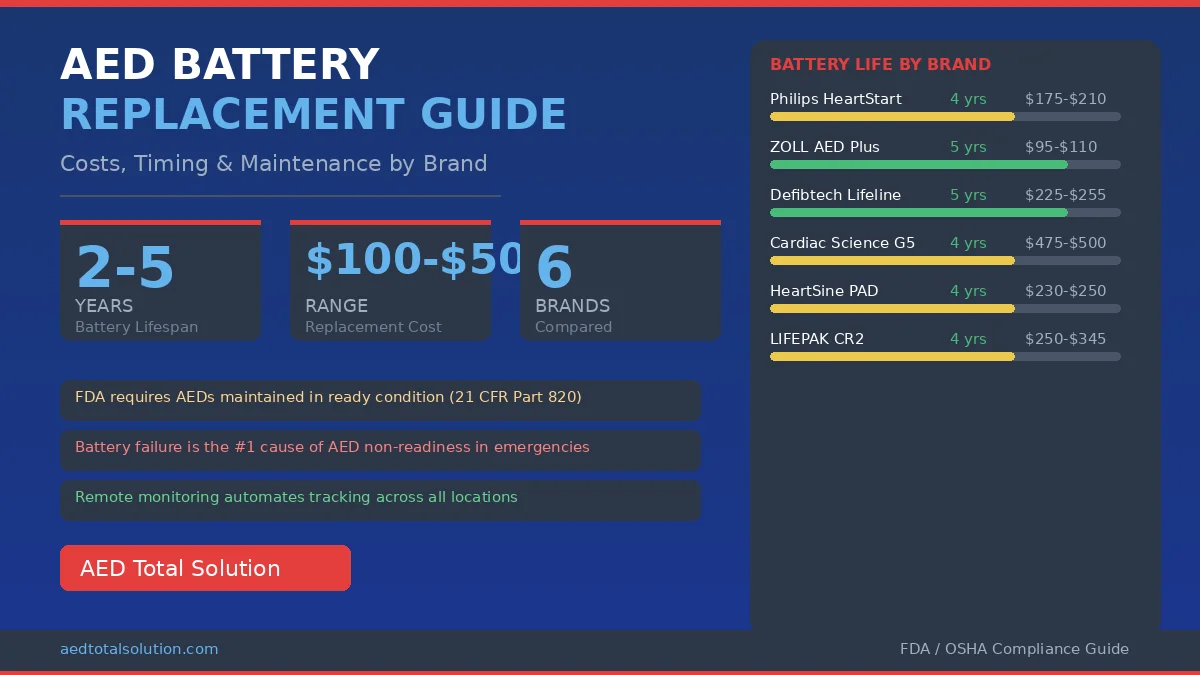
One of the most critical parts of your monthly inspection is checking the expiration dates on your AED’s battery and electrode pads. These components have a limited shelf life, typically lasting between two and five years. If they expire, your AED may not be able to deliver a proper shock, rendering it useless in an emergency.
Set up a reliable system to track these dates. A digital calendar reminder or a simple spreadsheet can work, but it’s vital that you order and install replacements before the old ones expire. Forgetting this step is a common compliance gap. This is where an automated management program can be a lifesaver, as it tracks expiration dates for you and ensures replacement supplies arrive exactly when you need them.
What training your staff needs
While anyone can use an AED in an emergency, California law requires that businesses with an AED program have trained responders on staff. At least one employee per AED should complete a CPR and AED training course from a nationally recognized organization like the American Heart Association or the American Red Cross.
Having trained team members ensures someone on-site has the confidence and skills to act quickly and effectively during a sudden cardiac arrest event. Proper training covers how to recognize the signs of cardiac arrest, perform CPR, and correctly apply the AED pads. Encouraging multiple employees to get certified creates a more resilient response team, so you’re prepared no matter who is present when an emergency occurs.
Keeping your records in order
Thorough documentation is your proof of compliance. California requires you to keep detailed records of all maintenance and testing performed on your AED. This creates an essential paper trail that protects your organization from liability and demonstrates that you have diligently managed your device.
Your records should include a log of every monthly inspection with the date, the inspector’s name, and the device’s status. You should also document every time you replace the batteries or electrode pads. Finally, keep copies of your staff’s CPR and AED training certificates on file. Maintaining these records in an organized binder or digital folder makes it easy to verify your program’s health and readiness at a moment’s notice.
Registering your AED with local EMS
When you acquire an AED, you must register it with your local emergency medical services (EMS) agency. This is a mandatory step in California. You’ll need to provide the specific location of the device, its make, and its model.
This registration process adds your AED to a local dispatch map. When someone calls 911 to report a cardiac arrest near your location, the dispatcher can see your AED and direct the caller or a nearby bystander to retrieve it. This simple action can help bridge the critical time gap before paramedics arrive. Remember to update your local EMS agency if you ever move the AED to a new location or take it out of service.
How Are Businesses with AEDs Protected from Liability?
A common worry for business owners is whether having an AED opens them up to legal risks. Fortunately, California has laws designed to protect you. These protections aren’t automatic, though. They depend on you having a well-managed and compliant AED program. Here’s how the laws work and what you need to do to ensure your business is covered.
How the Good Samaritan Law protects you
California’s Good Samaritan laws are designed to encourage people to help during an emergency without fearing legal consequences. This protection extends to using an AED, shielding any bystander or employee who steps in to help someone in cardiac arrest. The law recognizes that immediate action is what matters most in a life-or-death situation. This legal safeguard empowers people to act decisively, knowing the focus is on saving a life, not on potential legal fallout. It covers the rescuer, the business that purchased the device, and any trainers involved.
Specific protections for business owners
The legal protections don’t just cover the person using the AED; they also extend to you as the business owner. When you place an AED in your workplace, you are shielded from civil damages related to its use, as long as you follow all state requirements. This protection is your reward for being prepared. However, if your AED isn’t properly maintained or staff isn’t trained, you could be held responsible. A fully compliant AED program is your best defense, ensuring your device is always ready and your legal protections remain firmly in place.
What you must do to be covered
To qualify for liability protection, you can’t just mount an AED on the wall and forget it. California law requires you to take specific steps. You must ensure the AED is placed correctly, register its location with your local EMS agency, and perform routine maintenance per the manufacturer’s guidelines. This includes regular inspections and tracking expiration dates for batteries and pads. Crucially, you also need to keep detailed records of all maintenance. Following these rules demonstrates due diligence and is essential for securing legal protection.
Understanding training exemptions
While the Good Samaritan law protects an untrained person who uses an AED, the liability shield for your business often hinges on proper training. For your organization to be protected, you generally need to show you’ve made a reasonable effort to train your staff. This doesn’t mean every single person needs to be certified, but you should have designated responders. The law protects spontaneous helpers, but it expects businesses to be proactively prepared. Ensuring your team is trained is a key part of a responsible emergency response plan and solidifies your legal standing.
What Happens If You Don’t Comply with AED Laws?
Ignoring California’s AED requirements isn’t just a paperwork oversight; it exposes your organization to serious and avoidable risks. When you fail to install, maintain, or provide training for a legally required AED, you create significant vulnerabilities that can have lasting financial and legal consequences. The issue goes far beyond a simple compliance check. It touches on your legal duty to provide a safe environment for employees, customers, and visitors.
Failing to comply can lead to direct financial penalties, but the greater danger often lies in legal liability. If a sudden cardiac arrest occurs on your property and a required AED is missing, broken, or inaccessible, your organization could be found negligent. This not only invalidates the legal protections you would otherwise have but also opens the door to costly lawsuits. The ripple effects can damage your reputation and create a sense of unease among your staff. Let’s break down what that really means for your business, from fines and legal battles to the impact on your insurance coverage. Understanding these consequences is the first step toward building a truly secure and compliant AED program.
Fines and penalties for non-compliance
While California’s state-level AED statutes don’t always list specific fines, non-compliance can still hit your budget. Local city and county ordinances may impose their own monetary penalties for violations. Furthermore, regulatory bodies that oversee workplace safety can issue citations and fines for failing to meet established standards of care. These direct penalties are often just the beginning. Think of them as the initial, most obvious cost of non-compliance. The real financial damage often comes from the secondary consequences, like legal fees and increased insurance premiums, which can quickly overshadow the cost of a simple fine.
How it increases your liability risk
The most significant consequence of non-compliance is the increased risk of legal liability. If your business is required by law to have an AED and you fail to provide one, or if the device is not properly maintained, you could be held responsible if someone suffers harm from a cardiac arrest on your premises. This is typically framed as negligence, meaning you failed to meet your duty of care. This failure creates a direct path for a lawsuit. In a situation where a life could have been saved, the absence of a functional, mandated AED becomes a critical point of failure. Proving that your organization ignored its legal obligations is often straightforward, leaving you in a vulnerable position in any legal proceeding.
The impact on your insurance and legal standing
California’s Good Samaritan laws are designed to protect businesses and individuals who act in good faith during an emergency. However, these protections are not absolute. They generally apply when you have followed all relevant laws for AED placement, maintenance, and training. If you neglect these duties, you risk forfeiting that legal shield. If someone is harmed because your business didn’t follow AED laws, the injured person or their family may have legal options to seek payment for damages. A lawsuit can be incredibly costly, not just in potential settlements but also in legal fees and damage to your reputation. Furthermore, a negligence claim can lead to higher insurance premiums or even difficulty securing coverage in the future, impacting your business long after the case is closed.
Why You Should Install an AED Even If It’s Not Required
Meeting legal requirements is the baseline for workplace safety, but true preparedness goes beyond checking a box. Installing an AED, even when not mandated, is one of the most impactful decisions you can make for the well-being of your employees, customers, and visitors. It sends a clear message that you prioritize safety and are ready to act when seconds are critical. While some businesses are required by law to have an AED, many others choose to install one voluntarily because the benefits are so clear. It’s an investment in people, preparedness, and peace of mind.
The lifesaving impact of early defibrillation
Sudden cardiac arrest can happen to anyone, anywhere, at any time. When it does, the clock starts ticking immediately. The chance of survival drops significantly with each passing minute. Using an automated external defibrillator (AED) within the first few minutes can increase the survival rate to as high as 90%. With over 350,000 out-of-hospital cardiac arrests occurring in the U.S. each year, having an AED on-site transforms bystanders into first responders, giving someone their best possible chance at a positive outcome. It’s a simple device that can make an extraordinary difference.
Building a safer, more confident workplace
Placing an AED in your facility does more than just prepare you for an emergency; it builds a culture of safety and confidence. When employees know a defibrillator is available and are trained to use it, they feel empowered to help their colleagues. This readiness can reduce panic and hesitation during a crisis. By investing in an AED program, you show your team that their safety is a top priority. This commitment fosters a more secure and supportive environment where everyone feels better protected and prepared to respond effectively.
Strengthening your emergency response plan
An AED is a vital part of a complete emergency response plan. It works alongside CPR and first aid training to create a comprehensive safety net for your organization. Integrating an AED into your workplace procedures ensures your team has the right tools to handle a cardiac emergency. A well-managed program includes clear signage showing where the device is, regular inspections, and staff training. Our AED program management services help you seamlessly incorporate this life-saving technology into your overall safety strategy, ensuring it’s always ready when needed.
Lowering your overall liability
While it may seem counterintuitive, having an AED can actually reduce your organization’s liability. California’s Good Samaritan laws are designed to protect individuals and businesses that use an AED in good faith during an emergency. This protection is strongest when the device is properly maintained and staff are trained. By proactively installing and managing an AED, you demonstrate a commitment to safety that can be crucial in a legal situation. It shows you took reasonable steps to protect people on your property, strengthening your position and minimizing risk.
How to Keep Your AED Program Compliant
Keeping your AED program compliant isn’t a one-time task; it’s an ongoing commitment to readiness. Once your AED is installed, the real work of managing it begins. A compliant program is one where the device is always ready for an emergency, your team is prepared to act, and your efforts are clearly documented. Thinking about compliance in a structured way helps you stay organized and reduces your organization’s liability.
Breaking it down into four key areas makes the process much more manageable: creating a consistent maintenance schedule, coordinating staff training, managing your documentation, and staying current with changing regulations. Each piece is essential for building a program that not only meets legal requirements but also genuinely protects the people in your workplace. A well-managed program gives you confidence that your investment in safety will pay off when seconds count. This is where professional AED program management can be a game-changer, ensuring no detail is overlooked.
Create a maintenance schedule
An AED is only useful if it works, and a regular maintenance schedule is the best way to ensure it’s always ready. At a minimum, you should physically inspect your AED at least once every 30 days, following the manufacturer’s specific instructions. During these checks, confirm the readiness indicator shows the device is operational, check the battery’s status, and most importantly, verify the expiration dates on the electrode pads. Expired pads or a dead battery can render the device useless in an emergency. Setting calendar reminders and assigning a specific person to this task helps create accountability and ensures these critical checks are never missed. You can find replacement AED accessories online to keep your device stocked.
Coordinate staff training
Having an AED is the first step, but having a team that feels confident using it is just as important. While modern AEDs are designed for use by lay responders, formal training empowers your staff to act quickly and correctly during a high-stress cardiac emergency. Organizations like the American Red Cross and the American Heart Association offer certified CPR and AED courses that give responders the skills they need. Coordinating this training for a core group of employees ensures someone is always prepared to step in. This not only fulfills a key compliance requirement but also builds a stronger, more resilient safety culture in your workplace.
Manage your documentation
In the world of compliance, if it isn’t documented, it didn’t happen. Keeping meticulous records is your proof that you are responsibly managing your AED program. Your documentation should include a log of every monthly inspection, with the date, the inspector’s initials, and the status of the device. You should also track battery and electrode pad expiration dates and the dates they were replaced. Finally, keep a record of which staff members have completed AED and CPR training and when their certifications expire. These records are essential for demonstrating due diligence and are your first line of defense if your program’s integrity is ever questioned.
Stay on top of law changes
AED laws and regulations are not set in stone; they can evolve over time. State, county, and even city ordinances can change, introducing new requirements for placement, training, or maintenance. As an AED owner, part of your responsibility is to stay informed about the laws that apply to your specific location and industry. A change in legislation could impact your training requirements or inspection frequency. Regularly checking for updates from your local health authorities or working with a compliance partner helps ensure your program never falls out of step with current rules, protecting your organization from potential fines and liability.
Simplify Compliance with Professional AED Program Management
Keeping up with California’s AED requirements can feel like a full-time job. Between monthly inspections, tracking expiration dates, and maintaining perfect records, it’s easy for something to fall through the cracks. This is especially true if you’re managing multiple devices or locations. Instead of juggling spreadsheets and calendar reminders, you can streamline the entire process with professional AED program management. It’s a straightforward way to ensure your program is always ready, compliant, and protected.
The benefit of expert oversight
Handing over your AED program to a dedicated team gives you more than just peace of mind; it provides a layer of protection. California law is clear: owners must maintain and test their AEDs according to manufacturer guidelines and keep detailed records of everything. An expert partner handles all of this for you. They ensure every device is checked on schedule, that all compliance tasks are documented, and that your program meets state and local requirements. This expert oversight reduces your liability and frees up your team to focus on their core responsibilities, confident that your AED program management is in capable hands.
Automate your compliance tracking
One of the biggest challenges of in-house AED management is keeping up with the relentless schedule of tasks. California law requires regular checks, at least every 30 days, with clear records to prove it. A professional management service replaces manual tracking with an automated system. You get timely alerts for upcoming battery and pad expirations, digital checklists for monthly inspections, and a centralized dashboard to view the status of every device. This automation not only saves time but also creates a perfect, audit-ready paper trail. It removes the risk of human error, ensuring no inspection is ever missed and your compliance documentation is always up to date.
Manage AEDs across multiple locations with ease
The complexity of AED compliance grows with every new device and location you add. If you’re a building owner, you’re responsible for notifying tenants annually about AED locations. For multi-site businesses, ensuring every location follows the same maintenance protocol is a huge logistical challenge. A professional management service centralizes oversight for your entire AED fleet. From a single platform, you can monitor the readiness of every device, whether you have five or five hundred. This unified approach guarantees consistency, simplifies reporting, and makes it easy to manage recalls or updates across your whole organization. It’s the simplest way to maintain a compliant and effective emergency response program at scale.
Related Articles
Frequently Asked Questions
My business isn’t a gym or a school. How do I know for sure if I need an AED? The clearest indicator is your building’s occupancy load. In California, commercial buildings designed to hold 200 or more people are generally required to have an AED. The best way to confirm this is by checking your official certificate of occupancy. Beyond that, remember to research your local city and county ordinances, as they can have stricter rules than the state.
What’s the biggest mistake businesses make with their AED programs? The most common and dangerous mistake is treating the AED as a “set it and forget it” device. Simply mounting it on a wall isn’t enough for compliance. The law requires ongoing maintenance, including monthly inspections and tracking the expiration dates for batteries and electrode pads. Forgetting these tasks is a major compliance gap that can render the device useless and expose your business to significant liability.
If we have an AED, are we automatically protected from lawsuits? No, the liability protections offered under California’s Good Samaritan laws are not automatic. They are conditional on you properly managing your AED program. To be covered, you must follow all state requirements, which include performing regular maintenance, keeping detailed records of your inspections, registering the device with local EMS, and ensuring staff are properly trained.
What happens if an untrained employee uses the AED in an emergency? California’s Good Samaritan law protects any person who uses an AED in good faith to save a life, regardless of whether they have formal training. However, for your business to receive its own liability protection, you are expected to have a program in place that includes designated and trained responders. The law protects spontaneous helpers, but it expects businesses to be proactively prepared.
Is managing an AED program something we can handle ourselves? You can certainly manage your own program if you have a diligent system for tracking every detail, from monthly inspections to supply expiration dates and training certifications. However, the risk of human error is high, and a single missed task can put your program out of compliance. Professional management services remove that risk by automating tracking and documentation, which is especially helpful for organizations with multiple locations.