

Placing an AED on the wall is a great first step, but it’s far from the last. A common mistake is thinking that owning the device is enough to be compliant. In reality, a functional, well-managed program is what truly matters. This includes everything from routine maintenance and supply tracking to staff training and detailed record-keeping. A device with an expired battery or pads is just as bad as having no device at all. The real OSHA requirements for AED in workplace environments focus on creating a complete, documented, and reliable emergency response system. This article breaks down the essential components of a compliant program, ensuring your investment in safety is always ready to make a difference when it counts.
Key Takeaways
- State Laws Dictate Your AED Requirements: Don’t stop at OSHA’s general guidelines. Your true legal obligations for AED placement, training, and maintenance are defined by specific state and local laws, which are essential for avoiding liability.
- An AED Is a Program, Not Just a Product: A successful safety plan requires more than just the device. It involves strategic placement for a rapid response, consistent team training, and routine maintenance to ensure your AED is always ready to use.
- Your Records Are Your Proof of Compliance: Meticulous documentation is non-negotiable. Keep organized logs of all training certifications, maintenance checks, and incident reports to create an auditable trail that protects your organization.
What Does OSHA Say About Workplace AEDs?
When you look for a specific OSHA rule that says, “You must have an AED,” you won’t find one. The agency’s standards don’t explicitly name automated external defibrillators. Instead, OSHA’s approach to workplace safety is guided by its General Duty Clause. This foundational rule requires employers to provide a workplace free from recognized hazards that are likely to cause serious harm or death.
While sudden cardiac arrest (SCA) isn’t a piece of faulty equipment, it is a recognized, life-threatening hazard. Because of this, OSHA’s guidance on first aid and emergency preparedness is where AEDs fit in. The decision to implement an AED program is a critical part of your overall safety plan, showing you’ve taken proactive steps to protect your team from a known risk. It’s about moving beyond the bare minimum and creating a truly response-ready environment.
The General Duty Clause Explained
The General Duty Clause is OSHA’s catch-all for ensuring worker safety. It means that even if there isn’t a specific regulation for a particular danger, employers still have a fundamental responsibility to address it. When it comes to SCA, having an AED on-site is one of the most effective ways to mitigate that risk. While OSHA’s standards don’t mandate AEDs everywhere, they do require employers to be prepared for first-aid emergencies. In a high-risk setting—like a large manufacturing plant or a remote construction site—failing to have an AED could be interpreted as not providing a workplace free from recognized hazards. It’s all about assessing your environment and taking reasonable steps to protect your people.
Are AEDs Recommended or Required?
So, what’s the final word? OSHA strongly recommends AEDs in the workplace but does not have a universal requirement. The agency leaves it up to each employer to conduct a risk assessment and determine if an AED is necessary for their specific situation. You should consider factors like the physical nature of the work, the average age of your workforce, and how long it would take for emergency medical services (EMS) to arrive. For many businesses, especially those in high-risk industries or with many employees, an AED program is a critical component of a responsible first-aid plan. Creating a compliant and effective AED program ensures you’re not just checking a box but are truly prepared to save a life.
Are AEDs Legally Required in Your Workplace?
One of the most common questions we hear is whether the law requires a business to have an Automated External Defibrillator (AED). The short answer is: it’s complicated. There isn’t a single federal law that mandates AEDs for every workplace in the country. Instead, your legal responsibility depends on a mix of federal guidelines, specific state laws, and the unique risks present in your industry.
Understanding these layers is the first step to building a compliant and effective AED program. While the Occupational Safety and Health Administration (OSHA) doesn’t have a one-size-fits-all rule, its standards on first aid and emergency preparedness set clear expectations for employers. Let’s break down what you need to know to determine your organization’s requirements.
Federal Rules vs. State Laws
At the federal level, OSHA doesn’t have a specific standard that says, “You must have an AED.” However, that doesn’t mean you have no obligation. OSHA’s general first-aid rules require employers to have adequate first-aid supplies and trained personnel ready, especially if the workplace isn’t near a hospital or clinic. While AEDs aren’t explicitly named, they are often considered essential for a complete emergency response plan in many environments.
Where things get more specific is at the state level. Many states have passed their own laws requiring AEDs in certain types of public places and private businesses, such as gyms, schools, and government buildings. These state laws often create clearer requirements than the broader federal guidelines.
Requirements for Specific Industries
Certain industries carry higher risks of sudden cardiac arrest, and OSHA expects employers in these fields to take extra precautions. For example, workplaces with a higher risk of electrocution, like construction sites or maritime operations, are often expected to have an AED on hand. The same goes for environments where employees perform strenuous physical activity.
Ultimately, every employer is responsible for assessing the specific hazards in their workplace. If your assessment reveals a risk of cardiac arrest and that emergency medical services (EMS) might not arrive within a few minutes, then providing an AED becomes a critical part of ensuring a safe work environment. Thinking through your specific business requirements is key.
Clearing Up Common Misconceptions
Let’s clear up a common point of confusion: OSHA’s Medical Services and First Aid Standard (1910.151) does not list AEDs as a required item in a first-aid kit. Some business owners interpret this to mean they don’t need one. However, the standard puts the responsibility on the employer to provide first-aid supplies that are “adequate” for their workplace.
What’s considered “adequate” is based on the potential hazards and injuries that could occur at your specific site. An office setting has very different risks than a chemical plant or a large manufacturing facility. This means you are responsible for determining what supplies and training are appropriate for your team, and for many, that includes an AED.
Which Industries Need an AED Program Most?
While federal law doesn’t mandate an AED in every office, some workplaces simply carry a higher risk of sudden cardiac arrest. For these industries, having a well-managed AED program isn’t just a good idea—it’s a fundamental part of a strong safety culture. Understanding if your business falls into a high-risk category can help you make informed decisions to protect your team and customers.
Workplaces with High-Risk Factors
OSHA recommends AEDs in workplaces where a sudden cardiac arrest is more likely. This includes environments with known risk factors like high-stress roles, exposure to electrical hazards, or physically demanding tasks. It also applies to businesses with an older workforce, as age can be a factor in cardiac health. If your employees work in confined spaces or remote locations where emergency medical services might be delayed, an on-site AED becomes even more critical. A proactive AED program demonstrates a commitment to employee well-being and prepares your team to act decisively in an emergency.
Healthcare, Gyms, and Fitness Centers
It’s no surprise that healthcare settings—from dental offices to outpatient clinics—are prime locations for AEDs. But gyms and fitness centers also top the list. Strenuous physical activity can trigger underlying heart conditions, making a cardiac event more likely. Many states have specific laws requiring fitness facilities to have AEDs readily available for their members and staff. For these businesses, an AED is an essential piece of safety equipment. Ensuring your device is properly maintained and visible gives everyone peace of mind and shows you prioritize the health of your community.
Construction and Manufacturing Sites
Construction and manufacturing sites often combine physically demanding labor with unique hazards like potential electrocution, making them high-risk environments. These job sites can also be large or remote, leading to longer response times for paramedics. Having an AED on-site can bridge that critical gap between a cardiac event and the arrival of professional help. Because these environments can be tough on equipment, it’s important to choose a durable AED and have a solid maintenance plan. This ensures your device is always ready to perform when every second counts.
Businesses with a Large Workforce
The simple math is that the more people you have in one place, the higher the chance of a medical emergency. This is why large corporate offices, schools, universities, and even busy retail centers should have an AED program. Many states require schools, especially those with athletic programs, to have AEDs. By equipping your facility, you extend a layer of protection to hundreds or even thousands of employees, students, and visitors each day. Investing in the right AED devices and training is a powerful way to build a safer environment for everyone who walks through your doors.
How to Set Up Your AEDs the Right Way
You’ve decided to get an AED for your workplace—that’s a huge step toward protecting your team. But simply unboxing the device and mounting it on the first empty wall you see isn’t enough. A truly effective AED program depends on thoughtful setup. Where you place your AEDs, how quickly they can be accessed, and how they fit into your overall emergency plan are just as important as the device itself. Getting these details right from the start ensures your AED is ready to do its job when seconds are critical.
Where to Place Your AEDs for Quick Access
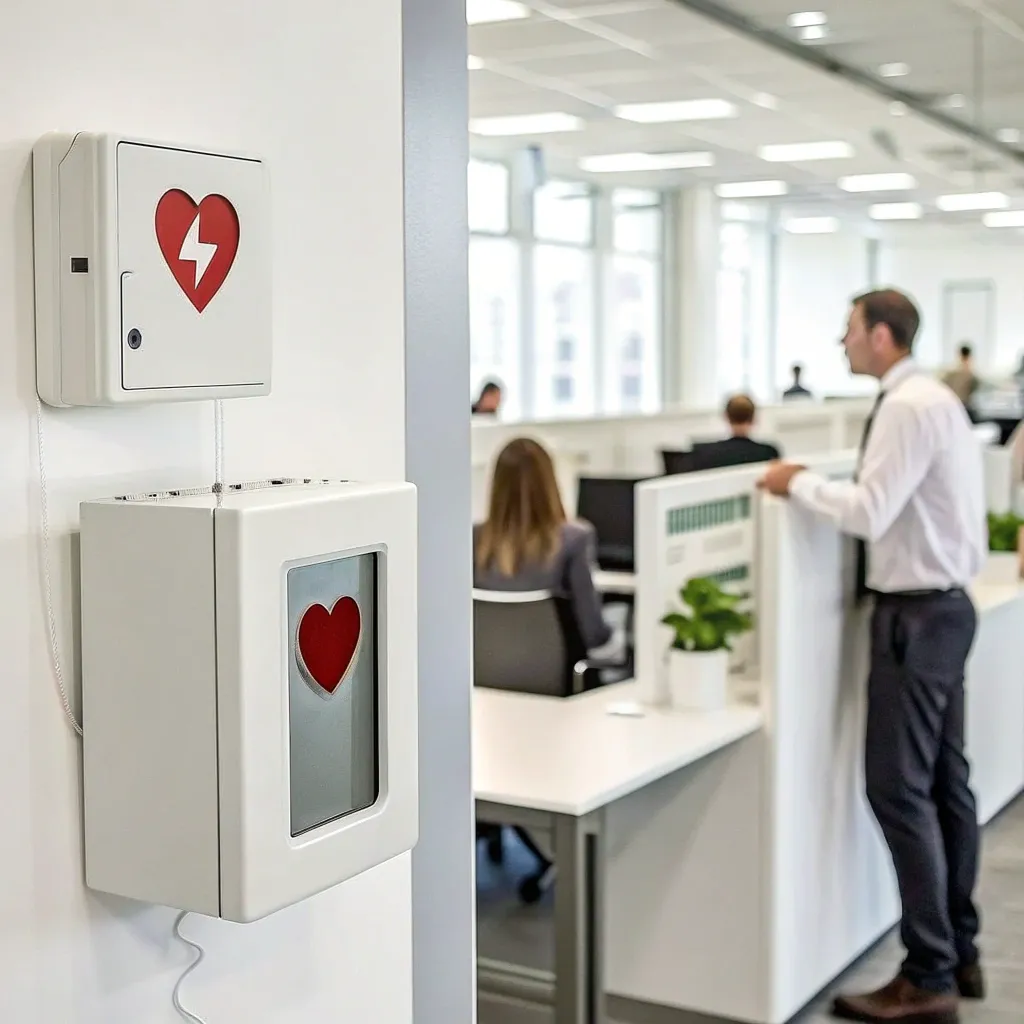
The golden rule for AED placement is simple: a person should be able to grab it and return to the scene within three to five minutes. Think about your facility’s layout. Where do people gather most? Lobbies, cafeterias, conference rooms, and fitness centers are all smart choices. Also, consider areas that are far from emergency exits or where an ambulance might have trouble reaching quickly. The device should be highly visible, clearly signed, and never blocked by furniture or equipment. Proper placement guidance is a key part of a successful program, ensuring your AED is exactly where it needs to be during an emergency.
Meeting Response Time Goals
Why is the three-to-five-minute window so critical? Because for every minute that passes without intervention, a person’s chance of surviving sudden cardiac arrest drops by 7% to 10%. After 10 minutes, survival is extremely rare. This statistic highlights the urgency of a rapid response. Your placement strategy directly impacts your ability to meet this goal. By positioning AEDs in accessible, central locations, you cut down the retrieval time and give your team the best possible chance to act effectively. The goal isn’t just to have an AED on-site; it’s to get it to the person’s side as quickly as humanly possible.
Fitting AEDs into Your Emergency Plan
An AED is a powerful tool, but it’s only one piece of your emergency response puzzle. OSHA advises employers to assess their workplace to determine what first aid supplies and training are needed. Your AED should be integrated into a formal, written emergency plan that your team understands and practices. This plan should outline clear roles: who calls 911, who retrieves the AED, and who starts CPR. A well-managed AED program makes your workplace significantly safer for everyone. Thinking through these logistics beforehand removes confusion during a crisis and ensures a coordinated, effective response. This is where comprehensive AED program management can make all the difference. For a detailed walkthrough, see our complete guide on how to create an AED emergency response plan for your workplace.
How to Train Your Team to Use an AED
Having an AED on-site is a critical first step, but the device is only effective if your team knows how to use it without hesitation. Proper training transforms a piece of equipment into a life-saving tool and gives your employees the confidence to act when every second counts. Building a strong training program isn’t just about checking a box for compliance; it’s about creating a culture of safety and preparedness. Here’s how to build a training program that prepares everyone for an emergency.
What Should AED Training Cover?
Effective AED training goes beyond a simple device demonstration. A comprehensive program should teach your team how to respond to a cardiac emergency from start to finish. This includes recognizing the signs of sudden cardiac arrest, knowing when to call 911, and performing high-quality cardiopulmonary resuscitation (CPR). Since CPR is often required before an AED is used, these skills should be taught together. Your team members should learn how to apply the AED pads correctly, follow the device’s voice prompts, and understand what to do after the shock is delivered. The goal is to create a seamless response where everyone knows their role and can act decisively.
Finding the Right CPR and AED Certifications
To ensure your team receives credible and effective instruction, look for certification courses from nationally recognized organizations. The American Heart Association and the American Red Cross are the gold standard for CPR and AED training. They offer a variety of formats, including in-person classes that allow for hands-on practice, as well as blended learning options that combine online coursework with a practical skills session. Choosing a program that provides official certification is important for both compliance and liability protection. It verifies that your employees have been trained to a recognized standard, giving you and your team peace of mind.
Why Practice Builds Confidence
In a high-stress emergency, people don’t rise to the occasion—they fall back on their training. This is why hands-on practice is so important. Reading a manual or watching a video isn’t enough to build the muscle memory needed to act quickly. Regular drills and practice sessions with a training AED help demystify the process and reduce hesitation. When your employees have physically walked through the steps of retrieving the device, applying the pads, and following the prompts, they build the confidence to perform these actions under pressure. This practical experience is a key part of a complete AED program management plan that prioritizes true readiness.
Keeping Skills Sharp with Refresher Courses
CPR and AED skills are perishable. A one-time training session isn’t enough to keep your team prepared for the long term. Certifications typically expire every two years, and for good reason. Regular refresher courses are essential for maintaining skills and ensuring your team remembers the correct procedures. These sessions are also a great opportunity to review your workplace’s specific emergency action plan, confirm the location of your AEDs, and introduce any new team members to the protocol. OSHA recommends that training is updated often, making ongoing education a core component of a compliant and effective safety program.
What Maintenance Do Workplace AEDs Need?
Placing an AED on the wall is just the first step. To keep your workplace safe and compliant, you need to treat your AED like any other critical piece of safety equipment—it requires regular attention. Think of it this way: you wouldn’t let your fire extinguishers go uninspected, and your AED is no different. Consistent maintenance ensures it’s ready to work at a moment’s notice, which is the only moment that matters.
According to OSHA, employers must “check, test, and take care of AEDs according to the manufacturer’s instructions.” This isn’t just a suggestion; it’s a fundamental part of a responsible safety program. Proper maintenance involves a few key tasks, from quick daily glances to tracking expiration dates and staying on top of manufacturer updates. Neglecting these steps can leave you with a device that fails during an emergency, creating a tragic outcome and significant liability. The good news is that creating a maintenance routine doesn’t have to be complicated, especially when you have the right systems in place.
Simple Daily Checks
A quick, daily check is one of the easiest and most effective things you can do to ensure your AED is ready. Most AEDs perform automatic self-tests and display a simple readiness indicator—often a green light or a checkmark—to show that everything is working correctly. Make it a habit for a designated person to walk by and confirm that the status indicator is green. This simple visual inspection takes only a few seconds but can immediately alert you to issues like a low battery or a device malfunction. It’s the first line of defense in a solid AED program management plan.
Tracking Battery and Pad Expiration Dates
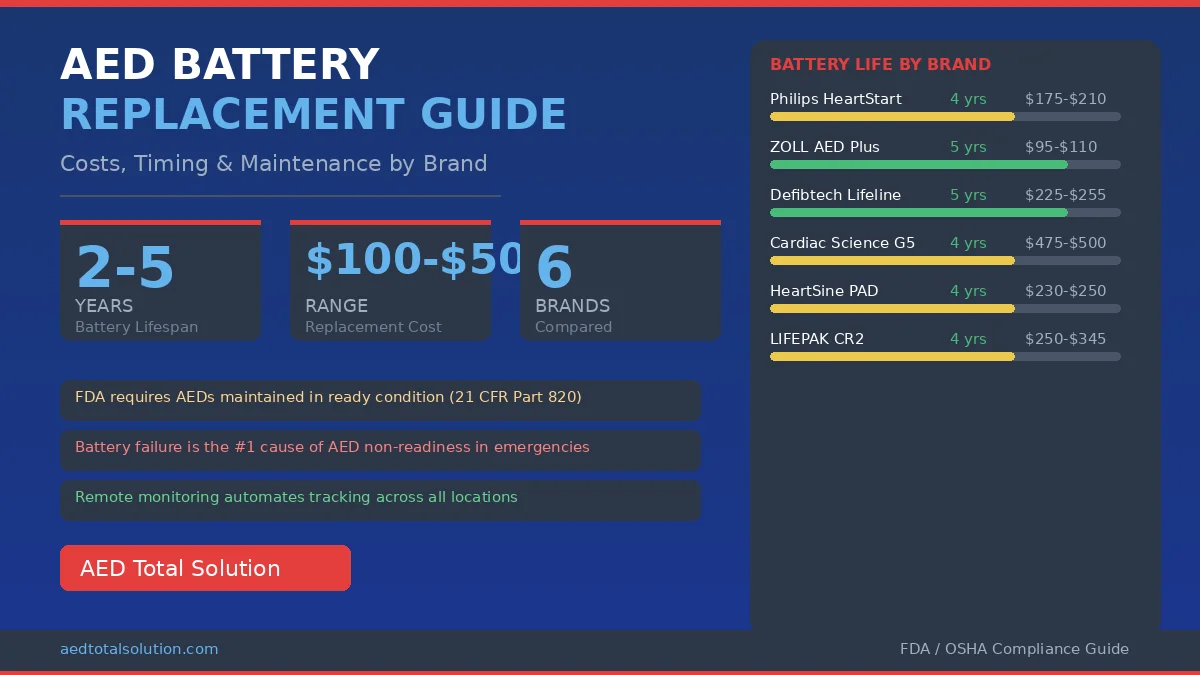
Every AED has two critical components with a limited shelf life: the battery and the electrode pads. Both have clear expiration dates printed on them, and using them past these dates can cause the device to fail. The gel on expired pads can dry out, preventing a solid connection to the skin, while an old battery may not hold enough charge to deliver a shock. Manually tracking these dates can be a real headache, especially if you manage multiple devices across different locations. Staying on top of your AED accessories is non-negotiable for keeping your device functional and compliant.
Following Manufacturer Guidelines and Recalls
Not all AEDs are created equal. Each manufacturer provides specific guidelines for maintenance, testing schedules, and operation, and OSHA requires that you follow them precisely. Sticking to these instructions ensures your device functions as intended and keeps you in compliance. Beyond routine maintenance, you also need to stay informed about any manufacturer recalls or software updates. This can be a challenge, as you might not hear about a critical update until it’s too late. A managed AED program helps ensure these important notices never slip through the cracks, protecting both your employees and your organization.
Using Remote Monitoring to Stay Ahead
Instead of relying on manual checklists and calendar reminders, you can use technology to automate your AED maintenance. Remote monitoring systems automatically track the readiness of every device in your program. These systems can perform virtual inspections, send you email alerts when batteries or pads are nearing expiration, and create a digital log of all maintenance activities for easy compliance reporting. This proactive approach removes the risk of human error and gives you confidence that your entire AED fleet is ready to respond. It’s the smartest way to manage a modern AED program and ensure you’re always prepared.
How Do State Laws Affect Your AED Program?
While OSHA’s General Duty Clause sets a broad expectation for workplace safety, the specific rules for your AED program are often found at the state level. This is where things can get tricky. There isn’t a single, nationwide standard for AEDs, which means your compliance obligations depend entirely on where your business operates. For organizations with offices in different states, keeping up with this patchwork of regulations can feel like a full-time job.
Each state has its own approach to AED legislation. Some have detailed requirements for specific industries, while others focus more on providing liability protection for those who use a device in good faith. These laws typically cover three main areas: where and when an AED is required, what protections you have under Good Samaritan laws, and the administrative steps you need to take, like medical oversight and state registration. Understanding these local rules is the key to building a program that is not only effective but also legally sound. It protects your organization, empowers your team, and ensures your AED is ready to be a lifeline when it matters most.
How Requirements Vary by State
Because there’s no federal mandate, state AED laws create a complex web of rules that can differ dramatically from one another. For example, one state might require all fitness centers and schools to have an AED on-site, while a neighboring state may have no such rule. These requirements can also extend to specific building types, like large public venues or government offices.
This variability is one of the biggest compliance headaches for businesses with multiple locations. What keeps your Texas office compliant won’t necessarily meet the standards for your California branch. It’s your responsibility to know the specific regulations for every location to avoid fines and liability risks. This includes understanding any local ordinances that might add another layer of requirements on top of state law.
Understanding Good Samaritan Laws
Most people have heard of Good Samaritan laws, but many don’t realize how they apply to workplace AED programs. These laws are designed to protect individuals and organizations from liability when they voluntarily help someone during a medical emergency. In the context of AEDs, they offer legal protection if a device is used in good faith to save a life.
However, this protection isn’t automatic. States often tie Good Samaritan immunity to certain conditions. For instance, many laws require you to prove that your AED was properly maintained, your staff received appropriate training, and you registered the device’s location with local emergency services. Failing to meet these requirements could put your organization at risk. Think of these laws not as a free pass, but as an incentive to maintain a responsible and ready AED program.
Medical Oversight and State Registration
Many states require AED programs to have medical oversight, which means a licensed physician must oversee your program to ensure it aligns with current medical protocols. This doctor doesn’t need to be on-site, but they are responsible for things like reviewing event data after an AED is used and ensuring your training is up to par. This step confirms your program is medically sound and effective.
Additionally, most states require you to register your AED with your local emergency medical services (EMS). This is a critical step that allows 911 dispatchers to direct rescuers to the nearest device in an emergency. Both medical oversight and registration are essential for compliance and can be easily overlooked. Partnering with a program management service ensures these administrative tasks are handled correctly, keeping your program compliant and fully integrated with your local emergency response system.
Common Challenges for Multi-Location Businesses
Managing an AED program at one site is a big responsibility. But when you’re overseeing devices across multiple locations, the complexity grows exponentially. Each new office, store, or facility adds another layer of compliance rules, maintenance schedules, and logistical hurdles, making it incredibly difficult to ensure every single AED is ready for an emergency. From inconsistent state laws to the simple fact that you can’t be everywhere at once, multi-location businesses face unique obstacles in keeping their people safe and their organization protected from liability.
The core problem is a lack of visibility and control. When your AEDs are spread out, you lose the ability to physically check on them, confirm that local staff are performing inspections, and verify that every device is compliant with local regulations. What works for your headquarters in Texas might not meet the requirements for a branch in California. This patchwork of rules creates significant administrative burdens and opens the door to compliance gaps. Relying on a decentralized team of employees who have other primary responsibilities often means AED maintenance becomes an afterthought. This can lead to expired pads, dead batteries, and devices that fail when they’re needed most, exposing your organization to serious legal and financial risks.
The Trouble with Centralized Management
Trying to manage every AED from a central office often leads to critical gaps. It’s nearly impossible for one person or team to keep tabs on physical inspections, local staff training, and device status across different cities or states. When the person on-site is busy with their primary job, AED checks can easily fall to the bottom of the to-do list. This centralized approach can create a false sense of security, where you think everything is covered, but in reality, devices could be non-functional without anyone at headquarters knowing until it’s too late.
Keeping Every Location Compliant
Compliance is one of the biggest headaches for multi-location businesses. While OSHA offers guidance, specific AED requirements often vary by state and even by county. A device in one state might need to be registered with the local emergency services, while another requires physician oversight. Keeping track of these different rules is a massive task. A simple mistake or oversight at just one location can put your entire organization at risk of liability, making a consistent, expert-led approach to AED program management essential.
Overcoming Tech and Communication Hurdles
Relying on spreadsheets and email chains to track your AEDs is a recipe for disaster. Manual tracking is prone to human error, and communication can easily break down when you’re dealing with different points of contact at each site. What happens if a local manager leaves? Does the knowledge of the AED’s maintenance schedule leave with them? Without a reliable, automated system, you’re left with outdated information and no clear way to confirm if a device is actually ready to save a life.
Finding a Solution That Grows with You
As your business expands, your AED program needs to scale seamlessly. You need a system that doesn’t just add more work to your plate with each new location. The right solution should simplify your oversight, not complicate it. Look for a partner that offers remote monitoring, automated alerts for battery and pad expirations, and centralized documentation. A comprehensive AED management service removes the guesswork and administrative burden, allowing your program to grow with your company while ensuring every device is compliant and ready.
What Records Do You Need to Keep for Compliance?
Think of your records as the official story of your AED program—a story that proves your devices are maintained, your people are trained, and you are prepared. If an emergency happens, this documentation is your first line of defense, showing you took every reasonable step to protect your team. Without proper records, even the best-laid plans can fall apart under scrutiny. Keeping everything organized demonstrates a commitment to safety that goes beyond just having a device on the wall. It shows you have a living, breathing program that’s ready for action. This documentation is what separates a truly compliant program from one that just looks good on the surface. It’s the backbone of a defensible safety strategy and is essential for meeting OSHA first aid standards. Let’s break down the essential records you need to maintain.
Training and Certification Records
Having trained responders is one thing, but proving it is another. Your training records should clearly show who on your team is certified in CPR and AED use. For each person, you’ll want to log their name, the date of their training, the certification provider, and when their certification expires. Keeping digital or physical copies of their certification cards is a great practice. Since skills can fade, it’s also important to track when refresher courses are needed. These records are your proof that you have designated and qualified individuals ready to step in during an emergency, which is a cornerstone of any effective workplace safety program.
Inspection and Maintenance Logs
An AED is only useful if it works. That’s why meticulous inspection and maintenance logs are non-negotiable. These records document that your devices are checked regularly and are in good working order. Your logs should include the date of each inspection, the name of the person who performed it, and the status of the AED’s readiness indicator. Crucially, you must also track the expiration dates for batteries and electrode pads and document when they are replaced. Always follow the manufacturer’s recommendations for maintenance schedules. These logs provide a clear, auditable trail showing your AEDs are consistently cared for and ready to save a life.
Incident Reports for Audits
When an AED is used, documenting the event is critical. An incident report creates an official record for post-event review, compliance audits, and legal protection. This report should detail the date, time, and location of the incident, the name of the person who collapsed, and who responded. It should also describe the actions taken, including when the AED was applied and whether a shock was delivered. This information is invaluable for refining your emergency response plan and providing essential data to medical oversight physicians and emergency services. A thorough report demonstrates that your program functions as intended during a real-world crisis, confirming its effectiveness.
Putting It All Together: Your Compliant AED Program
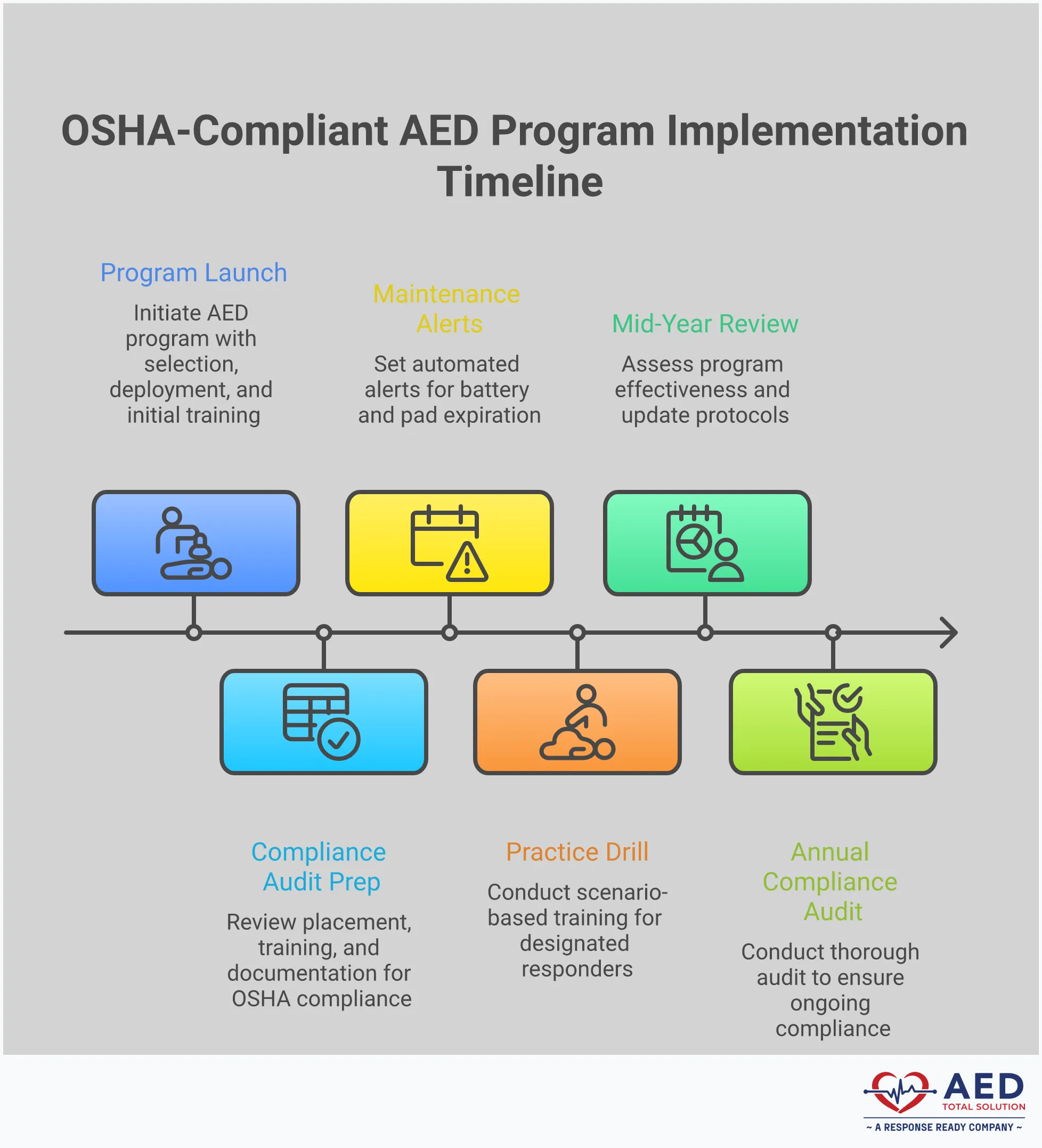
Creating an AED program that meets OSHA guidelines and state laws involves more than just buying a device. It’s about building a complete system that ensures your equipment is ready, your team is trained, and your records are in order. When you connect all the pieces, you create a program that not only checks the compliance boxes but genuinely prepares your workplace for an emergency. Let’s look at what a truly effective program includes and how you can manage it without the headache.
The Key Pieces of a Strong Program
A strong AED program starts with a clear-eyed assessment of your workplace. Every business is different, so you need to understand your specific risks to build a first-aid response that makes sense for your team. According to OSHA guidance, this includes placing AEDs in accessible spots, training employees to use them, and performing routine maintenance according to the manufacturer’s instructions. Think of it as a living system, not a one-time purchase. Regular inspections, battery and pad tracking, and proper documentation are the essential, ongoing tasks that keep your program effective and compliant. Without them, even the best AED is just a box on the wall.
Why You Need Professional Support
Let’s be honest: managing an AED program is a heavy lift. It’s a serious responsibility that goes far beyond just mounting a device. You have to coordinate with local EMS, keep detailed maintenance logs, track training certifications, and stay on top of changing state regulations. For many safety and facilities managers, this becomes a constant source of administrative work and anxiety. Is everything up to date? Are we audit-ready? This is where professional support becomes so valuable. Having an expert partner helps you manage the complexities and close any gaps, ensuring your program is truly prepared for an emergency, not just compliant on paper.
Simplify Everything with Program Management
Instead of juggling spreadsheets and calendar reminders, you can streamline your entire AED program with a dedicated management solution. A full-service partner handles every detail, from tracking expiration dates and scheduling inspections to documenting maintenance and ensuring every device is monitored for readiness. This approach removes the guesswork and administrative burden, giving you confidence that your program is always compliant and prepared. With comprehensive AED program management, you get the tools and expert oversight needed to protect your team and your organization. It’s the simplest way to ensure your AEDs are ready to go when seconds matter most.
Related Articles
- AED Laws & Requirements Across State — AED Total Solution
- AED Rules and Regulations: A Compliance Guide
- AED Program Management | Compliance and Maintenance
- OSHA AED Location Requirements: A Simple Guide
Frequently Asked Questions
Does OSHA actually require my business to have an AED? While you won’t find a specific OSHA rule that says “you must have an AED,” the answer isn’t a simple no. OSHA’s General Duty Clause requires employers to provide a workplace free from known hazards that could cause serious harm or death. Since sudden cardiac arrest is a recognized and deadly hazard, having an AED is considered a critical step in mitigating that risk. OSHA strongly recommends them, and in certain high-risk situations, not having one could be seen as failing to meet your general duty to keep employees safe.
My business isn’t in a high-risk industry like construction. Do I still need an AED? It’s true that some industries have higher risks, but sudden cardiac arrest can happen to anyone, at any time, in any workplace. An office setting is not immune. The decision should be based on your specific environment. Consider the average age of your workforce, the number of employees and visitors you have, and, most importantly, how long it would take for paramedics to arrive. If emergency services are more than a few minutes away, an on-site AED can be the difference between life and death.
What’s the biggest mistake businesses make after buying an AED? The most common mistake is treating the AED as a “set it and forget it” device. Buying the AED is just the beginning. A truly effective program requires ongoing attention. This includes placing the device where it can be accessed within three minutes, training your team to use it confidently, and performing regular maintenance checks. Neglecting these steps can lead to expired pads, dead batteries, and a device that fails when you need it most.
Are we protected from lawsuits if we use our AED to help someone? Most states have Good Samaritan laws that offer liability protection to individuals and organizations that use an AED in good faith during an emergency. However, this protection isn’t always automatic. It is often dependent on you proving that you properly maintained the device, provided appropriate training for your staff, and followed any local registration requirements. Think of these laws as an incentive to run a responsible and well-managed AED program.
How can I keep track of everything if I have AEDs in multiple offices? Managing AEDs across several locations is a huge challenge. Relying on spreadsheets and different staff members at each site often leads to missed inspections and compliance gaps, especially since state laws can vary. The most effective solution is a centralized program management system that uses remote monitoring. This gives you a single view of every device’s readiness, sends automated alerts for expiring parts, and ensures every location is compliant without you having to chase down information.