

Many people think a heart attack and a Sudden Cardiac Arrest (SCA) are the same thing, but they aren’t. A heart attack is a plumbing problem; SCA is an electrical one that causes the heart to stop beating suddenly. When that happens, the chance of survival drops about 10% for every minute that passes without defibrillation. Paramedics often can’t arrive fast enough. Having an AED on-site empowers your team to act immediately, bridging that critical time gap. When you buy defibrillator for office use, you are investing in a device that gives your colleagues the best possible chance of surviving a life-threatening emergency.
Key Takeaways
- Empower Anyone to Save a Life: Modern AEDs are designed for lay rescuers, using simple voice commands to guide the entire process. This ease of use, combined with Good Samaritan laws, means any employee can confidently step in during an emergency.
- Budget for the Total Cost of Ownership: The initial price of an AED is just the beginning. A sustainable program accounts for the long-term costs of replacement pads and batteries, as well as essential CPR and AED training for your team.
- Ensure Readiness Through Active Management: An AED program is only effective if it’s properly managed. This means establishing a clear emergency plan, documenting all maintenance checks, and tracking supply expiration dates to guarantee your device is always ready and your organization stays compliant.
Why Your Office Needs a Defibrillator
Thinking about workplace safety often brings fire extinguishers and first-aid kits to mind. But what about preparing for a sudden cardiac arrest? An Automated External Defibrillator (AED) is a critical tool that can mean the difference between life and death. Let’s walk through why having one in your office isn’t just a good idea—it’s a fundamental part of keeping your team safe.
What is Sudden Cardiac Arrest?
Sudden Cardiac Arrest (SCA) is not a heart attack. It’s an electrical malfunction that causes the heart to stop beating unexpectedly. When this happens, blood flow to the brain and other vital organs ceases. Without immediate intervention, the outcome is almost always fatal. Every minute that passes without a defibrillation shock decreases the chance of survival significantly.
An AED is a small, user-friendly device that analyzes the heart’s rhythm and, if necessary, delivers an electrical shock to restore a normal heartbeat. It’s designed for anyone to use, even without formal medical training, providing clear voice instructions to guide the user through every step.
AEDs, Liability, and Legal Protection
Many business owners worry about the legal side of having an AED. While there isn’t a single federal law requiring them in every workplace, many states have specific regulations. More importantly, OSHA requires employers to ensure medical services and first aid are “readily available” for employees. An AED is a key part of meeting that standard.
Concerns about liability are also common, but Good Samaritan laws in all 50 states offer legal protection to individuals who use an AED to help someone in good faith. Having a well-managed program actually reduces your risk by demonstrating a commitment to safety. Proper AED program management ensures your device is compliant, maintained, and ready to use, protecting both your employees and your organization.
How AEDs Improve Survival Rates
The statistics on SCA are sobering, but the impact of an AED is incredibly hopeful. When a person experiences SCA, their chance of survival drops by about 10% for every minute that passes without defibrillation. Paramedics often can’t arrive fast enough. However, when CPR is combined with a shock from an AED within the first few minutes, the survival rate can be as high as 90%.
An electrical shock is the only therapy that can restart a heart during SCA. Having a defibrillator on-site empowers your team to act immediately, bridging the critical time gap until professional help arrives. When you purchase an AED for your office, you are investing in a device that gives your colleagues the best possible chance of surviving a life-threatening emergency.
What Are the Best Defibrillator Brands for an Office?
Choosing the right AED for your workplace can feel like a big decision, but it doesn’t have to be complicated. The most important thing is to select a device that is reliable, easy to use, and from a reputable brand. While many great options are available, a few names consistently stand out in the industry for their quality and user-friendly designs. Think of it less like picking a complex medical device and more like choosing a vital piece of safety equipment, like a fire extinguisher. The goal is to find an AED that anyone in your office could confidently use during an emergency, without needing a medical degree.
Top brands like Philips, ZOLL, and Cardiac Science have built their reputations on creating devices that guide even untrained responders through the entire process with clear, calm instructions. They understand that the person using the AED will likely be a coworker experiencing a stressful, high-stakes situation. That’s why their products are designed to remove as much guesswork as possible. When you shop for an AED, focusing on these trusted manufacturers is a great way to narrow down your choices. It ensures you’re getting a high-quality device that’s built to perform when it matters most and is supported by years of research and real-world application.
Our Recommended AED Models
When you start looking at defibrillators, you’ll quickly notice a few key players: Philips, ZOLL, Physio-Control, HeartSine, Defibtech, and Cardiac Science. These brands are the leaders in the AED market for a reason. They have a long track record of producing dependable devices that are trusted by medical professionals and workplaces alike. For an office setting, you want a model that prioritizes simplicity and clear instructions, since the person using it might be a coworker with no medical background. Each of these brands offers excellent AEDs designed for public access, but a few specific models are particularly well-suited for the workplace. We’ll take a closer look at some of our top picks from ZOLL, Philips, and Cardiac Science.
Features of the ZOLL AED Plus
The ZOLL AED Plus is a fantastic choice for offices because it does more than just deliver a shock—it actively coaches the rescuer. Its standout feature is Real CPR Help®, which provides real-time feedback on the depth and rate of chest compressions. A clear voice prompt will tell you to “Push harder” or confirm “Good compressions,” taking the guesswork out of performing CPR. This guidance is incredibly valuable in a high-stress situation, helping ensure the victim gets effective care while waiting for paramedics. The ZOLL AED Plus also comes with a 7-year warranty, giving you peace of mind that your investment is protected for the long haul.
An Overview of the Philips HeartStart Series
Philips is known for creating intuitive, user-friendly technology, and their AEDs are no exception. The Philips HeartStart OnSite AED is one of the most popular models for offices, schools, and public spaces. As soon as you pull the handle, it activates and begins providing calm, step-by-step voice commands that walk you through the entire rescue process, from pad placement to CPR. This simple, straightforward design helps build confidence in responders during a chaotic event. The HeartStart series is designed to be so easy to use that a responder with minimal training can operate it effectively, making it a perfect fit for any workplace safety program.
Exploring Cardiac Science Powerheart Models
The Cardiac Science Powerheart G5 AED is another top-tier option that’s built for reliability and performance. One of its key advantages is its fast shock delivery, which minimizes the time between CPR and defibrillation—a critical factor for survival. Like the ZOLL model, the Powerheart G5 also offers real-time CPR feedback to guide the rescuer. It features an 8-year warranty, one of the longest in the industry, which speaks to its durability. The device also performs daily, weekly, and monthly self-tests to ensure it’s always ready to go. For organizations looking for a robust and dependable AED, the Powerheart G5 is an excellent choice.
How Much Does an Office Defibrillator Cost?
When you start looking into getting an AED for your office, the first question is usually about the price. It’s a practical place to start, but the sticker price on the device is only one piece of the puzzle. Thinking about the total cost of ownership from the beginning will help you budget accurately and ensure your AED program is sustainable for years to come. The true cost includes the initial purchase, the essential replacement parts you’ll need down the road, the training that empowers your team to act confidently, and the oversight needed to keep everything compliant and ready.
Understanding these different costs helps you see the full picture of what it takes to maintain a life-saving AED program. It’s not a one-time purchase but an ongoing commitment to safety. From the device itself to the batteries and pads that keep it running, each component plays a critical role. A well-managed program that tracks compliance and readiness can save you from headaches and potential liability, ensuring your investment is always prepared to make a difference. Let’s break down what you can expect to invest in, so you can make an informed decision that protects your team and your organization. We’ll cover everything from the device itself to the ongoing program management services that keep your program running smoothly.
The Upfront Purchase Price
The initial investment for an Automated External Defibrillator (AED) typically falls between $900 and $2,500. This range depends on several factors, including the brand, specific features like real-time CPR feedback, and the length of the warranty. While it might be tempting to go for the lowest-priced option, it’s important to consider which features will best serve your office environment. You can explore a variety of AEDs for sale to compare models and find the right fit. A more intuitive device with clear voice prompts, for example, might be worth the extra cost for a workplace with limited medical personnel. Think of this as the foundational cost for building a safer workplace.
Ongoing Costs: Maintenance and Supplies
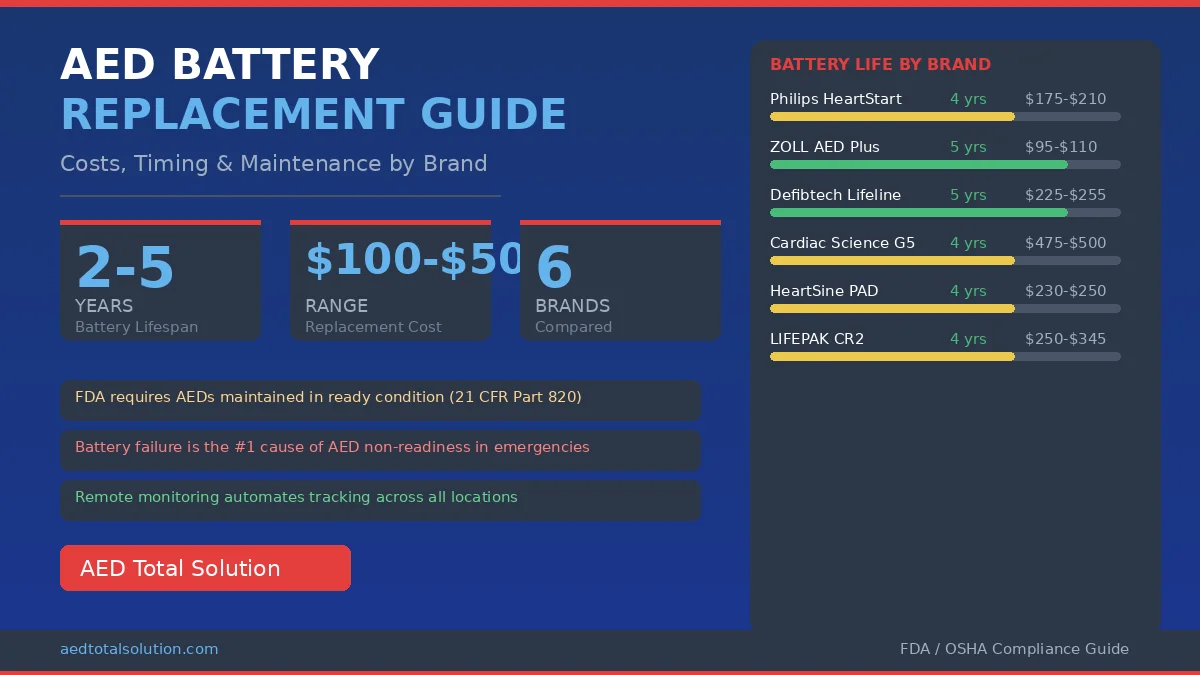
An AED isn’t a “set it and forget it” device. To keep it rescue-ready, you’ll need to plan for recurring costs for essential supplies. The electrode pads, which are applied to a person’s chest, have a shelf life and need to be replaced every two to four years, costing between $70 and $190. Similarly, the battery that powers the device will last about four to five years and costs anywhere from $175 to $250 to replace. These aren’t optional expenses; they are critical for ensuring the AED functions correctly when you need it most. Tracking these expiration dates is a key part of any effective AED program.
Factoring in Training and Compliance
Having an AED is the first step, but ensuring your team knows how to use it is just as important. Investing in AED, CPR, and First Aid training empowers your employees to respond quickly and confidently during an emergency. This not only improves the chances of a positive outcome but also helps you meet compliance standards and reduce liability. The cost of training varies, but it’s a vital part of your overall safety budget. A comprehensive AED program management plan often includes tracking training certifications and ensuring your workplace meets all local and state requirements, taking the guesswork out of compliance.
What Influences the Total Cost of Ownership?
When you look at the big picture, the total cost of ownership goes far beyond the initial price tag. It’s the sum of the device purchase, the lifetime cost of replacement pads and batteries, ongoing training for your staff, and any program management fees. Thinking in these terms helps you create a realistic budget and avoid surprise expenses that could compromise your program’s readiness. For some organizations, an AED rental program can be a great alternative, bundling the device, maintenance, and supplies into a predictable monthly cost. Ultimately, understanding the total cost ensures your life-saving program remains effective and compliant for the long haul.
What Features Matter Most in an Office AED?
When you’re choosing an AED, it’s easy to get lost in the technical specs. But the best device for your office isn’t necessarily the one with the most bells and whistles—it’s the one that’s reliable, easy to use in a crisis, and suited to your specific environment. A sudden cardiac arrest is a high-stress situation, and the AED should reduce confusion, not add to it. Focusing on a few key features will help you select a defibrillator that empowers anyone on your team to act confidently and effectively. From clear voice prompts to automatic readiness checks, these are the features that truly make a difference when every second counts.
Ease of Use and Clear Voice Prompts
In an emergency, simplicity is everything. The person responding to a cardiac arrest may have minimal training and will be under immense pressure. The best AEDs are designed for lay rescuers, with intuitive interfaces and clear, calm instructions. Look for a device that provides simple, step-by-step voice commands that walk the user through the entire process, from applying the electrode pads to performing CPR. For example, models like the Philips HeartStart are well-known for their ability to guide users through each critical step. This feature removes the guesswork and helps ensure the rescuer can deliver effective aid without hesitation.
Automatic Self-Testing for Readiness
An AED is only useful if it’s ready to work at a moment’s notice. That’s why the automatic self-testing feature is non-negotiable. Modern AEDs perform their own routine diagnostic checks—daily, weekly, and monthly—to verify the battery, pads, and internal circuitry are all functioning correctly. If the device detects an issue, it will signal an alert, often with a flashing light or an audible chirp. This proactive monitoring is the first line of defense against device failure. While self-tests are crucial, an AED management program ensures these alerts are never missed and that you stay on top of expiration dates. The Mayo Clinic advises that you should replace batteries and pads as instructed, and a self-testing device makes that process foolproof.
Adult and Pediatric Capabilities
Sudden cardiac arrest can affect anyone, regardless of age. If your workplace is a school, community center, or a business where employees’ families and other visitors are common, you need an AED that can treat children as well as adults. Many modern defibrillators offer pediatric capabilities. This is often managed in one of two ways: either with separate, smaller electrode pads designed for children or with a special key or switch that reduces the energy of the electrical shock to a safer level for a child. If your environment includes children, make sure to add pediatric pads or a pediatric key to your setup.
Battery Life and Durability
An AED is a long-term investment in safety, so its durability and maintenance needs are important considerations. Look for a device with a long-lasting battery. A typical AED battery will last between two and five years, which reduces the frequency of replacement and lowers the long-term cost of ownership. You should also consider the device’s durability, often indicated by its IP (Ingress Protection) rating, which measures its resistance to dust and water. An AED in a clean, corporate office has different needs than one in a manufacturing facility or a gym. Choosing a durable device ensures it can withstand the conditions of your specific workplace.
Portability and Compact Design
When someone collapses from cardiac arrest, time is critical. The AED needs to be retrieved and brought to their side as quickly as possible. A lightweight, compact, and portable design is essential. The device should be easy to grab and carry, even for someone who is in a panic. Most modern AEDs are designed with this in mind, weighing just a few pounds and fitting into a small carrying case. Leading manufacturers design their AEDs and related items to be easy to transport and deploy, ensuring that help can arrive without delay, no matter where the emergency occurs in your building.
What Are the Legal Requirements for Office AEDs?
Figuring out the legal side of having an AED in your office can feel a bit complicated, but it’s a critical step. While there isn’t a single federal law that requires every business to have a defibrillator, a mix of state laws and federal guidelines creates a framework you need to follow. Staying compliant isn’t just about checking a box; it’s about ensuring your device is ready to save a life and protecting your organization from liability. The rules that apply to your office depend on where you’re located, your industry, and even how close you are to emergency medical services.
Most legal frameworks cover a few key areas: specific state requirements, federal workplace safety guidance from OSHA, liability protections under Good Samaritan laws, and the absolute necessity of proper documentation. Getting a handle on these four areas will give you the confidence that your AED program is not only effective but also built on a solid legal foundation. Our AED program management services are designed to handle these details for you, ensuring every aspect of your program is compliant and ready.
State-by-State AED Regulations
The first thing to know is that AED laws vary widely from one state to another. There is no federal mandate, so your compliance obligations are determined by local legislation. Many states require AEDs in specific types of facilities, such as schools, gyms, and government buildings. Some laws also outline requirements for training, maintenance, and registration with local emergency services.
Because the rules are so different across the country, it’s essential to research the specific AED statutes that apply in your state. For businesses with offices in multiple locations, this can become especially complex. Understanding these local requirements is the foundation of a compliant AED program and helps ensure you meet all legal expectations for your workplace.
OSHA Guidance for Workplace Safety
The Occupational Safety and Health Administration (OSHA) plays a key role in workplace safety, and that includes emergency preparedness. While OSHA doesn’t have a specific standard that requires all employers to have an AED, it does mandate that employers provide a workplace free from recognized hazards. More directly, its medical and first aid standard requires that employers ensure medical services are “readily available.”
If your workplace is not in close proximity to a hospital or emergency services, OSHA may determine that an AED is necessary to meet this requirement. Having an AED on-site is considered a best practice and a vital part of a comprehensive first-aid program. Following OSHA’s guidance demonstrates a commitment to employee safety and helps you create a safer environment for everyone in your building.
Understanding Good Samaritan Laws
A common concern for business owners is the potential liability of using an AED. Thankfully, all 50 states have Good Samaritan laws that offer legal protection to individuals who respond to a medical emergency. These laws are designed to encourage people to help without fear of being sued if they cause unintentional injury or harm while providing aid.
These protections typically extend to the business or organization that owns the AED, provided the device has been properly maintained and used in good faith. However, these protections aren’t automatic. They often depend on following state-specific requirements for training, maintenance, and medical oversight. This is why having a well-managed AED program is so important—it not only prepares you for an emergency but also ensures you’re covered by these crucial liability protections.
Documenting Training and Maintenance
Simply having an AED on the wall isn’t enough to be compliant. Proper documentation is one of the most important—and often overlooked—aspects of a successful AED program. OSHA guidelines and many state laws emphasize the need for a written program that details everything from device placement and routine maintenance checks to employee training records and post-event reviews.
You should keep detailed logs of battery and pad expiration dates, weekly or monthly readiness inspections, and a list of trained responders. This documentation proves your organization has been diligent in maintaining its AEDs and preparing its staff. It’s your best defense against liability claims and a critical tool for ensuring your device is always ready to work when needed. A comprehensive AED management program automates this tracking and reporting, removing the administrative burden from your team.
Common Misconceptions About Office AEDs
When it comes to workplace safety, misinformation can be a huge roadblock. Many decision-makers hesitate to implement an AED program because of common myths and outdated beliefs. Let’s clear up the four biggest misconceptions about having an AED in the office so you can feel confident about protecting your team.
Myth: They’re Too Complicated to Use
If you can follow simple directions, you can use an AED. This is probably the most persistent myth, but modern AEDs are specifically designed for people with zero medical background. Once you open the device, it immediately begins speaking to you with clear, calm voice instructions. It tells you exactly where to place the electrode pads using simple diagrams and guides you through every single step. The device analyzes the person’s heart rhythm on its own and will only advise a shock if it’s medically necessary. You don’t have to make any complex decisions—the machine does the hard work for you, making them incredibly user-friendly in a high-stress situation.
Myth: Only Trained Professionals Can Use Them
While formal training is always a great idea for building confidence, you absolutely do not need to be a medical professional to operate an AED. These devices were created for the general public. The core principle of an AED is to remove human error from the equation. It won’t allow a user to deliver a shock unless its internal computer detects a shockable heart rhythm. This built-in safety feature makes it impossible to accidentally harm someone. So, while we always recommend training as part of a complete AED program management plan, any bystander can safely use one to save a life.
Myth: Our Office Doesn’t Need One
Thinking Sudden Cardiac Arrest (SCA) won’t happen in your workplace is a dangerous gamble. SCA can affect anyone, regardless of age, gender, or health status—and it often strikes without warning. An office is a place where employees, clients, and visitors spend a significant amount of time. Having an AED on-site is just as fundamental to safety as having a fire extinguisher or a first-aid kit. When SCA occurs, every second counts. The chance of survival decreases by about 10% for every minute that passes without defibrillation, making on-site AEDs for offices a critical, life-saving tool.
Myth: An AED Increases Our Liability
This is a concern we hear often, but it’s completely backward. In reality, not having an AED can create a much greater liability risk. All 50 states have Good Samaritan laws that protect individuals who provide emergency aid in good faith. These laws are designed to encourage people to help without fear of being sued. From a business perspective, having a well-maintained AED program demonstrates a clear commitment to employee and visitor safety. It shows you’ve taken proactive steps to prepare for a worst-case scenario, which strengthens your legal standing and, more importantly, protects your people.
How to Implement an Effective AED Program
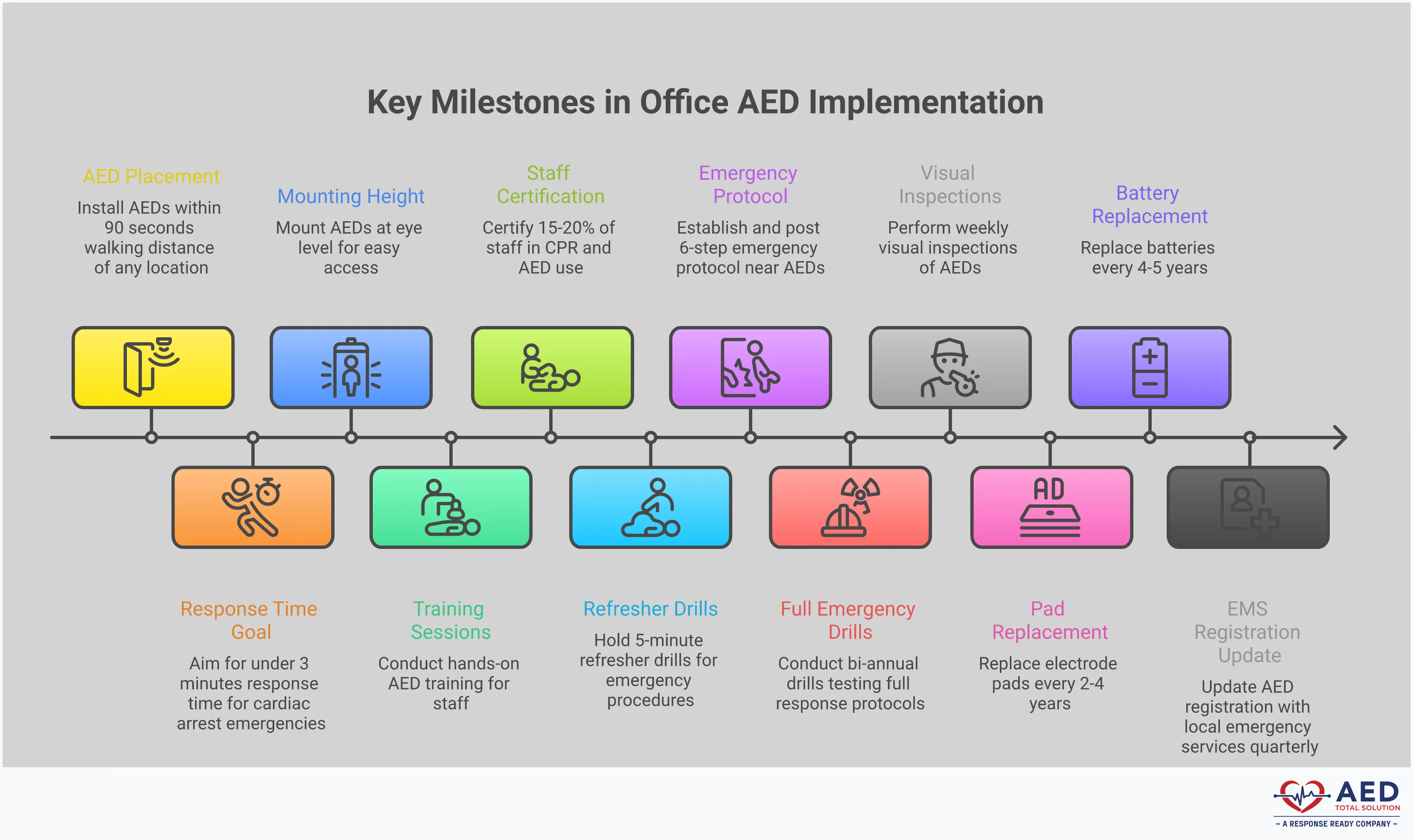
Placing an AED in your office is a fantastic first step, but the real work begins with building a program around it. An effective AED program ensures your team is prepared, confident, and ready to act when seconds count. It transforms the device from a box on the wall into a fully integrated part of your workplace safety plan. This involves more than just a one-time training session; it requires a thoughtful approach to training, awareness, emergency planning, and ongoing readiness checks. Let’s walk through the key components of a program that truly protects your people.
Develop a Comprehensive Training Plan
Your AED is designed to be user-friendly, but nothing replaces the confidence that comes from hands-on training. A comprehensive plan should include certified courses in CPR, first aid, and AED use. This training gives your designated responders the skills to assess a situation, communicate effectively, and act decisively before professional help arrives. Investing in regular training ensures your team not only knows how to use the equipment but also understands their role in an emergency. When people feel prepared, they are far more likely to step in and help. This preparation is the foundation of a successful response and can make all the difference in a crisis.
Promote AED Awareness Among Employees
A life-saving device is only useful if people know it exists and where to find it. Promoting AED awareness throughout your workplace is crucial. Make sure the AED’s location is clearly marked with visible signage. Talk about it during team meetings and new employee orientations. You can even send out periodic email reminders about its location and the employees who are trained to respond. The goal is to make sure every single person in your building knows what to do and who to alert if they see someone collapse. This widespread awareness creates a culture of safety and ensures that no time is wasted searching for the device during an emergency.
Create a Clear Emergency Response Protocol
When an emergency happens, chaos can take over. A clear, written emergency response protocol prevents confusion and ensures every critical step is taken. This plan should outline exactly what to do from the moment someone collapses. Who calls 911? Who retrieves the AED? Who starts CPR? Who directs emergency services when they arrive? Defining these roles ahead of time is essential. Your protocol should be specific to your office layout and your team. Having a well-documented plan is a core part of a managed AED program, as it provides a simple, repeatable process for your team to follow under pressure, ensuring a coordinated and effective response.
Maintain Readiness with Drills and Refreshers
Practice makes perfect—or in this case, it makes prepared. Regularly running emergency drills helps your team internalize the response plan and use the AED training unit. These drills can reveal gaps in your protocol, like a locked door on the route to the AED, that you can fix before a real event occurs. Beyond practice, maintaining the device itself is non-negotiable. This means routinely checking that the batteries and pads have not expired and that the device passes its self-tests. Consistent maintenance and practice drills ensure that both your people and your equipment are always ready to go. This ongoing oversight is key to program compliance and true readiness.
Related Articles
Frequently Asked Questions
Do I really need to be trained to use an AED? While formal training is always recommended to build confidence, modern AEDs are designed for anyone to use, regardless of their background. The moment you open the device, it provides clear, step-by-step voice instructions to guide you through the entire process. The machine analyzes the heart’s rhythm and makes the decision on whether a shock is needed, so you don’t have to. Think of training less as a requirement and more as a way to empower your team to act decisively in a stressful situation.
What happens if I use the AED and the person doesn’t survive? Can my company be sued? This is a common and understandable fear, but it’s exactly why Good Samaritan laws exist in every state. These laws provide legal protection for individuals and organizations that use an AED in good faith to try and save a life. This protection is strongest when you can show your AED program was properly managed—meaning the device was maintained, and you followed state guidelines. A well-run program actually reduces your liability by demonstrating a clear commitment to safety.
How do I know which AED is the right one for my office? The best AED for your workplace is one that is reliable and incredibly simple to operate under pressure. Instead of getting caught up in technical specs, focus on user-friendly features like clear voice coaching and automatic self-tests that ensure the device is always ready. Consider your specific environment as well. An office with frequent visitors or a daycare might need a model with straightforward pediatric capabilities, while a more rugged workplace might need a more durable device.
Is buying the defibrillator a one-time cost? The initial purchase is the biggest expense, but it’s not the only one. To keep an AED rescue-ready, you’ll need to replace the electrode pads and batteries every few years. These supplies have expiration dates, and using expired components can cause the device to fail. Factoring these recurring costs into your budget from the start ensures your life-saving investment remains effective for its entire lifespan.
What’s involved in managing an AED after it’s installed? An effective AED program goes beyond just hanging the device on a wall. It involves regularly checking the device’s status indicator to ensure it’s ready, tracking the expiration dates for pads and batteries, keeping records of trained staff, and having a clear emergency response plan that everyone understands. This ongoing oversight ensures your AED is not just present but is truly prepared to function when an emergency occurs.