Owning an AED is a significant investment in safety, but the financial commitment doesn’t end with the initial purchase. The ongoing costs of maintenance, particularly for batteries and pads, can catch many organizations by surprise. These essential components must be replaced on a regular schedule, creating a recurring expense that needs to be budgeted for. A smart strategy for AED battery and pad replacement is crucial for managing your program’s total cost of ownership and avoiding last-minute scrambles for funding. In this article, we’ll break down the costs, timelines, and common mistakes to help you build a sustainable and predictable maintenance plan for your life-saving devices.
Key Takeaways
- Respect the Expiration Date: Your AED’s batteries and pads have a firm shelf life. Replacing them on schedule, regardless of use, is essential because their core components degrade over time, which can lead to device failure during a rescue.
- Use Only Manufacturer-Approved Parts: AED accessories are not interchangeable. Using the wrong battery or pads for your specific model can cause the device to fail and void your warranty. Always buy authentic parts from a trusted source and stock both adult and pediatric pads if your location requires them.
- Create a Routine for Readiness Checks: An effective AED program goes beyond just owning the device. Establish a consistent schedule for visual inspections, document every check and replacement, and have a clear plan for restocking the AED immediately after it’s used to close any gaps in preparedness.
AED Batteries and Pads: The Essentials
An Automated External Defibrillator (AED) is a powerful, life-saving device, but it’s only as reliable as its core components. Think of the battery and pads as the heart and hands of your AED—without them, the device simply can’t do its job. Understanding what they are, why they need regular attention, and cutting through common myths is the first step in building a truly response-ready AED program. Let’s get into the essentials so you can feel confident that your device is prepared for an emergency.
What Are AED Batteries and Pads?
Let’s start with the basics. The AED battery is the power source that allows the device to analyze a person’s heart rhythm and deliver a shock if needed. The AED pads are the single-use electrodes you stick to a person’s bare chest. These pads have a special gel that helps them adhere to the skin and conduct the electrical current safely and effectively. Together, these two components are the most critical AED accessories you’ll manage. While AEDs are designed to be durable and simple for anyone to use, their batteries and pads have finite lifespans and require your attention to keep the device ready.
Why Regular Replacement Is Non-Negotiable
Imagine needing an AED only to find its battery is dead. It’s a preventable failure that could have devastating consequences. That’s why replacing batteries and pads on schedule isn’t just a best practice—it’s a critical part of owning an AED. Batteries can lose their charge over time, even when the device isn’t used. Pads can also expire; the conductive gel on them dries out, which means they won’t stick properly or deliver an effective shock. Most AED batteries last between two and five years, while pads typically need to be replaced every two years. Tracking these dates is essential for compliance and readiness, which is where an AED program management service can be a huge help.
Common Myths About AED Maintenance
One of the biggest myths is that AEDs are “set it and forget it” devices. While they perform routine self-tests, these checks don’t replace the need for manual inspections. Another common misconception is that as long as the indicator light is green, everything is fine. That light confirms the battery has power, but it won’t tell you if your pads are about to expire. It’s crucial to physically check the expiration dates printed on the pad packaging. You can find answers to more common questions on our FAQ page. Consistently replacing pads and batteries before they expire is the only way to ensure your AED will function correctly when it matters most.
How to Choose the Right AED Batteries and Pads
Selecting the right accessories for your AED is just as critical as choosing the device itself. The batteries and pads are the components that deliver the life-saving shock, so their effectiveness is non-negotiable. Think of them as the fuel and tires for a high-performance car—without the right ones, the engine is useless. Making the correct choice comes down to understanding a few key factors: the type of battery your environment requires, the appropriate pads for your potential victims, and absolute compatibility with your specific AED model. Getting these details right ensures your device is ready to perform reliably when an emergency strikes. Let’s walk through exactly what you need to look for to keep your AED program in top shape.
Battery Types: Non-Rechargeable, Rechargeable, and Aviation-Approved
When it comes to AED batteries, you’ll generally encounter three main types. The most common for public and business settings are non-rechargeable lithium batteries. They have a long standby life—typically two to five years—and are designed for simplicity. You install them and forget about them until the AED indicates a replacement is needed. Rechargeable batteries are less common and are usually found in hospitals or on ambulances where AEDs are used frequently. Finally, aviation-approved batteries are required for use on commercial aircraft and must meet specific FAA standards. For most businesses, schools, and public spaces, a long-life, non-rechargeable battery is the most practical and reliable choice for your AED program.
Pad Options: Adult vs. Pediatric
AED pads are not a one-size-fits-all accessory. The most important distinction is between adult and pediatric pads. Adult pads are designed for anyone over 8 years old or weighing more than 55 pounds. For younger children or infants, you must use pediatric pads. These smaller pads deliver a reduced electrical shock (an attenuated dose) that is safer and more effective for a child’s smaller body. If your AED is located somewhere children are often present—like a school, church, or community center—it’s essential to have a set of pediatric pads on hand. Using adult pads on a small child can cause injury and may not be effective, so always check you have the right equipment for your environment.
Check for Brand Compatibility
This might be the most important rule of AED maintenance: batteries and pads are brand- and model-specific. You can’t use a Philips battery in a ZOLL AED, or vice-versa. Using an incompatible accessory will cause the device to fail its self-test and, more critically, it will not function in an emergency. Before purchasing any replacements, double-check the make and model of your AED unit. The model number is usually printed on the back or bottom of the device. Always purchase the specific battery and pads designed for your exact machine. If you have any uncertainty, it’s always best to contact an expert to confirm you’re ordering the correct parts.
Key Features to Look For
Beyond basic compatibility, a few other features can guide your purchasing decision. When evaluating replacement parts, consider the battery’s expected standby life. A battery with a four- or five-year life can reduce long-term costs and maintenance tasks compared to one that needs replacing every two years. For pads, check the packaging for clear, simple instructions and diagrams that are easy to follow under pressure. Ultimately, the goal is to choose reliable, high-quality components that support the overall effectiveness of your device. The best AEDs are the ones that are simple to use and ready to go, and that readiness starts with having the right accessories installed.
When Should You Replace AED Batteries and Pads?
An AED is only effective if it’s ready to work at a moment’s notice. The batteries and pads are the most critical components, and they both have finite lifespans. Knowing exactly when to replace them is a core part of responsible AED ownership. It’s not just about swapping them out after a rescue; it’s about proactive maintenance that ensures your device is always prepared. The key is to pay attention to three things: the manufacturer’s recommended timeline, the device’s own warning signs, and the environment where it’s stored. Getting this right removes the guesswork and ensures your AED can perform its life-saving function when called upon.
Follow Manufacturer Replacement Timelines
Every AED battery and pad has a clear expiration date printed on it, and this is your most important guide. Think of it as a non-negotiable deadline. Most AED batteries have a standby life of four to seven years, while electrode pads typically last around two years. The gel on the pads can dry out over time, making them less effective at adhering to the skin and delivering a shock. It’s crucial to track these dates for every device you manage. A great practice is to set calendar reminders well in advance of the expiration dates. For organizations with multiple devices, this is where a dedicated program management service becomes invaluable, as it automates tracking and ensures replacements happen on schedule without fail.
Warning Signs That Mean “Replace Now”
Your AED is designed to communicate its status, and you need to listen when it speaks up. Most devices perform regular self-tests and will alert you if something is wrong. Look for the status indicator light—a green blinking light or a “ready” symbol typically means everything is fine. If you see a red light, no light at all, or hear a persistent chirping or beeping sound, your AED is signaling a problem. This is often a low or expired battery. Don’t dismiss that chirp as a minor annoyance; it’s a critical alert that your device is not ready for a rescue. Address these warnings immediately by troubleshooting the issue, which almost always starts with checking the battery and pads.
How Environment Affects Lifespan
Where you keep your AED has a direct impact on the lifespan of its components. Extreme temperatures are the enemy of batteries and pads. Storing a device in a car where temperatures can soar in the summer or plummet in the winter can drain the battery much faster than its stated lifespan. Similarly, high humidity can degrade the adhesive on electrode pads. The ideal storage location is a climate-controlled, visible, and easily accessible spot. If your AED must be in a variable environment, like a vehicle or an outdoor area, using a proper temperature-controlled cabinet is essential. Proper placement protects your investment and maximizes readiness.
Decode Self-Test Failures and Indicator Lights
Modern AEDs are smart, but their signals are only useful if you know what they mean. The daily, weekly, or monthly self-tests check the health of the battery, pads, and internal circuitry. A failed self-test will trigger the audible and visual alerts mentioned earlier. While a solid red “X” or a chirping sound can be alarming, it’s usually pointing to a straightforward fix. The first step is to check the expiration dates on your components. If they are expired, replace them. If they are still within their date range, the battery may have a fault. Having the correct replacement parts on hand makes this a quick fix, turning a failed device back into a rescue-ready asset.
What Is the Cost of AED Battery and Pad Replacement?
An AED is a long-term investment in safety, and that includes planning for the ongoing cost of essential accessories. While the initial device purchase is the biggest expense, the batteries and pads that make it function have a limited shelf life and must be replaced periodically. Understanding these recurring costs is key to maintaining a response-ready and compliant AED program without any last-minute budget surprises. Let’s break down what you can expect to spend.
Average Price Ranges for Batteries and Pads
The cost of replacement parts can vary quite a bit, but here are some general price ranges to help you plan. Adult AED pads typically cost between $65 and $236 per set. If your organization needs pediatric pads for children, expect to pay a bit more, usually between $125 and $279. AED batteries have the widest price range, generally falling between $100 and $499. This variation depends on the AED’s make and model, as well as the battery’s chemistry and lifespan.
Standard vs. Long-Life Batteries: A Cost Comparison
When choosing a battery, you’ll often have the option between a standard-life and a long-life version. Standard batteries usually cost between $40 and $120 and last two to four years. In contrast, long-life batteries have a higher upfront cost, typically $150 to $280, but last four to five years. While the initial price is higher, a long-life battery can reduce your total cost of ownership over time and simplify maintenance by extending the replacement cycle. This is a great option for busy facilities managers looking to streamline their tasks.
What Factors Influence the Cost?
Several factors determine the price of your AED’s replacement parts. The brand is a major one—components for different AED manufacturers are not interchangeable and come at different price points. The type of battery, such as a standard versus a long-life option, also plays a significant role. Finally, whether a battery is non-rechargeable or rechargeable affects the cost, though most public-access AEDs use reliable, low-maintenance non-rechargeable batteries. You can explore a wide range of AED accessories to find the specific parts compatible with your device.
How to Budget for Ongoing Maintenance
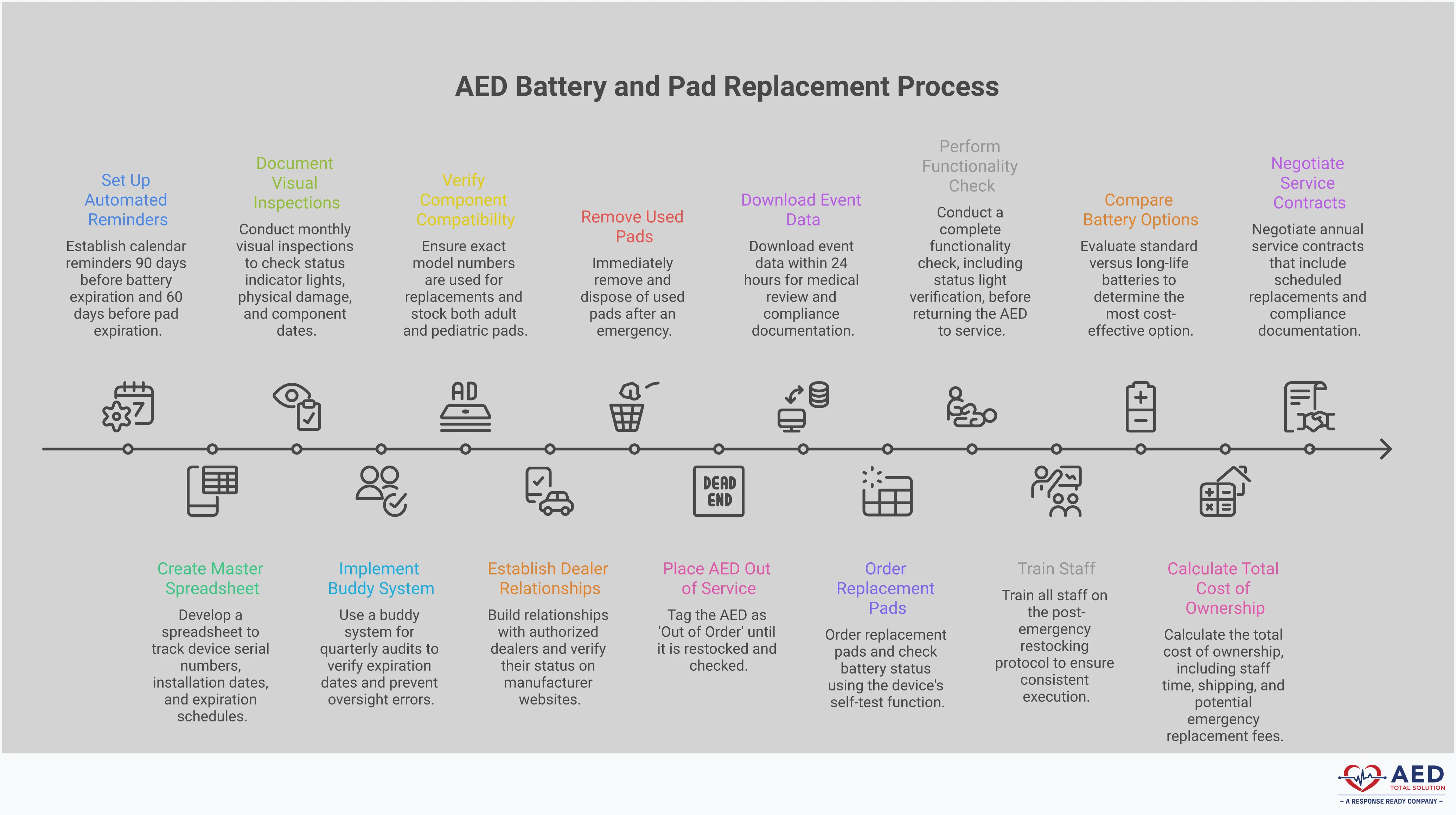
Budgeting for AED maintenance means looking beyond a single purchase. The best approach is to create a replacement schedule based on the expiration dates of your current batteries and pads. Don’t forget to factor in the immediate cost of replacing pads after any use, as they are single-use only. To simplify this process, many organizations use an AED program management service to track expiration dates, automate replacement reminders, and ensure all maintenance is documented. This proactive approach keeps your program compliant and your devices ready to save a life.
Where to Buy AED Replacement Parts
When it’s time to buy new batteries and pads, you need a source you can trust. The right supplier ensures you get authentic, compatible parts that keep your device ready for an emergency. Here’s where to look and what to watch out for.
Get Your Replacements with AED Total Solution
The easiest way to get the right parts on time is to work directly with your program management partner. At AED Total Solution, we simplify the entire process. We don’t just sell AEDs and accessories; we manage your inventory to ensure you always have what you need before it expires. When you partner with us, we track your battery and pad expiration dates and automatically ship replacements, eliminating guesswork and saving you administrative time. Our online shop is stocked with manufacturer-approved batteries and pads for all the top AED brands. This integrated approach guarantees you receive authentic, compatible components that keep your devices ready and your program compliant.
Find Authorized Dealers and Online Suppliers
If you’re sourcing parts on your own, always purchase from an authorized dealer. Manufacturers partner with specific distributors to ensure their products are stored correctly and sold with valid warranties. You can typically find a list of authorized dealers on the AED manufacturer’s website. While many online suppliers exist, sticking to these approved vendors protects you from counterfeit or improperly stored products. Remember, your AED is a medical device where performance is critical. Using a trusted supplier is a key part of maintaining a reliable emergency response program and ensuring your device functions as expected during a cardiac arrest event.
Look for Discounts and Promotions
Managing an AED program involves ongoing costs, and it’s smart to look for ways to budget effectively. Many suppliers offer discounts for first-time buyers or promotions for signing up for their email newsletters. These can be a great way to save on your initial purchase or recurring replacement orders. Some vendors also provide bulk discounts if you’re outfitting multiple locations. While saving money is important, be cautious of deals that seem too good to be true. A steep discount from an unknown seller could be a red flag for counterfeit or expired products, so always prioritize the supplier’s reputation over a bargain.
How to Verify Authentic Manufacturer Parts
Using genuine manufacturer parts is non-negotiable for both safety and compliance. Counterfeit or third-party batteries and pads can cause the AED to fail a self-test, malfunction during a rescue, or even void your device’s warranty. To verify you have an authentic part, purchase only from authorized sources. Check the packaging for the manufacturer’s official logo, seal, and serial number. The quality should feel consistent with your original components. If you have any doubts, you can always contact our team for guidance. Authentic parts are designed to meet strict FDA standards, ensuring your AED performs reliably when a life is on the line.
Avoid These Common Replacement Mistakes
Managing your AED inventory might seem simple, but a few common oversights can undermine your entire emergency preparedness plan. These mistakes are easy to make, especially when you’re juggling multiple responsibilities and locations. The good news is that they are also easy to avoid with a bit of foresight and a solid process. Ensuring your AED is always ready means paying close attention to the details. From tracking dates to documenting every check, a proactive approach is your best defense against device failure. Let’s walk through the most frequent missteps so you can keep your program compliant and effective.
Mistake #1: Ignoring Expiration Dates
This is one of the most critical yet common errors. Both AED batteries and pads have firm expiration dates printed on their packaging. Once that date passes, their reliability is no longer guaranteed. An expired battery may not hold enough charge to deliver a life-saving shock, and the conductive gel on expired pads can dry out, preventing a solid connection to the patient’s skin. As one industry expert notes, “It’s very important to use the correct and non-expired battery for an AED, or the device won’t work when needed to save a life.” Make it a habit to physically check the dates during your routine inspections and set calendar reminders well in advance of expiration.
Mistake #2: Using Incompatible Parts
When it’s time to order replacements, you might be tempted by lower-priced, third-party options. This is a risky move. Using off-brand or incompatible parts can cause the AED to malfunction and will almost certainly void the manufacturer’s warranty, leaving you unprotected. It’s essential to only use AED accessories that are specifically designed and approved for your device model. As AED Brands points out, “Cheaper, generic batteries might not work as well, could fail early, and might even void your AED’s warranty.” Always purchase from authorized dealers to ensure you receive authentic, reliable components that keep your device functioning as intended and your organization protected.
Mistake #3: Skipping Inspections and Documentation
Simply swapping out an old battery for a new one isn’t enough. Proper maintenance requires a paper trail. Failing to document inspections, battery installation dates, and pad replacements creates significant compliance gaps and liability risks. If an incident occurs, you’ll need to prove the device was properly maintained. Keeping a detailed log demonstrates due diligence and ensures you meet state and federal requirements. This record should include the date of each check, the status of the supplies, and the initials of the person who performed the inspection. A comprehensive AED management program can automate this tracking, giving you audit-ready reports and peace of mind.
Mistake #4: Forgetting to Replace Pads After Use
In the aftermath of a medical emergency, it’s easy to overlook this crucial step. AED pads are strictly single-use items. Once they are removed from their sealed packaging and applied to a person, they cannot be used again, regardless of whether a shock was delivered. The adhesive is compromised, and the gel that helps conduct electricity will begin to dry out. According to Scouting America, “After any AED use, the pads must be replaced.” Your organization should have a clear post-use protocol that includes immediately removing the used pads, ordering a new set, and taking the AED out of service until the fresh pads are installed and the device is confirmed to be rescue-ready.
How to Manage Your AED Maintenance and Compliance
Owning an AED is a great first step, but the real work lies in making sure it’s ready to go at a moment’s notice. A solid maintenance and compliance plan isn’t just about checking boxes; it’s about accountability and ensuring your device can save a life. This involves creating a routine for inspections, storing your device correctly, knowing what to do after it’s used, and keeping up with safety standards. Let’s walk through how to build a system that gives you complete confidence in your AED program.
Create a Regular Inspection Schedule
Waiting for an emergency to find out your AED battery is dead is not a risk worth taking. A regular inspection schedule is your first line of defense. According to OSHA, employers should have a system for routine checks to ensure devices are in working order. Your schedule should include monthly visual inspections where you check the AED’s status indicator, look for any physical damage, and confirm that the battery and pads have not expired. Documenting every check creates a clear record of readiness, which is essential for compliance and peace of mind. A well-managed AED program makes this process simple and automatic.
Store Components Properly for Best Performance
Where you keep your AED matters more than you might think. Extreme heat or cold can drain batteries and cause the gel on electrode pads to dry out, making them ineffective. To get the best performance and longest life out of your components, store your AED in a climate-controlled environment. It should be kept in a visible, accessible location, away from direct sunlight and moisture. An AED cabinet is ideal for protecting the device from dust and damage while ensuring it’s easy to find during an emergency. Proper storage is a simple step that has a huge impact on reliability.
Establish a Post-Use Replacement Protocol
In the moments after an AED is used, it’s easy to forget what comes next. That’s why having a clear post-use protocol is so important. First, remember that AED pads are single-use only and must be replaced immediately. The battery may also be depleted and need replacement. Your protocol should involve taking the device out of service right away, ordering new AED accessories, and downloading the event data for medical review. Once the device has been restocked and confirmed to be working, you can return it to its cabinet, ready for the next emergency.
Stay Compliant with OSHA and Safety Standards
Staying compliant means more than just following a few rules; it’s about adhering to a standard of care that protects both your organization and the people you serve. AED maintenance requirements involve following the manufacturer’s guidelines for checking and replacing components. Beyond that, regulations can vary by state and industry, so it’s important to know what’s required for your specific situation. Keeping detailed records of inspections, maintenance, and staff training is the best way to demonstrate compliance. This documentation is your proof that you’re maintaining a safe and prepared environment.
Related Articles
Frequently Asked Questions
My AED is making a chirping sound. What does that mean? That chirping is your AED’s way of getting your attention. It’s a signal from the device’s routine self-test that something needs to be addressed immediately. Most often, it indicates that the battery is low or that the electrode pads have expired. Your first step should be to check the expiration dates on both components and replace anything that is out of date. This sound means your AED is not ready for a rescue, so it’s important to resolve the issue right away.
Do I have to replace the pads if they’re still sealed in the package? Yes, you absolutely do. It’s a common misconception that pads are fine as long as the package is sealed, but they have a firm expiration date for a reason. Over time, the conductive gel on the pads dries out. If the gel is too dry, the pads won’t stick to the skin correctly and won’t be able to deliver an effective electrical shock. Following the printed expiration date is essential for ensuring the device works as intended.
Can I buy a cheaper, off-brand battery or pads to save money? The short answer is no. AEDs are precision medical instruments, and their batteries and pads are designed specifically for each make and model. Using an incompatible or third-party component can cause the device to fail its self-test or malfunction during an emergency. It will also almost certainly void your manufacturer’s warranty, leaving your organization exposed to significant liability. Always stick with authentic, manufacturer-approved parts from a trusted supplier.
What’s the first thing I need to do with the AED after it has been used in an emergency? Once the emergency medical services team has taken over, your immediate priority for the AED is to take it out of service. The electrode pads are strictly single-use and must be discarded and replaced, even if a shock was not delivered. You should also check the battery status, download the event data for medical review, and order fresh supplies right away. The device should not be returned to its cabinet until it has been fully restocked and confirmed to be rescue-ready again.
Besides expiration dates, does anything else affect how long my battery will last? Yes, the environment where you store your AED has a major impact on battery life. Extreme temperatures, both hot and cold, can drain a battery much faster than its stated lifespan. Storing a device in a car or an outdoor area without a proper climate-controlled cabinet is a common cause of premature battery failure. To get the most out of your battery, keep your AED in a visible, accessible location where the temperature is stable and controlled.